4H Part Time on your Jeep Wrangler engages four-wheel drive to improve traction on slippery or off-road surfaces like snow, mud, or loose gravel.
It evenly distributes power to all wheels, helping you maintain control at moderate speeds without causing drivetrain strain.
You can shift into 4H Part Time at low speeds, typically under 25 mph, and it’s not meant for dry pavement driving.
Understanding how to use it properly can help prevent mechanical issues and maximize off-road performance.
Key Takeaways
- 4H Part Time on a Jeep Wrangler engages four-wheel drive for improved traction on slippery or off-road surfaces.
- It evenly distributes power to all wheels but is not suitable for dry pavement to avoid drivetrain damage.
- 4H Part Time allows driving at moderate speeds, typically under 25 mph, without stopping or shifting into neutral to engage.
- This mode enhances control on wet, snowy, or loose gravel terrain while maintaining better speed than low-range 4L mode.
- Regular maintenance, including fluid checks, ensures optimal 4H Part Time performance and prevents drivetrain issues.
What Does 4H Part Time Mean on a Jeep Wrangler
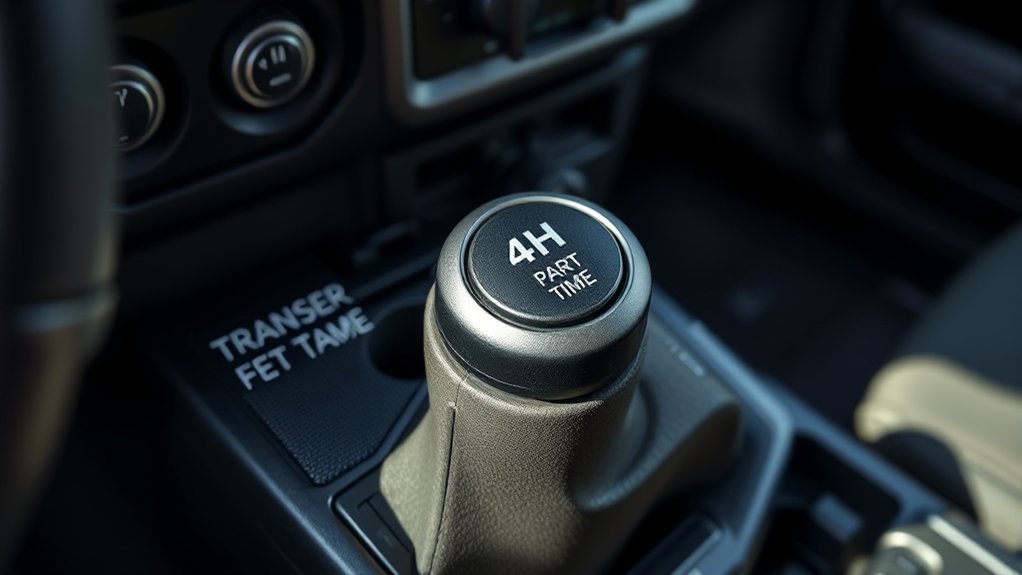
Although you might be familiar with basic driving modes, understanding what 4H Part Time means on a Jeep Wrangler is essential for maximizing its off-road capabilities. The 4H Part Time functionality engages the vehicle’s four-wheel drive system, distributing power evenly to all wheels to improve traction on slippery or uneven terrain.
Unlike full-time four-wheel drive, this mode is designed specifically for conditions where you need extra grip but want to maintain higher speeds than in low-range settings. The jeep drivetrain mechanics activate a transfer case that locks the front and rear axles together, ensuring synchronized movement.
However, since the front and rear wheels rotate at the same speed, 4H Part Time isn’t suitable for dry pavement, as it can cause drivetrain binding and tire wear.
How 4H Part Time Works in Your Jeep Wrangler
When you engage 4H Part Time in your Jeep Wrangler, power is distributed evenly between the front and rear wheels to improve traction on slippery or uneven surfaces. This mode helps you maintain control without sacrificing speed, making it ideal for off-road or adverse weather conditions.
Understanding how 4H works lets you use it effectively for better handling and safety.
Engaging 4H Part Time
Since 4H Part Time engages your Jeep Wrangler’s four-wheel drive system without locking the center differential, it allows you to maintain better traction on slippery or moderately rough surfaces without stressing the drivetrain.
To engage 4H Part Time, simply shift the transfer case lever or use the electronic 4WD selector, depending on your model, while the vehicle is moving at low speeds. This action activates traction control systems that optimize power distribution between front and rear axles, enhancing off-road performance.
You don’t need to stop or shift into neutral, making changes smooth and efficient. This setup helps you tackle gravel, mud, or snow with confidence, as it balances traction without sacrificing drivability or causing unnecessary wear.
Benefits Of 4H Mode
Because 4H Part Time distributes power effectively between the front and rear axles without locking the center differential, it provides improved traction and stability on various challenging surfaces. You’ll experience performance enhancement when driving on slippery terrains like gravel, mud, or snow, as the system adjusts torque to maintain control.
This traction improvement reduces wheel slip, allowing you to navigate obstacles confidently without sacrificing speed. Additionally, 4H mode enhances your Jeep Wrangler’s handling during moderate off-road conditions and adverse weather, ensuring safer, more predictable driving.
When Should You Use 4H Part Time While Driving?
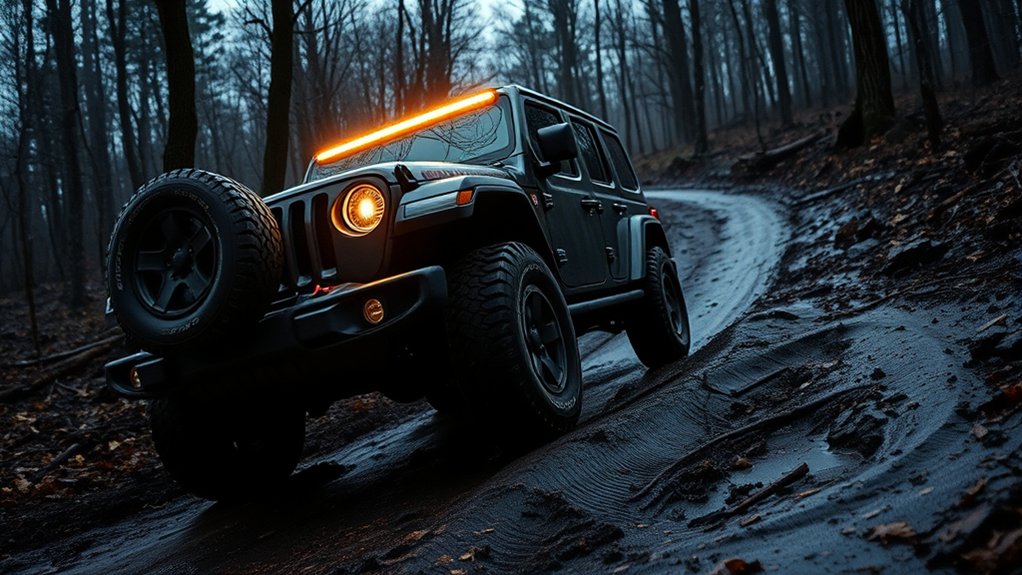
How do you know the right moment to engage 4H part time on your Jeep Wrangler? It depends largely on driving conditions and terrain types. You should use 4H part time when:
- Roads are slippery but you still want to maintain higher speeds, such as on wet pavement or packed snow.
- You’re driving on loose gravel or dirt trails, where extra traction improves stability.
- You encounter moderate off-road terrain like sand or mud that requires better power distribution.
- You need enhanced control while ascending or descending gentle hills without compromising speed.
Using 4H part time in these scenarios optimizes traction without stressing your drivetrain. Avoid using it on dry pavement or sharp turns, as that can cause drivetrain binding. By matching 4H part time to appropriate driving conditions and terrain types, you guarantee safer, more efficient off-road performance.
Engaging and Disengaging 4H Part Time Safely
Master engaging and disengaging 4H part time on your Jeep Wrangler by following specific steps designed to protect your drivetrain and guarantee smooth operation. Start by slowing to a complete stop or driving at a low speed, usually under 25 mph, before engaging 4H.
Shift the transfer case lever firmly into the 4H position using proper techniques to avoid gear grinding. Always apply safety precautions such as ensuring your wheels have proper traction and avoiding abrupt maneuvers during the switch.
When disengaging 4H, slow down and shift back to 2H smoothly to prevent drivetrain stress. By adhering to these safety precautions and proper techniques, you maintain your vehicle’s mechanical integrity, enhance control, and extend the lifespan of your Jeep Wrangler’s four-wheel-drive components.
Common Mistakes to Avoid With 4H Part Time
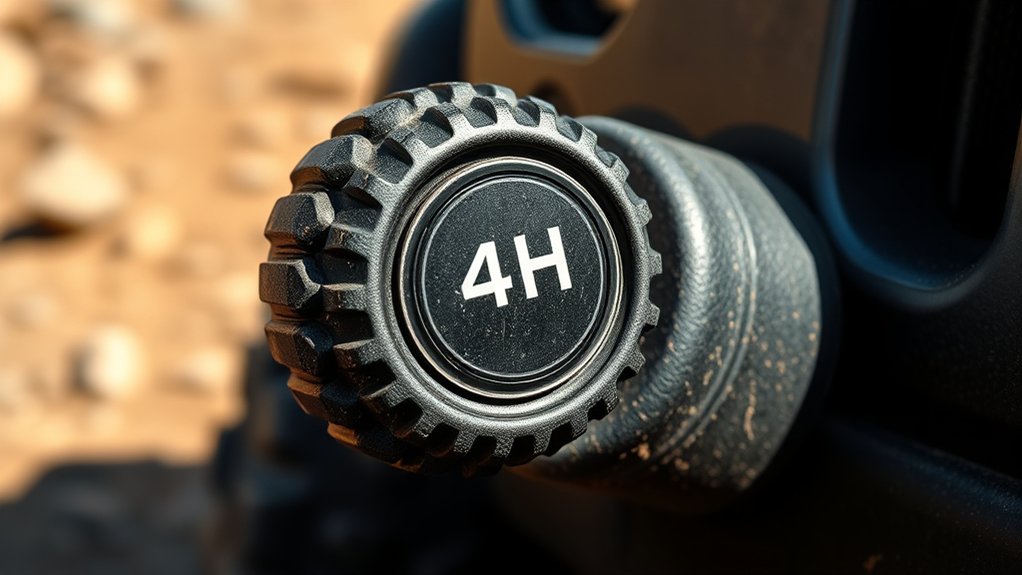
Properly engaging and disengaging 4H part time is key to protecting your Jeep Wrangler’s drivetrain, but even experienced drivers can fall into common pitfalls. To maintain peak driving habits and adapt to seasonal conditions, avoid these mistakes:
- Using 4H part time on dry pavement causes unnecessary drivetrain strain.
- Forgetting to disengage 4H when returning to regular roads leads to tire wear and mechanical stress.
- Engaging 4H at high speeds requires slowing down to the recommended range for smooth operation.
- Ignoring changes in seasonal conditions means missing the need to adjust your use of 4H based on terrain and weather to maximize safety and efficiency.
Avoiding these errors guarantees your Wrangler performs reliably under varied conditions.
How 4H Part Time Differs From Other Jeep Wrangler 4WD Modes
Why should you choose 4H Part Time over other 4WD modes on your Jeep Wrangler? It offers a balanced approach for moderate off-road driving conditions, engaging four-wheel drive without the full commitment of 4L. This mode improves traction control on slippery surfaces while allowing higher speeds than 4L.
| Mode | Best Driving Conditions |
|---|---|
| 2H | Dry pavement, normal roads |
| 4H Part Time | Wet, snowy, or loose gravel |
| 4H Auto | Variable traction, mixed terrain |
| 4L | Steep, rocky, or deep mud |
| Neutral | Towing or flatbed transport |
Unlike 4H Auto, 4H Part Time requires manual engagement and is ideal when you anticipate consistent low-traction conditions, giving you precise control over your Jeep’s traction control system.
Benefits of 4H Part Time on Jeep Off-Road Trails
When you tackle off-road trails with varying terrain, engaging 4H Part Time on your Jeep Wrangler enhances traction and vehicle stability without sacrificing speed. This mode optimizes off-road performance by distributing power evenly between front and rear axles, improving your control on slippery or uneven surfaces.
Here’s how 4H Part Time benefits you:
- Improves traction control by engaging both axles, reducing wheel slip.
- Maintains higher speeds compared to low-range modes, allowing quicker trail progress.
- Enhances stability on mixed surfaces like gravel, mud, and sand.
- Simplifies driving by automatically balancing torque, reducing driver fatigue.
Using 4H Part Time guarantees you get reliable traction and responsive handling, enabling safer and more efficient off-road exploration.
How 4H Part Time Affects Fuel Economy and Wear
While 4H Part Time improves traction and handling on challenging terrain, it also influences your Jeep Wrangler’s fuel consumption and component wear. Engaging 4H Part Time increases drivetrain resistance, which reduces fuel efficiency compared to 2H mode.
You’ll notice higher fuel consumption because the system powers all four wheels, causing the engine to work harder. Additionally, using 4H Part Time on dry pavement or at high speeds can accelerate wear impact on drivetrain components like the transfer case and differentials.
This increased mechanical stress may lead to premature part degradation if not managed properly. To maintain peak fuel efficiency and minimize wear impact, you should reserve 4H Part Time for off-road or slippery conditions, switching back to 2H mode during normal driving.
Troubleshooting Common 4H Part Time Problems
Encountering issues with 4H Part Time on your Jeep Wrangler can disrupt your off-road experience and compromise vehicle performance. To troubleshoot common problems, focus on these key areas:
1. Check for drivetrain issues
Unusual noises or vibrations often indicate worn or damaged components needing inspection.
Unusual noises or vibrations typically signal worn or damaged drivetrain components requiring prompt inspection.
2. Inspect the transfer case selector
Selector problems can prevent proper engagement. Confirm it moves smoothly without resistance.
3. Verify electrical connections
Faulty wiring or sensors may cause intermittent 4H activation failures.
4. Examine fluid levels and condition
Low or contaminated transfer case fluid can impair 4H operation and accelerate wear.
Frequently Asked Questions
Can 4H Part Time Be Used on Icy Roads?
Yes, you can use 4H part time on icy roads to improve traction. Its benefits include better control and stability, enhancing icy road safety.
Just avoid using it on dry pavement to prevent drivetrain damage.
Does 4H Part Time Affect Jeep Wrangler Towing Capacity?
4H Part Time engages the drivetrain fully, improving traction but not changing your Jeep Wrangler’s towing performance or capacity. You’ll maintain the same towing limits, though drivetrain engagement helps handle rougher conditions more confidently.
Is 4H Part Time Compatible With Jeep Wrangler Aftermarket Tires?
Yes, 4H part time is compatible with Jeep Wrangler aftermarket tires, but you’ll need to confirm tire compatibility with your specific modifications. Properly matched tires maintain drivetrain balance and prevent damage during off-road use or varied terrain conditions.
How Does 4H Part Time Impact Jeep Wrangler Warranty?
Using 4H part time won’t typically void your Jeep Wrangler’s warranty coverage if used correctly. It maintains drivetrain performance by distributing power properly, but misuse or modifications affecting drivetrain may impact warranty claims, so stay cautious.
Can 4H Part Time Be Engaged While Going Downhill?
Like riding a wild stallion downhill, you can engage 4H Part Time while descending to boost downhill traction and off-road performance.
Just guarantee your speed’s controlled to maintain stability and protect your Jeep’s drivetrain.
Conclusion
Using 4H Part Time on your Jeep Wrangler is like switching to a higher gear when climbing a steep hill—it gives you extra traction and control on slippery or uneven surfaces. You’ll want to engage it only when conditions demand, avoiding misuse to prevent drivetrain damage.
Understanding its role compared to other 4WD modes helps you drive smarter, maintain fuel efficiency, and keep your Jeep performing reliably on and off the road.
In conclusion, knowing when and how to use 4H Part Time on Jeep Wrangler ensures better handling and protects your vehicle during challenging driving conditions.