You want the best synthetic engine oil designed to meet your vehicle’s manufacturer specifications and viscosity needs for maximum protection and performance.
Top choices like Mobil 1 Extended Performance suit high-mileage engines, Castrol EDGE excels in turbocharged cars, and Valvoline Advanced Full Synthetic offers strong oxidation resistance.
Proper additives like detergents and anti-wear agents enhance reliability.
Changing intervals range from 7,500 to 10,000 miles, depending on use.
Understanding these factors guarantees longer engine life and efficiency—explore how each element impacts your engine’s health.
Key Takeaways
- Mobil 1 Extended Performance is ideal for high-mileage engines, offering long-lasting protection and excellent thermal stability.
- Castrol EDGE excels in turbocharged and high-performance engines due to its superior wear resistance and enhanced additive technology.
- Valvoline Advanced Full Synthetic provides excellent oxidation resistance, making it perfect for daily drivers in varied conditions.
- Royal Purple High-Performance Synthetic improves horsepower and is suited for performance-tuned vehicles requiring enhanced engine output.
- Choose synthetic oil viscosity based on manufacturer recommendations and driving conditions, such as 0W-20 for hybrids and 15W-40 for diesel trucks.
How Is Synthetic Oil Different From Regular Oil?
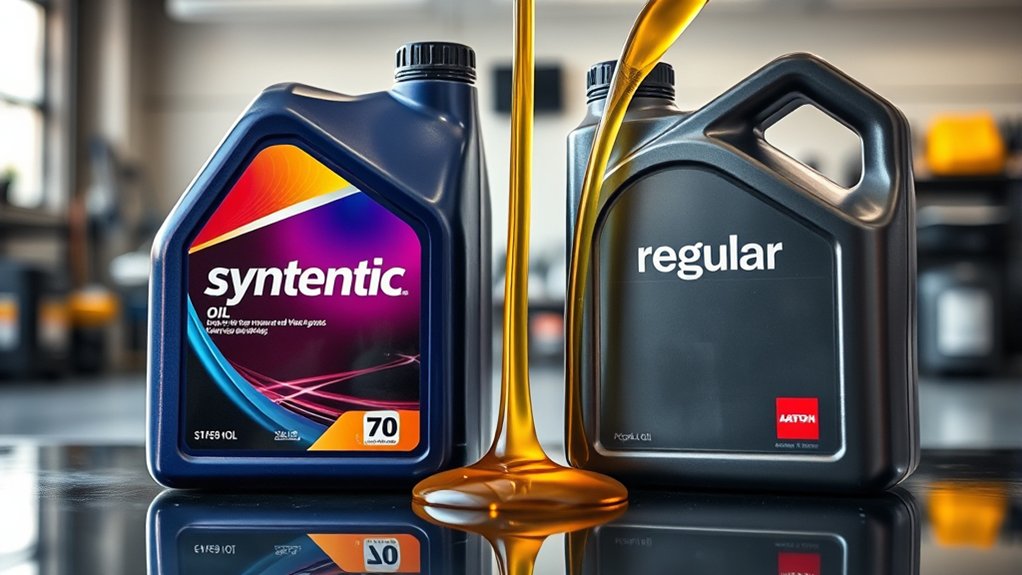
Although both synthetic and regular oils serve the same fundamental purpose of lubricating engine components, synthetic oil is engineered at the molecular level to provide superior performance. You’ll find that synthetic advantages stem from its uniform molecular structure, achieved through a controlled oil production process involving chemical synthesis.
This contrasts with conventional oil, derived from crude oil refining, which contains varied hydrocarbon chains and impurities. Synthetic oil’s precise formulation results in enhanced thermal stability, reduced oxidation, and improved viscosity across temperature extremes.
When you choose synthetic oil, you benefit from consistent lubrication, minimized engine wear, and extended oil change intervals. Understanding these technical distinctions helps you appreciate why synthetic oil outperforms regular oil in demanding conditions, making it a more reliable choice for maintaining engine efficiency and longevity.
Why Manufacturer Specs Matter When Choosing Synthetic Oil
When selecting synthetic oil, adhering to your vehicle manufacturer’s specifications guarantees peak engine performance and protection. Manufacturer recommendations are based on rigorous testing and engineering standards tailored to your engine’s design and operational demands.
Ignoring these specs risks inadequate lubrication, increased wear, and potential engine damage. You should also prioritize oils with proper oil certification, such as API SN Plus or ILSAC GF-6, which confirm compliance with industry standards and compatibility with your engine.
These certifications confirm the synthetic oil meets minimum requirements for viscosity, thermal stability, and additive performance. By following manufacturer recommendations and choosing certified oils, you optimize engine efficiency, longevity, and emissions control, reducing the risk of warranty issues and costly repairs.
Manufacturer specs aren’t just guidelines; they’re essential for maintaining your engine’s integrity.
How to Choose the Right Viscosity for Your Synthetic Oil
How do you determine the right viscosity for your synthetic oil? Viscosity ratings indicate the oil’s resistance to flow at different temperatures and directly affect oil performance. Selecting the proper viscosity guarantees ideal lubrication, reduces engine wear, and maintains fuel efficiency.
Consult your vehicle’s manual for manufacturer recommendations. Consider ambient temperatures and driving conditions to fine-tune your choice.
| Viscosity Rating | Temperature Range (°F) | Ideal Use Case |
|---|---|---|
| 0W-20 | -40 to 68 | Cold climates, fuel efficiency |
| 5W-30 | -30 to 86 | All-season, moderate climates |
| 10W-40 | -20 to 104 | High temperature, heavy load |
| 15W-40 | -10 to 104 | Diesel engines, hot climates |
| 20W-50 | 0 to 122 | Older engines, high heat |
Choose viscosity ratings that match your engine’s needs for peak oil performance.
Which Additives Boost Synthetic Engine Oil Performance?
You’ll find that synthetic engine oils rely heavily on specific additives to enhance performance under extreme conditions. Key additives like detergents, anti-wear agents, and viscosity index improvers work together to protect engine components and maintain oil stability.
Understanding these common additive types helps you select an oil that optimizes engine efficiency and longevity.
Key Performance Enhancers
Although synthetic engine oils possess superior base properties, their performance depends heavily on specialized additives that enhance lubrication, protect engine components, and maintain stability under extreme conditions. You’ll find that the true performance benefits arise from additive synergy, where combined agents work together to maximize viscosity, reduce friction, and inhibit oxidation.
This synergy guarantees a balanced formulation, enabling the oil to maintain film strength and resist thermal breakdown. When choosing the best synthetic oil, focus on how these key performance enhancers interact to provide consistent protection, extend oil life, and improve fuel efficiency.
Understanding this interplay helps you select oils that meet rigorous engine demands, ensuring peak operation and longevity without compromising efficiency under varied driving stresses.
Common Additive Types
Because synthetic engine oils rely on carefully engineered additives to deliver their full potential, understanding the common additive types is essential for selecting the right formulation. You’ll encounter detergents that prevent deposit formation, dispersants that keep contaminants suspended, and anti-wear agents that form protective films on metal surfaces.
Oxidation inhibitors slow oil degradation under high temperatures, preserving oil performance over time. Friction modifiers reduce internal engine friction, enhancing fuel efficiency, while corrosion inhibitors protect against acid buildup and rust.
Each additive type contributes distinct additive benefits that collectively optimize synthetic oil performance. By analyzing your engine’s demands and operating conditions, you can choose synthetic oil with additive packages tailored to enhance durability, cleanliness, and efficiency, ensuring peak engine protection and longevity.
Which Synthetic Oils Are Best for Different Vehicle Types?
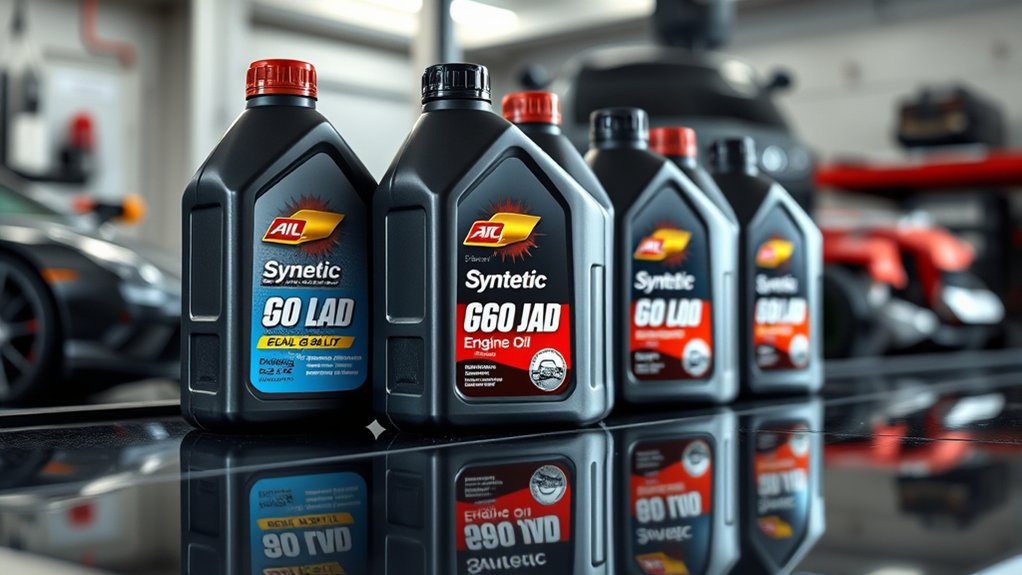
You need to match synthetic oils to your vehicle’s specific requirements to guarantee ideal performance and protection. Different engines, whether high-mileage, turbocharged, or diesel, demand formulations tailored to their operating conditions.
Understanding these distinctions helps you select the best synthetic oil for your vehicle type.
Best Synthetic Oils
Selecting the right synthetic oil depends heavily on your vehicle’s engine type, driving conditions, and manufacturer specifications. To maximize synthetic oil benefits, choose from top brands renowned for advanced additive technology and stable viscosity under stress.
Here’s a concise guide:
- Mobil 1 Extended Performance: Ideal for high-mileage engines, excels in thermal stability and wear protection.
- Castrol EDGE: Best for turbocharged and high-performance engines due to strong shear resistance.
- Valvoline Advanced Full Synthetic: Offers excellent oxidation resistance, suited for daily drivers in varied climates.
- Royal Purple High-Performance Synthetic: Enhances horsepower and fuel efficiency, favored in performance-tuned vehicles.
Vehicle-Specific Oil Choices
When tailoring synthetic oil choices to your vehicle, understanding engine design and operating demands is crucial. Vehicle recommendations specify oil viscosity and additive packages to guarantee ideal oil compatibility, enhancing engine protection and efficiency.
For example, turbocharged engines require oils with robust thermal stability, while hybrids benefit from low-viscosity, high-efficiency synthetics. Here’s a concise guide:
| Vehicle Type | Recommended Synthetic Oil |
|---|---|
| Sports Cars | 5W-40, high shear stability |
| Diesel Trucks | 15W-40, enhanced detergents |
| Hybrids | 0W-20, low friction formulations |
| Luxury Sedans | 5W-30, extended drain intervals |
| Off-road Vehicles | 10W-40, superior wear protection |
Use this table to match vehicle recommendations with oil compatibility, guaranteeing your engine performs reliably under its specific operating conditions.
When and How Often Should You Change Synthetic Engine Oil?
How often should synthetic engine oil be changed to maintain peak engine performance? The oil change frequency depends on your vehicle’s specifications, driving conditions, and synthetic oil type. Typically, synthetic oils allow longer intervals, up to 7,500 to 10,000 miles, compared to conventional oils.
Synthetic engine oil changes typically range from 7,500 to 10,000 miles, depending on your vehicle and driving conditions.
To enhance maintenance, consider these tips:
- Follow manufacturer-recommended intervals in your owner’s manual.
- Adjust frequency based on driving habits; stop-and-go traffic demands more frequent changes.
- Monitor oil quality using onboard sensors or manual checks for contamination or viscosity breakdown.
- Use high-quality synthetic oil tailored to your engine’s requirements to guarantee stability over time.
Adhering to these maintenance tips helps you avoid engine wear, reduce sludge buildup, and sustain peak lubrication, guaranteeing long-term engine health and performance.
Frequently Asked Questions
Can Synthetic Oil Improve Fuel Efficiency?
Yes, synthetic oil can improve your fuel economy by reducing engine friction. Choosing the correct oil viscosity guarantees ideal flow, minimizing energy loss and allowing your engine to operate more efficiently, ultimately enhancing fuel efficiency.
Is Synthetic Oil Safe for Older Engines?
Yes, synthetic oil is safe for older engines if you verify oil compatibility with seals and materials. Its superior lubrication reduces wear, enhancing engine longevity. Always consult your manufacturer’s specifications before switching to synthetic.
How Does Synthetic Oil Affect Engine Noise?
Synthetic oil can silence engine noise like a thunderstorm vanishing instantly. It enhances engine performance by reducing friction and wear, delivering superior noise reduction and smoother operation. This keeps your engine running quieter and more efficiently.
Can Synthetic Oil Prevent Engine Wear in Extreme Temperatures?
Yes, synthetic oil provides superior wear protection in extreme conditions by maintaining viscosity stability and forming a durable lubricating film. This reduces friction and mechanical wear, ensuring engine longevity even under harsh temperature fluctuations.
Are Synthetic Oils Environmentally Friendly?
Think of synthetic oil as a cleaner river flowing through your engine. You’ll find synthetic oil benefits include reduced emissions and longer intervals, making it an eco-friendly alternative that helps you minimize environmental impact while maintaining peak performance.
Conclusion
So, you want the “best” synthetic oil, like it’s some mythical elixir? Remember, it’s not magic—it’s chemistry meeting specs. You wouldn’t slap any oil in your engine like it’s a salad dressing, right? Manufacturer specs and viscosity matter more than a unicorn’s horn.
Pick additives like a scientist, not a gambler. Change intervals aren’t a wild guess; they’re precise calculations. Choose wisely, or your engine might just throw you a tantrum worthy of Shakespeare.
In the end, selecting the best synthetic engine oil means understanding these details and matching the oil to your engine’s needs. It’s science, not luck, that keeps your engine running smoothly.