You should change your synthetic engine oil every 7,500 to 10,000 miles or every 6 to 12 months, following your car manufacturer’s specific guidelines.
Changing synthetic engine oil at the right intervals is crucial for maintaining optimal engine performance and longevity.
Your driving habits and the type of synthetic oil you use affect this interval—aggressive driving or city stop-and-go traffic may require more frequent changes.
High-quality oils can extend drain intervals, but ignoring oil condition signs risks engine damage.
Explore how to optimize oil change timing for your vehicle’s longevity and performance to keep your engine running smoothly.
Key Takeaways
- Change synthetic engine oil every 7,500 to 10,000 miles or every 6 to 12 months, depending on manufacturer recommendations.
- Adjust oil change frequency based on driving habits, such as aggressive driving or frequent short trips.
- Use manufacturer-approved synthetic oil grades to ensure optimal engine performance and extend oil life.
- Monitor oil condition for dark color, grit, or engine noise as signs for an early oil change.
- Severe driving conditions or oil pressure warnings require more frequent synthetic oil changes.
What Your Car Manufacturer Recommends for Synthetic Oil Changes
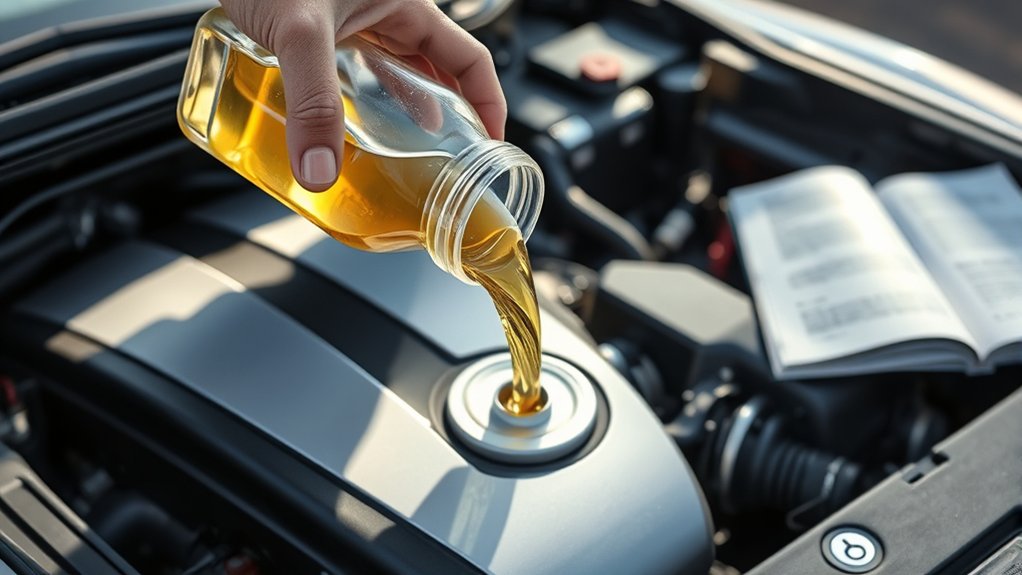
Although synthetic oils generally last longer than conventional oils, you should always follow your car manufacturer’s specific recommendations for oil change intervals. These guidelines are calibrated to maintain ideal oil viscosity, which directly impacts engine performance and longevity.
Your manufacturer considers factors such as engine design, operating conditions, and recommended synthetic formulations when specifying intervals. Using oil with the correct viscosity guarantees proper lubrication and heat dissipation, preventing premature wear and maintaining efficiency.
Ignoring these recommendations can lead to less-than-ideal engine function, increased deposits, and possible warranty issues. Always refer to your owner’s manual or manufacturer’s maintenance schedule to select the appropriate synthetic oil grade and adhere to the prescribed change frequency, preserving engine integrity and maximizing performance over time.
Recommended Intervals for Changing Synthetic Engine Oil
Following your car manufacturer’s guidelines sets a solid foundation, but understanding the typical recommended intervals for synthetic engine oil changes helps you maintain peak engine health. Generally, synthetic oil offers superior oil longevity, allowing you to extend oil change intervals to 7,500 to 10,000 miles, or approximately every 6 to 12 months.
However, these intervals depend on driving conditions and oil quality. To maximize performance, follow maintenance tips such as regularly checking oil levels and using manufacturer-approved oil grades. Deviating from recommended intervals risks oil degradation, which compromises lubrication and engine protection.
Staying within these precise intervals guarantees ideal viscosity retention and contaminant dispersion, safeguarding engine components. By adhering to these technical guidelines, you’ll maintain efficient engine operation and prolong the life of your synthetic oil.
How Driving Habits Affect Synthetic Engine Oil Change Frequency

Because your driving habits directly influence engine stress and oil contamination rates, they play an essential role in determining how often you should change synthetic engine oil. Aggressive acceleration, frequent stop-and-go traffic, and short trips where the engine doesn’t reach ideal temperature accelerate oil degradation.
These driving conditions increase the accumulation of contaminants, moisture, and combustion byproducts in the oil, reducing its ability to protect engine components and maintain engine performance. Conversely, steady highway driving at moderate speeds generates less engine stress and allows oil to perform at peak efficiency longer.
If your driving involves severe conditions, you’ll need to shorten synthetic oil change intervals to prevent performance loss and potential engine damage. Monitoring how your specific driving habits affect oil quality helps enhance maintenance schedules for maximum engine longevity.
Does the Type of Synthetic Oil Change How Often You Change It?
How does the specific type of synthetic oil you choose impact the frequency of oil changes? The oil composition plays an essential role in determining change intervals.
Different synthetic oils vary in base stock quality and the blend of oil additives, which influence oxidation resistance and thermal stability. High-quality synthetic oils with advanced oil additives better resist breakdown under heat and stress, extending the effective lifespan of the oil.
Conversely, oils with fewer or less effective additives degrade faster, requiring more frequent changes. Additionally, some synthetic oils are formulated for extended drain intervals, supported by rigorous testing of their oil composition and additive performance.
Understanding these technical differences helps you select an oil that matches your engine’s demands and maintenance schedule, optimizing protection without unnecessary premature oil changes.
Signs Your Synthetic Oil Needs an Early Change

While selecting the right synthetic oil can extend your oil change intervals, certain conditions may require you to change the oil sooner than the recommended schedule. Monitoring your engine’s condition is essential to maintaining peak engine performance.
One clear indicator is a change in oil color; if the oil appears unusually dark or gritty, contaminants may have accumulated. Additionally, if you notice decreased engine performance, such as rough idling or reduced fuel efficiency, your oil might be degraded.
Other signs include:
- Increased engine noise or knocking sounds
- Oil pressure warning light activation
- Excessive exhaust smoke
- Mileage surpassing the manufacturer’s severe service interval
Addressing these signs promptly helps prevent engine wear and maintains synthetic oil effectiveness.
Frequently Asked Questions
Can Synthetic Oil Improve Engine Performance?
Yes, synthetic oil improves engine performance by enhancing lubrication properties, reducing friction, and resisting breakdown under extreme conditions.
This helps you maintain engine longevity and consistent power output over time, ensuring peak engine function.
Is Synthetic Oil Better for Cold Weather?
Yes, synthetic oil’s viscosity remains stable in cold weather, ensuring faster engine start-up and better lubrication. You’ll notice improved cold weather performance because synthetic oils resist thickening, reducing wear during low-temperature engine operation.
How Does Synthetic Oil Affect Fuel Efficiency?
You know what they say: “A stitch in time saves nine.” Synthetic oil’s advanced oil composition and fuel additives reduce friction, improving combustion efficiency. This helps you boost fuel economy and get the most miles per gallon from your engine.
Can You Mix Synthetic and Conventional Oil?
You can mix synthetic and conventional oil, but oil compatibility varies by brand and formulation.
Mixing concerns include reduced performance and additive dilution, so it’s best to maintain consistent oil types to guarantee ideal engine protection and longevity.
Does Synthetic Oil Protect Better Against Engine Wear?
You’ll notice synthetic oil boosts wear resistance, directly enhancing engine longevity. Its uniform molecular structure reduces friction and thermal breakdown, ensuring consistent lubrication under extreme conditions.
This performance is something conventional oils often can’t match, protecting your engine more effectively.
Conclusion
Think of your synthetic engine oil as the lifeblood of your car’s engine, flowing silently yet fundamentally. Changing it on time, as your manufacturer advises, guarantees this lifeblood remains pure and efficient, preventing wear and tear.
Your driving habits and oil type act like environmental factors, influencing when this essential fluid needs renewal. Ignoring early warning signs is like ignoring a warning light on your dashboard—don’t wait until damage speaks louder than your oil change schedule.
To keep your engine running smoothly and extend its lifespan, it’s important to know how often do you change synthetic engine oil and follow those guidelines closely.