The second shifter in your Jeep Wrangler controls the transfer case, allowing you to switch between 2WD, 4WD High, and 4WD Low modes. This feature is essential for optimizing traction and torque distribution based on driving conditions.
It manages gear ranges that are crucial for adapting to various terrains, especially when off-roading. Engaging low-range gearing provides increased torque and better control at low speeds, which is vital for challenging environments.
Using the second shifter properly enhances your vehicle’s off-road performance and stability. Understanding its functions and safe use will help you maximize your Jeep’s capabilities.
Key Takeaways
- The second shifter controls the transfer case, managing 4WD modes and shifting between high and low gear ranges.
- It allows selection between 2WD, 4WD High, and 4WD Low independently of the main transmission lever.
- Low range gear provides increased torque for off-road crawling and climbing, while high range is for normal driving speeds.
- Safe shifting requires stopping the vehicle, placing the transmission in neutral, and fully depressing the clutch before use.
- Regular maintenance of the second shifter and transfer case fluid ensures smooth operation and prevents costly drivetrain damage.
What Is the Second Shifter in a Jeep Wrangler?
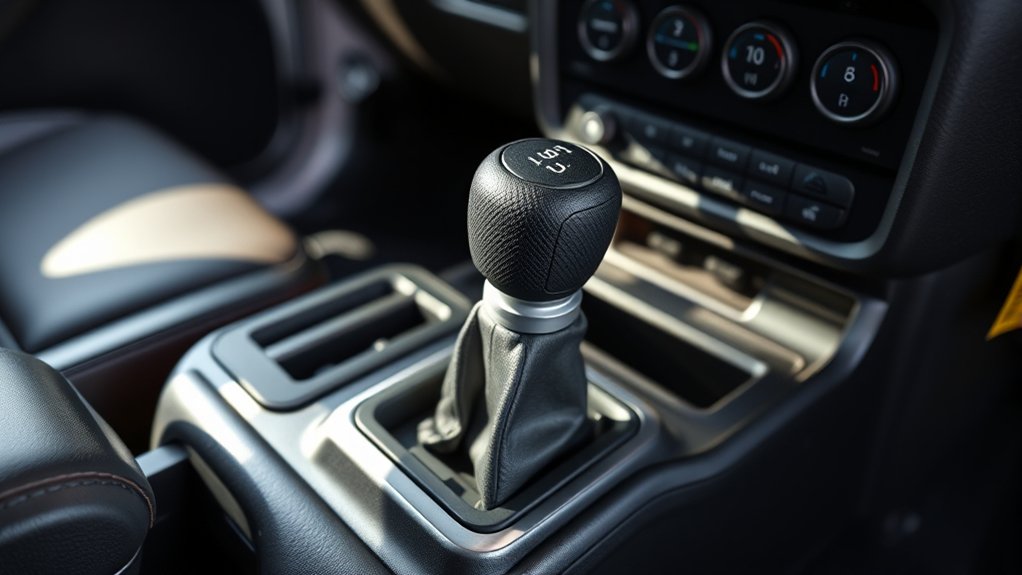
What exactly does the second shifter in a Jeep Wrangler control? The second shifter functions as a dedicated lever that manages the vehicle’s transfer case, which is vital for shifting between high and low gear ranges.
This shifter directly influences the Wrangler’s off road capabilities by allowing you to engage low-range gearing, providing increased torque and control on challenging terrains. Unlike the primary transmission shifter, which handles gear selection for regular driving, the second shifter adjusts the drivetrain configuration.
This adjustment is essential when crawling over rocks, traversing steep climbs, or traversing slippery surfaces. By manipulating this shifter, you optimize power distribution to the wheels, enhancing traction and stability. Understanding the second shifter functions gives you precise command over your Jeep’s off road performance.
How to Use the Second Shifter to Select 4WD Modes
Having control over the second shifter means you can effectively manage your Jeep Wrangler’s 4WD modes to suit varying terrain demands. To use the second shifter, first understand its shifter mechanics: it operates independently from the main transmission lever to engage the four wheel drive system.
When you move the shifter, you manually select between 2WD, 4WD High, and 4WD Low modes. Start by bringing the Jeep to a stop or low speed, then firmly shift into the desired 4WD mode by moving the lever along its defined path.
The shifter’s internal linkage engages the transfer case, distributing power to both front and rear axles. Mastering this process guarantees peak traction control and vehicle stability on diverse off-road conditions.
Understanding High vs. Low Range Gears on the Second Shifter
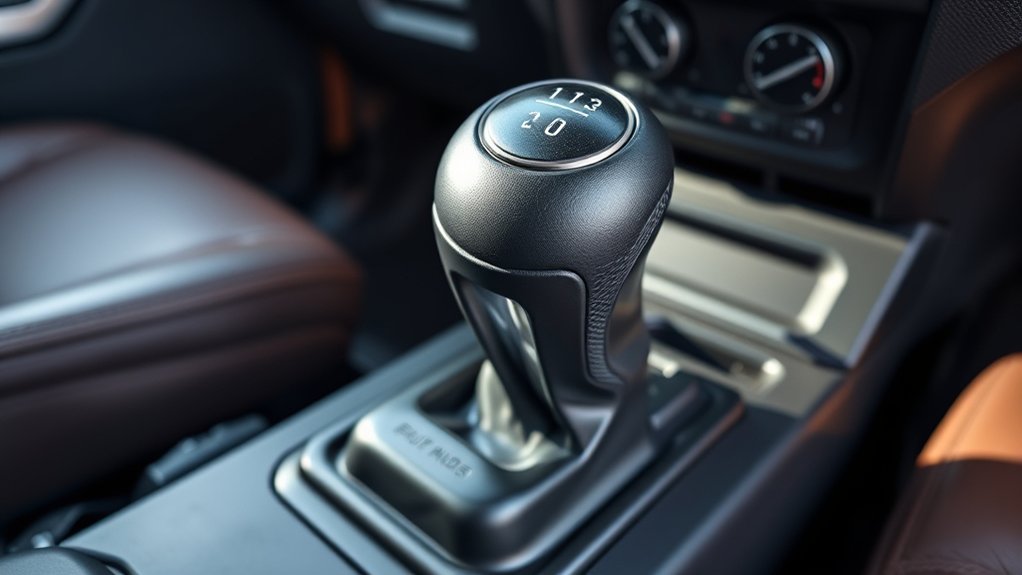
Although both high and low range gears engage the Jeep Wrangler’s four-wheel-drive system, they serve distinctly different functions tailored to varying driving conditions. High range gear provides a 1:1 gear ratio, maintaining regular speed and fuel efficiency while delivering power evenly across the drivetrain. Low range gear, however, offers considerably reduced gear ratios, increasing torque output for enhanced control at low speeds.
High range maintains speed and efficiency, while low range boosts torque for superior low-speed control.
Key differences include:
- Gear ratios: High range uses direct drive; low range multiplies torque.
- Drivetrain function: High range suits normal driving; low range optimizes crawling and climbing.
- Application: High range supports moderate off-road conditions; low range handles steep, technical terrain.
Understanding these differences guarantees you select the right setting for precise drivetrain operation and vehicle performance.
When to Use the Second Shifter Off-Road?
You’ll engage the second shifter’s low range gears when tackling steep inclines or descending rugged slopes to maximize torque and control. Use it on rough terrain to maintain slow, steady speeds without straining the engine or losing traction.
Knowing when to shift into low range guarantees your Jeep handles challenging off-road conditions safely and efficiently.
Engaging Low Range Gears
Engaging the low range gears with the second shifter allows you to maximize torque and control when driving off-road. You’ll want to initiate gear engagement only when the vehicle is stationary or moving very slowly, usually under 5 mph, to protect the transfer case. Low range reduces your gear ratio, providing enhanced power at lower speeds.
Use the second shifter for:
- Maneuvering over rocky or uneven terrain where precise throttle control is critical
- Traversing deep mud or sand that demands increased torque without wheel spin
- Crawling through tight trails requiring steady, controlled power delivery
Mastering low range gear engagement optimizes your Jeep’s off-road capability, ensuring you maintain traction and vehicle stability in challenging conditions.
Navigating Steep Inclines
Mastering low range gear engagement sets the foundation for tackling steep inclines with confidence. When you approach a steep hill, shift the second shifter into low range to maximize torque and maintain a controlled, slow climb.
This gear reduces strain on your engine and drivetrain, allowing precise modulation of throttle input. Combine this with effective climbing techniques: keep steady momentum, avoid sudden acceleration, and use the throttle smoothly to prevent wheel spin.
Engaging traction control in low range helps maintain grip by selectively braking slipping wheels, ensuring consistent forward progress. Trust the second shifter to deliver enhanced power and control, enabling you to conquer steep gradients safely and efficiently without sacrificing vehicle stability or risking mechanical damage.
Handling Rough Terrain
When maneuvering rough terrain off-road, using the second shifter effectively can greatly enhance your Jeep Wrangler’s performance and safety. Engage the second shifter to switch between high and low range, fine-tuning torque and control. This is vital when:
- Steering through uneven surfaces where your suspension setup faces maximum articulation demands.
- Managing loose or slippery conditions, where adjusting tire pressure improves traction and reduces slippage.
- Climbing over rocks or deep ruts requiring slow, controlled power delivery to prevent damage.
Lower gear ratios via the second shifter reduce drivetrain stress and increase engine braking, allowing you to maintain steady momentum. Always assess your tire pressure and suspension setup before engaging low range to guarantee peak vehicle response and prevent mechanical strain during challenging off-road maneuvers.
How to Shift the Second Shifter Safely
To shift the second shifter safely, start by bringing your Jeep Wrangler to a complete stop and verifying the transmission is in neutral. Engage safety precautions by fully depressing the clutch before manipulating the secondary shifter.
Use firm, deliberate shifting techniques to move between high and low range gears, avoiding abrupt or forceful actions that could damage the transfer case. Confirm the shifter is securely positioned before releasing the clutch to prevent gear slippage.
Always monitor the terrain and vehicle response to determine the appropriate time for shifting. Following these steps helps maintain drivetrain integrity and guarantees smooth operation, reducing wear on components.
Practicing precise coordination between clutch, primary, and second shifters optimizes control and enhances your Wrangler’s off-road performance safely.
Common Mistakes to Avoid When Using the Second Shifter
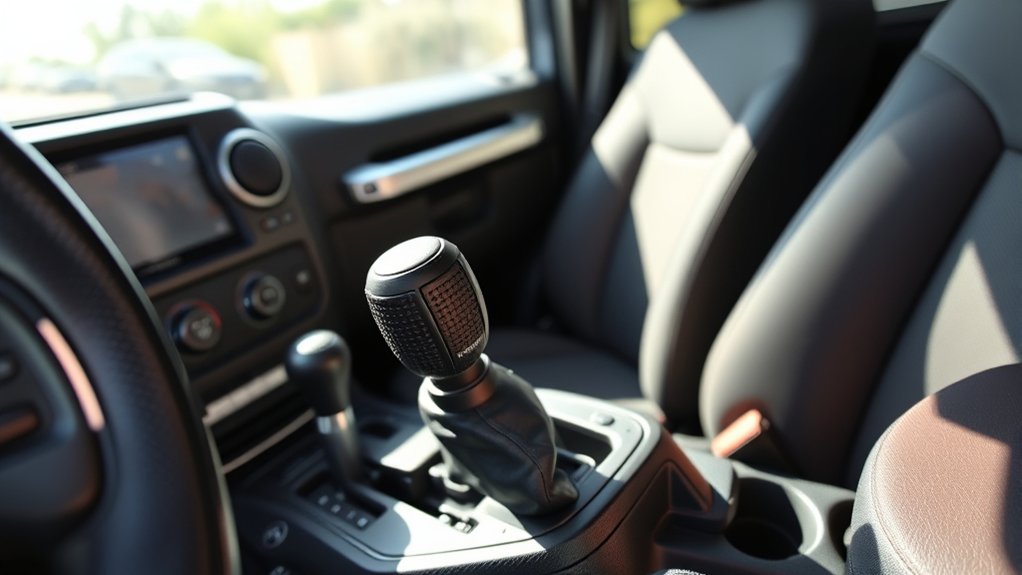
Although the second shifter provides enhanced control over your Jeep Wrangler’s drivetrain, improper use can cause significant mechanical issues. Many drivers fall prey to common misconceptions that lead to damaging shifting techniques.
The second shifter enhances control but misuse can lead to serious drivetrain damage.
To avoid this, focus on these key points:
- Avoid forcing the shifter into gear; precise alignment is essential to prevent gear grinding.
- Don’t shift the second shifter at high speeds; engage it only when the vehicle is stationary or moving slowly to protect the transfer case.
- Refrain from confusing the second shifter with the main gear selector; each serves distinct functions and requires different handling.
Why the Second Shifter Improves Jeep Wrangler Performance
Since the second shifter directly controls the transfer case, it greatly enhances your Jeep Wrangler’s drivetrain versatility. By enabling you to shift between 2WD, 4WD high, and 4WD low, it delivers critical performance enhancements tailored to varying terrains.
When engaged properly, the second shifter optimizes torque distribution, improving traction and stability in off-road conditions. This precise control over power delivery positively affects driving dynamics, allowing you to adapt quickly to slippery, uneven, or steep surfaces.
Additionally, switching to 4WD low via the second shifter provides increased torque multiplication, essential for crawling over rocks or deep mud. Overall, the second shifter’s role in managing drivetrain modes directly translates to improved vehicle responsiveness, control, and safety, ensuring your Jeep Wrangler performs at its best in diverse environments.
Maintenance Tips for Your Jeep’s Second Shifter
Properly maintaining your Jeep Wrangler’s second shifter guarantees smooth operation and prolongs the lifespan of the transfer case components it controls. Regular fluid checks are essential to prevent contamination and guarantee ideal lubrication of internal gears.
You should adhere to a strict maintenance schedule, inspecting the shifter mechanism for wear signs such as looseness or unusual resistance. Shifter lubrication must be applied precisely to pivot points, and gear adjustment should be performed to maintain correct engagement.
Follow these key maintenance tips:
- Perform routine fluid checks and replace contaminated fluids promptly.
- Apply appropriate shifter lubrication and clean debris using recommended cleaning tips.
- Conduct gear adjustment and troubleshoot issues early; replace worn or damaged parts immediately.
Staying vigilant helps you avoid costly repairs and guarantees reliable second shifter performance.
Frequently Asked Questions
Can the Second Shifter Be Used in Automatic Jeep Wranglers?
You can’t use the second shifter in automatic Jeep Wranglers because it’s designed for manual shifting techniques.
Rely on the automatic transmission to optimize your driving experience instead of manipulating a secondary shifter.
Does the Second Shifter Affect Fuel Efficiency?
The second shifter itself doesn’t directly impact fuel efficiency. However, your fuel efficiency factors depend on how you use it in various driving conditions, like engaging 4WD in low traction. This can increase fuel consumption due to drivetrain load.
Is the Second Shifter Compatible With All Jeep Wrangler Models?
You won’t find one shifter type fits all Jeep modifications; only about 60% of Jeep Wrangler models support the second shifter.
Always check compatibility carefully to guarantee proper integration and ideal off-road performance.
Can the Second Shifter Be Repaired or Replaced Easily?
You can repair or replace the second shifter easily with available replacement parts. Repair options include inspecting linkages and bushings, while replacement involves specific OEM or aftermarket components designed for precise fit and ideal performance.
Are There Aftermarket Upgrades for the Second Shifter?
Yes, you’ll find numerous aftermarket options for the second shifter, including performance upgrades like reinforced shafts, precision bushings, and short-throw mechanisms. These enhancements improve shift feel and durability in your Jeep Wrangler’s transfer case.
Conclusion
Mastering the second shifter in your Jeep Wrangler is like releasing a secret gear in your adventure toolkit. It lets you precisely command 4WD modes and alternate between high and low ranges, adapting to rugged terrains with surgical precision. By understanding and respecting its mechanics, you guarantee smoother changes and avoid costly mistakes.
Treat this shifter like the heart of your off-road system—maintain it well, and it’ll keep your Wrangler performing like a finely tuned machine on every trail. The second shifter is essential for getting the most out of your Jeep’s off-road capabilities and ensuring you conquer any terrain with confidence.