You should apply spark plug grease only to the threads and sealing surfaces to guarantee smooth installation and prevent corrosion. Using spark plug grease in these areas ensures proper torque and helps avoid damage during installation.
Use a thin, even layer to maintain these benefits and prevent attracting dirt.
Never put grease inside the spark plug gap, as it disrupts spark efficiency and can cause misfires.
Additionally, coat spark plug boots and connectors before assembly to guarantee secure electrical connections. Understanding these precise application points is key to optimizing your engine’s performance and reliability.
Key Takeaways
- Apply a thin, even layer of grease to the spark plug threads for smooth installation and corrosion prevention.
- Coat the spark plug sealing surface to protect against moisture and contaminants.
- Avoid putting grease on the electrode or inside the spark plug gap to maintain proper spark function.
- Grease the inside of the spark plug boot or connector before installation to ensure secure electrical contact.
- Ensure grease does not attract dirt or interfere with torque readings during spark plug installation.
How Spark Plug Grease Protects Your Engine
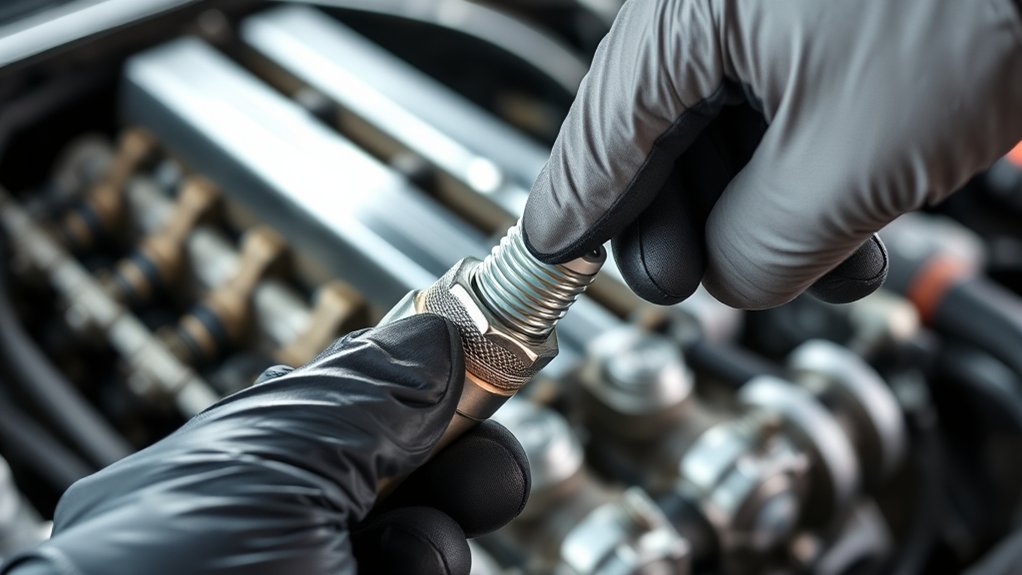
Although it may seem like a small detail, applying spark plug grease plays an essential role in protecting your engine by preventing corrosion and guaranteeing a secure electrical connection. You’ll find that this grease forms a protective barrier against moisture and contaminants, which can degrade metal contacts over time.
By maintaining clean, corrosion-free connections, you help optimize spark plug performance, enabling consistent ignition and efficient combustion. This directly contributes to engine longevity by reducing wear and preventing misfires caused by poor connectivity.
Clean, corrosion-free spark plug connections ensure consistent ignition, efficient combustion, and longer engine life.
Without proper application, corrosion can increase resistance, leading to weak sparks and potential engine damage. Using spark plug grease correctly guarantees reliable electrical conductivity, preserving both the spark plug’s function and your engine’s overall health.
This small step ultimately enhances performance and extends engine service life.
Where to Apply Spark Plug Grease for Best Performance
To get the best performance, apply spark plug grease specifically to the threads to guarantee smooth installation and prevent corrosion. Make sure you avoid getting grease on the electrode to maintain proper spark function.
Proper sealing on the threads also helps protect against moisture and contaminants.
Spark Plug Thread Application
Apply spark plug grease directly to the threads before installation to guarantee smooth threading and prevent seizing. Proper grease application reduces friction, enabling you to achieve accurate spark plug torque without over-tightening or under-tightening.
This guarantees consistent compression and peak engine performance. When applying grease, use a thin, even layer on the threads only. Avoid the electrode or firing end to prevent contamination.
Grease applications improve installation reliability and simplify future removal by preventing thread galling and corrosion. Remember, excessive grease can attract dirt and affect torque readings, so apply sparingly.
Seal and Prevent Corrosion
When you coat the spark plug’s sealing surface with a thin layer of grease, you create a barrier that prevents moisture and contaminants from causing corrosion. This application enhances corrosion prevention by reinforcing the plug’s sealing mechanisms, ensuring a tight, impermeable fit between the plug and cylinder head.
The grease fills microscopic gaps, blocking water and debris that could degrade metal surfaces and compromise performance. Proper sealing reduces the risk of galvanic corrosion and maintains the integrity of the spark plug over time.
Applying grease here also aids in easier removal during maintenance by preventing the plug from seizing due to rust. For ideal results, use a high-temperature, dielectric grease designed for automotive applications, ensuring effective corrosion prevention without interfering with electrical conductivity.
Avoid Electrode Contact
Although grease improves sealing, you must avoid getting it on the spark plug’s electrode. Electrode protection is critical because grease on the electrode can disrupt the spark formation, leading to misfires and reduced engine performance.
When performing grease application, apply a thin layer only on the spark plug’s threads and the ceramic insulator’s base, steering clear of the electrode tip. This targeted application prevents corrosion and guarantees a secure fit without compromising electrical conductivity.
Use dielectric grease designed for high temperatures to maintain peak performance. Remember, any grease on the electrode can insulate the spark path, hindering combustion efficiency.
Why Not to Put Grease Inside the Spark Plug Gap
You shouldn’t put grease inside the spark plug gap because it disrupts the spark’s ability to jump across the electrodes. This interference reduces spark efficiency and can cause ignition failure.
Keeping the gap clean guarantees reliable engine performance.
Impact on Spark Efficiency
Since the spark plug gap must remain free of obstructions, applying grease inside it considerably reduces spark efficiency. When you introduce grease to this critical area, it impairs the spark’s ability to jump the gap, directly lowering ignition efficiency.
This decline affects overall spark performance, causing incomplete combustion and engine misfires.
Here’s how grease impacts spark efficiency:
- Increases gap resistance, preventing ideal spark generation.
- Disrupts the ionization process necessary for ignition.
- Causes inconsistent spark timing due to electrical interference.
- Leads to fuel inefficiency by impairing combustion quality.
To maintain peak spark performance and ignition efficiency, keep the spark plug gap clean and free from any conductive or insulating substances like grease.
Risk of Ignition Failure
Grease inside the spark plug gap doesn’t just reduce spark efficiency; it can cause complete ignition failure. When you apply grease inside the gap, it creates a conductive barrier that prevents the spark from jumping across the electrodes. This disrupts the ignition system’s ability to ignite the air-fuel mixture, leading to misfires or engine stalling.
Different spark plug types rely on precise electrode spacing to generate a consistent spark; any contamination alters this critical gap. You must avoid introducing any foreign substances, including grease, into the gap to maintain reliable ignition. Instead, apply spark plug grease only on the boot or terminal to protect against moisture and corrosion without compromising spark delivery.
Proper handling guarantees peak ignition system performance and engine efficiency.
How to Use Spark Plug Grease on Boots and Connectors
Although spark plug grease is often associated with the threads, applying it correctly on boots and connectors is equally important for guaranteeing peak performance. Different spark plug types may require specific grease alternatives to maintain ideal electrical insulation and prevent moisture intrusion.
Properly greasing boots and connectors ensures optimal performance and protects against moisture and electrical issues.
Here’s how to apply grease effectively:
- Clean the boot and connector surfaces thoroughly to remove dirt and old grease.
- Apply a thin, even layer of spark plug grease inside the boot to enhance electrical conductivity and ease installation.
- Avoid excess grease, which can attract debris or cause arcing.
- Inspect connectors for wear or corrosion before greasing to guarantee proper contact.
Following these steps guarantees reliable spark delivery and prolongs component life without compromising ignition.
How Much Spark Plug Grease to Use and When
Determining the right amount of spark plug grease to apply is crucial for ideal performance and longevity. You should use a thin, even layer, just enough to coat the boot’s interior surface without excess.
Applying too much grease can cause arcing or attract dirt, while too little fails to protect connectors. Different spark plug types, such as resistor or iridium plugs, don’t require varying amounts, but always check manufacturer guidelines.
Choose grease brands formulated specifically for spark plugs, like silicone dielectric grease, which withstands high temperatures and resists moisture. Apply grease before installing the spark plug boots and connectors to guarantee proper insulation and ease of removal.
Common Mistakes to Avoid When Applying Spark Plug Grease
Applying the right amount of spark plug grease is only part of the process; avoiding common mistakes during application is equally important to secure peak performance. When using spark plug grease, incorrect application techniques can lead to poor conductivity or component damage.
To guarantee proper use, avoid these errors:
- Overapplying grease, which can cause buildup and interfere with electrical contact.
- Applying grease to the electrode or firing end, reducing spark efficiency.
- Using incompatible grease types that degrade rubber boots or connections.
- Failing to clean surfaces before applying grease, leading to contamination and poor adhesion.
How to Clean and Maintain Spark Plug Connections After Greasing
Once you’ve applied spark plug grease correctly, maintaining clean and secure connections is essential to guarantee consistent performance. For effective spark plug maintenance, regularly inspect the terminals for dirt, corrosion, or grease buildup.
Use a wire brush or a specialized spark plug cleaner to remove any contaminants gently. Avoid harsh abrasives that might damage the metal surfaces. After cleaning, apply a thin layer of dielectric grease to prevent moisture intrusion, ensuring peak electrical conductivity.
Gently clean spark plug terminals and apply dielectric grease to protect against moisture and ensure optimal conductivity.
When reinstalling, confirm the connections are tight but not over-torqued to prevent thread damage. Periodic cleaning techniques, combined with proper greasing, extend the life of your spark plugs and maintain engine efficiency.
Consistent maintenance minimizes misfires and improves ignition reliability over time, keeping your vehicle running smoothly.
Frequently Asked Questions
Can Spark Plug Grease Improve Fuel Efficiency?
You won’t see a direct fuel efficiency boost from spark plug grease, but applying it effectively enhances spark plug longevity and guarantees consistent performance. This indirectly supports your engine’s efficient operation over time.
Is Spark Plug Grease Safe for All Engine Types?
Like a key fitting a lock, spark plug grease isn’t universally safe; you’ll need to check engine compatibility before grease application.
Using the wrong type risks damage, so always follow manufacturer guidelines for ideal performance and safety.
How Often Should Spark Plug Grease Be Reapplied?
You should reapply spark plug grease during every spark plug maintenance session or replacement. Consistent grease application guarantees ideal insulation and prevents corrosion, maintaining engine performance and longevity effectively.
Can Spark Plug Grease Prevent Engine Misfires?
You might be surprised, but yes, using spark plug grease can help prevent engine misfires by enhancing spark plug longevity. Its heat resistance guarantees stable connections, reducing electrical arcing and maintaining consistent ignition performance under extreme conditions.
What Are the Best Brands of Spark Plug Grease?
You’ll find excellent spark plug grease brands like Permatex, CRC, and Dielectric Grease by 3M. Their spark plug grease applications guarantee ideal seal and corrosion protection, maximizing spark plug grease benefits in engine performance and longevity.
Conclusion
Think of spark plug grease as a shield, forming a slick barrier against corrosion and electrical resistance. Apply it sparingly on boots and connectors—not inside the spark gap—to keep your engine’s spark crisp and efficient.
Too much grease is like fog on a windshield, blurring connections and performance. By treating your spark plugs with care and precision, you guarantee smooth ignition and extend engine life.
To ensure your engine runs smoothly, always remember where to put spark plug grease for the best results, powering your ride with reliable, clean sparks every time.