You place a spark plug boot on top of the spark plug to guarantee a secure electrical connection between the ignition wire and the spark plug itself.
This boot provides essential insulation that prevents voltage leaks and moisture intrusion, maintaining stable spark delivery.
Different boot materials affect heat resistance and durability, so choosing the right one matters.
Proper installation and maintenance of these connections are key to your engine’s performance and efficiency.
More details are available for optimizing your ignition system.
Key Takeaways
- The spark plug boot covers the top of the spark plug, providing insulation and a secure electrical connection.
- A spark plug wire connects to the top via the boot, transmitting high-voltage electricity from the ignition coil.
- Dielectric grease is often applied inside the boot to prevent moisture and ensure consistent electrical contact.
- The connector type on top varies, including rubber, silicone, phenolic, or hybrid boots for heat resistance and flexibility.
- Proper installation requires aligning and firmly seating the boot to avoid misfires and maintain engine efficiency.
What Is the Spark Plug Boot?
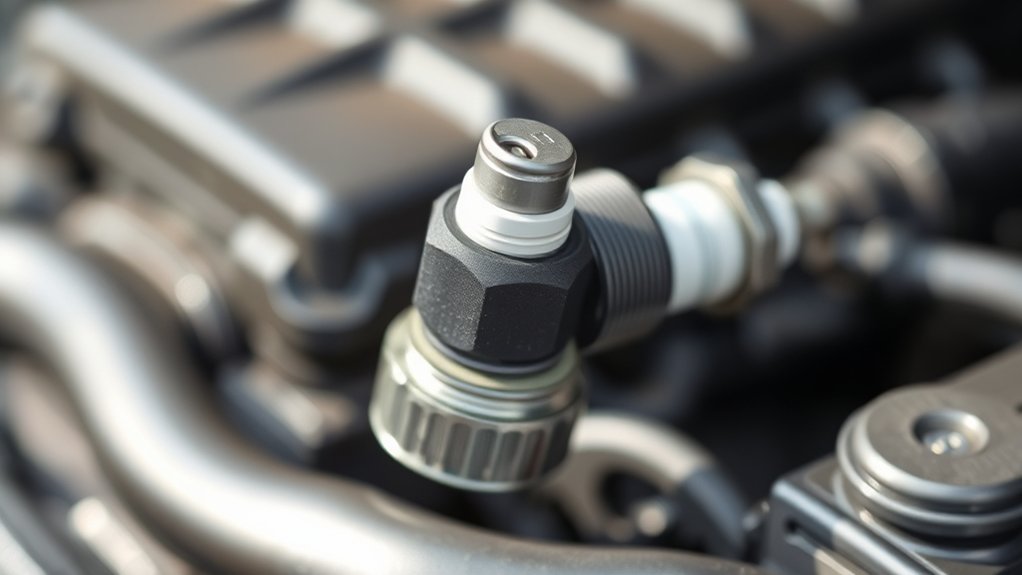
The spark plug boot is an essential component that connects the ignition wire to the spark plug, guaranteeing a secure electrical connection. It provides critical spark insulation, preventing electrical leaks that can cause misfires or engine performance issues.
When performing boot maintenance, you need to inspect the boot for cracks, brittleness, or corrosion, as damaged boots compromise the electrical seal. Use dielectric grease to enhance spark insulation and protect against moisture and contaminants.
Proper boot maintenance helps maintain consistent voltage flow and engine reliability. You should also ascertain the boot fits snugly over the spark plug to avoid arcing.
Why Spark Plug Wires Matter for Engine Performance
You rely on spark plug wires to deliver high-voltage electricity from the ignition coil to the spark plug efficiently. If these wires degrade or resist current flow, your engine’s performance and fuel efficiency can suffer.
Understanding their function helps you maintain ideal combustion and power output.
Spark Plug Wire Function
Spark plug wires transmit high-voltage electricity from the ignition coil to the spark plugs, guaranteeing timely and efficient combustion within the engine cylinders. These wires are designed to handle intense electrical loads without loss or interference, which is essential for maintaining ideal ignition timing.
Depending on the spark plug types used, the wire’s resistance and insulation must match specific requirements to prevent voltage drop or crossfire. If the wires degrade, you risk delayed sparks or misfires that disrupt combustion.
Proper spark plug wire function guarantees that the ignition system delivers consistent voltage pulses precisely when needed, directly influencing engine performance. By understanding their role, you can appreciate how critical these wires are in supporting the precise ignition timing necessary for effective engine operation.
Impact on Engine Efficiency
When spark plug wires fail to deliver consistent voltage, engine efficiency takes a hit through incomplete combustion and misfires. You rely on proper ignition timing to guarantee maximum fuel burn, and faulty wires disrupt this, reducing spark plug longevity and overall performance.
Poor conduction causes delayed or weak sparks, directly impacting engine output and fuel economy.
Consider these key effects of spark plug wire issues on engine efficiency:
- Misfires increase emissions and fuel consumption
- Erratic ignition timing leads to rough idling and power loss
- Reduced spark plug lifespan due to inconsistent voltage stress
- Engine knock potential rises, risking mechanical damage
Maintaining high-quality spark plug wires preserves ignition timing accuracy, enhancing combustion stability and prolonging spark plug longevity for peak engine function.
Common Spark Plug Connector Types You Should Know
You’ll encounter various spark plug boot types designed to fit specific ignition systems and resist heat differently. The connector materials, often silicone or EPDM rubber, affect durability and electrical insulation.
Understanding installation compatibility guarantees a secure connection and ideal engine performance.
Spark Plug Boot Types
Although the spark plug itself plays a critical role in engine performance, the boot connecting it to the ignition wire guarantees a secure electrical path and protects against moisture and contaminants. Understanding spark plug boot types helps you select the right fit for durability and efficiency.
Boots vary primarily by boot material variations, affecting heat resistance and flexibility. Common types include:
- Silicone boots: offer excellent heat resistance and flexibility, ideal for high-temperature environments.
- Rubber boots: cost-effective but less heat resistant, suitable for standard applications.
- Phenolic boots: provide electrical insulation and heat resistance but are more brittle.
- Hybrid boots: combine materials for balanced performance in demanding conditions.
Choosing the correct spark plug boot type guarantees peak spark delivery and longevity under varying engine conditions.
Connector Material Differences
Since the connector material directly influences electrical conductivity and durability, understanding the differences between common spark plug connector types is crucial for optimizing ignition system performance. Typically, connectors combine ceramic insulators with metal contacts to guarantee efficient current transfer and thermal resistance.
Ceramic insulators provide excellent heat tolerance and electrical isolation, preventing short circuits under high temperatures. Metal contacts, often made from copper or nickel alloys, offer superior conductivity and corrosion resistance, which maintains a stable electrical connection over time.
When selecting connectors, you’ll find variations in metal composition that affect conductivity and lifespan. By choosing connectors with high-quality ceramic insulators and robust metal contacts, you guarantee reliable spark delivery and reduce the risk of misfires, thereby enhancing overall engine efficiency and durability.
Installation Compatibility Factors
Three key factors determine spark plug connector installation compatibility: connector type, terminal design, and insulation requirements. When selecting a connector, you must consider these to avoid installation challenges and compatibility issues that can affect engine performance.
Common spark plug connector types you should know include:
- Solid terminal connectors: Provide direct contact but may require precise alignment.
- Boot-style connectors: Offer insulation but can be bulky, complicating tight spaces.
- Spring-loaded connectors: Adapt to terminal size variations, reducing installation errors.
- Magnetic connectors: Guarantee firm attachment, minimizing disconnections under vibration.
Understanding these types helps you address potential compatibility issues effectively, guaranteeing a secure fit and reliable electrical conduction without risking damage or misfires during installation.
How the Ignition Coil Works With Spark Plug Connectors
When you connect the ignition coil to the spark plug connectors, it transforms low voltage from the battery into the high voltage required to create a spark. Different ignition coil types, such as coil-on-plug, distributor, and coil pack, must match the spark plug compatibility to guarantee efficient energy transfer and reliable ignition.
The coil generates thousands of volts, which the spark plug connectors channel precisely to the spark plug gap, igniting the air-fuel mixture.
| Ignition Coil Type | Voltage Output (kV) | Spark Plug Compatibility |
|---|---|---|
| Coil-on-Plug | 20-40 | Direct connection, high energy |
| Distributor | 15-30 | Requires spark plug wires |
| Coil Pack | 25-35 | Multi-spark plug setups |
This synergy guarantees peak engine performance and fuel efficiency.
Signs Your Spark Plug Connection Needs Replacement
Several clear indicators can signal that your spark plug connection needs replacement. Ignition issues often arise when the electrical path is compromised, affecting engine performance. Recognizing spark plug symptoms early helps prevent further damage and guarantees peak operation.
Watch for these signs:
- Engine misfires or rough idling indicating inconsistent spark delivery
- Difficulty starting the engine due to poor electrical contact
- Reduced acceleration performance linked to interrupted ignition
- Visible corrosion or wear on the spark plug connector reducing conductivity
If you notice any of these symptoms, inspect the spark plug connection promptly. Replacing worn or damaged connectors restores proper ignition function and prevents misfires, maintaining your engine’s reliability and efficiency.
How Poor Spark Plug Connections Affect Fuel Efficiency
Even slight disruptions in your spark plug connections can considerably reduce fuel efficiency by causing incomplete combustion. When connections deteriorate, your ignition system efficiency drops, leading to misfires and wasted fuel.
This not only shortens spark plug longevity but also increases emissions and operating costs. You need to maintain secure, clean connections to guarantee peak fuel burn.
| Issue | Impact on Fuel Efficiency |
|---|---|
| Loose connection | Intermittent spark, fuel wastage |
| Corroded terminal | Reduced conductivity, misfires |
| Damaged connector boot | Poor insulation, ignition loss |
| Worn electrode contact | Weak spark, incomplete combustion |
| Contaminated surface | Voltage loss, reduced efficiency |
Maintaining your spark plug connections directly supports fuel economy and engine performance.
Tips for Installing Spark Plug Connectors Correctly
Maintaining secure and clean spark plug connections plays a direct role in maximizing fuel efficiency, which makes proper installation of spark plug connectors a key step in engine upkeep. When performing spark plug maintenance, you need to verify each connector fits snugly without forcing it, preventing damage to both the connector and the spark plug terminal.
Properly fitting spark plug connectors are essential for fuel efficiency and avoiding damage during maintenance.
Follow these tips for connector troubleshooting and installation:
- Inspect connectors for corrosion or wear before installation.
- Align the connector straight onto the spark plug terminal to avoid bending pins.
- Apply dielectric grease lightly inside the connector to enhance electrical contact and prevent moisture intrusion.
- Confirm a firm click or resistance when seating the connector, indicating a secure connection.
These steps help maintain peak engine performance and prevent misfires caused by poor connections.
Maintaining Spark Plug Connections for Reliable Performance
While regular inspections guarantee spark plug connections stay intact, you should also clean and tighten them periodically to prevent electrical resistance and misfires. Spark plug maintenance requires you to remove any corrosion, dirt, or moisture from the connector and terminal surfaces. Use a wire brush or contact cleaner to restore ideal contact.
After cleaning, verify the connections are securely tightened to maintain connection integrity, which is essential for reliable spark transmission. Loose or dirty connections increase voltage drop, causing weak sparks and inefficient combustion.
Additionally, inspect the spark plug boots for cracks or wear that could compromise insulation. By consistently performing these maintenance steps, you’ll enhance ignition system performance, improve fuel efficiency, and reduce engine misfires, guaranteeing your vehicle runs smoothly and reliably over time.
Frequently Asked Questions
Can I Use Dielectric Grease on Spark Plug Boots?
Yes, you can use dielectric grease on spark plug boots during spark plug maintenance. It prevents moisture and corrosion, improves electrical insulation, and eases boot removal.
These dielectric grease benefits enhance spark plug longevity and performance effectively.
How Often Should Spark Plugs Be Replaced?
You should replace spark plugs every 30,000 to 100,000 miles, depending on their lifespan. Pay attention to replacement indicators like rough idling, misfires, or poor fuel economy to guarantee peak engine performance and efficiency.
What Materials Are Spark Plug Wires Made From?
You’re handling delicate lifelines in the ignition system: spark plug wires often combine silicone or EPDM rubber insulation with copper or carbon fiber cores. These materials suit various spark plug types, ensuring efficient conductivity and durability under heat and stress.
Can Damaged Spark Plug Connectors Cause Engine Misfires?
Yes, damaged spark plug connectors can cause engine misfires by disrupting the electrical flow. You’ll notice reduced engine performance and efficiency.
Always inspect and replace faulty connectors to maintain ideal combustion and smooth operation.
Are Spark Plug Wires Universal for All Car Models?
No, spark plug wires aren’t universal; you need to verify spark plug compatibility with your vehicle’s ignition system. Using the correct wires maintains ignition system performance and prevents misfires or inefficient engine operation, so always check specifications carefully.
Conclusion
Now that you know what goes on top of your spark plug—the essential boot and connector—don’t underestimate their role. Missing this detail could mean misfires, poor fuel efficiency, or worse.
Before you think your engine’s the issue, check those connections. Proper installation and maintenance aren’t optional; they’re critical.
The next time you lift the hood, remember: the smallest part on top of your spark plug can make the biggest difference in performance and reliability. Understanding what goes on top of your spark plug is key to keeping your engine running smoothly.