Yes, a new spark plug can be bad due to manufacturing defects, incorrect gap settings, or damage during shipping.
It’s important to know that even brand-new spark plugs are not immune to issues. You should always inspect for cracks, measure resistance, and verify the proper gap before installation to avoid misfires or poor engine performance.
Improper installation or using incompatible plugs can also cause problems.
Recognizing early signs like weak sparks and misfires helps maintain engine efficiency. Understanding these factors will guide you in ensuring reliable spark plug function and longevity.
Key Takeaways
- New spark plugs can have manufacturing defects affecting performance and reliability.
- Incorrect gap settings or electrode misalignment may cause misfires even in new plugs.
- Improper installation torque can damage threads or reduce spark plug effectiveness.
- Using incompatible spark plugs disrupts combustion timing and engine function.
- Visual defects like cracks or chips can render new spark plugs faulty before use.
Can a New Spark Plug Actually Be Bad?
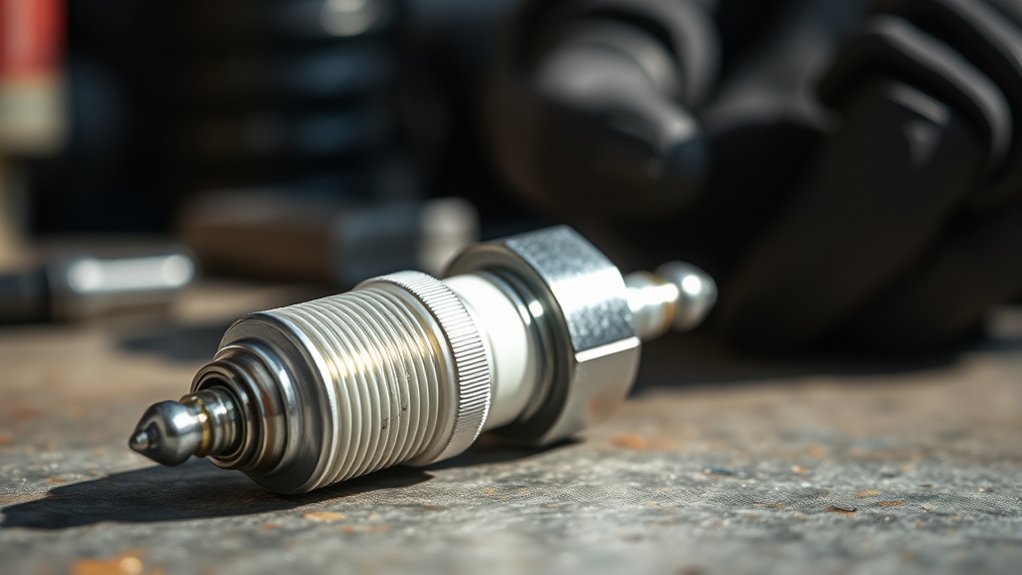
Can a new spark plug actually be bad? Yes, it can. Despite being new, variations in spark plug quality during manufacturing can lead to defects.
To guarantee reliability, you need to rely on established testing methods such as resistance measurement, visual inspection for electrode damage, and gap verification. These tests help detect inconsistencies like improper electrode spacing or internal faults that compromise performance.
Ensure spark plug reliability with resistance checks, visual inspections, and precise gap verification.
Even minor deviations in spark plug quality can cause misfires or poor combustion. As a result, you should always verify new spark plugs before installation using precise, methodical testing to confirm they meet specifications.
Skipping these steps increases the risk of engine issues, so trust the testing methods to safeguard your vehicle’s efficiency and longevity.
Common Causes of New Spark Plug Problems
You can encounter problems with new spark plugs due to manufacturing defects that affect performance. Incorrect installation, such as improper torque or gap settings, often causes issues.
Additionally, using a spark plug that isn’t compatible with your engine can lead to malfunction or damage.
Manufacturing Defects
Although new spark plugs are generally reliable, manufacturing defects can occasionally cause performance issues right out of the box. Variations in manufacturing quality or substandard spark plug materials may result in improper electrode alignment, insulation failure, or incomplete sealing.
You should always inspect new spark plugs carefully before installation.
| Defect Type | Potential Impact |
|---|---|
| Electrode Misalignment | Irregular spark generation |
| Poor Material Quality | Reduced durability and corrosion |
| Insulation Cracks | Electrical leakage and misfires |
| Incomplete Sealing | Compression loss and fouling |
Incorrect Installation Issues
When installing new spark plugs, improper techniques often lead to common performance issues. You must strictly follow recommended installation techniques to avoid problems like misfires, poor fuel economy, or engine damage.
One critical factor is adhering to torque specifications; over-tightening can damage the spark plug threads or the plug itself, while under-tightening leads to poor electrode contact and potential combustion leaks. Use a calibrated torque wrench to achieve the precise torque value specified by the manufacturer.
Additionally, verify the spark plug seats flush without cross-threading, which compromises the seal and thread integrity. Properly gapping the spark plug before installation also falls under correct techniques, but torque application and thread engagement remain paramount to maintain peak engine performance and spark plug longevity.
Compatibility With Engine
How do you determine if a new spark plug is truly compatible with your engine? First, consult your vehicle’s manual for exact engine specifications. Using incorrect spark plug types can cause misfires, poor fuel efficiency, or engine damage. Verify the heat range, thread size, and electrode gap match your engine’s requirements precisely.
| Engine Specification | Spark Plug Requirement |
|---|---|
| Thread Size | Must match engine cylinder head |
| Heat Range | Must suit engine operating temp |
| Electrode Gap | Must align with ignition system |
| Spark Plug Type | OEM recommended or equivalent |
Ensuring compatibility means your engine runs efficiently and avoids ignition problems. Don’t guess. Match spark plug types exactly to your engine specifications for peak performance.
How Can Improper Installation Cause Spark Plug Issues?
If you don’t install a spark plug correctly, you risk causing several performance problems and potential engine damage. Precise adherence to proper installation techniques and spark plug torque specifications is critical. Over-tightening can damage the threads or the plug itself, while under-tightening may lead to poor contact and combustion inefficiency.
Incorrect spark plug installation risks engine damage; follow proper torque and techniques to ensure optimal performance.
Here are four common issues caused by improper installation:
- Stripped threads reducing cylinder head integrity.
- Incorrect spark plug gap causing misfires or weak sparks.
- Heat dissipation problems leading to pre-ignition or fouling.
- Vibrational loosening resulting in loss of compression.
Following manufacturer torque settings and installation methods guarantees peak engine function and longevity, preventing costly repairs due to installation errors.
Why Does Compatibility Matter for Spark Plugs?
You need to verify spark plug compatibility to maintain peak engine performance and prevent misfires. Following manufacturer specifications is critical because using the wrong plug can lead to improper combustion and increased wear.
Ignoring compatibility reduces spark plug longevity and may cause costly engine damage over time.
Engine Performance Impact
Although a new spark plug might seem like a straightforward replacement part, its compatibility with your engine’s specifications critically influences performance. Using an incompatible spark plug can disrupt combustion timing and reduce engine efficiency, leading to increased fuel consumption and diminished power output.
To maintain peak engine performance, consider these factors:
- Ignition Timing Accuracy – Guarantees efficient combustion and smooth operation.
- Heat Range Match – Prevents overheating or fouling, protecting engine components.
- Electrode Design – Affects spark quality and combustion completeness.
- Gap Specification – Influences spark intensity and fuel burn efficiency.
Selecting a spark plug aligned with your engine’s design preserves fuel economy and overall responsiveness, preventing performance degradation.
Manufacturer Specifications Importance
Maintaining ideal engine performance depends heavily on selecting spark plugs that meet the exact manufacturer specifications. Choosing incompatible spark plugs risks improper combustion, misfires, or engine damage.
The spark plug materials influence conductivity and durability. The heat range guarantees proper temperature management to prevent fouling or overheating.
| Specification | Importance |
|---|---|
| Spark Plug Materials | Affect electrical conductivity, wear |
| Heat Range | Controls operating temperature |
| Thread Size | Guarantees correct fit and sealing |
Longevity And Wear Effects
Because spark plugs operate under extreme conditions, their longevity and wear are directly influenced by compatibility with the engine’s design parameters. If you use an incompatible spark plug, you risk accelerating wear patterns that shorten the spark plug lifespan and impair engine efficiency.
To enhance spark plug durability, consider:
- Matching heat range to prevent overheating or fouling.
- Ensuring electrode material suits combustion conditions.
- Confirming correct thread size and reach to avoid mechanical damage.
- Verifying gap specifications to maintain ideal spark intensity.
Each factor affects how evenly the spark plug wears and how long it performs effectively. Ignoring compatibility can lead to premature degradation, misfires, and reduced fuel economy, so precise adherence to manufacturer recommendations is critical for sustained spark plug performance.
What Are the Signs of a Faulty New Spark Plug?
Even new spark plugs can develop issues that affect engine performance, so you need to recognize specific signs early. Faulty spark plug performance is often linked to improper installation techniques or manufacturing defects.
Look for symptoms such as misfires, rough idling, or decreased fuel efficiency, which indicate potential spark plug failure even if the plug is new.
| Symptom | Possible Cause | Impact on Engine |
|---|---|---|
| Engine Misfire | Electrode gap inconsistency | Incomplete combustion |
| Rough Idle | Improper torque installation | Unstable engine operation |
| Poor Fuel Economy | Spark plug fouling | Reduced combustion efficiency |
| Hard Starts | Defective insulator | Ignition delay |
You should address these signs promptly to maintain peak engine function.
How to Test If a New Spark Plug Is Defective
Recognizing the signs of a faulty new spark plug is only the first step; you also need to verify its condition through testing. Spark plug testing guarantees the component functions properly before installation. To check if your new spark plug is defective, follow these steps:
- Visually inspect the spark plug for cracks, chips, or manufacturing defects.
- Use a multimeter to test electrical continuity; set it to the ohms setting and place the probes on the terminal and the electrode.
- Confirm the resistance reading matches the manufacturer’s specifications; an open circuit indicates a faulty spark plug.
- Perform a spark test by grounding the plug and observing if it produces a consistent, strong spark when the ignition is activated.
These methods confirm the spark plug’s reliability before use.
When Should You Replace or Reinstall a New Spark Plug?
When should you replace or reinstall a new spark plug to guarantee peak engine performance? Replace the spark plug once it reaches or exceeds the manufacturer’s recommended spark plug lifespan, typically between 30,000 to 100,000 miles depending on the type. If you notice engine misfires, rough idling, or decreased fuel efficiency before that, consider early replacement.
Reinstallation is necessary if you detect improper seating, cross-threading, or incorrect gap settings during initial installation. Follow precise installation tips: verify the spark plug threads are clean, use the correct torque to avoid under- or overtightening, and confirm the gap matches specifications. Proper reinstallation prevents damage and maintains ideal combustion.
Monitoring spark plug lifespan and adhering to installation tips guarantees reliable engine function and avoids premature wear or failure.
How Can You Avoid Faulty New Spark Plug Issues?
How can you guarantee that a new spark plug performs reliably from the start? Proper spark plug maintenance and precise installation techniques are essential. Follow these steps to avoid faulty new spark plug issues:
Ensure reliable spark plug performance with proper maintenance and precise installation techniques from the very beginning.
- Inspect Before Installation: Check for physical damage or manufacturing defects on the spark plug.
- Use Correct Installation Torque: Over-tightening or under-tightening can cause electrode damage or poor contact.
- Apply Anti-Seize Compound Sparingly: Prevent thread galling but avoid excess that can alter torque readings.
- Verify Gap Settings: Confirm spark plug gaps match manufacturer specifications for ideal ignition.
Frequently Asked Questions
How Do Spark Plugs Affect Fuel Efficiency?
You’ll notice spark plug wear reduces combustion efficiency, causing incomplete fuel burning. Replacing worn plugs guarantees ideal spark timing, improving fuel efficiency by maintaining precise ignition and maximizing energy output from each combustion cycle in your engine.
Can Weather Conditions Impact Spark Plug Performance?
Yes, weather conditions affect spark plug performance by altering ignition timing and heat dissipation. Different spark plug materials respond uniquely; for example, iridium handles heat better, helping you maintain ideal combustion in varying temperatures.
What Tools Are Needed to Replace Spark Plugs?
You’ll need a spark plug socket, ratchet, torque wrench, and gap gauge.
Choose the correct spark plug type, follow installation tips carefully, and verify proper torque to avoid damage and guarantee peak engine performance.
How Often Should Spark Plugs Be Checked or Cleaned?
You shouldn’t let your spark plugs age like ancient relics; check and clean them every 30,000 miles. Maintaining ideal spark plug lifespan demands precise spark plug maintenance to guarantee peak engine performance and efficiency.
Are There Differences Between Spark Plugs for Diesel and Gasoline Engines?
Yes, you’ll find distinct spark plug types designed for diesel specifications and gasoline engines. Diesel plugs handle higher compression and heat, while gasoline plugs optimize ignition timing. Always match the plug type to your engine’s requirements precisely.
Conclusion
Even a brand-new spark plug can throw a wrench in your engine’s smooth operation if it’s defective or improperly installed. Think of it as a tiny gear in a complex machine—if it’s off, the whole system falters.
By ensuring compatibility, following precise installation steps, and performing thorough testing, you’ll keep your engine firing flawlessly.
Don’t overlook these details, or you risk turning a fresh part into a hidden problem. This shows that yes, a new spark plug can be bad if not handled correctly.