Your car’s spark plug plays a crucial role by generating a precise electric spark to ignite the compressed air-fuel mixture inside the combustion chamber. This ignition powers the engine efficiently, ensuring smooth operation.
It guarantees proper ignition timing, which maximizes power and fuel economy while preventing misfires and deposit buildup.
The plug’s electrode material and heat range affect durability and combustion quality, directly impacting performance.
If you’re curious about maintaining spark plug health and choosing the right type for your engine, there’s more detail to explore. Understanding these factors can help you keep your engine running at its best.
Key Takeaways
- The spark plug generates an electric spark to ignite the air-fuel mixture in the engine’s combustion chamber.
- It ensures precise ignition timing, critical for efficient combustion and optimal engine power.
- The spark plug’s electrode gap and material influence ignition efficiency and smooth engine operation.
- It prevents engine misfires and promotes complete fuel combustion, improving performance and fuel economy.
- Regular spark plug maintenance is essential to avoid rough idling, poor acceleration, and reduced fuel efficiency.
What Is a Spark Plug and How It Works
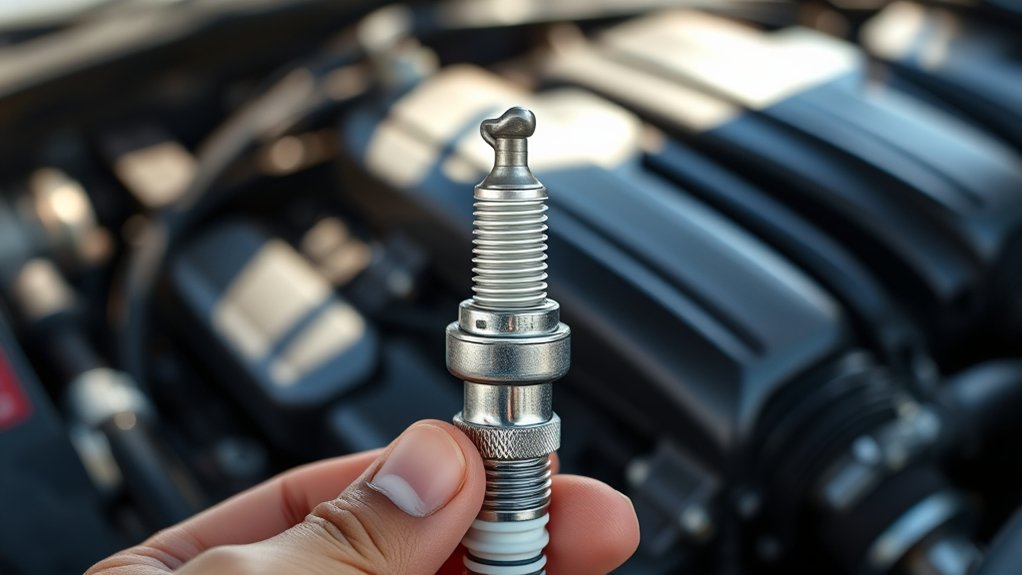
A spark plug is a vital component in your car’s ignition system that generates the electric spark needed to ignite the air-fuel mixture inside the engine’s combustion chamber. Understanding spark plug construction helps you appreciate its role: it consists of a central electrode, insulator, and metal shell, designed to withstand extreme heat and pressure.
When your ignition timing is precise, the spark plug fires at the ideal moment, ensuring efficient combustion. Electrical voltage travels through the ignition coil to the central electrode, creating a spark across the gap to the ground electrode.
This controlled spark initiates combustion, powering your engine. Proper spark plug function depends on maintaining correct electrode gap and timing, both essential for reliable performance and fuel efficiency.
Why Spark Plugs Matter for Your Engine
You rely on spark plugs to ignite the air-fuel mixture precisely at the right moment, ensuring efficient combustion. This ignition directly impacts your engine’s performance, fuel economy, and power output.
Properly functioning spark plugs also prevent misfires and reduce deposit buildup, maintaining engine reliability.
Igniting The Air-Fuel
Igniting the air-fuel mixture is the spark plug’s critical function, initiating combustion within the engine’s cylinders. When the air-fuel mixture enters the cylinder, the spark plug generates a high-voltage electrical spark at precisely the right moment, known as the ignition timing.
This spark ignites the compressed mixture, causing a controlled explosion that drives the piston downward, producing power. Accurate ignition timing guarantees the air-fuel mixture burns efficiently, maximizing energy output and minimizing wasted fuel.
If the spark occurs too early or too late, combustion efficiency drops, risking engine knocking or power loss. By reliably delivering this spark, the spark plug enables your engine to convert fuel into mechanical energy smoothly and effectively. Without this precise ignition, your engine wouldn’t run properly or efficiently.
Enhancing Engine Performance
Because spark plugs directly influence combustion quality, they play an essential role in optimizing your engine’s performance. Proper spark plug function guarantees consistent ignition timing, which enhances engine efficiency and supports precise performance tuning.
Worn or incorrect spark plugs can cause incomplete combustion, reducing power output and fuel economy.
| Factor | Impact on Engine Performance |
|---|---|
| Spark Plug Gap | Affects ignition timing |
| Electrode Material | Influences durability and spark quality |
| Heat Range | Controls operating temperature |
| Ignition Voltage | Determines spark strength |
| Maintenance Interval | Prevents performance degradation |
Preventing Misfires And Deposits
Consistent and reliable spark plug operation not only improves engine performance but also helps prevent misfires and the buildup of deposits that can impair combustion. Misfire causes often include worn or fouled spark plugs that fail to generate a strong spark, disrupting the air-fuel mixture ignition.
When deposit buildup forms on the spark plug electrodes, it alters the gap and reduces spark intensity, further increasing misfire risk. By maintaining clean and properly gapped spark plugs, you guarantee efficient combustion, minimizing unburned fuel and harmful emissions.
Regular inspection and replacement prevent deposit buildup and help avoid engine hesitation, poor fuel economy, and increased emissions. Ultimately, well-functioning spark plugs are critical for your engine’s smooth operation and longevity.
How Spark Plugs Start the Combustion Process
When the engine’s piston compresses the air-fuel mixture inside the combustion chamber, the spark plug generates a high-voltage electrical spark that ignites this mixture. This ignition initiates the combustion process, producing the controlled explosion that powers your engine.
Precise combustion timing is critical; the spark must occur at the ideal moment to maximize power output and fuel efficiency. The spark plug’s electrode gap and material influence ignition efficiency by ensuring a consistent, strong spark under varying conditions.
If the spark is weak or poorly timed, combustion becomes incomplete, reducing engine performance and increasing emissions. By delivering a reliable spark at the right moment, the spark plug directly controls the start of combustion, making it essential for efficient engine operation and smooth power delivery.
Signs Your Spark Plug Is Failing
Several key signs indicate your spark plug is failing and needs attention. Understanding these common symptoms helps you maintain ideal engine performance and avoid costly repairs before the spark plug lifespan expires.
- Engine misfires Inconsistent ignition causes rough idling and poor acceleration.
- Difficulty starting A worn spark plug struggles to ignite the air-fuel mixture efficiently.
- Reduced fuel efficiency Incomplete combustion increases fuel consumption noticeably.
- Engine surging or hesitation Fluctuating power delivery signals spark plug degradation.
If you experience these symptoms, it’s important to inspect your spark plugs promptly. Ignoring them can lead to further engine issues, reduced performance, and higher emissions. Keeping track of your spark plug lifespan and recognizing these signs guarantees your vehicle runs smoothly and reliably.
When and How to Replace Spark Plugs
Although spark plugs can last tens of thousands of miles, you’ll need to replace them according to your vehicle manufacturer’s schedule or if you notice performance issues. The replacement frequency varies by vehicle but typically ranges from 30,000 to 100,000 miles.
To replace spark plugs, first disconnect the battery and remove any engine covers. Use appropriate spark plug tools, such as a spark plug socket and torque wrench, to avoid damaging the plugs or threads.
Carefully remove each plug, inspect it for wear or deposits, and install new plugs with the correct gap and torque specifications. Reinstall ignition components and covers.
Following the recommended replacement frequency and using proper spark plug tools guarantees reliable engine ignition and peak performance.
How Spark Plug Condition Impacts Engine Performance
Because spark plugs directly initiate combustion in your engine, their condition greatly affects engine performance. Worn or fouled spark plugs reduce ignition efficiency, leading to incomplete combustion and decreased power. Maintaining ideal spark plug condition is essential to maximize your vehicle’s responsiveness and fuel economy. Proper spark plug maintenance extends spark plug lifespan and prevents engine misfires.
Here’s how spark plug condition impacts performance:
- Fuel Efficiency: Worn plugs increase fuel consumption due to poor combustion.
- Power Output: Damaged plugs cause weak or inconsistent sparks, lowering engine power.
- Engine Smoothness: Faulty plugs create misfires, resulting in rough idling or hesitation.
- Emissions: Bad plugs increase unburned fuel emissions, harming environmental performance.
Regular inspection and replacement within the recommended spark plug lifespan guarantee your engine runs smoothly and efficiently.
Choosing the Right Spark Plug for Your Car
You need to select the correct spark plug type based on your car’s engine specifications to guarantee ideal ignition. Pay close attention to the heat range, as it affects how well the spark plug dissipates heat during operation.
Additionally, understanding the differences in materials, such as copper, platinum, or iridium, can impact durability and performance.
Spark Plug Types
Selecting the right spark plug for your car is essential for peak engine performance and longevity. Spark plug types vary mainly by materials and construction, which influence electrode wear, ignition timing, and performance tuning.
Here are four common types:
- Copper Core: Features a copper core and nickel alloy electrodes; excellent conductivity but higher electrode wear.
- Platinum Tips: Use platinum tips on electrodes, reducing wear and maintaining gap settings longer.
- Iridium Electrodes: Have fine iridium electrodes with ceramic insulators; offer superior durability and precise ignition timing.
- Double Platinum: Incorporate platinum on both center and ground electrodes for enhanced longevity and consistent performance.
Choosing the correct type helps guarantee efficient combustion and optimum spark plug life.
Heat Range Importance
Heat range plays a critical role in how effectively a spark plug dissipates combustion heat, directly impacting engine performance and durability. You need to choose a spark plug with an appropriate heat range to guarantee peak heat dissipation.
If the heat range is too hot, the plug may overheat, causing pre-ignition or engine knocking. Conversely, a plug that’s too cold won’t reach the necessary temperature to burn off carbon deposits, leading to fouling.
The heat range relates closely to the spark plug’s thermal conductivity and insulator design, which control how quickly heat moves from the combustion chamber to the cylinder head. Selecting the right heat range balances thermal conductivity and combustion conditions, helping maintain efficient ignition, prevent damage, and prolong engine life.
Always consult your vehicle’s specifications to match the correct heat range.
Material Differences
Understanding how a spark plug’s heat range affects performance leads naturally to examining the materials used in their construction. The choice of ceramic materials and electrode designs directly impacts durability, efficiency, and ignition quality.
When selecting a spark plug, consider these key material differences:
- Copper Core: Offers excellent conductivity but wears faster due to softer materials.
- Platinum Electrodes: Provide longer life and better resistance to fouling.
- Iridium Tips: Feature superior durability and consistent spark delivery with minimal erosion.
- Ceramic Insulators: High-quality ceramics guarantee ideal heat dissipation and electrical insulation, improving overall spark plug reliability.
Frequently Asked Questions
Can Spark Plugs Affect Fuel Efficiency?
Yes, worn spark plugs reduce fuel efficiency by causing incomplete combustion. You should monitor spark plug lifespan and choose reputable spark plug brands to maintain peak engine performance and maximize your vehicle’s fuel economy consistently.
Do Spark Plugs Require Special Tools for Installation?
You don’t usually need special tools for spark plug installation, but using a proper spark plug socket and torque wrench guarantees correct tightening.
Different spark plug types may require specific gap settings, so follow installation tips carefully.
How Do Weather Conditions Impact Spark Plug Performance?
You’ll find that extreme weather conditions shorten your spark plug lifespan by affecting ignition timing precision. Cold weather can cause misfires, while excessive heat accelerates electrode wear, both reducing overall performance and efficiency.
Are Spark Plugs Reusable After Cleaning?
You can reuse spark plugs after cleaning, but only if their electrodes and insulators show no damage. Proper spark plug maintenance extends spark plug lifespan, ensuring ideal engine performance and preventing misfires or reduced efficiency.
Can Faulty Spark Plugs Cause Emissions Problems?
Yes, faulty spark plugs, especially those with worn spark plug materials, disrupt ignition timing, leading to incomplete combustion. This inefficiency increases harmful emissions, so maintaining proper spark plug condition is essential for ideal engine performance and reduced emissions.
Conclusion
If your spark plug fails, your engine might as well be a lawnmower stuck in a snowstorm—completely useless. You rely on these small but mighty components to ignite the fuel-air mix and keep your car roaring. Ignoring spark plug health can turn smooth drives into frustrating sputters.
So, never underestimate their role; choosing and maintaining the right spark plug guarantees your engine performs like a finely tuned machine every single time. Remember, the spark plug is essential to your car’s overall performance and reliability.