To torque a spark plug correctly, start by using a calibrated torque wrench set to the manufacturer’s specifications, which you can find in your vehicle’s service manual.
Attach the correct spark plug socket with a rubber insert. Hand-tighten the plug before applying the precise torque.
Avoid over-tightening to prevent thread damage or spark plug distortion. Proper torque guarantees peak engine performance and longevity.
Keep your tools calibrated and follow exact specs to maintain efficiency and avoid common mistakes.
You can explore further guidance on tools, steps, and maintenance.
Key Takeaways
- Locate the correct torque specification in the vehicle or spark plug manufacturer’s manual before starting the installation.
- Use a calibrated torque wrench with the appropriate spark plug socket for accurate torque application.
- Tighten the spark plug by hand initially, then use the torque wrench to apply the specified torque value evenly.
- Avoid overtightening to prevent thread damage, insulator cracking, or poor sealing in the cylinder head.
- Recheck torque after installation and schedule regular inspections to ensure spark plug condition and engine performance.
Why Spark Plug Torque Matters for Your Engine
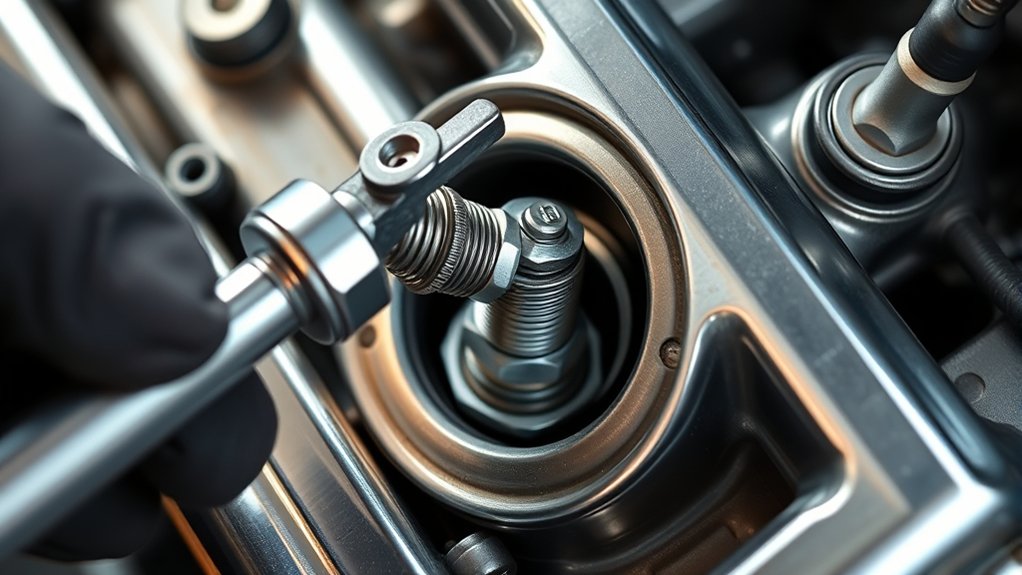
Although it may seem minor, applying the correct torque to your spark plugs is essential for optimal engine performance. When you torque a spark plug properly, you guarantee peak spark plug performance by creating a secure seal between the plug and cylinder head.
This seal prevents combustion gases from escaping and maintains consistent heat transfer, which directly impacts engine efficiency. Over-tightening can damage threads or distort the spark plug, reducing its lifespan and impairing performance.
Under-tightening, on the other hand, risks poor contact and potential misfires, lowering engine efficiency and causing rough operation. By using the correct torque, you maintain the integrity of the combustion chamber, enhance fuel combustion, and extend the spark plug’s service life, critical steps for sustaining your engine’s performance and reliability.
Finding Manufacturer Torque Specs for Spark Plugs
You’ll find torque specifications for your spark plugs in the vehicle’s service manual or on the manufacturer’s website.
Pay close attention to the units, usually listed in foot-pounds or Newton-meters, to confirm accurate torque application.
Following these manufacturer guidelines precisely prevents damage and guarantees peak engine performance.
Where To Locate Specs
Where can you find the exact torque specifications for your spark plugs? Locating specifications requires checking manuals and trusted sources to guarantee proper installation. Start by consulting your vehicle’s owner’s manual or service manual; these documents often provide precise torque values.
If you don’t have access to these, refer to the spark plug manufacturer’s documentation or website, which lists recommended torque specs for their products. Additionally, professional repair databases and technical bulletins can be valuable resources.
- Vehicle owner’s or service manual
- Spark plug manufacturer’s documentation
- Professional repair databases and technical bulletins
Understanding Torque Units
After locating the correct torque specifications for your spark plugs, it’s important to understand the units used to measure torque. Torque is typically expressed in either pound-feet (lb-ft) or Newton-meters (Nm).
When measuring torque, you’ll use a torque wrench calibrated to the specified unit. If your torque wrench uses a different unit than the manufacturer’s specs, you must perform torque conversion to guarantee accuracy. For example, 1 lb-ft equals approximately 1.356 Nm.
Failing to apply the correct unit or conversion can lead to under- or over-tightening the spark plug, risking damage or poor performance. Always confirm the unit specified and adjust your measuring tool accordingly.
This precise understanding guarantees you apply the correct torque for the best spark plug installation.
Importance Of Manufacturer Guidelines
Although it might be tempting to rely on general torque values, following the manufacturer’s torque specifications for your spark plugs is essential to confirm peak engine performance and prevent damage. Manufacturer specifications provide the exact torque accuracy needed to guarantee proper sealing and heat dissipation.
Over-tightening can strip threads or damage the spark plug, while under-tightening risks poor contact and misfires. To find these specs, check:
- The vehicle’s service manual or repair guide
- Spark plug packaging or manufacturer’s website
- Technical databases or trusted automotive resources
Adhering strictly to these guidelines guarantees correct torque accuracy, maintains engine integrity, and prolongs spark plug lifespan. Always use a calibrated torque wrench to achieve the precise torque value specified by the manufacturer.
Tools You Need for Spark Plug Torque
To properly torque a spark plug, you’ll need a few essential tools that guarantee accuracy and prevent damage. First, a calibrated torque wrench is critical; it guarantees you apply the exact torque specified for the spark plug type you’re installing.
Different spark plug types require varying torque settings. Using a torque wrench prevents over-tightening, which can damage threads, or under-tightening, which risks poor performance.
Besides the torque wrench, you’ll need the correct spark plug socket, typically a deep socket with a rubber insert to grip the plug securely without causing damage. Finally, a ratchet handle compatible with your torque wrench and an extension bar, if necessary, will help you reach plugs in tight engine spaces.
Having these tools ready sets the stage for precise, reliable spark plug installation.
Torque a Spark Plug Step-by-Step
With the right tools in hand, you can now torque the spark plug accurately to guarantee peak engine performance. Begin by threading the spark plug by hand into the cylinder head to prevent cross-threading.
Once finger-tight, use a torque wrench set to the manufacturer’s recommended torque specification. Apply steady pressure until the wrench clicks, indicating the correct torque. This precise approach guarantees ideal spark plug installation, maintaining proper compression and heat transfer.
Use a torque wrench set to the exact specification and tighten until it clicks for perfect spark plug installation.
Remember to:
- Set the torque wrench to the exact value specified for your engine.
- Tighten the spark plug evenly without overtightening.
- Recheck torque after initial engine operation for best results.
Following these steps maximizes engine performance and prevents damage during spark plug installation.
Common Mistakes to Avoid When Torquing Spark Plugs
You need to avoid overtightening spark plugs, as it can damage the threads or the plug itself. Using an improper torque tool often leads to inaccurate torque settings and potential engine issues.
Let’s review these common mistakes to guarantee you apply the correct torque every time.
Overtightening Risks
Although it might seem like tightening spark plugs as much as possible guarantees a secure fit, overtightening can cause serious damage. You risk stripping the threads in the cylinder head or breaking the spark plug, both leading to costly repairs.
The overtightening consequences include compromised engine performance and potential safety hazards. To avoid spark plug damage, apply the manufacturer’s specified torque using a calibrated torque wrench.
Common overtightening risks include:
- Thread damage in the cylinder head, causing poor sealing and potential leaks
- Cracking or breaking of the spark plug insulator or shell
- Distorted or damaged gasket, resulting in compression loss
Always follow torque specifications precisely to prevent these issues and guarantee reliable engine operation.
Improper Torque Tools
Damaging spark plugs or cylinder heads from overtightening often results from using incorrect or uncalibrated torque tools. You must select the right torque wrench types and utilize spark plug gauges to guarantee precise application. Avoid relying on general-purpose wrenches or tools without calibration, which can lead to inconsistent torque and damage.
| Tool Type | Accuracy Level | Recommended Use |
|---|---|---|
| Click Torque Wrench | ±4% | Most spark plug applications |
| Beam Torque Wrench | ±5-10% | Budget-friendly, less precise |
| Digital Torque Wrench | ±2% | High precision required |
Always verify calibration before use to maintain accuracy and prevent costly errors.
How to Maintain Proper Spark Plug Torque Over Time
Since spark plug torque can loosen over time due to engine vibrations and thermal expansion, it’s crucial to regularly check and maintain the correct torque settings. Maintaining proper torque guarantees ideal spark plug lifespan and consistent engine performance.
To do this effectively, you should:
- Schedule torque inspections during routine maintenance intervals.
- Use a calibrated torque wrench to verify and adjust torque as needed.
- Replace spark plugs if you notice signs of wear or damage affecting torque retention.
Frequently Asked Questions
Can I Reuse Old Spark Plugs After Removing Them?
You shouldn’t reuse old spark plugs because removing techniques can damage them, reducing spark plug longevity. Always inspect for wear or deposits, and replace plugs to guarantee peak engine performance and avoid misfires or inefficiency.
How Does Spark Plug Torque Affect Fuel Efficiency?
You might think improper spark plug torque barely matters, but it directly impacts combustion efficiency. Ensuring correct torque during spark plug maintenance guarantees peak performance and fuel efficiency.
This is achieved by preventing misfires and maintaining consistent ignition timing.
What Is the Difference Between Torque and Tightness?
Torque measures the rotational force you apply, essential for spark plug materials to avoid damage, while tightness is the resulting snugness.
Always follow torque specifications to guarantee proper seal and performance without over-tightening or stripping threads.
Can Over-Torquing Cause Engine Damage?
You might unintentionally stress your engine by over-torquing. Exceeding torque specifications can damage spark plug materials, causing cracks or thread stripping.
Always follow precise torque guidelines to maintain engine integrity and peak performance.
How Often Should Spark Plugs Be Replaced?
You should replace spark plugs every 30,000 to 100,000 miles, depending on their lifespan. Regular replacement guarantees peak engine performance, prevents misfires, and maintains fuel efficiency.
Always consult your vehicle’s manual for specifics.
Conclusion
Think of spark plug torque as the engine’s heartbeat—too tight, and you risk cracking the porcelain; too loose, and you invite misfires. By following manufacturer specs and using the right tools, you guarantee a precise, secure fit every time.
Stay vigilant against common mistakes, and routinely check torque to keep your engine humming smoothly. Mastering this balance safeguards performance and longevity, making your spark plugs work like a well-oiled symphony.
Proper spark plug torque is essential to ensure your engine runs efficiently and reliably.