Yes, the Jeep Wrangler is an SUV, known for its higher ground clearance, rugged frame, and strong off-road capabilities.
Unlike many traditional SUVs, it doesn’t focus on luxury or spaciousness but instead emphasizes durability and outdoor adventure.
You’ll find unique features like removable doors and a trail-rated badge that highlight its distinct design.
These elements set the Wrangler apart from typical SUVs.
If you want to understand how the Wrangler’s unique traits compare to traditional SUVs and what that means for you, there’s plenty more to explore.
Key Takeaways
- The Jeep Wrangler is classified as a compact or mid-size SUV with a focus on off-road capabilities.
- It features higher ground clearance, robust frames, and 4×4 drivetrain typical of SUVs.
- Its design emphasizes ruggedness and versatility, distinguishing it from sedans and hatchbacks.
- The Wrangler’s off-road gear and trail-rated badge highlight its SUV classification and terrain capability.
- While less luxurious and practical than some SUVs, it fits squarely within the SUV category due to its structure and function.
What Defines an SUV and Why It Matters
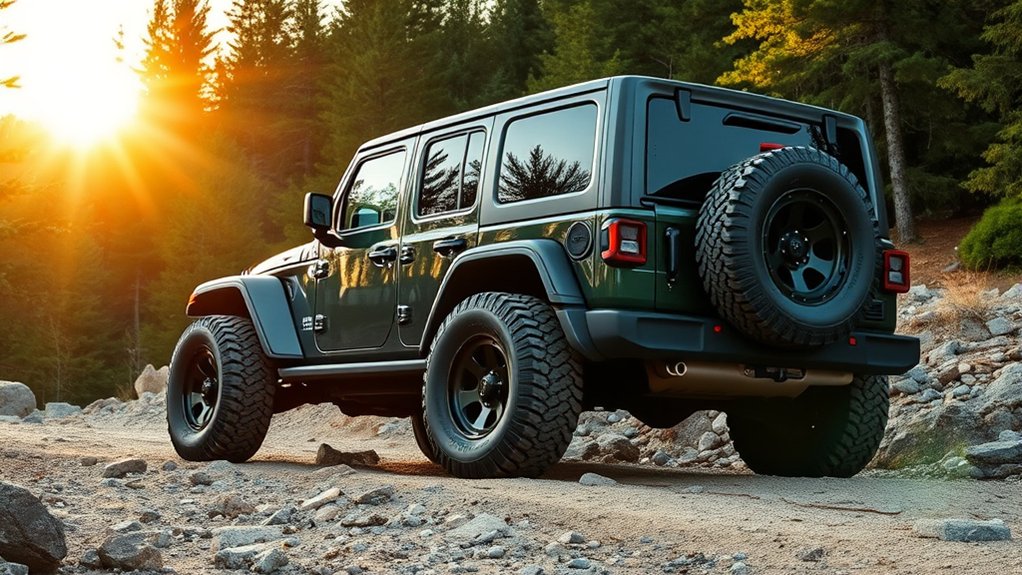
Understanding what defines an SUV is essential because it shapes how you perceive vehicles like the Jeep Wrangler. SUV characteristics typically include a higher ground clearance, a robust frame, and often, four-wheel drive capabilities.
These features distinguish SUVs from sedans or hatchbacks, emphasizing versatility and off-road potential. Vehicle classification relies on these criteria to categorize automobiles accurately, influencing consumer expectations and regulatory standards.
SUV features highlight versatility and off-road capability, guiding vehicle classification and shaping consumer and regulatory perspectives.
When you consider an SUV, you’re looking at a vehicle built for both comfort and ruggedness, suitable for diverse terrains. Recognizing these traits helps you make informed decisions about whether a specific model fits the SUV category.
This clarity is vital since the SUV label impacts everything from marketing to insurance rates, making the definition more than just semantics.
Jeep Wrangler Body Style and Design Explained
The Jeep Wrangler features a distinctive body style that sets it apart from many other SUVs on the market. Its boxy shape, removable doors, and fold-down windshield reflect a design focused on off-road capability and ruggedness rather than sleek urban appeal.
When you explore Wrangler styling, you’ll notice its classic seven-slot grille and round headlights, which maintain a strong Jeep identity.
Customization options are extensive, allowing you to tailor the Wrangler’s appearance and function to your needs. Key design elements include:
- Removable hard or soft tops for open-air driving
- High ground clearance and short overhangs for better off-road performance
- Sturdy fender flares and skid plates
- Modular components supporting aftermarket upgrades
This unique design prioritizes versatility and durability over conventional SUV aesthetics.
How the Jeep Wrangler Fits SUV Categories
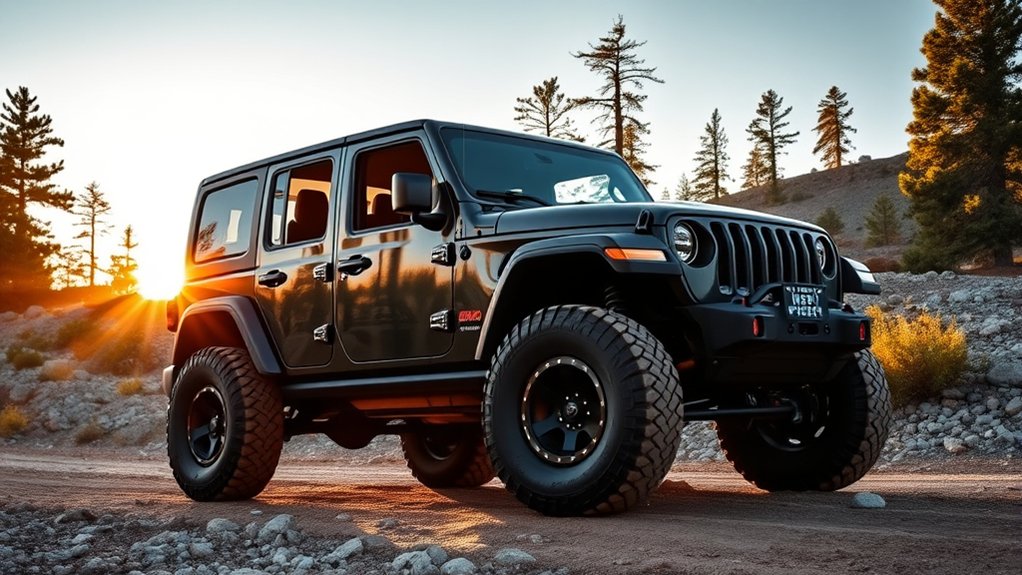
You’ll want to examine how the Jeep Wrangler is officially classified within SUV categories to understand its place in the market. Comparing its features with those of traditional SUVs helps clarify where it aligns or differs.
This analysis will reveal how the Wrangler fits into SUV definitions based on design and functionality.
Jeep Wrangler Classification
Although the Jeep Wrangler is widely recognized for its off-road capabilities, its classification within SUV categories can be nuanced. You’ll find that the Wrangler’s unique characteristics place it in a distinct niche among SUVs. Its Wrangler history and off-road heritage highlight its design focus on rugged terrain rather than urban comfort.
Over time, the model evolution introduced modern amenities without sacrificing durability, reflecting Jeep’s commitment to brand loyalty.
When classifying the Wrangler, consider:
- Traditional SUV status due to its size and passenger capacity
- Subcategory as a compact or mid-size SUV depending on the model
- Emphasis on off-road rather than luxury or utility features
- Strong alignment with adventure-oriented buyers, distinguishing it within SUV segments
Understanding these points helps clarify where the Jeep Wrangler fits in SUV classifications.
SUV Features Comparison
When comparing SUV features, the Jeep Wrangler stands out by blending traditional off-road capabilities with certain SUV characteristics that appeal to everyday drivers. Unlike many compact SUVs, which prioritize urban maneuverability and fuel efficiency, the Wrangler emphasizes ruggedness and trail performance.
It offers removable doors and roof options, features uncommon in most luxury SUVs focused on comfort and technology. While it may lack some high-end interior refinements found in luxury SUVs, the Wrangler compensates with durable materials suited for outdoor use.
Its 4×4 drivetrain and higher ground clearance align it more closely with utility-focused SUVs rather than purely city-oriented compact SUVs. Consequently, the Wrangler fits uniquely within SUV categories by combining off-road strengths with practical everyday features.
Jeep Wrangler’s Unique Features Compared to Other SUVs
Because the Jeep Wrangler is designed with off-road capability as a top priority, it stands out from most other SUVs in several key ways. You’ll notice the Wrangler versatility shines through its rugged design and functional features tailored for challenging terrains.
Its off-road performance is unmatched thanks to specialized engineering. Here are some unique features to take into account:
- Removable doors and roof for an open-air driving experience
- High ground clearance and solid axles for enhanced off-road traction
- Heavy-duty skid plates protecting crucial undercarriage components
- Trail-rated badge certifying capability in mud, water, rock, and snow
These elements guarantee the Wrangler delivers a different driving experience than typical SUVs, focusing more on adventure and durability while maintaining everyday usability.
Comparing the Wrangler to Traditional SUVs
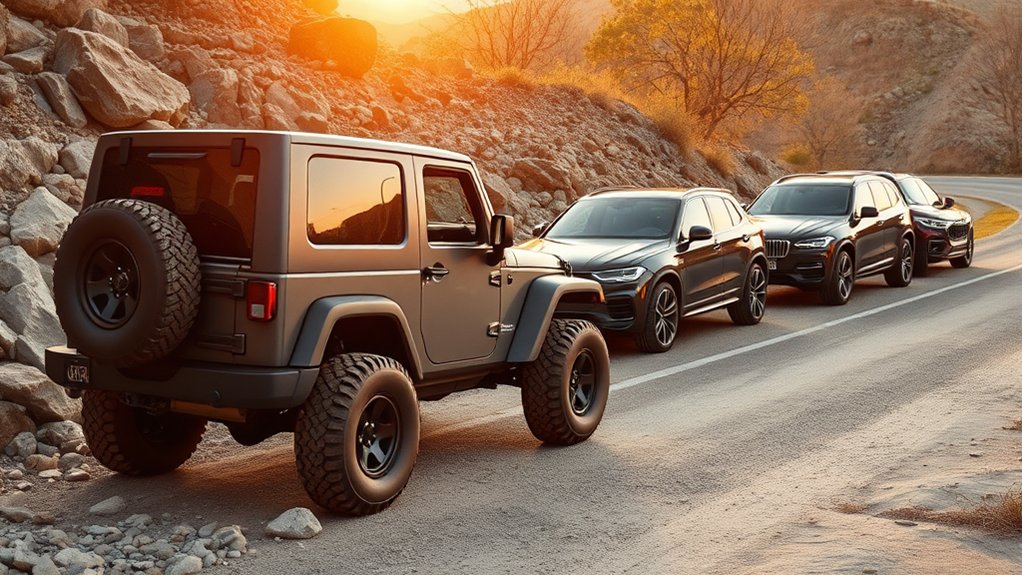
When you compare the Jeep Wrangler to traditional SUVs, you’ll notice a clear focus on off-road capability that sets it apart. Its design emphasizes ruggedness and functionality over on-road comfort, which is typical of many SUVs.
Understanding these differences helps clarify where the Wrangler fits within the SUV category.
Off-Road Capability Comparison
Although many traditional SUVs offer some off-road features, the Jeep Wrangler stands out with its purpose-built design focused on rugged terrain. When you compare the Wrangler’s off-road capability to traditional SUVs, you’ll notice clear differences in performance and specialization.
The Wrangler excels in rock crawling and trail performance, thanks to its superior ground clearance, solid axles, and locking differentials. Traditional SUVs often prioritize comfort and on-road handling, which limits their off-road prowess.
Key off-road advantages of the Jeep Wrangler include:
- High ground clearance for overcoming obstacles
- Robust 4×4 drivetrain optimized for traction
- Rock crawling ability with enhanced suspension articulation
- Trail performance supported by skid plates and tow hooks
These features make the Wrangler a more capable choice if you plan serious off-roading.
Design and Function Differences
While traditional SUVs often focus on blending comfort with versatility for everyday driving, the Jeep Wrangler emphasizes a rugged design tailored specifically for off-road adventures. When you assess design versatility, you’ll notice the Wrangler’s removable doors and roof, features uncommon in most SUVs, enhancing its outdoor adaptability.
Traditional SUVs prioritize enclosed cabins and refined interiors, aiming for passenger comfort and cargo space. From a functionality assessment standpoint, the Wrangler’s solid axles and high ground clearance improve its terrain handling, whereas most SUVs lean toward smoother rides and fuel efficiency.
You’ll find the Wrangler sacrifices some daily driving ease for enhanced off-road capability, making it unique. Understanding these design and function differences clarifies why the Wrangler stands apart from typical SUVs in both purpose and performance.
Jeep Wrangler’s Off-Road Capabilities That Set It Apart
Explore the Jeep Wrangler’s off-road capabilities, and you’ll find a vehicle engineered to tackle rugged terrain with confidence. Its trail performance excels due to advanced suspension systems and high ground clearance, allowing you to navigate uneven surfaces effortlessly.
The Wrangler’s approach angles and tire options enhance terrain handling, giving you control in challenging conditions. Engine specifications provide robust power, while customization potential lets you tailor off-road gear, including winch capabilities, to meet specific needs.
- Superior suspension systems absorb shocks on rough trails
- Variety of tire options optimize grip on diverse terrain
- High ground clearance and approach angles prevent undercarriage damage
- Customizable off-road gear, such as winches, enhance recovery and versatility
These features collectively set the Wrangler apart in off-road performance.
Interior and Practicality Differences From Other SUVs
The Jeep Wrangler’s off-road prowess comes with interior and practicality features that differ notably from many other SUVs. When you step inside, you’ll notice the interior space prioritizes ruggedness over luxury, resulting in a more utilitarian cabin.
While seating is adequate, the Wrangler’s boxy design and removable top can limit headroom and cargo capacity compared to more conventional SUVs. You might face practicality concerns if you regularly carry large families or substantial gear, as the Wrangler offers less cargo volume and fewer comfort amenities.
Additionally, its upright seating and less refined suspension can affect ride comfort on paved roads. Understanding these interior space and practicality differences helps you gauge whether the Wrangler’s unique design fits your daily driving and storage needs.
Why Some People Don’t Consider the Wrangler a Typical SUV?
Because the Jeep Wrangler emphasizes off-road capability and rugged design over typical SUV features, many people don’t see it as a conventional sport utility vehicle. You might find that its unique Jeep heritage sets it apart from the more comfort-oriented SUVs you’re used to.
Traditional SUV perceptions focus on family-friendly interiors and smooth road handling, which the Wrangler deprioritizes. Consider these reasons:
- Its boxy, utilitarian design contrasts with sleek SUV styling
- Limited cargo space and rear passenger comfort compared to mainstream SUVs
- Exceptional off-road features overshadow on-road refinement
- Removable doors and roof highlight its adventure-first identity
When you weigh these factors, it’s clear why many don’t view the Wrangler as a typical SUV despite its classification.
Should You Buy a Jeep Wrangler as an SUV?
Wondering if a Jeep Wrangler fits your needs as an SUV? You should weigh several factors before deciding. The Wrangler offers excellent resale value, making it a smart investment if you plan to sell later.
Considering a Jeep Wrangler? Evaluate key factors like resale value before making your SUV choice.
However, its fuel efficiency trails behind many modern SUVs, which could affect your running costs. Comfort levels are moderate; while it handles rough terrain well, the ride might feel stiff on paved roads.
Additionally, maintenance costs tend to be higher due to specialized parts and frequent off-road use. If you prioritize rugged capability and strong resale value over fuel economy and daily comfort, the Wrangler might suit you.
Otherwise, exploring more conventional SUVs could better meet your practical needs without compromising on efficiency or comfort.
Frequently Asked Questions
What Is the Fuel Economy of a Jeep Wrangler?
You’ll find the Jeep Wrangler’s fuel efficiency varies by model, averaging around 17-25 mpg. Its driving range depends on tank size and conditions, typically offering 250-370 miles before refueling becomes necessary.
How Much Does a Jeep Wrangler Typically Cost?
You want affordability and flexibility; Jeep Wrangler pricing starts around $30,000, varying by model and features.
You can explore Jeep Wrangler financing options to spread costs, making ownership more accessible and tailored to your budget.
What Are Common Maintenance Issues With Jeep Wranglers?
You’ll often face engine troubles, transmission issues, and electrical problems with Jeep Wranglers. Focus on suspension wear, tire maintenance, and rust prevention to keep your vehicle reliable and extend its lifespan efficiently.
Can a Jeep Wrangler Be Used for Towing?
Yes, you can use a Jeep Wrangler for towing, but its towing capacity is moderate compared to larger SUVs. It excels in off-road performance, making it ideal for light trailers or gear, not heavy loads.
Are There Hybrid or Electric Jeep Wrangler Models Available?
Yes, you can find Jeep Wrangler models featuring hybrid technology, like the 4xe plug-in hybrid, delivering impressive electric performance alongside traditional power. This blend enhances fuel efficiency without sacrificing off-road capability or ruggedness you expect.
Conclusion
Think of the Jeep Wrangler as a rugged mountain climber in the SUV family—built for adventure rather than just daily roads. While it fits many SUV criteria, its unique design and off-road prowess set it apart from typical SUVs.
If you value versatility and durability over traditional SUV comforts, the Wrangler could be your perfect match. Ultimately, deciding if it’s an SUV depends on how you define utility and style in your ride.
In conclusion, the Jeep Wrangler is indeed an SUV, but one that emphasizes rugged capability and adventure above conventional SUV traits.