You’ll recognize a burnt spark plug by its chalky white or blistered insulator tip and eroded or melted electrodes caused by excessive heat.
Look for cracked or scorched porcelain, which signals damage beyond normal wear.
A healthy plug shows light tan or gray tips with no deposits or erosion.
Spotting these signs early helps avoid engine misfires and performance loss.
Understanding these details further can reveal how burnt plugs affect your vehicle’s overall health and efficiency.
Key Takeaways
- Burnt spark plugs have white or blistered insulator tips indicating excessive heat exposure.
- Electrodes appear eroded, rounded, or melted due to prolonged high temperatures.
- Cracked or scorched ceramic insulators signal damage and reduced functionality.
- Wide electrode gaps from wear are common in burnt spark plugs.
- Discolored insulator tips contrast with the healthy light tan or gray color.
Identifying Burnt Spark Plugs Quickly
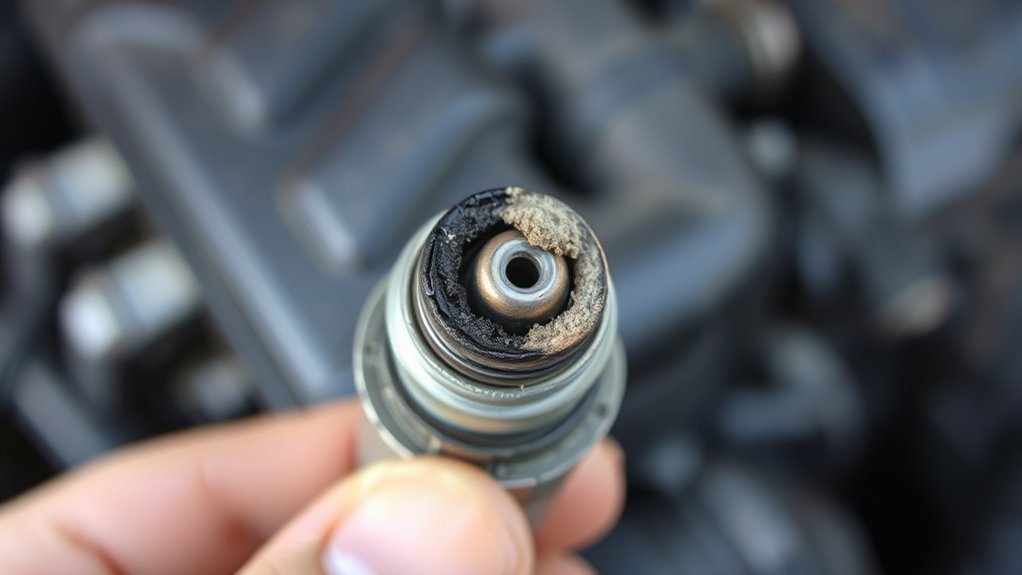
To identify burnt spark plugs quickly, start by removing the plugs and inspecting their electrodes and insulator tips. During your spark plug inspection, focus on discoloration, erosion, or melting signs on the electrode. These symptoms often indicate overheating or improper combustion within the ignition system.
Check for any cracks or excessive deposits on the ceramic insulator, as these can affect spark efficiency. Use a gap gauge to measure the electrode gap; an abnormally wide gap suggests electrode wear due to burning. This precise inspection helps you diagnose ignition issues promptly, preventing further engine damage.
Healthy vs. Burnt Spark Plugs: What to Look For
While inspecting your spark plugs, you’ll notice clear differences between healthy and burnt examples. Healthy spark plugs feature a light tan or grayish color on the insulator tip, with no signs of erosion or deposits. The electrodes remain sharp and intact, ensuring consistent spark generation for peak engine performance.
In contrast, burnt spark plugs display discoloration, often white or blistered insulators, and eroded electrodes that impair spark quality. Regular spark plug maintenance helps prevent these issues, maintaining combustion efficiency and reducing misfires.
Common Visual Signs of a Burnt Spark Plug
Although spark plugs may appear similar at a glance, burnt spark plugs exhibit distinct visual signs that indicate damage and reduced functionality. During your spark plug inspection, focus on discoloration. Common burnt plugs show a white or blistered insulator tip.
The electrode may appear eroded, rounded, or melted, evidence of excessive heat exposure. You might also notice cracked porcelain or deposits that look scorched rather than typical light tan. These signs directly correlate with declining engine performance, causing misfires, rough idling, or reduced fuel efficiency.
Identifying these visual indicators early allows you to address ignition issues before they escalate. Remember, precise spark plug inspection is crucial to maintaining peak engine performance and preventing costly repairs. Recognizing burnt spark plugs quickly guarantees your engine runs smoothly and efficiently.
What Different Spark Plug Deposits Reveal About Engine Health
You’ll encounter various spark plug deposits that signal different engine conditions. The color and texture of these deposits help pinpoint issues like fuel mixture problems or oil leaks.
Common Spark Plug Deposits
Several types of spark plug deposits can quickly reveal the condition of your engine’s combustion process. Common deposits include carbon buildup, oil fouling, and ash deposits, each indicating specific issues like rich fuel mixtures, oil leaks, or additive residue.
Different spark plug types, such as copper, platinum, and iridium, vary in their susceptibility to deposits and require tailored cleaning methods. For example, copper plugs tolerate abrasive cleaning, while platinum and iridium plugs need gentle methods to avoid damage.
Regular inspection and appropriate cleaning methods extend spark plug life and maintain peak engine performance. Recognizing these deposits helps you diagnose underlying problems early, ensuring efficient combustion and preventing severe engine damage.
Understanding these signs supports informed maintenance decisions and enhances your vehicle’s reliability.
Deposit Colors And Meanings
A spark plug’s deposit color provides critical clues about your engine’s combustion health. Through deposit analysis, you can identify issues early by understanding color significance. Here’s what different colors reveal:
- Light tan or gray: Indicates normal combustion and proper engine operation.
- Black, dry soot: Signifies a lean fuel mixture or insufficient air, causing incomplete combustion.
- Wet, oily deposits: Suggest oil entering the combustion chamber, often due to worn piston rings or valve guides.
- White or blistered deposits: Point to excessive heat or detonation, risking engine damage.
Diagnosing Engine Issues
Although spark plug deposits may seem minor, they offer essential insights into your engine’s condition. Different spark plug types accumulate distinct deposits that directly reflect engine performance issues.
For example, oily deposits on standard plugs often indicate worn piston rings or valve guides, causing oil to enter the combustion chamber. White, blistered deposits typically point to overheating or incorrect heat range spark plug types.
Carbon fouling, seen as black soot, signals a rich fuel mixture or weak ignition. By examining these deposits, you diagnose problems like misfires, poor fuel economy, or combustion inefficiencies.
Understanding the specific deposit characteristics on your spark plugs allows you to pinpoint engine malfunctions precisely, enabling timely repairs and maintaining peak engine performance. Always match the correct spark plug type to prevent premature wear and inaccurate diagnostics.
How Burnt Spark Plugs Impact Vehicle Performance
Burnt spark plugs disrupt the ignition process, causing misfires that reduce engine efficiency and power output. When your spark plugs burn out prematurely, you’ll notice a direct impact on engine performance.
Here’s how burnt spark plugs affect your vehicle:
- Decreased Fuel Efficiency: Incomplete combustion wastes fuel, lowering miles per gallon.
- Reduced Power Output: Misfires prevent ideal cylinder firing, diminishing engine power.
- Increased Emissions: Poor combustion raises harmful emissions, potentially failing emissions tests.
- Shortened Spark Plug Lifespan: Excessive heat and deposits accelerate wear, requiring more frequent replacements.
Why Burnt Spark Plug Color and Texture Matter
Because the color and texture of spark plugs reveal specific combustion conditions, they serve as essential diagnostic tools for identifying engine issues. When you examine spark plug chemistry, variations in deposits and wear patterns directly reflect combustion efficiency.
A healthy spark plug typically displays a light tan or grayish color with a smooth texture, indicating ideal fuel-air mixture and complete combustion. Conversely, burnt spark plugs show discoloration, often white, blistered, or blackened, and rough or pitted textures, signaling abnormal combustion or overheating.
These visual cues let you assess fuel quality, ignition timing, and air-fuel ratios without invasive testing. Understanding these details helps you monitor engine performance effectively, ensuring timely maintenance and preventing further damage caused by inefficient combustion or spark plug degradation.
Diagnosing Engine Problems From Spark Plug Damage
When you inspect spark plug damage closely, you can pinpoint specific engine problems that affect performance and efficiency. Recognizing these signs helps you optimize spark plug longevity and streamline engine maintenance. Here’s what to look for:
Inspecting spark plug damage reveals engine issues, boosting performance and extending spark plug life.
- Blistered or melted electrodes indicate overheating, often caused by incorrect ignition timing or lean fuel mixtures.
- Black, oily deposits suggest oil leakage into the combustion chamber, signaling worn piston rings or valve seals.
- White, ashy deposits mean excessive carbon buildup, usually from poor fuel quality or incomplete combustion.
- Corroded or cracked insulators reveal exposure to moisture or coolant leaks, pointing to potential gasket failure.
When to Replace a Burnt Spark Plug for Best Results
If you notice signs of damage or reduced engine performance, you should replace the spark plug promptly to avoid further complications. The spark plug lifespan varies by vehicle and plug type, but generally ranges from 30,000 to 100,000 miles. Always consult your vehicle’s manual for recommended replacement intervals to maintain peak engine function.
A burnt spark plug indicates that the electrode and insulator have degraded, leading to misfires and inefficient combustion. Replacing the spark plug within the specified intervals guarantees consistent ignition, fuel efficiency, and engine longevity.
Delaying replacement risks increased emissions, poor acceleration, and potential engine damage. Use OEM or high-quality spark plugs to match specifications, and inspect plugs regularly to detect early signs of wear or burning.
Frequently Asked Questions
How Often Should Spark Plugs Be Inspected for Burning Signs?
You should perform spark plug maintenance by inspecting them every 30,000 to 50,000 miles. Regular inspection frequency guarantees early detection of burning signs, preventing engine issues and maintaining peak performance and fuel efficiency.
Can Using the Wrong Spark Plug Cause It to Burn Out?
Yes, using the wrong spark plug materials affects heat dissipation and can alter ignition timing, causing premature burn out.
You’ll experience misfires or engine knocking if the plug’s specifications don’t match your engine’s requirements precisely.
What Tools Are Needed to Safely Remove a Spark Plug?
You’ll need a spark plug socket, ratchet wrench, and extension for spark plug removal. Use a torque wrench for safe handling during reinstallation.
Gloves and safety glasses protect you from debris and guarantee precise, secure work.
Are Burnt Spark Plugs More Common in Certain Vehicle Models?
Like a worn-out shoe, certain high-performance or older vehicles face spark plug failure more often due to engine stress and design.
You should prioritize regular vehicle maintenance to prevent misfires and optimize performance.
Can Fuel Quality Affect Spark Plug Lifespan and Burning?
Yes, fuel types directly impact spark plug lifespan and burning by influencing combustion efficiency. Poor-quality fuel causes incomplete combustion, leading to deposits and overheating that degrade spark plugs faster.
This reduces engine performance and increases maintenance needs.
Conclusion
You should know that up to 30% of engine misfires stem from burnt spark plugs, highlighting their essential role in performance. By recognizing the distinct discoloration, erosion, or deposits on your spark plugs, you can diagnose issues early and avoid costly repairs.
Replacing burnt spark plugs promptly guarantees ideal combustion and fuel efficiency. Stay vigilant—your engine’s health depends on these small but crucial components functioning correctly.
Understanding what a burnt spark plug looks like is key to maintaining your vehicle’s performance and preventing further engine damage.