You can spot a lean spark plug by its white or very light gray insulator tip and an eroded or blistered electrode. This appearance signals excessive combustion temperatures and insufficient fuel lubrication during combustion. A lean spark plug indicates that the engine is running with too much air and not enough fuel.
A lean plug will be clean, lacking oil or carbon buildup, but its condition can cause engine misfires and reduced power. If left unchecked, it may lead to engine damage over time.
Understanding the causes, problems, and solutions linked to lean spark plugs is essential for maintaining engine performance.
There’s more detailed information ahead to help you diagnose and fix issues related to lean spark plugs. This knowledge will ensure your engine runs smoothly and efficiently.
Key Takeaways
- A lean spark plug has a white or very light gray insulator tip.
- The electrode appears eroded or blistered due to excessive combustion temperatures.
- It shows no oil or carbon buildup, indicating clean but overheated combustion.
- The light color signifies insufficient fuel lubrication during combustion.
- Its condition reflects a fuel mixture that is too lean, causing engine performance issues.
Spotting a Lean Spark Plug: What to Look For
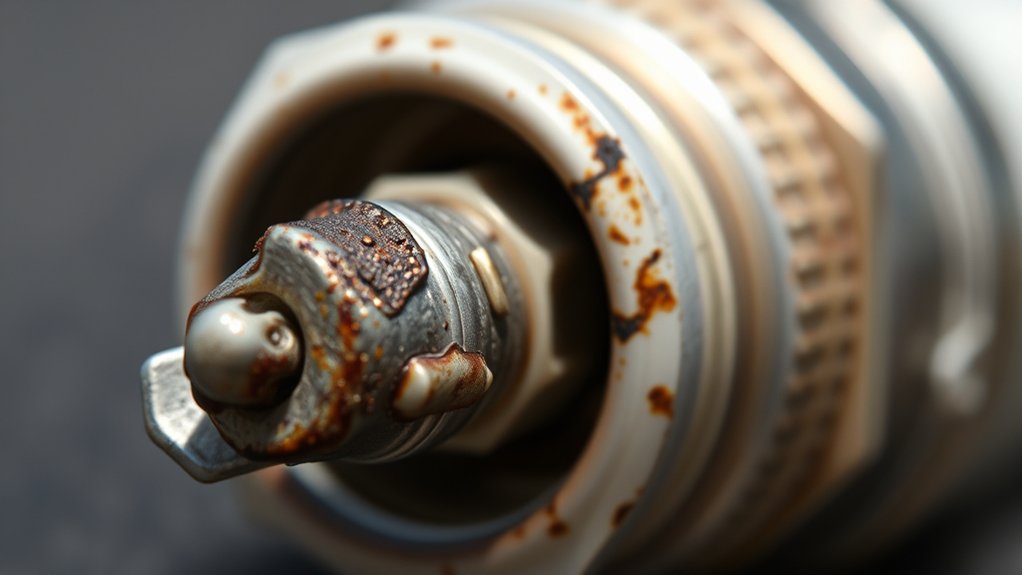
How can you identify a lean spark plug quickly and accurately? Start by examining the spark plug anatomy, focusing on the insulator nose and electrode. A lean spark plug typically shows a white or very light gray color on the insulator tip, indicating excessive combustion temperatures.
The electrode may appear eroded or blistered due to the lean air-fuel mixture. These visual signs directly impact engine performance by causing overheating, misfires, and potential damage.
Unlike normal deposits, the light coloration signals insufficient fuel lubrication during combustion. When inspecting, verify the spark plug is clean of oil or carbon buildup, as these can mask lean conditions.
Recognizing these precise visual cues helps you diagnose lean running conditions promptly, protecting your engine’s efficiency and longevity.
Common Causes of Lean Spark Plugs
Though lean spark plugs reveal specific combustion issues, pinpointing the root cause requires understanding common factors that reduce fuel delivery or increase air intake. One primary cause is a malfunctioning fuel injector, which disrupts the proper fuel mixture, leading to insufficient fuel reaching the combustion chamber.
Another frequent issue is a vacuum leak, allowing excess air to enter and lean out the fuel mixture, directly impacting combustion efficiency. Additionally, a clogged air filter can alter airflow, but more often, sensors like the oxygen sensor or mass airflow sensor provide incorrect data, causing the engine control unit to adjust the fuel mixture improperly.
Understanding these causes helps you maintain ideal combustion efficiency and prevent lean spark plug formation.
Engine Problems Caused by Lean Spark Plugs
Identifying the causes of lean spark plugs sets the stage for recognizing the engine problems they can trigger. When lean spark plugs operate, spark plug performance deteriorates due to insufficient fuel mixture, causing incomplete combustion. This leads to engine misfires, reduced power output, and rough idling.
You may also notice increased engine knocking or pinging, as the lean condition raises combustion temperatures beyond ideal levels. Over time, these issues compromise engine efficiency, resulting in higher fuel consumption and accelerated wear on critical components like valves and pistons.
Additionally, lean spark plugs can cause overheating, which stresses ignition components and may lead to premature failure. Understanding these effects helps you diagnose performance drops and avoid potential engine damage linked to compromised spark plug operation.
Fixing and Preventing Lean Spark Plug Problems
Because lean spark plugs can severely impact engine performance and longevity, addressing these issues promptly is essential. Start by ensuring your fuel mixture is correctly balanced; a lean condition often results from insufficient fuel or excessive air.
Regular spark plug maintenance, including inspection and cleaning, helps detect early signs of lean operation. Replace plugs showing excessive wear or deposits. Additionally, check fuel injectors and air filters to maintain ideal combustion.
Use the table below to gauge urgency and emotional impact:
| Concern | Emotion | Action Required |
|---|---|---|
| Engine misfire | Frustration | Immediate spark plug check |
| Poor fuel economy | Disappointment | Adjust fuel mixture |
| Engine damage | Anxiety | Professional diagnosis |
Frequently Asked Questions
How Often Should Spark Plugs Be Replaced?
You should replace spark plugs every 30,000 to 100,000 miles, depending on type. Monitor replacement signs like misfires or poor fuel economy to guarantee ideal spark plug lifespan and maintain engine performance efficiently.
Can Lean Spark Plugs Damage the Catalytic Converter?
Just like Icarus flew too close to the sun, lean spark plug wear can cause catalytic converter failure by overheating and damaging it.
You’ll want to monitor spark plug wear closely to prevent costly catalytic converter failure.
Are Lean Spark Plugs More Common in Certain Vehicle Types?
Yes, lean spark plugs are more common in high-performance vehicles with advanced spark plug design for optimized combustion. You’ll notice improved vehicle performance, but they require precise tuning to avoid lean conditions that can cause engine damage.
What Tools Are Needed to Inspect Spark Plugs Properly?
You’ll need a spark plug socket, ratchet, gap gauge, and a wire brush for spark plug inspection. These tools help guarantee accurate spark plug maintenance, letting you clean, measure, and reinstall plugs correctly for peak engine performance.
Do Lean Spark Plugs Affect Fuel Efficiency?
Yes, lean spark plugs indicate a lean fuel mixture, which can improve fuel efficiency but may cause ignition timing issues.
You’ll need to monitor both to optimize performance without risking engine damage or reduced power output.
Conclusion
You might not realize it, but a lean spark plug can cause up to a 30% drop in engine efficiency. When you spot a white, blistered electrode, you’re likely dealing with a lean condition. This means your engine’s running hotter and using less fuel, risking damage over time.
By regularly checking and addressing lean spark plugs, you’ll maintain ideal performance and avoid costly repairs. Keeping an eye on what a lean spark plug looks like is essential for ensuring your engine stays in peak condition.