You can’t use spark plug wires universally because their length, connector type, and resistance must match your engine’s exact specifications to guarantee reliable ignition performance.
Using incorrect wires can cause misfires, power loss, and increased emissions due to poor spark delivery and voltage leakage.
Proper wire fit prevents tension or slack that disrupts timing and combustion.
Understanding how make, model, and wire materials impact compatibility helps you maintain ideal engine function and avoid costly issues.
Key Takeaways
- Spark plug wires are not universal and must match specific engine requirements for proper function and fit.
- Compatibility depends on wire length, connector type, and resistance ratings aligned with the engine’s cylinder layout.
- Incorrect wire length can cause signal loss or strain, leading to misfires and reduced engine performance.
- Connector diameters and types must fit spark plug terminals to ensure secure, efficient electrical transmission.
- Using the wrong wires risks ignition timing issues, increased emissions, and premature wear or engine hesitation.
What Are Spark Plug Wires and Why Do They Matter
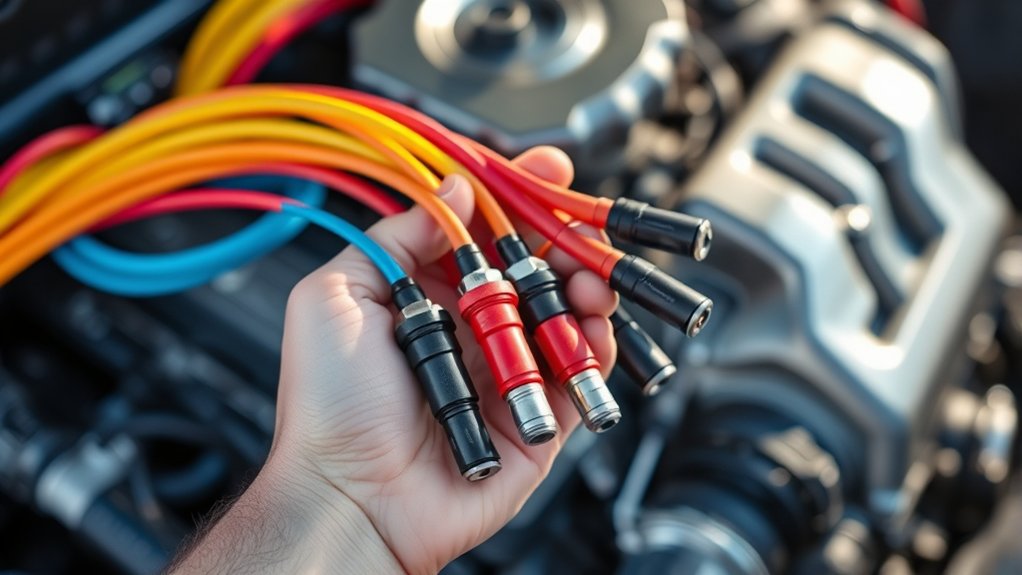
Spark plug wires transmit electrical current from the ignition coil to the spark plugs, enabling combustion in your engine. Their primary role supports the spark plug function, delivering high-voltage electricity with minimal resistance.
Spark plug wires deliver high-voltage electricity from the ignition coil to spark plugs, ensuring engine combustion.
This precise transmission guarantees the spark plugs receive consistent energy to ignite the air-fuel mixture at the ideal moment, maintaining ignition efficiency. If the wires degrade or fail, voltage loss occurs, causing weak or inconsistent sparks that reduce engine performance and fuel economy.
You need reliable spark plug wires designed to handle high voltage and resist heat, moisture, and abrasion. Proper maintenance and replacement are critical, as compromised wires directly impact the spark plug function and overall ignition efficiency, potentially leading to misfires and engine hesitation.
Understanding this connection helps you maintain your vehicle’s performance.
Are Spark Plug Wires Universal?
You can’t assume spark plug wires are universal because compatibility depends on your engine’s specifications. Factors like wire length, connector type, and resistance ratings affect proper fit and function.
To guarantee peak performance, you’ll need wires designed specifically for your vehicle model.
Compatibility With Different Engines
Many factors determine whether spark plug wires will fit your engine, and they’re rarely universal across all models. Compatibility depends largely on engine types and the specific wire lengths required.
You must match wires to your engine’s cylinder layout and spacing to guarantee proper fit and performance. Here’s a quick comparison:
| Engine Type | Wire Length Requirement |
|---|---|
| Inline 4-Cylinder | Shorter, uniform lengths |
| V6 | Mixed lengths, moderate |
| V8 | Longer, varied lengths |
| Boxer | Symmetrical medium |
| Diesel (if applicable) | Usually none or specialized |
Different ignition systems and engine configurations demand tailored spark plug wires. You should always verify compatibility before purchasing to avoid misfires or electrical issues.
Factors Affecting Wire Fit
Although it might seem convenient to assume spark plug wires are universal, several vital factors affect their fit on your engine. Fit variations primarily arise from differences in connector types and diameters, which must match the spark plug terminals and distributor cap precisely to guarantee ideal electrical conductivity.
Additionally, wire length plays a significant role; wires that are too long can cause signal loss or excessive resistance, while wires that are too short may strain connections or prevent proper routing. You also need to take into account insulation material and thickness, which impact heat resistance and durability in your engine bay.
Understanding these variables helps you select spark plug wires tailored to your engine’s specifications, ensuring reliable performance and preventing misfires or premature wear caused by improper fit.
How Make and Model Affect Spark Plug Wire Compatibility
Since each vehicle make and model features unique engine designs and configurations, spark plug wires must match specific lengths, connectors, and resistance ratings to guarantee peak performance. You can’t just swap wires without considering the wire length, as improper sizing can cause stress or misrouting, leading to premature wear or electrical interference.
Additionally, connection type matters. Different engines use varying terminal styles and boot angles to guarantee secure attachment and ideal conductivity. When selecting wires, you need to verify compatibility with your vehicle’s exact make and model to maintain proper fitment and function.
Ignoring these factors might result in poor engine performance or even damage. Consequently, always consult manufacturer specifications or a trusted parts database to confirm wire length and connection type before replacement.
Types and Materials of Spark Plug Wires
When choosing spark plug wires, understanding the types and materials is essential to guarantee ideal electrical conductivity and durability. Spark plug wires typically feature cores made from copper, carbon-impregnated fiberglass, or spiral-wound copper.
Each material affects resistance levels and, consequently, your engine’s performance impact. Copper cores offer superior conductivity but may transmit more electromagnetic interference. Carbon-impregnated fiberglass provides better suppression but slightly higher resistance. Spiral-wound copper balances conductivity and interference reduction.
Wire insulation plays a critical role in protecting against heat, moisture, and abrasion. Silicone insulation is common for high-temperature environments, assuring longevity and consistent performance. Some wires also incorporate multiple insulation layers to enhance durability and reduce signal loss.
Selecting the right core and insulation materials guarantees reliable spark delivery and peak engine efficiency.
What Happens If You Use the Wrong Spark Plug Wires?
Using the wrong spark plug wires can cause misfires, reduced engine performance, and increased emissions. When wire resistance, length, or connector type doesn’t match your engine’s specifications, spark performance and ignition efficiency suffer.
This mismatch disrupts the precise delivery of voltage needed for maximum combustion.
| Issue | Cause | Effect on Engine |
|---|---|---|
| Misfire | High wire resistance | Rough idle, power loss |
| Poor Spark | Incorrect wire length | Delayed ignition timing |
| Increased Emissions | Incompatible connector | Incomplete combustion |
| Engine Hesitation | Low insulation capacity | Voltage leakage |
| Reduced Efficiency | Wrong material composition | Lower spark intensity |
Using correct wires guarantees consistent ignition efficiency and preserves spark performance.
How to Choose the Right Spark Plug Wires for Your Car
You need to select spark plug wires that match your engine’s specifications and operating conditions. Focus on wire material types, such as silicone or carbon core, to guarantee ideal conductivity and heat resistance. Confirm compatibility with your engine model to maintain performance and prevent misfires.
Wire Material Types
Choosing the right spark plug wires starts with understanding the different wire material types available and their impact on performance. The wire insulation quality, conductivity ratings, and resistance to heat and interference vary greatly among materials.
Here are three common types:
1. Copper Core
Offers excellent conductivity ratings but often lacks advanced wire insulation, making it prone to electromagnetic interference and quicker degradation.
2. Carbon Core
Features superior wire insulation to suppress radio frequency interference but has higher resistance, which can reduce spark efficiency.
3. Magnetic Core (Spiral or Multistrand)
Balances conductivity and wire insulation effectively, minimizing interference while maintaining low resistance for peak spark delivery.
Selecting the appropriate wire type guarantees your ignition system performs reliably under different driving conditions.
Compatibility With Engine
Although spark plug wires may appear similar, their compatibility with your engine is critical for maximum ignition performance. You need to select wires that match your engine specifications precisely, including voltage requirements and heat resistance.
Incorrect wire lengths can lead to poor fitment, causing tension or slack that disrupts spark delivery. Measure the distance from the distributor or ignition coil to each spark plug carefully, and choose wires designed for those exact lengths.
Also, consider your engine’s layout, whether V-shaped, inline, or flat configurations demand specific wire routing to prevent crossfire or interference. Using wires incompatible with your engine specifications can reduce ignition efficiency, increase electrical resistance, and ultimately impair engine performance.
Prioritize exact matches to maintain maximum ignition timing and guarantee reliable combustion cycles.
Tips for Installing and Maintaining Spark Plug Wires
When installing spark plug wires, guaranteeing a secure connection at both ends prevents misfires and maintains peak engine performance. Proper wire installation and ongoing wire maintenance are essential for reliable ignition.
Secure spark plug wire connections are key to preventing misfires and ensuring optimal engine performance.
Follow these important tips:
- Match Wire Lengths and Routing: Use wires that fit your engine’s specifications and route them away from hot engine parts to avoid heat damage.
- Inspect for Damage: Regularly check for cracks, burns, or corrosion on wires and connectors, replacing any compromised components promptly.
- Use Dielectric Grease: Apply dielectric grease to the boot ends to enhance electrical insulation and simplify future removal.
Adhering to these steps guarantees maximum conductivity and durability, preventing power loss and engine inefficiency due to faulty spark plug wires.
Frequently Asked Questions
How Often Should Spark Plug Wires Be Replaced?
You should replace spark plug wires every 30,000 to 50,000 miles. Regular spark plug wire maintenance helps prevent symptoms of wear like misfires, rough idle, or poor fuel economy, ensuring peak engine performance and reliability.
Can Spark Plug Wires Affect Fuel Efficiency?
Yes, faulty spark plug wire materials can reduce fuel efficiency by causing weak sparks. You should verify ignition system compatibility to maintain ideal combustion, preventing misfires and maximizing your engine’s fuel economy and performance.
Do Spark Plug Wires Impact Engine Performance?
Yes, spark plug wires impact engine performance by ensuring proper ignition timing. Faulty wires cause engine misfires, reducing power and efficiency.
Replacing worn wires maintains consistent spark delivery and ideal combustion for smooth operation.
Are There Any Safety Risks With Faulty Spark Plug Wires?
Yes, faulty spark plug wires can cause misfires, leading to engine stalling or poor ignition system performance.
You should prioritize spark plug maintenance to avoid electrical shocks, increased emissions, and potential engine damage.
Can I Clean Spark Plug Wires to Extend Their Life?
You can clean spark plug wires using wire cleaning techniques like wiping with a cloth and mild solvent during spark plug maintenance. This helps remove dirt but won’t fully restore deteriorated insulation or conductivity, so replace if damaged.
Conclusion
Choosing the right spark plug wires isn’t a guessing game—it’s the backbone of your engine’s performance. Using wires that fit your make and model guarantees smooth ignition and avoids costly damage.
Think of them as the crucial nerves transmitting power; a misfit can disrupt the whole system. Stay informed, pick the correct wires, and maintain them carefully to keep your engine firing flawlessly every time you turn the key.
When selecting spark plug wires, remember they are not universal. Ensuring you choose the appropriate wires for your specific vehicle is essential for optimal engine function and longevity.