Yes, a bad spark plug can cause your check engine light to come on. When a spark plug malfunctions, it disrupts the combustion process, leading to engine misfires detected by your vehicle’s ECU. This triggers the warning light and often results in rough idling, reduced power, and higher fuel consumption.
Diagnosing this issue involves scanning for specific misfire codes and inspecting the spark plugs.
Identifying faulty plugs early can prevent further engine damage and improve overall performance.
Keep exploring to understand how to identify, fix, and prevent these issues effectively.
Key Takeaways
- Faulty spark plugs cause combustion issues that trigger the engine control unit to illuminate the check engine light.
- Misfires from bad spark plugs lead to diagnostic trouble codes (P0300-P0308) detected by the vehicle’s OBD-II system.
- Increased emissions and rough idling from spark plug problems contribute to check engine light activation.
- The engine struggles with power loss and inefficient fuel combustion, prompting the ECU to signal a fault.
- Replacing worn or damaged spark plugs and clearing codes resolves the check engine light related to spark plug faults.
How to Spot Common Symptoms of Faulty Spark Plugs
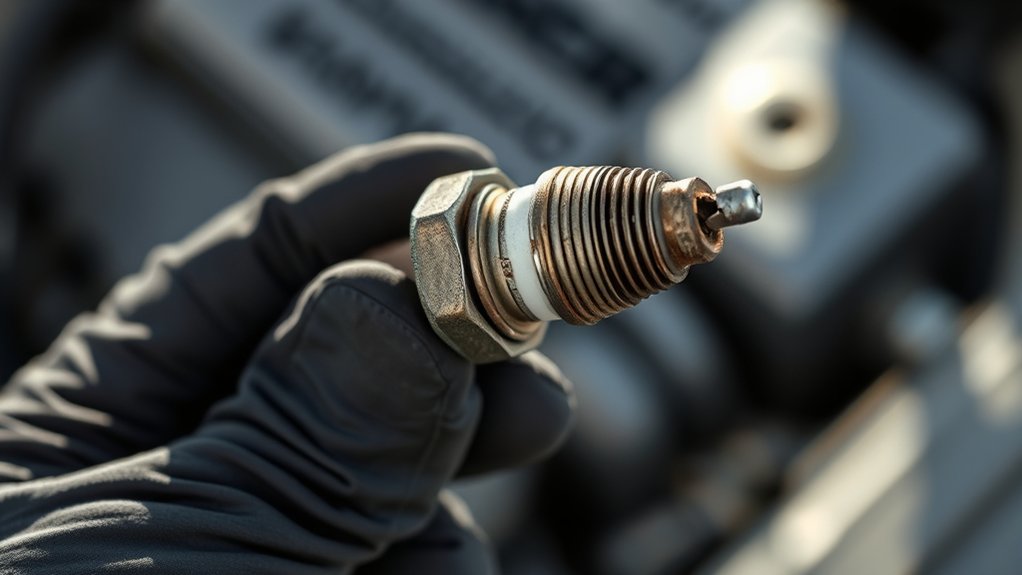
How can you identify if your spark plugs are failing? First, consider the spark plug lifespan, typically between 30,000 to 100,000 miles depending on the type. When plugs near the end of their lifespan, you may notice decreased engine performance.
Symptoms include rough idling, difficulty starting the engine, and reduced fuel efficiency. Misfires can cause jerking or hesitation during acceleration. You might also observe increased exhaust emissions or a noticeable drop in power.
Inspecting spark plugs reveals wear such as carbon deposits, erosion, or burning. Regularly monitoring these symptoms helps you address spark plug issues promptly, maintaining peak engine performance and preventing further engine damage.
Recognizing these signs early guarantees you replace spark plugs before they compromise your vehicle’s reliability and efficiency.
Why a Bad Spark Plug Can Make Your Check Engine Light Come On
When a spark plug malfunctions, it disrupts the combustion process, causing the engine control unit (ECU) to detect irregularities. This triggers the check engine light to alert you of potential issues. Different spark plug types, such as copper, platinum, or iridium, have varying durability and performance characteristics that directly impact engine performance.
A bad spark plug causes:
- Misfires that reduce fuel combustion efficiency.
- Increased emissions due to incomplete burning.
- Rough idling and loss of power.
- Higher fuel consumption as the engine compensates.
Each fault triggers specific error codes the ECU recognizes, prompting the check engine light. Understanding how spark plug types influence combustion quality helps you appreciate why even one faulty plug can compromise engine performance and activate the warning system.
How to Diagnose Spark Plug Issues That Trigger the Check Engine Light
Why does your check engine light come on, and how can you pinpoint a faulty spark plug as the cause? Begin by retrieving the diagnostic trouble codes (DTCs) with an OBD-II scanner; misfire codes (P0300-P0308) often indicate spark plug issues.
Next, perform spark plug testing by visually inspecting for carbon buildup, cracks, or electrode wear. Check the spark plug gap with a feeler gauge to confirm it meets manufacturer specifications.
Visually inspect spark plugs for damage and measure the gap to ensure it matches manufacturer specs.
Additionally, monitor engine performance metrics such as rough idling, hesitation, or reduced power, which signal ignition problems. For a more precise diagnosis, use an oscilloscope to analyze ignition waveforms.
Combining these diagnostic steps helps you accurately identify spark plug faults triggering the check engine light, confirming targeted and effective maintenance.
How to Fix Spark Plug Problems and Reset the Check Engine Light
After identifying faulty spark plugs through diagnostic codes and inspection, addressing the problem promptly assures ideal engine performance and clears the check engine light. Here’s how to fix spark plug problems and reset the check engine light:
- Perform spark plug replacement using OEM or high-quality aftermarket plugs compatible with your engine’s specifications.
- Inspect the ignition system components, including wires and coils, to confirm proper electrical flow.
- Reinstall the new spark plugs with the correct torque, preventing damage and guaranteeing efficient combustion.
- Use an OBD-II scanner to clear the check engine light codes after the replacement, confirming the issue is resolved.
Following these steps restores ignition system integrity and prevents recurrent misfires, maintaining smooth engine operation.
Maintenance Tips to Prevent Spark Plug Failure and Check Engine Lights
Although spark plugs are designed to last for thousands of miles, regular maintenance plays an essential role in preventing premature failure and avoiding check engine light warnings. To maintain peak engine performance, schedule timely spark plug replacement according to your vehicle manufacturer’s specifications.
Inspect spark plugs for signs of wear, such as fouling or erosion, during routine service intervals. Use the correct spark plug type and gap to guarantee efficient combustion. Additionally, keep ignition coils and wiring in good condition to avoid misfires that trigger check engine lights.
Clean or replace air filters regularly to prevent contaminants from affecting spark plug function. By adhering to these maintenance tips, you’ll extend the lifespan of your spark plugs, maintain consistent engine performance, and reduce the risk of unexpected check engine light alerts.
Frequently Asked Questions
Can Bad Spark Plugs Damage Other Engine Components?
Yes, spark plug failure can cause engine misfire, which stresses ignition coils and catalytic converters, potentially damaging them. You should replace faulty spark plugs promptly to prevent further engine component damage and maintain peak performance.
How Often Should Spark Plugs Be Replaced in Different Vehicles?
You’ll want to honor your spark plugs’ natural lifespan by following manufacturer replacement intervals, usually every 30,000 to 100,000 miles. These intervals are tailored to your vehicle’s type, driving habits, and plug material for peak performance.
Are Some Spark Plug Brands More Reliable Than Others?
Yes, some spark plug brands offer superior spark plug performance due to better materials and manufacturing. You should choose reputable spark plug brands to guarantee consistent ignition, longevity, and maximum engine efficiency, minimizing misfires and maintenance issues.
Can Bad Spark Plugs Affect Fuel Efficiency Significantly?
If you want your fuel consumption to mimic a leaky faucet, bad spark plugs will help by sabotaging ignition performance. Poor sparks cause incomplete combustion, forcing your engine to guzzle more fuel, slashing efficiency and raising costs.
Is It Safe to Drive With a Check Engine Light Caused by Spark Plugs?
You can drive briefly with a check engine light caused by spark plug symptoms, but don’t ignore it. Faulty plugs reduce engine performance, risking misfires and damage.
Get them inspected and replaced promptly for safety and efficiency.
Conclusion
If your check engine light flickers on, don’t ignore the spark plugs—they’re the silent culprits behind many engine woes. Like a misfiring orchestra, faulty plugs disrupt your engine’s harmony, triggering warning lights. By spotting symptoms early, diagnosing accurately, and maintaining your plugs regularly, you can keep your engine running smoothly and avoid costly repairs.
Remember, a little attention now prevents a big headache later—your car’s performance depends on it. Ultimately, a bad spark plug can cause the check engine light to come on, so staying vigilant with spark plug care is essential.