Yes, a bad spark plug can cause engine knock by disrupting the combustion process and causing irregular ignition timing.
When your spark plugs misfire, they ignite the air-fuel mixture prematurely or inconsistently, leading to knocking sounds and reduced engine performance.
You’ll notice rough idling, hesitation, or increased fuel use as signs.
Diagnosing involves inspecting spark plugs for fouling or incorrect heat range.
Understanding how these issues trigger knock helps you pinpoint and resolve the problem effectively.
Key Takeaways
- Bad spark plugs disrupt combustion, causing abnormal ignition timing that can lead to engine knock.
- Misfires from fouled or worn spark plugs result in uneven combustion and knocking sounds.
- Incorrect spark plug heat range contributes to premature or delayed combustion, triggering knock.
- Rough idling and hesitation during acceleration often indicate spark plug-related knocking issues.
- Replacing faulty spark plugs with the correct type and gap helps eliminate engine knock.
How a Bad Spark Plug Causes Engine Knock
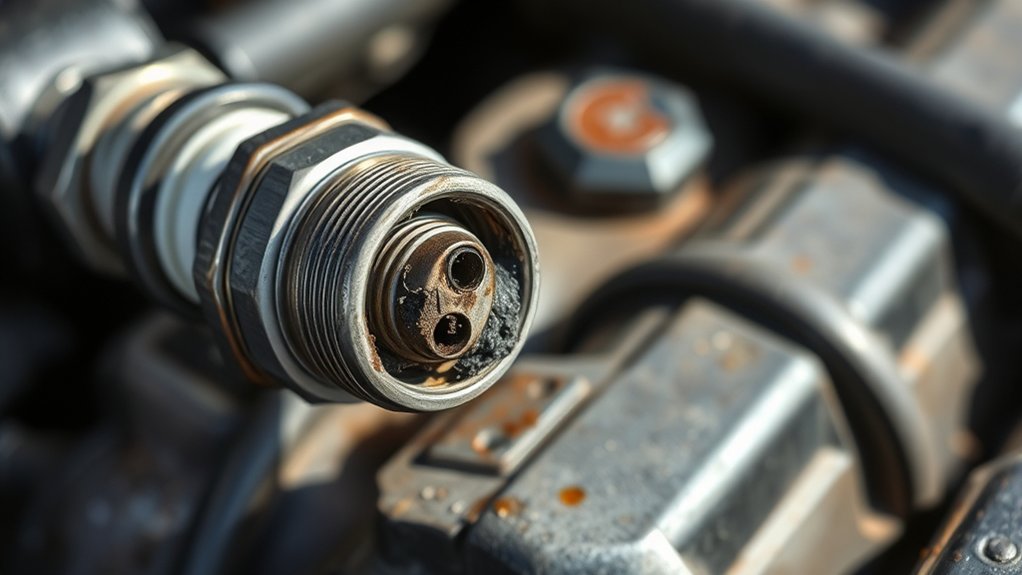
Although engine knock can stem from various issues, a bad spark plug directly disrupts the combustion process, causing abnormal ignition timing. When your spark plug fails to generate a consistent spark, the air-fuel mixture ignites irregularly, leading to premature or delayed combustion.
Different spark plug types, such as copper, platinum, or iridium, offer varying durability and heat ranges, affecting ignition timing precision. If your spark plug’s heat range doesn’t match your engine’s requirements, it can cause incomplete combustion or overheating, further increasing knock risk.
You need to verify that your spark plugs maintain ideal gap settings and are compatible with your engine’s ignition system to prevent misfires and erratic ignition timing. Ultimately, a malfunctioning spark plug disturbs the controlled burn cycle, triggering the characteristic knocking noise.
Signs Your Spark Plug Is Causing Engine Knock
How can you tell if your spark plug is causing engine knock? One clear sign is inconsistent engine performance, such as hesitation or reduced power during acceleration.
Different spark plug types have distinct firing characteristics; if your plugs wear unevenly or become fouled, misfires can occur, leading to knocking. You might also notice rough idling or increased fuel consumption, both indicators of inefficient combustion linked to spark plug issues.
Additionally, unusual engine sounds, like pinging or rattling under load, often point to premature combustion triggered by faulty spark plugs. Monitoring these symptoms helps you identify if your spark plug is the root cause before the knock damages engine components.
Recognizing these signs is essential for maintaining peak engine performance and preventing costly repairs.
How to Diagnose Spark Plug Issues Causing Engine Knock
Identifying the signs of spark plug-related engine knock is only the first step; pinpointing the exact cause requires a systematic diagnostic approach. Begin by inspecting the spark plug types installed. Incorrect heat range or electrode design often leads to pre-ignition and knock.
Identifying spark plug-related knock starts with inspecting spark plug types for correct heat range and design.
Next, examine the electrode for carbon deposits or damage, which can disrupt proper ignition. Finally, verify the ignition timing, as misaligned timing can cause early combustion and knocking. Use this checklist:
- Compare installed spark plug types with manufacturer specifications.
- Conduct a physical inspection for fouling, wear, or gaps.
- Test ignition timing with a timing light to confirm alignment.
This methodical approach helps isolate whether spark plugs or timing contribute to engine knock, enabling targeted troubleshooting.
Fixing Spark Plug Problems to Stop Engine Knock
Once you’ve diagnosed spark plug issues causing engine knock, implementing the correct fixes becomes vital to restore smooth engine operation. Start by replacing worn or fouled spark plugs with the manufacturer’s specified type and gap. Proper spark plug maintenance includes regularly inspecting electrodes for deposits, wear, or damage that disrupt combustion timing.
Next, verify spark plug wires and ignition coils are in good condition, as faulty ignition components can also degrade engine performance and cause knock. After replacement, clear any diagnostic trouble codes and perform a test drive to confirm the knock is resolved.
Consistent spark plug maintenance optimizes combustion efficiency, prevents misfires, and stabilizes engine timing, all critical for eliminating knock and maintaining peak engine performance. Regular attention to these details prolongs engine life and enhances fuel economy.
Frequently Asked Questions
Can Bad Spark Plugs Affect Fuel Efficiency?
Yes, bad spark plugs disrupt proper fuel combustion and ignition timing, causing incomplete burning. This reduces your engine’s efficiency, leading to increased fuel consumption and decreased fuel efficiency overall.
Replacing them restores ideal performance quickly.
How Often Should Spark Plugs Be Replaced?
You know what they say: “A stitch in time saves nine.” You should replace spark plugs every 30,000 to 100,000 miles, depending on spark plug lifespan and manufacturer’s recommended replacement intervals. This helps maintain peak engine performance.
Are All Spark Plugs Compatible With Every Engine?
No, you can’t use all spark plug types with every engine. Each engine requires specific spark plug designs and heat ranges to guarantee proper engine compatibility, ideal performance, and to prevent damage or misfires.
Can Spark Plug Issues Damage the Catalytic Converter?
Like a ticking time bomb, faulty spark plugs can harm your catalytic converter. If you ignore spark plug lifespan, engine performance suffers, causing unburned fuel to overheat and damage the converter.
This reduces emissions efficiency and vehicle reliability.
Do Spark Plug Problems Cause Difficulty Starting the Engine?
Yes, spark plug misfire can cause difficulty starting the engine by disrupting ignition timing and combustion. You’ll notice reduced starting performance, as the engine struggles to generate consistent sparks necessary for smooth ignition.
Conclusion
You might think a tiny spark plug can’t cause such a noisy engine knock, but it can—and often does. Ignoring this small component might seem harmless until that persistent knock turns into costly damage.
So, don’t overlook spark plugs; they’re not just sparks in the dark. Diagnosing and fixing them promptly prevents engine knock and keeps your vehicle running smoothly.
Ironically, the smallest fix often saves the biggest headache. In conclusion, a bad spark plug can cause engine knock, making timely maintenance essential.