You can use synthetic oil in your diesel engine to improve performance and reduce wear, thanks to its superior thermal stability and friction reduction.
Synthetic oil maintains consistent viscosity under high combustion temperatures and offers enhanced protection against sludge and deposits.
However, before switching, check your engine’s condition, manufacturer’s specifications, and compatibility with seals.
Choosing the right synthetic oil guarantees ideal lubrication and fuel efficiency.
Explore how these factors influence your engine’s longevity and maintenance requirements.
Key Takeaways
- Synthetic oil is suitable for diesel engines, offering enhanced thermal stability and improved protection against wear and deposits.
- It reduces friction and improves fuel efficiency, supporting optimal engine performance across temperature variations.
- Compatibility with diesel engine specifications and manufacturer requirements is essential before switching to synthetic oil.
- Synthetic oils help extend oil change intervals by resisting thermal breakdown and maintaining viscosity.
- Older engines may face seal or gasket compatibility concerns, so evaluate engine condition and additive packages carefully.
Is Synthetic Oil Suitable for Diesel Engines?
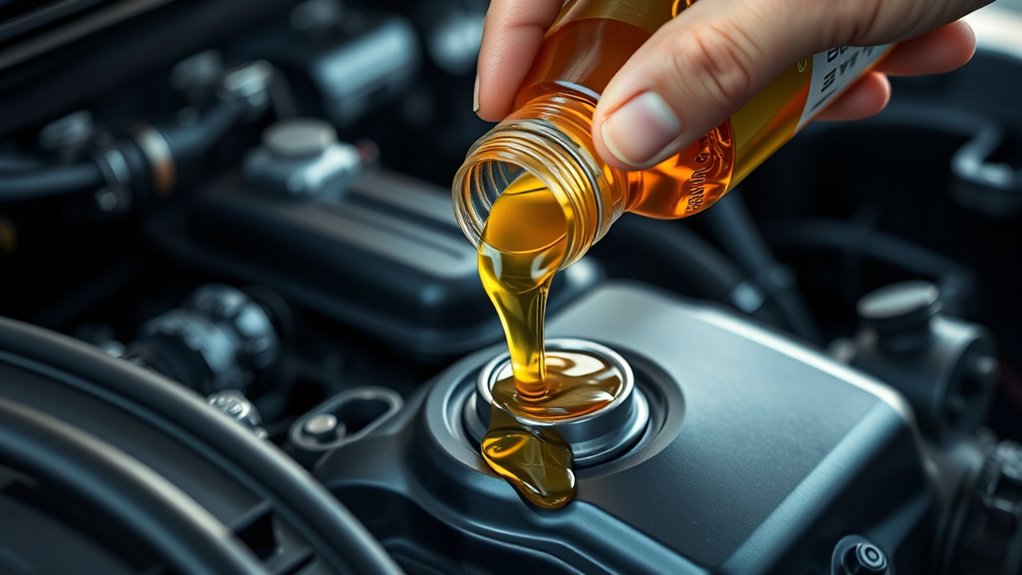
How well does synthetic oil perform in diesel engines? Synthetic oil excels in maintaining optimal engine performance by providing consistent oil viscosity under extreme temperature variations common in diesel operation. Its molecular uniformity reduces friction more effectively than conventional oils, enhancing fuel efficiency and minimizing wear.
You’ll notice synthetic oil resists thermal breakdown, essential for diesel engines operating at higher combustion temperatures. This stability preserves oil viscosity, guaranteeing reliable lubrication and protection against sludge and deposits. Synthetic formulations also improve cold-start performance, reducing engine strain.
However, you should verify that the synthetic oil meets diesel-specific standards to confirm compatibility with your engine’s design and emissions system. Overall, synthetic oil’s advanced properties make it highly suitable for diesel engines, supporting durability and efficient performance across diverse operating conditions.
What to Know Before Switching to Synthetic Oil in Your Diesel Engine
Before switching to synthetic oil in your diesel engine, you need to evaluate your engine’s current condition and the specific oil requirements outlined by the manufacturer. Inspect for signs of wear, sludge buildup, or leaks, as synthetic oil’s different viscosity and detergent properties may interact uniquely with existing deposits.
Verify that the synthetic oil’s formulation, including any oil additives, meets your engine’s performance standards, such as API and OEM specifications. Adhere to recommended maintenance tips like timely oil changes and filter replacements to maximize synthetic oil efficacy.
Additionally, consider how synthetic oil’s additive packages affect compatibility with seals and gaskets in your engine. Proper assessment guarantees seamless integration with your diesel engine’s lubrication system, preventing potential issues and preserving operational reliability.
Benefits of Using Synthetic Oil in Diesel Engines
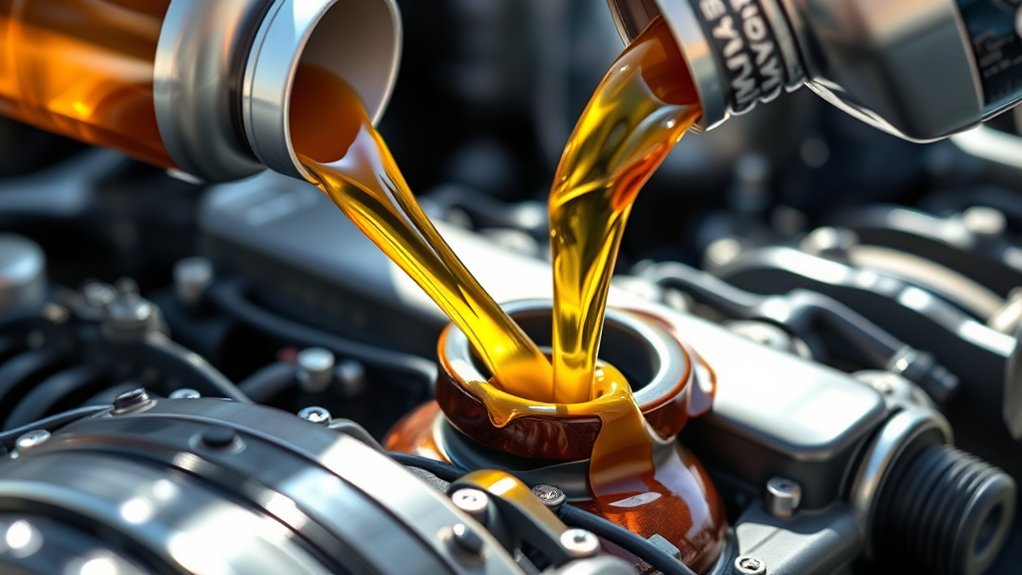
When you switch to synthetic oil in your diesel engine, you gain improved thermal stability and oxidation resistance, which help maintain oil integrity under high operating temperatures. This enhances engine performance and reduces wear, directly contributing to engine longevity.
Synthetic oil’s uniform molecular structure minimizes friction, improving fuel efficiency and reducing energy loss. Additionally, it offers superior protection against sludge and deposits, ensuring cleaner engine internals over time.
Key benefits include:
- Enhanced thermal stability for consistent performance
- Reduced engine wear and tear
- Improved fuel efficiency through decreased friction
- Superior resistance to sludge and deposits
- Extended intervals between oil changes
Common Concerns About Synthetic Oil in Diesel Engines
Although synthetic oil offers numerous advantages for diesel engines, some users remain hesitant due to common concerns about its compatibility, cost, and potential effects on engine components. You may worry that synthetic oil’s different chemical structure could affect oil viscosity, potentially impacting engine performance, especially in older engines designed for conventional oils.
Additionally, synthetic oil often comes at a higher upfront cost, prompting questions about long-term value. Some fear that synthetic formulations might degrade seals or gaskets, leading to leaks or mechanical issues.
However, modern synthetic oils are engineered to meet or exceed diesel engine specifications, maintaining stable viscosity under extreme conditions and protecting components effectively. Understanding these concerns helps you weigh risks accurately before deciding on synthetic oil for your diesel engine.
Choosing the Right Synthetic Oil for Your Diesel Engine
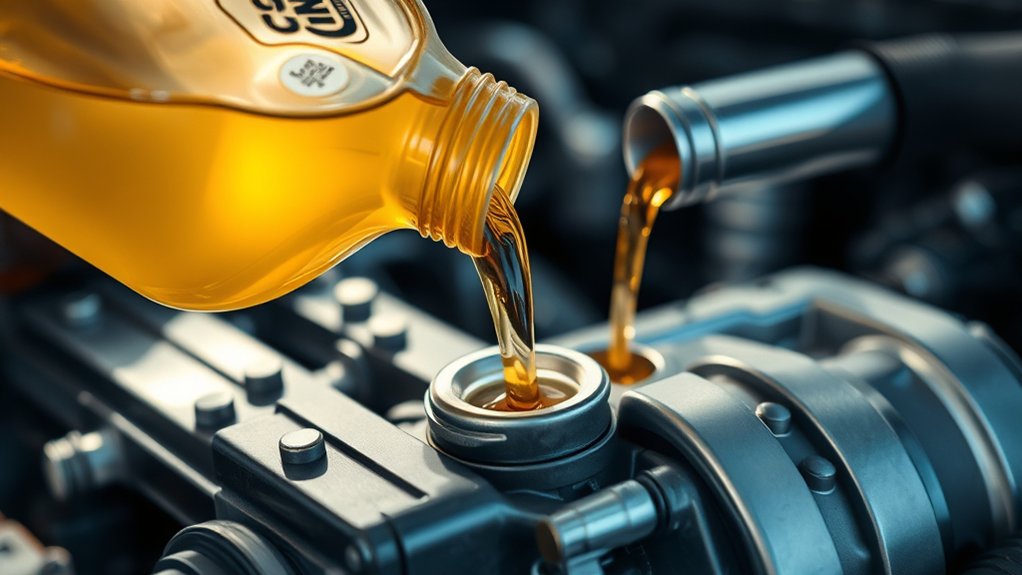
Selecting the right synthetic oil for your diesel engine requires careful evaluation of factors such as viscosity grade, additive package, and compatibility with your engine’s specifications. You need to verify the oil viscosity matches your engine’s operational temperature range to maintain ideal engine performance and protection.
Choosing synthetic oil means matching viscosity and additives to your diesel engine’s specs for optimal performance.
Additionally, the additive package should include detergents, anti-wear agents, and corrosion inhibitors tailored for diesel engines. Confirm that the synthetic oil complies with your engine manufacturer’s standards and industry certifications, such as API CK-4 or CJ-4.
Consider the oil’s ability to handle soot dispersion and thermal stability to prevent deposits and maintain engine cleanliness.
Key considerations include:
- Correct oil viscosity for temperature conditions
- Thorough additive package
- Compatibility with engine specs
- Certification compliance (API, OEM)
- Thermal and soot handling capabilities
Frequently Asked Questions
How Often Should Synthetic Oil Be Changed in a Diesel Engine?
You should change synthetic oil in your diesel engine every 7,500 to 10,000 miles, depending on conditions.
Synthetic oil benefits include extended oil change intervals and superior engine protection under high stress and temperature.
Can Synthetic Oil Improve Diesel Engine Fuel Efficiency?
Yes, synthetic oil can improve your diesel engine’s fuel economy by reducing friction and wear. This enhanced lubrication also supports engine longevity, ensuring ideal performance and efficiency over extended operating periods.
Is Synthetic Oil Compatible With Diesel Engine Turbochargers?
Like a well-tuned instrument, synthetic oil maintains precise oil viscosity, enhancing turbocharger performance in diesel engines. You’ll find it reduces wear and heat, ensuring your turbocharger operates efficiently and reliably under demanding conditions.
Does Synthetic Oil Affect Diesel Engine Warranty Coverage?
You won’t void warranty policies if you use synthetic oil meeting your diesel engine’s exact oil specifications. Always verify with your manufacturer to confirm compliance and maintain coverage, as using incorrect oils can lead to denied warranty claims.
Can Synthetic Oil Be Mixed With Conventional Diesel Engine Oil?
You can gently blend synthetic and conventional oils, but be mindful of oil compatibility to avoid performance hiccups. Mixing may dilute benefits, so for best performance benefits, it’s wise to stick with one oil type consistently.
Conclusion
So, you’re thinking synthetic oil might be too fancy for your rugged diesel engine? Ironically, it’s precisely this high-tech formulation that handles diesel’s demands better than conventional oils.
While you might worry about cost or compatibility, synthetic oil actually reduces wear, improves efficiency, and withstands extreme conditions.
If you want your diesel engine to perform like a champ instead of a chump, switching to the right synthetic oil isn’t just smart—it’s practically essential for diesel engines.