Yes, 2 cycle engines need oil mixed with fuel to guarantee proper lubrication and prevent rapid wear. The oil reduces friction, protects metal parts, and maintains combustion efficiency.
Without the correct oil-to-fuel ratio, your engine risks overheating, knocking, and premature damage. Using recommended oils and regularly checking mixture quality helps maintain performance.
Understanding signs of low oil and proper maintenance strategies can greatly extend your engine’s lifespan and operation.
Key Takeaways
- 2 cycle engines require oil mixed with fuel for proper lubrication of internal components.
- Oil prevents metal parts from grinding and reduces engine wear in 2 cycle engines.
- Incorrect oil levels cause overheating, increased friction, and reduced engine performance.
- The oil-to-fuel ratio must follow manufacturer guidelines, typically between 16:1 and 50:1.
- Regular monitoring of oil quality and mixture ensures efficient combustion and engine longevity.
How Does a 2 Cycle Engine Work?
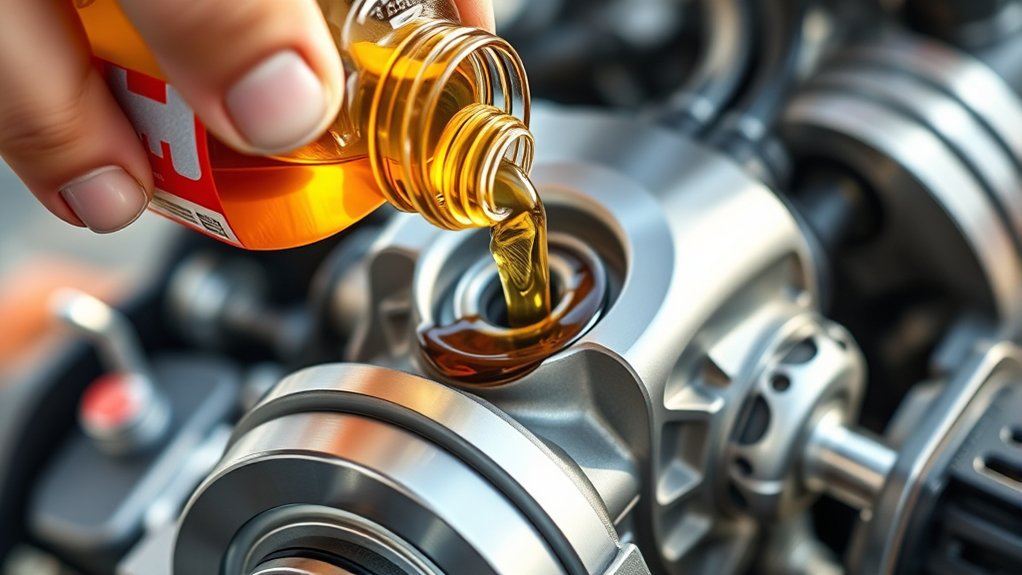
Although a 2 cycle engine completes its power cycle in only two strokes of the piston, it efficiently combines intake, compression, combustion, and exhaust processes within this brief sequence. You’ll find that key engine components, like the piston, cylinder, crankcase, and ports, work synchronously to manage the fuel mixture’s flow.
The combustion process ignites the compressed mixture, generating power output immediately. The exhaust system then expels burnt gases swiftly to prepare for the next cycle. Lubrication methods in these engines differ from four-stroke types, relying on the fuel mixture to deliver oil, which impacts performance efficiency and affects maintenance routines.
Understanding these interactions helps you optimize engine function and schedule maintenance precisely, ensuring consistent power output and prolonged engine life.
Why Two-Cycle Engines Need Oil
Because two-cycle engines rely on a fuel-oil mixture for lubrication, you must add oil to prevent metal components from grinding together and causing premature wear. Proper engine lubrication is essential for wear prevention and maintaining combustion efficiency.
Two-cycle engines need oil in the fuel mix to prevent wear and ensure efficient combustion.
You should understand the oil significance to guarantee performance enhancement and engine longevity. Key factors include:
- Selecting appropriate oil types that provide ideal lubrication without compromising fuel stability.
- Following precise mixing methods to achieve the correct oil-to-fuel ratio, crucial for consistent engine operation.
- Implementing regular maintenance practices to monitor oil quality and prevent deposits that reduce combustion efficiency.
- Recognizing that insufficient oil leads to increased friction, overheating, and accelerated engine wear, which diminishes overall performance.
How to Mix Oil and Fuel Correctly
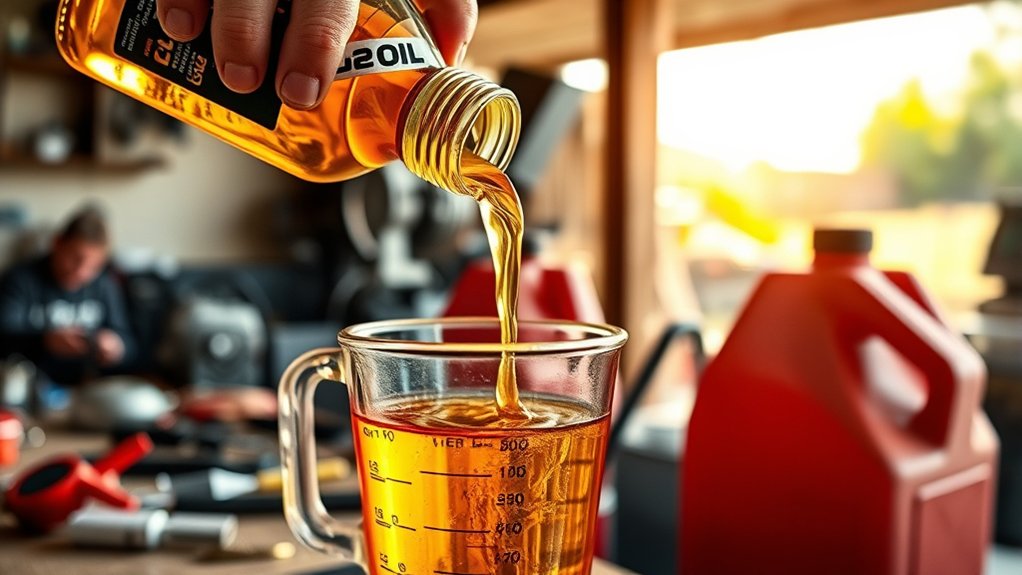
You need to follow the manufacturer’s specified oil-to-fuel ratio to guarantee ideal engine performance and longevity.
Mixing the fuel and oil thoroughly, preferably in a clean container, prevents uneven lubrication and potential engine damage.
Let’s examine the correct ratios and practical steps for achieving a consistent mixture.
Proper Oil-to-Fuel Ratio
Mixing oil and fuel at the correct ratio is essential for the best performance and longevity of a 2 cycle engine. An improper ratio can lead to increased oil degradation, reduced engine performance, and environmental impact. Consider these factors:
- Oil Viscosity and Synthetic Options: Choose oil with suitable viscosity and synthetic additives to guarantee ideal lubrication and reduced deposits.
- Fuel Quality and Stability: Use fresh, high-quality fuel to prevent fuel degradation, which affects combustion and engine efficiency.
- Mixing Containers and Storage Practices: Employ clean, airtight containers to maintain mixture integrity and avoid contamination or evaporation.
- Maintenance Frequency: Adjust oil-to-fuel ratios based on engine wear and operating conditions to balance protection with emissions control.
Accurate ratios directly influence your engine’s reliability and environmental footprint.
Mixing Techniques and Tips
When preparing a 2 cycle engine fuel mixture, ensuring thorough and consistent blending of oil and fuel is critical for ideal lubrication and combustion. Start by selecting the appropriate oil types specified for your engine, and choose fuel with the correct octane rating to optimize performance.
Use precise measurement tools, such as calibrated measuring cups or syringes, to accurately dose oil and fuel according to the recommended ratio. Always mix in clean, dedicated mixing containers to avoid contamination.
Employ blending techniques like vigorous shaking or stirring to achieve a homogeneous mixture. Adhere to proper storage practices by keeping the mixture in sealed, labeled containers away from heat and sunlight.
Follow strict safety precautions, including working in ventilated areas and avoiding open flames, to reduce risk during mixing and storage.
Signs Your Engine Is Low on Oil
How can you tell if your two-cycle engine is running low on oil? Monitoring oil level is critical for maintaining ideal engine performance and prolonging engine lifespan. Here are key warning signs and performance indicators to watch for:
- Decreased engine power: Low oil reduces lubrication, causing the engine to struggle under load.
- Unusual noises: Increased friction from insufficient oil often results in knocking or squealing sounds.
- Oil warning alerts: Some engines have sensors that trigger oil warning lights during maintenance checks.
- Excessive smoke: A lean oil mix can cause the engine to emit more smoke than usual.
Regular oil changes and consistent monitoring of these signs help guarantee your engine runs efficiently and avoids premature wear.
Why Too Little Oil Can Damage Your Engine
Noticing signs like decreased power or unusual noises indicates your two-cycle engine might be low on oil, which can lead to serious internal damage. When oil levels drop, lubrication failure occurs, increasing engine wear due to metal-to-metal contact.
Insufficient oil compromises oil viscosity, reducing its ability to form a protective film. This accelerates oil degradation and thermal breakdown, especially under high operating temperatures. As contaminants accumulate, oil contamination further impairs performance, exacerbating engine component abrasion.
Low oil levels weaken viscosity, speeding degradation and contamination that wear down engine parts.
Over time, this damage shortens engine lifespan and increases maintenance frequency. Without adequate oil, critical parts suffer irreversible harm, leading to costly repairs or engine replacement.
Maintaining proper oil levels prevents lubrication failure and mitigates oil degradation, ensuring your two-cycle engine operates efficiently and endures demanding conditions.
Best Oils and Maintenance Tips for 2 Cycle Engines
You need to choose the right oil type to guarantee ideal lubrication and combustion in your 2 cycle engine. Understanding proper mixing ratios is critical to prevent engine wear or fouling.
Regular maintenance routines, including oil quality checks and fuel system cleaning, will maximize engine performance and longevity.
Top Oil Types
Although 2 cycle engines operate differently from 4 cycle engines, selecting the proper oil remains essential for peak performance and longevity. You must consider oil types based on viscosity ratings, environmental impact, and performance additives.
Here are the top oil types:
- Synthetic blends: Offer superior lubrication and thermal stability, ideal for high-performance or seasonal use.
- Mineral oils: Cost-effective with decent protection, but less durable under extreme conditions.
- Biodegradable options: Environmentally friendly with reduced toxicity, suitable for sensitive areas and regulatory compliance.
- Brand comparisons: Study user reviews and cost analysis to balance price and quality effectively.
Choosing the right oil involves analyzing seasonal considerations and engine requirements to optimize efficiency and minimize wear.
Mixing Ratios Guide
Understanding the correct mixing ratios is essential for maintaining ideal performance and preventing engine damage in 2 cycle engines. You need to combine the precise proportions of oil types and fuel additives recommended by the manufacturer, typically ranging from 16:1 to 50:1.
Employ accurate mixing techniques. Measure oil and fuel separately before blending to guarantee consistent lubrication methods. Incorrect ratios can impair engine performance by causing inadequate lubrication or excessive deposits.
Adhering to maintenance schedules will help you monitor for signs of improper mixing. Always follow safety precautions when handling and storing the fuel-oil mixture, using proper containers and storage tips to avoid degradation or contamination.
Accurate mixing directly supports 2 cycle engine longevity and peak functionality, so precision in this process is critical.
Routine Engine Care
Accurate oil-to-fuel ratios form the foundation for routine engine care, but selecting the right type of oil and maintaining consistent practices will further extend your 2 cycle engine’s lifespan.
For ideal engine longevity, adhere strictly to the manufacturer’s maintenance schedule and use high-quality synthetic or semi-synthetic oils specifically designed for 2 cycle engines.
Here are four key maintenance tips to keep your engine performing efficiently:
- Use oils with proper API certification to guarantee thermal stability and deposit control.
- Follow the recommended oil-to-fuel ratio precisely to prevent lubrication failure.
- Regularly clean or replace fuel filters to avoid contaminants damaging engine components.
- Inspect spark plugs and replace them as per the maintenance schedule to maintain combustion efficiency.
Consistent, precise care safeguards your engine’s performance and durability.
Troubleshooting Common Lubrication Issues
When your two-cycle engine shows signs of poor lubrication, such as excessive smoke or unusual noises, you need to systematically identify the root cause. Oil contamination often leads to lubrication failure, reducing engine efficiency and causing wear.
Start by checking the oil-to-fuel ratio and inspecting for debris or water in the oil. Use the table below to diagnose common issues:
| Symptom | Possible Cause | Recommended Action |
|---|---|---|
| Excessive smoke | Oil contamination | Replace oil, clean fuel tank |
| Engine knocking | Lubrication failure | Adjust oil mix ratio |
| Overheating | Insufficient lubrication | Increase oil concentration |
Frequently Asked Questions
Can I Use Regular Motor Oil in a 2 Cycle Engine?
You shouldn’t use regular motor oil in a 2 cycle engine; specialized oil types with proper viscosity guarantee wear protection, maintain emission standards, optimize fuel efficiency, and require precise mixing ratios to enhance engine performance and maintenance.
How Often Should I Change the Oil in a 2 Cycle Engine?
Think of oil change frequency as your engine’s heartbeat; for 2 cycle engines, change the oil every 20 to 50 hours to maintain peak engine performance. Regular oil changes prevent buildup, ensuring smooth, efficient operation without costly damage.
Are Synthetic Oils Better for 2 Cycle Engines?
Yes, synthetic oils offer synthetic benefits like improved engine longevity, better fuel efficiency, and reduced environmental impact. You’ll see performance differences, but verify oil compatibility to balance maintenance tips and cost considerations effectively.
What Happens if I Use Too Much Oil in the Fuel Mix?
If you use too much oil in the fuel mix, you’ll face oil mixture effects like increased smoke production, spark plug fouling, combustion efficiency decrease, and lubrication failure risks. These issues cause engine performance problems and potential fuel system damage despite regular maintenance tips.
Can 2 Cycle Engines Run Without Oil for Short Periods?
Running your 2 cycle engine without oil is like sailing a ship without water. Engine lubrication fails, causing severe engine damage and performance issues.
Always maintain proper fuel mixture with suitable oil types or additives to guarantee wear resistance and longevity.
Conclusion
You now know that two-cycle engines rely on oil mixed with fuel for proper lubrication, preventing costly damage. Curiously, running a 2-cycle engine with insufficient oil can reduce its lifespan by up to 50%.
By mixing oil and fuel correctly and monitoring oil levels closely, you guarantee peak performance and longevity. Staying vigilant about maintenance not only protects your engine but also maximizes efficiency, saving you time and money in the long run.
In conclusion, 2 cycle engines need oil to function properly and ensure durability. Proper oil use is essential for keeping these engines running smoothly and efficiently.