Yes, a two-stroke engine needs oil because it lacks a separate lubrication system. This means oil must be mixed directly with the fuel to ensure that critical engine components receive proper lubrication during combustion.
Without this mixture, essential parts can suffer from increased wear and damage.
Using the correct type of oil and adhering to the recommended mixing ratio is crucial. This prevents excessive friction, wear, and the buildup of carbon deposits inside the engine.
Running a two-stroke engine without oil can cause rapid damage to pistons and cylinder walls.
Knowing how to accurately measure and blend oil with fuel will help maintain peak engine performance and extend the engine’s lifespan.
Proper oil mixing is a key part of two-stroke engine maintenance.
Key Takeaways
- Two-stroke engines require oil mixed with fuel for proper lubrication since they lack a separate oil system.
- Oil in the fuel lubricates critical engine parts, preventing metal-to-metal contact and reducing wear.
- Running a two-stroke engine without oil causes severe internal damage and overheating.
- Correct oil-to-fuel ratios, as specified by manufacturers, ensure optimal lubrication and engine performance.
- Using the right oil type and mixing it thoroughly prevents carbon buildup and extends engine life.
Do Two-Stroke Engines Need Oil?
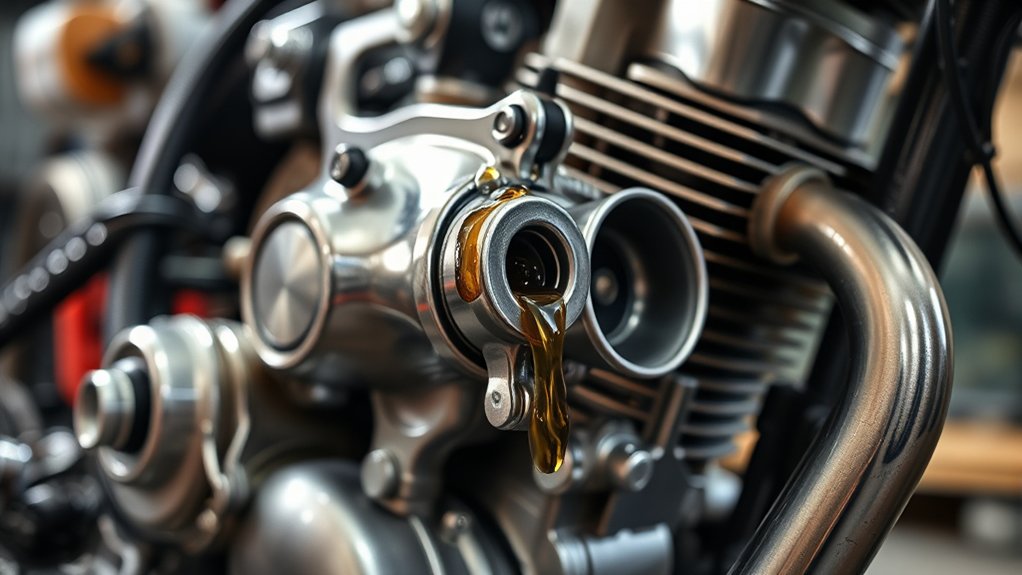
Every two-stroke engine requires oil to operate effectively because it lacks a separate lubrication system. Unlike four-stroke engines, where oil circulates independently, two-stroke engines rely on a precise mixture of oil and fuel for engine lubrication.
You’ll find various oil types designed specifically for these engines, including mineral, semi-synthetic, and fully synthetic oils, each offering different lubrication properties and thermal stability. Choosing the correct oil type is essential to minimize wear, reduce friction, and prevent engine seizure.
Because the oil directly contacts combustion components, it must combust cleanly to avoid deposits. Understanding these technical distinctions helps you maintain ideal engine performance and longevity, ensuring the two-stroke engine receives consistent, efficient lubrication throughout its operation cycle.
Why You Need to Mix Oil With Fuel in Two-Stroke Engines
Since two-stroke engines rely on a fuel-oil mixture for lubrication, understanding why you need to mix oil with fuel becomes key to proper engine function. Two-stroke engines lack a separate lubrication system, so oil types compatible with the engine must be blended directly into the fuel.
This mixture guarantees that critical components like pistons, crankshafts, and bearings receive consistent lubrication during combustion. Using correct mixing ratios is essential to balance lubrication and combustion efficiency. Too little oil risks increased wear, while too much can cause carbon buildup and smoke.
Typically, manufacturers specify precise mixing ratios to optimize performance and longevity. By adhering to recommended oil types and mixing ratios, you maintain engine integrity, prevent premature failure, and guarantee smooth operation throughout the engine’s service life.
What Happens If You Run a Two-Stroke Engine Without Oil?

If you run a two-stroke engine without oil, you risk immediate and severe damage to its internal components. The oil’s primary function is to provide critical lubrication, preventing metal-to-metal contact.
Running a two-stroke engine without oil causes severe damage by eliminating essential lubrication and protection.
Without it, lubrication failure occurs, causing friction to skyrocket. This friction generates excessive heat, greatly increasing the overheating risk.
As a result, key parts like the piston and cylinder wall experience accelerated wear or even seizure. You’ll also notice a sharp performance loss; the engine won’t operate smoothly and may stall frequently.
Prolonged operation without oil leads to irreversible engine damage, reducing lifespan and requiring costly repairs or replacements. To maintain peak function and avoid mechanical failure, always verify the correct oil-to-fuel ratio is used in your two-stroke engine.
How to Mix Oil and Fuel for Two-Stroke Engines
Mixing oil and fuel for two-stroke engines requires you to follow exact ratios specified by the manufacturer, typically expressed as a volume-to-volume measurement such as 50:1 or 40:1. Correct oil ratios guarantee peak lubrication and engine performance while preventing damage.
Use precise mixing techniques: measure oil and fuel accurately, mix thoroughly, and store the mixture in a clean container. Avoid guessing ratios, as improper mixing leads to engine failure or excessive smoke.
| Fuel Volume (Liters) | Oil Volume (Milliliters) | Oil Ratio |
|---|---|---|
| 1 | 20 | 50:1 |
| 1 | 25 | 40:1 |
| 5 | 100 | 50:1 |
| 5 | 125 | 40:1 |
Maintain these standards to maximize engine longevity and efficiency.
Frequently Asked Questions
Can I Use Synthetic Oil in a Two-Stroke Engine?
Yes, you can use synthetic oil in a two-stroke engine. Synthetic benefits include superior lubrication and cleaner combustion.
Just guarantee proper oil mixing ratios to prevent engine damage and optimize performance, following manufacturer specifications precisely.
How Often Should I Change the Oil in a Two-Stroke Engine?
You should follow the manufacturer’s maintenance schedule for oil change frequency, typically after every 25-50 hours of use. Regular monitoring guarantees ideal lubrication and prevents engine wear, maintaining peak two-stroke engine performance.
What Type of Oil Is Best for Cold Weather Two-Stroke Engines?
When frost whispers, you’ll want synthetic two-stroke oil with low viscosity to guarantee smooth cold weather performance. This choice minimizes resistance, promotes quick starts, and protects your engine from harsh, icy conditions efficiently and reliably.
Can Two-Stroke Engines Run on Ethanol-Blended Fuel?
You can run two-stroke engines on ethanol-blended fuel, but ethanol effects may cause corrosion and poor fuel compatibility.
You should use fuels with low ethanol content and consider additives to protect your engine’s components effectively.
How Do I Store Mixed Fuel for Two-Stroke Engines?
Think of storing mixed fuel like preserving a delicate potion. Use airtight storage containers with fuel stabilization additives to prevent degradation.
Keep containers in a cool, dry place, away from sunlight, ensuring ideal performance and longevity for your two-stroke engine.
Conclusion
You absolutely can’t run a two-stroke engine without oil—it’s like expecting a heart to pump without blood. Skipping the oil mix leads to instant, catastrophic damage, turning your engine into a useless paperweight faster than you can say “seized piston.”
Always mix the precise oil-to-fuel ratio recommended by the manufacturer to guarantee ideal lubrication, cooling, and performance. Neglecting this critical step isn’t just careless; it’s a guaranteed engine death sentence.
In conclusion, a two-stroke engine needs oil to operate properly and avoid severe damage.