You rely on the spark plug to ignite your engine’s air-fuel mixture by delivering a high-voltage spark across a precise gap between its center and ground electrodes.
The spark plug is essential for starting combustion and keeping your engine running smoothly.
The center electrode receives voltage, ionizing the gap’s gas to create a conductive plasma, sparking combustion inside the cylinder.
Its ceramic insulator and durable metals guarantee reliable performance under extreme heat and pressure.
Understanding its structure and maintenance helps improve engine efficiency and prevents failure—details you’ll find in deeper insights ahead.
Key Takeaways
- A spark plug ignites the air-fuel mixture in engine cylinders by creating a high-voltage spark across its electrode gap.
- The center electrode conducts voltage, while the insulator prevents electrical leakage, ensuring spark stability under extreme conditions.
- Electrical energy ionizes the gas in the spark gap, forming plasma that generates a spark to initiate combustion.
- Combustion triggered by the spark rapidly increases pressure and temperature, converting chemical energy into mechanical work.
- Proper spark plug maintenance and correct gap settings are essential for efficient ignition and engine performance.
What Is a Spark Plug and Why Is It Crucial?
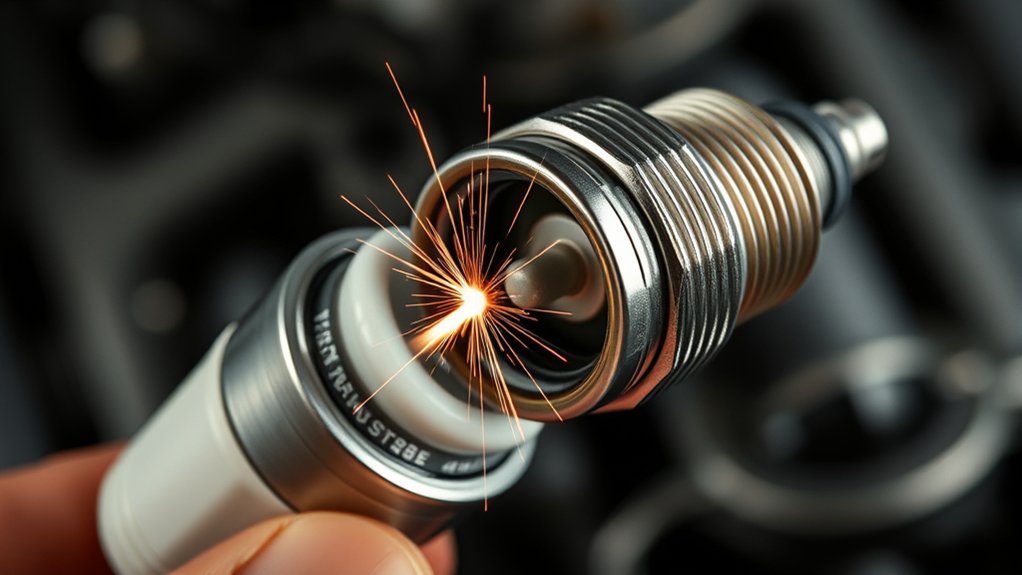
A spark plug is a small but vital component in an internal combustion engine that ignites the air-fuel mixture within the engine’s cylinders. You’ll find various spark plug types designed to match specific ignition systems, each tailored for ideal performance under different operating conditions.
For example, copper, platinum, and iridium spark plugs offer distinct electrical conductivity and durability characteristics. Understanding these spark plug types helps you select the right one for your engine’s ignition system, ensuring efficient combustion and reliable starts.
The spark plug’s precise electrode gap and robust insulation withstand extreme pressure and temperature, making it essential for maintaining engine efficiency and reducing emissions. Without a properly functioning spark plug, your ignition system can’t deliver consistent sparks, leading to poor engine performance and increased fuel consumption.
How Does a Spark Plug Create the Ignition Spark?
How exactly does a spark plug generate the intense spark needed to ignite the air-fuel mixture? When the ignition system sends a high-voltage electrical pulse at precisely the right ignition timing, this voltage travels through the spark plug’s center electrode.
The voltage must be high enough to overcome the resistance of the electrode gap, the small space between the center and ground electrodes. Once this threshold is exceeded, the electrical energy ionizes the gas in the gap, creating a conductive plasma channel.
This sudden discharge produces a spark with sufficient heat and energy to ignite the compressed air-fuel mixture in the combustion chamber. Proper ignition timing and a correctly set electrode gap are critical to guarantee the spark occurs at the ideal moment for efficient combustion and engine performance.
Main Parts of a Spark Plug and What They Do
You’ll find that a spark plug’s performance hinges on three key components: the center electrode, the insulator, and the ground electrode. The center electrode delivers the high-voltage current, while the insulator isolates this current to prevent unwanted discharge.
Meanwhile, the ground electrode provides the essential gap where the spark ignites the air-fuel mixture.
Center Electrode Function
Although it may seem small, the center electrode plays a crucial role in igniting the air-fuel mixture inside the engine cylinder. This component conducts the high voltage from the ignition coil and creates the spark necessary to initiate combustion.
Its material composition and design directly affect ignition efficiency, impacting engine performance and fuel economy. The center electrode must withstand extreme heat and corrosion while maintaining consistent electrical conductivity.
When you consider the center electrode, remember:
- Its precise shape guarantees ideal spark gap and consistent ignition.
- High-quality metals like iridium or platinum enhance durability and spark stability.
- Efficient heat dissipation prevents electrode wear and misfires.
Insulator Role Explained
While the center electrode delivers the spark that ignites the air-fuel mixture, the insulator plays an essential role in maintaining the spark plug’s overall functionality. It electrically isolates the center electrode from the metal shell, preventing short circuits.
Typically made from ceramic, insulator materials must exhibit low thermal conductivity to withstand extreme combustion temperatures while efficiently dissipating heat to avoid overheating.
| Insulator Material | Thermal Conductivity (W/m·K) | Heat Resistance (°C) |
|---|---|---|
| Alumina Ceramic | 20-30 | >1,200 |
| Silicon Nitride | 30-40 | >1,400 |
| Zirconia | 2-3 | >1,000 |
| Mullite | 3-5 | >1,200 |
This balance guarantees stable spark delivery and longevity.
Ground Electrode Purpose
The ground electrode serves as the vital counterpart to the center electrode by providing a stable surface for the spark to jump across, completing the electrical circuit necessary for ignition. Its performance hinges on the careful selection of ground electrode materials, typically nickel alloy or platinum, which resist corrosion and wear under extreme conditions.
Ground electrode design also plays a significant role; a precisely engineered shape and gap maintain peak spark efficiency and engine performance. When you understand the ground electrode’s function, you appreciate how it:
- Guarantees consistent spark generation for reliable engine starts
- Withstands intense heat and electrical stress without degradation
- Maintains precise gap settings critical for efficient combustion
This component’s material and design choices directly influence your engine’s power and fuel efficiency.
What Happens Inside the Cylinder When the Spark Plug Ignites?
When the spark plug ignites, it triggers a rapid combustion process by igniting the air-fuel mixture inside the cylinder. This combustion causes a sharp rise in pressure and temperature, forcing the piston downward.
You can see how this controlled explosion converts chemical energy into mechanical energy to power the engine.
Combustion Process Initiation
As the spark plug generates a high-voltage spark, it ignites the compressed air-fuel mixture inside the cylinder, initiating a rapid combustion process. You rely on precise combustion timing to guarantee the spark occurs at the ideal moment for maximum efficiency and power output.
When the spark jumps across the plug’s gap, it creates a flame kernel that rapidly expands, consuming the fuel mixture. This controlled ignition transforms chemical energy into mechanical work, driving the piston downward.
You can appreciate how:
- Proper combustion timing prevents engine knocking and maximizes performance
- The fuel mixture’s homogeneity guarantees complete and clean combustion
- A stable spark avoids misfires, maintaining smooth engine operation
Pressure and Temperature Rise
Once the spark plug ignites the air-fuel mixture, pressure and temperature inside the cylinder rise sharply within milliseconds. This rapid increase results from combustion, where chemical energy converts into thermal energy, causing gases to expand violently.
Compression effects play a crucial role here; the mixture is already under high pressure from the piston’s upward stroke, so ignition timing must be precise to optimize power output and prevent knocking. If the spark occurs too early or late, the pressure spike won’t align with piston position, reducing efficiency and risking engine damage.
As temperature soars past 2000°C, the expanding gases push the piston downward, producing mechanical work. Understanding this pressure and temperature rise clarifies why spark plug performance and timing are essential to engine operation and longevity.
How to Tell If Your Spark Plug Is Failing
Although spark plugs are small components, they play a critical role in your engine’s performance. Recognizing the signs of failure is essential to prevent damage. You can identify spark plug symptoms by monitoring how your engine runs.
An engine misfire is a primary indicator, often causing rough idling, reduced acceleration, or difficulty starting. Poor fuel economy and increased exhaust emissions also suggest spark plug deterioration. Additionally, physical inspection reveals fouling, corrosion, or electrode wear.
Watch for these signs closely:
- Unstable engine idle or frequent misfires causing jerks
- Noticeable drop in fuel efficiency and power output
- Visual signs of carbon buildup or electrode erosion
Act promptly to maintain engine efficiency and avoid costly repairs.
Choosing the Right Spark Plug for Your Car
When selecting a spark plug for your car, you need to take into account factors like heat range, thread size, and electrode material to guarantee peak engine performance. Different spark plug types, such as copper, platinum, and iridium, offer varying durability and conductivity.
Choosing the correct heat range assures the plug dissipates heat efficiently, preventing pre-ignition or fouling. Thread size must match your engine’s specifications to avoid damage or poor seating.
Electrode material affects longevity and ignition reliability; for example, iridium plugs provide superior wear resistance. Additionally, consider reputable spark plug brands known for precision manufacturing and quality control, as inferior products can impair combustion efficiency.
Always consult your vehicle’s manual or manufacturer recommendations to select the best spark plug type and brand tailored to your engine’s demands.
Easy Spark Plug Maintenance Tips to Keep Your Engine Running
Maintaining your spark plugs regularly guarantees peak engine performance and fuel efficiency by preventing misfires and buildup that can impair ignition. To extend your spark plug lifespan, perform spark plug cleaning every 30,000 miles or as recommended by your vehicle’s manual.
Use a wire brush or specialized spark plug cleaner to remove carbon deposits without damaging the electrode. Additionally, inspect the spark plug gap with a feeler gauge and adjust it precisely to manufacturer specifications. Neglecting these steps can lead to poor combustion and reduced power output.
Remember, well-maintained spark plugs guarantee smooth engine starts and ideal fuel consumption.
- Feel the confidence of a smoothly running engine every time you start your car.
- Save money by avoiding premature spark plug replacement.
- Experience improved acceleration and responsiveness on the road.
Frequently Asked Questions
Can Spark Plugs Affect Fuel Efficiency?
Yes, you can improve fuel efficiency by using high-quality spark plug materials that optimize ignition timing. Proper materials guarantee consistent sparks, enhancing combustion precision and reducing fuel waste.
This ultimately boosts your engine’s overall performance and economy.
How Often Should Spark Plugs Be Replaced?
You might not realize it, but your spark plug lifespan usually ranges between 30,000 to 100,000 miles. To keep your ignition system firing perfectly, replace them at these intervals, depending on your vehicle’s specifications and plug type.
Are Spark Plugs the Same for All Engine Types?
No, spark plug types vary based on engine compatibility. You’ll need specific plugs designed for your engine’s size, fuel type, and ignition system to guarantee peak performance, efficiency, and durability.
Always check manufacturer specifications carefully.
What Tools Are Needed to Replace a Spark Plug?
Need the right tools for spark plug maintenance? You’ll grab a spark plug socket matching spark plug types, a ratchet, extension, gap gauge, and torque wrench to guarantee precise installation without damaging threads or electrodes.
Can Bad Spark Plugs Cause Engine Misfires?
Yes, bad spark plugs, regardless of spark plug types, can cause engine misfires, disrupting combustion timing and reducing engine performance. You’ll notice rough idling, decreased power, and increased emissions, signaling it’s time for inspection or replacement.
Conclusion
Think of your spark plug as the heartbeat of your engine, delivering precise jolts that breathe life into every combustion cycle. Without its exact timing and flawless function, your engine’s symphony falters, losing power and efficiency.
By understanding its critical role and maintaining it meticulously, you guarantee your vehicle’s core keeps pulsing strong, igniting performance with every turn. Treat your spark plug well—it’s the tiny conductor orchestrating your engine’s power and reliability.
Remember, how does a spark plug work is key to keeping your engine running smoothly and efficiently.