Your engine oil gets dirty as it constantly traps dirt, microscopic dust, soot, and metal shavings from combustion and engine wear. This buildup is a key reason why engine oil gets dirty over time.
Heat and pressure cause thermal cracking and oxidation, breaking down oil molecules and forming sludge. Contaminants raise viscosity and corrode metal surfaces, reducing lubrication efficiency.
Over time, this thickens and degrades the oil’s protective film, risking engine damage. Understanding these processes reveals why timely oil changes are essential for engine health and longevity.
Key Takeaways
- Dirt, dust, and debris enter the engine through air intake systems and bypass air filters, contaminating the oil.
- Combustion byproducts like soot infiltrate the oil via piston rings and valve seals, increasing contamination.
- Oil undergoes thermal cracking and oxidation at high temperatures, breaking down its chemical structure.
- Mechanical shearing disrupts additive molecules, reducing oil’s protective properties and accelerating degradation.
- Metallic debris and acidic compounds from engine wear and combustion further contaminate and corrode the oil.
Why Your Engine Needs Oil to Run Smoothly
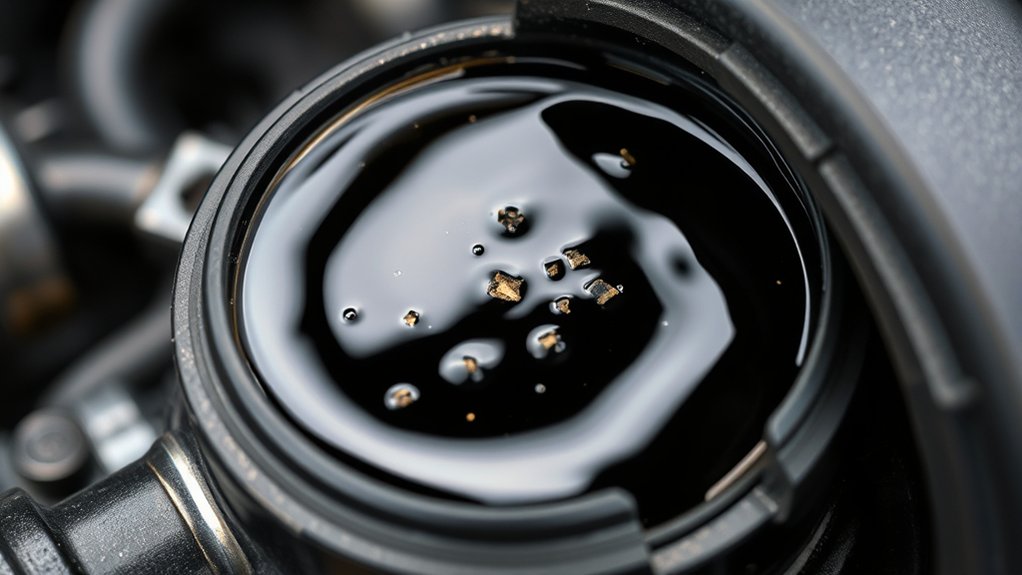
Your engine relies on oil to maintain peak performance by reducing friction between moving parts. Engine lubrication is critical because it creates a thin film that prevents metal-to-metal contact, minimizing wear and heat generation.
You need oil with the correct oil viscosity to guarantee it flows efficiently at various temperatures; if it’s too thick, it won’t circulate properly, and if too thin, it won’t provide adequate protection. Proper viscosity maintains a stable lubricating film under different operating conditions, safeguarding components like pistons and bearings.
Without ideal lubrication, parts can seize or degrade prematurely. Understanding oil viscosity’s role helps you appreciate why maintaining the right oil type and level is essential for smooth engine operation and longevity.
How Dirt and Debris Enter Engine Oil
Although engine oil is designed to protect internal components, it inevitably accumulates contaminants during operation. Dirt particles and debris enter the oil primarily through air intake systems, where microscopic dust bypasses air filters and infiltrates the combustion chamber.
Some contaminants originate from the environment, including road dust and soot, which find their way into the crankcase via piston rings and valve seals. Despite oil filtration systems capturing a significant portion of these particulates, the filter’s efficiency is limited by pore size and saturation over time.
As you operate the engine, dirt particles evade complete removal, gradually contaminating the oil. Understanding this process highlights the critical role of regular oil and filter changes to maintain oil cleanliness and protect engine longevity.
Why Metal Shavings Contaminate Engine Oil
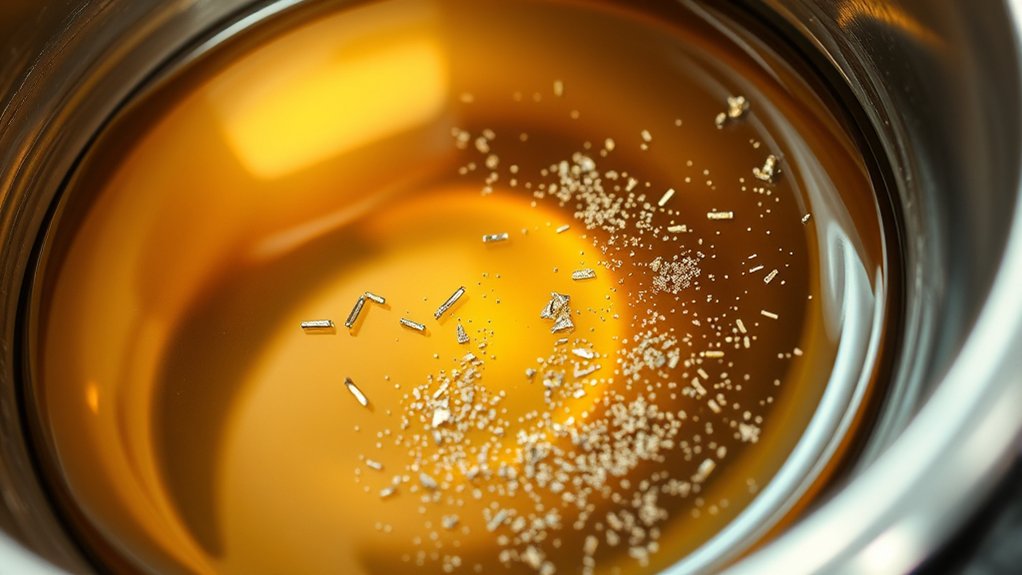
You’ll find metal shavings in engine oil primarily from wear and friction between moving parts. These particles degrade oil quality by accelerating oxidation and clogging filters.
Understanding their sources and practicing regular maintenance helps prevent contamination and extends engine life.
Sources Of Metal Shavings
Because engine components operate under intense friction and pressure, metal shavings inevitably enter the oil as microscopic particles or larger fragments. These shavings primarily originate from metal wear occurring at critical contact points, such as cylinder walls, piston rings, and bearings.
As these engine components move against each other, microscopic abrasion and metal fatigue release tiny fragments into the oil. Additionally, metal shavings can result from improper lubrication, causing accelerated wear or component misalignment.
Over time, even normal engine operation produces a measurable amount of metal debris. You must understand that these metal particles serve as direct indicators of engine wear, reflecting the mechanical condition of moving parts. Monitoring their presence in oil helps identify which engine components are deteriorating and to what extent metal wear is progressing.
Effects On Oil Quality
The presence of metal shavings in engine oil directly undermines its lubricating properties and overall performance. When these contamination sources enter the oil, they accelerate oil breakdown by causing increased friction and wear within the engine.
Metal particles act as abrasives, damaging engine surfaces and disrupting the oil’s ability to form a protective film. This contamination also promotes oxidation, which degrades the oil’s chemical stability and reduces its viscosity, impairing flow and heat dissipation.
You’ll notice that metal shavings increase sludge formation, further restricting oil circulation and escalating engine wear. Ultimately, the accumulation of metal debris compromises oil quality, reducing its effectiveness in protecting critical engine components and shortening the oil’s service life, leading to potential engine damage if not addressed promptly.
Prevention And Maintenance
Although metal shavings can enter engine oil from various sources, understanding their origin is essential for effective prevention and maintenance. You must adhere to strict maintenance schedules and utilize advanced oil filtration systems to minimize contamination.
Regular inspections detect wear patterns that produce shavings, allowing timely interventions. Neglecting these tasks accelerates engine degradation and reduces oil efficacy.
| Source of Shavings | Preventive Measure | Impact if Ignored |
|---|---|---|
| Bearing wear | Scheduled bearing checks | Increased friction, failure |
| Gear wear | Gearbox inspection | Gear damage, oil contamination |
| Improper assembly | Correct assembly procedures | Excessive metal debris |
| Oil filter failure | Oil filtration system upgrade | Unfiltered debris circulation |
| Lack of maintenance | Adhering to maintenance schedules | Accelerated engine wear |
Implementing these strategies guarantees cleaner oil and prolongs engine life.
How Combustion Byproducts Harm Engine Oil
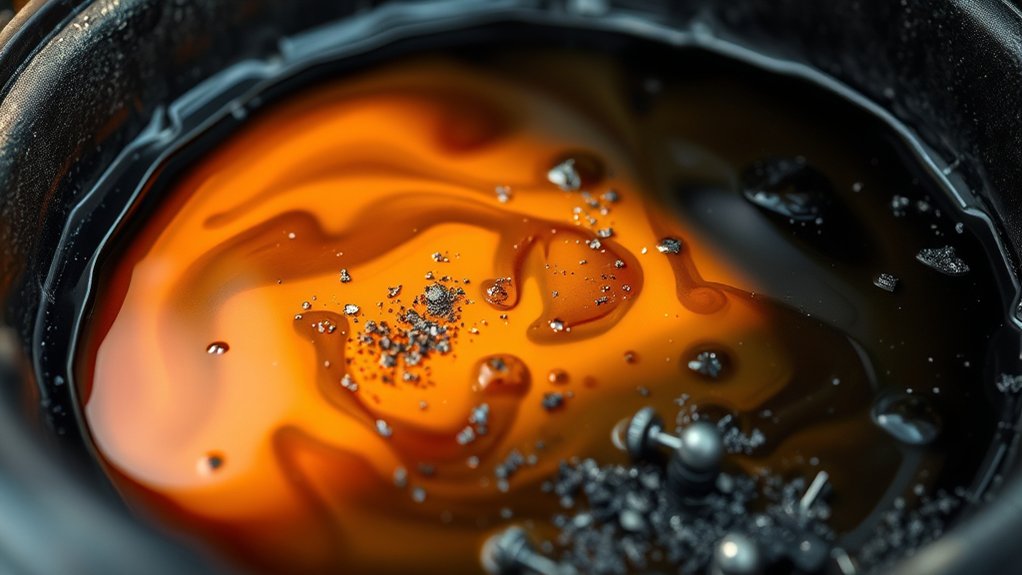
You’ll encounter combustion byproducts like soot, unburned fuel, and acidic compounds mixing with your engine oil. These contaminants degrade oil viscosity and reduce its ability to lubricate and protect engine components effectively.
Understanding their impact helps you maintain oil quality and engine performance.
Types Of Combustion Residue
When combustion occurs inside an engine, it generates various byproducts that contaminate the engine oil. Understanding the primary residue types helps you grasp how combustion byproducts affect oil integrity. These residues typically include:
- Soot Particles: Microscopic carbon deposits formed from incomplete combustion. They increase oil viscosity and accelerate wear.
- Acidic Compounds: Result from fuel combustion and oil oxidation. These acids corrode metal surfaces and degrade oil additives.
- Metallic Debris: Tiny metal fragments from engine wear mix with oil, exacerbating contamination and abrasive damage.
Each residue type interacts differently with oil, but all contribute to contamination. Recognizing these combustion byproducts enables you to anticipate maintenance needs and choose suitable oil formulations for maximum engine protection.
Effects On Oil Quality
Because combustion byproducts continuously mix with engine oil, they greatly degrade its protective properties over time. These contaminants, including soot, acids, and unburned fuel, chemically interact with oil additives, neutralizing their effectiveness.
As a result, the oil’s ability to lubricate, cool, and protect engine components diminishes. You rely on oil filtration to remove solid particles, but filters cannot capture dissolved contaminants or prevent additive depletion.
Over time, this leads to increased viscosity, sludge formation, and corrosion risk. To maintain oil quality, you must monitor additive levels and replace oil before contamination causes irreversible damage.
Understanding how combustion byproducts compromise oil emphasizes the critical role of regular oil changes and filtration system maintenance in preserving engine performance and longevity.
How Heat and Pressure Damage Engine Oil
Although engine oil is formulated to withstand extreme conditions, intense heat and pressure inside the engine initiate chemical changes that degrade its molecular structure. You’ll notice that heat breakdown causes oil molecules to oxidize, reducing viscosity and impairing lubrication.
Engine heat and pressure trigger chemical changes that degrade oil, reducing viscosity and harming lubrication.
Simultaneously, pressure degradation physically alters the oil’s additive package, weakening its protective qualities. These combined effects accelerate oil deterioration.
You can better understand this process through three key mechanisms:
- Thermal cracking: High temperatures break down hydrocarbon chains, diminishing oil integrity.
- Oxidation: Heat promotes reactions with oxygen, forming acidic compounds that corrode engine parts.
- Mechanical shearing under pressure: Intense forces disrupt additive molecules, reducing anti-wear performance.
Why Engine Oil Becomes Thick and Sludgy
Once engine oil starts breaking down chemically and physically, it thickens and forms sludge that impairs its flow and lubrication properties. This degradation alters oil viscosity, making it less effective at reducing friction.
Sludge formation results from contaminants like combustion byproducts and degraded additives binding with oil molecules, creating sticky deposits. These deposits accumulate, restricting oil passages and accelerating wear.
| Factor | Effect on Oil |
|---|---|
| Oxidation | Increases viscosity, promotes sludge |
| Contaminants | React with oil, trigger sludge formation |
| Additive depletion | Reduces oil’s ability to maintain viscosity |
Understanding these mechanisms helps you appreciate why maintaining proper oil condition is vital to engine longevity.
Signs Your Engine Oil Is Dirty and Needs Changing
Several key indicators can help you determine when your engine oil is dirty and requires changing. Monitoring oil color and oil texture offers precise insight into oil condition.
- Oil Color: Fresh oil is amber and translucent. When it darkens to black or murky brown, contaminants and combustion byproducts have accumulated, signaling degradation.
- Oil Texture: Healthy oil is smooth and fluid. If you notice a gritty or sludge-like feel, it means particulates and deposits have thickened the oil, reducing lubrication efficiency.
- Engine Performance: Unusual engine noises or overheating can indicate insufficient oil quality, often linked to dirty oil impairing component protection.
How Regular Oil Changes Keep Your Engine Healthy
Because engine oil continuously collects contaminants and loses its lubricating properties over time, performing regular oil changes is essential to maintain peak engine function. You need to adhere to the recommended oil change frequency to prevent sludge buildup, abrasive particle accumulation, and acid formation that degrade engine components.
While modern oil filtration systems capture many impurities, they cannot eliminate all contaminants, making periodic oil replacement critical. Skipping or extending oil change intervals reduces oil viscosity and film strength, increasing metal-to-metal contact and accelerating wear.
Frequently Asked Questions
Can Synthetic Oil Resist Getting Dirty Longer Than Conventional Oil?
Yes, synthetic oil offers superior contaminant resistance, enhancing its longevity compared to conventional oil. You’ll benefit from synthetic benefits like improved performance factors, which collectively extend oil life and maintain engine efficiency longer during use.
How Does Engine Oil Filtration Work to Remove Contaminants?
You rely on mechanical, centrifugal, and magnetic filter types to trap oil contaminants. These filters capture particles and sludge, ensuring cleaner oil circulates.
This maintains engine efficiency and prevents wear caused by abrasive debris in the oil.
Does Driving Style Affect How Quickly Engine Oil Gets Dirty?
Your driving style paints a canvas of engine wear; aggressive acceleration and harsh braking under severe driving conditions accelerate oil contamination.
You’ll find oil degrades faster, demanding more frequent changes to maintain peak engine performance.
Can Additives in Engine Oil Prevent Dirt Buildup?
Yes, additives improve additive effectiveness by enhancing dirt prevention in engine oil. They chemically neutralize contaminants and reduce sludge formation, helping you maintain cleaner oil longer.
However, they can’t entirely prevent dirt buildup under all driving conditions.
How Do Oil Change Intervals Vary by Vehicle Type?
You’ll find oil change intervals vary by vehicle maintenance needs and oil viscosity; high-performance or diesel engines require more frequent changes, while newer models with synthetic oils allow longer intervals, optimizing engine protection and efficiency.
Conclusion
If you don’t change your engine oil, it turns into a toxic sludge swamp, choking your engine like a clogged artery. Dirt, metal shavings, and combustion gunk build up relentlessly, causing wear and overheating that could grind your engine to a halt.
Regular oil changes act like a precise filtration system, flushing out contaminants and keeping your engine running smoothly and efficiently. This helps prevent catastrophic failure and costly repairs.
Don’t let dirty oil sabotage your vehicle’s heart. Understanding how does engine oil get dirty is key to maintaining your engine’s health and longevity.