You rely on engine oil to reduce friction by forming a thin lubricating film between moving parts, preventing wear and energy loss.
Engine oil plays a crucial role in keeping your engine running smoothly and efficiently. It also transfers heat away from critical components, balancing viscosity to optimize flow and cooling.
Over time, oil degrades and accumulates contaminants, which is why regular changes maintain its protective and cooling effectiveness.
Understanding these functions helps you protect your engine’s performance and longevity while minimizing overheating and mechanical failure risks.
Key Takeaways
- Engine oil reduces friction by forming a lubricating film between moving engine parts.
- It absorbs and dissipates heat to prevent engine overheating.
- Oil viscosity balances flow efficiency and protective film strength under varying conditions.
- Additives enhance lubrication, reduce wear, and protect metal surfaces.
- Regular oil changes remove contaminants and maintain oil’s protective properties.
How Engine Oil Works Inside Your Car’s Engine
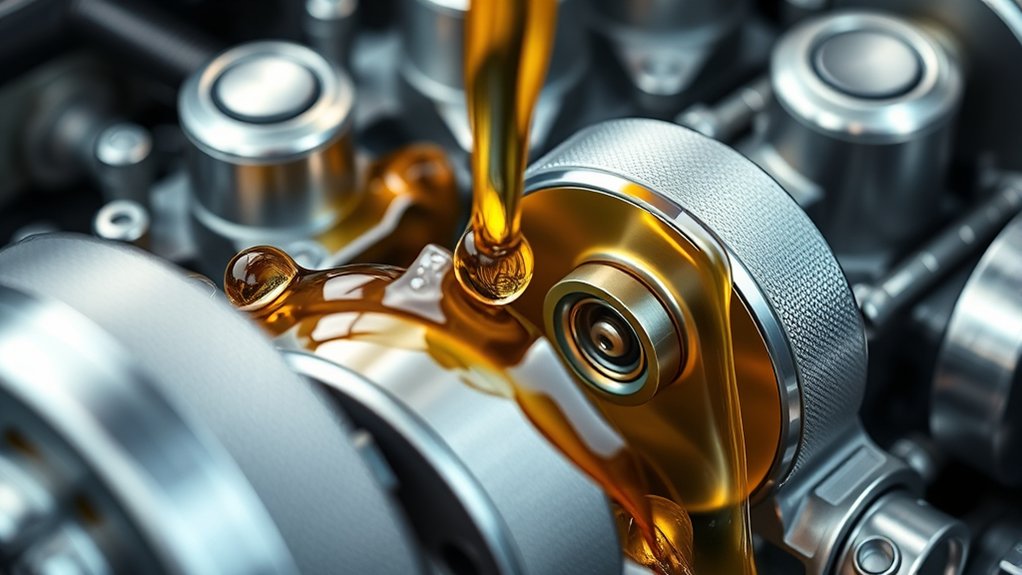
Although you may not see it, engine oil plays a critical role inside your car’s engine by reducing friction between moving parts. You need to understand that oil viscosity directly impacts how effectively the oil flows and forms a protective film under varying temperatures and pressures.
Selecting the right viscosity guarantees maximum lubrication, minimizing wear and maintaining engine efficiency. Synthetic options offer enhanced performance by providing more stable viscosity across temperature extremes and superior resistance to breakdown, which extends oil life and engine protection.
How Engine Oil Reduces Friction and Wear
When engine oil coats moving components, it creates a thin, lubricating film that separates metal surfaces, considerably reducing direct contact and friction. This film is essential for friction reduction, minimizing energy loss and heat generation.
By maintaining this separation, engine oil plays a significant role in wear prevention, extending the lifespan of engine parts.
Maintaining separation between components, engine oil crucially prevents wear and prolongs engine part longevity.
You should understand these key mechanisms of oil function:
- Hydrodynamic lubrication: Oil forms a pressurized layer that supports loads and prevents metal-to-metal contact.
- Additive action: Special additives enhance friction reduction and protect surfaces from abrasive wear.
- Surface smoothing: Oil fills microscopic irregularities, reducing asperity interactions that cause wear.
How Engine Oil Helps Keep Your Engine Cool
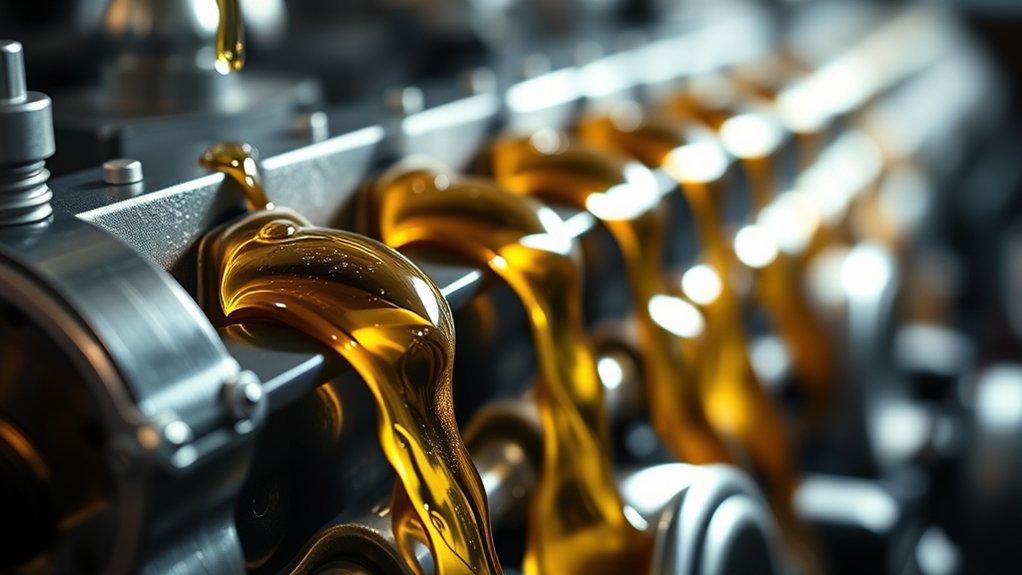
Because engine oil continuously circulates through your engine, it effectively transfers heat away from vital components, helping to maintain ideal operating temperatures. The oil’s cooling properties rely heavily on its ability to absorb and dissipate thermal energy generated by combustion and friction.
Oil viscosity plays an important role here; if it’s too thick, the oil won’t flow efficiently, limiting heat transfer. If it’s too thin, it won’t provide adequate lubrication, increasing friction and heat. Your engine oil’s formulation balances viscosity and thermal conductivity to optimize heat removal.
Why Regular Engine Oil Changes Are Vital for Your Car
Regularly changing your engine oil confirms that contaminants, metal particles, and degraded additives don’t accumulate and impair your engine’s performance. Maintaining the correct oil change frequency guarantees the oil retains its lubricating, cooling, and cleaning properties.
Neglecting this leads to increased friction, overheating, and accelerated engine wear.
You should consider these key reasons for timely oil changes:
- Removes abrasive particles that cause engine surface damage
- Restores additive effectiveness critical for oil stability
- Maintains ideal viscosity for efficient engine operation
Frequently Asked Questions
What Types of Engine Oil Are Best for Different Vehicles?
You’ll choose engine oil types based on vehicle compatibility: synthetic for high-performance engines, conventional for standard cars, and blend oils for moderate use.
Always check your manufacturer’s specs to guarantee ideal lubrication and engine longevity.
How Do Synthetic and Conventional Oils Differ?
Synthetic oils offer superior lubrication properties and consistent oil viscosity across temperatures, enhancing engine protection. Conventional oils vary more with heat, providing less stability.
You’ll notice synthetics better resist breakdown and maintain performance longer.
Can Engine Oil Improve Fuel Efficiency?
Yes, engine oil can improve fuel efficiency by reducing engine wear and friction through its superior lubrication properties. This minimizes energy loss, allowing your engine to operate more smoothly and consume less fuel over time.
What Additives Are in Engine Oil and Their Functions?
Additives in engine oil act like a Swiss army knife, enhancing oil performance by reducing wear, preventing corrosion, dispersing contaminants, and improving viscosity.
Each additive function works precisely to keep your engine running smoothly and efficiently.
How to Properly Dispose of Used Engine Oil?
You should collect used engine oil in a sealed container and take it to authorized oil collection centers. Utilize local recycling programs to guarantee environmentally safe disposal, preventing contamination and promoting resource recovery through proper recycling.
Conclusion
Think of engine oil as the lifeblood coursing through your car’s mechanical heart. It forms a protective shield, reducing friction and wear while carrying away heat, ensuring every component moves smoothly.
Without regular oil changes, this essential fluid becomes contaminated, like rust building inside pipes, threatening your engine’s efficiency and longevity.
By maintaining fresh oil, you preserve the delicate balance that keeps your engine running at peak performance, safeguarding your investment with precision and care. This is how engine oil works to protect and enhance your vehicle’s operation.