Yes, your 4 cycle engine absolutely needs oil to function properly.
Oil forms a protective film that reduces friction and prevents metal-to-metal wear inside the engine. Without oil, critical components like the crankshaft and piston rings will rapidly degrade, causing overheating and severe damage.
Proper oil circulation also helps dissipate heat and remove contaminants, preserving engine longevity.
Understanding how oil works and how to maintain its quality is key to keeping your engine running smoothly and efficiently.
Key Takeaways
- Yes, 4 cycle engines require oil to create a protective film that reduces friction between moving parts.
- Oil prevents metal-to-metal wear and ensures consistent lubrication for engine components.
- Proper oil viscosity is essential for efficient heat dissipation and engine performance.
- Running a 4 cycle engine without oil causes rapid damage, overheating, and costly mechanical failures.
- Regular oil checks and changes maintain oil quality and extend the engine’s lifespan.
Why 4 Cycle Engines Need Oil to Prevent Wear
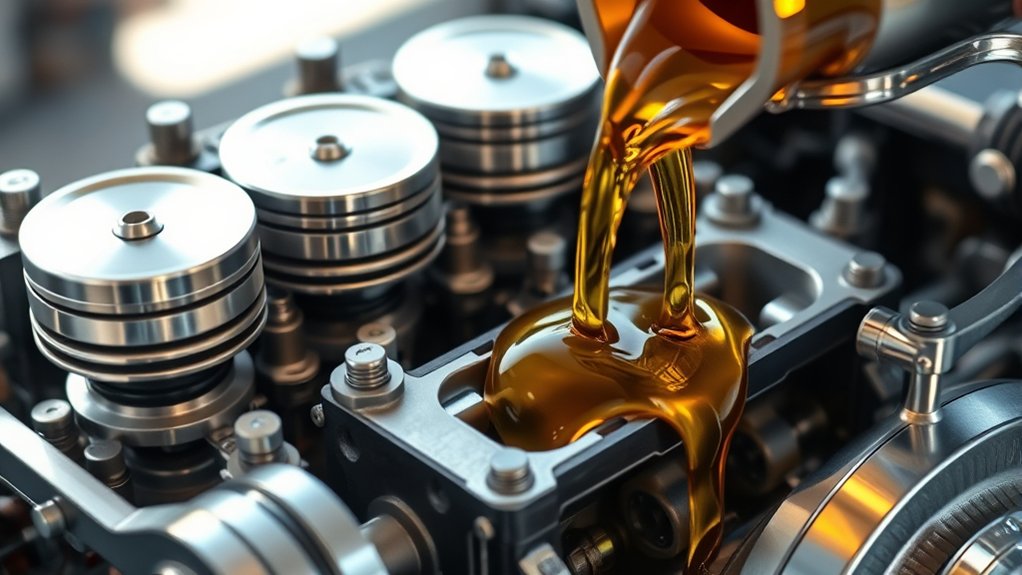
Because 4 cycle engines rely on multiple moving parts operating in close contact, you need oil to create a protective film that reduces friction and prevents metal-to-metal wear. Effective engine lubrication depends on maintaining an ideal oil viscosity, guaranteeing the oil forms a consistent, thin layer between components.
If the oil is too thick, it impedes flow, increasing resistance and wear; too thin, and it fails to separate surfaces adequately. By controlling oil viscosity, you promote efficient heat dissipation and minimize abrasion among pistons, crankshafts, and camshafts.
Without this precise balance, the engine’s mechanical integrity degrades rapidly. Consequently, selecting the correct oil viscosity grade and maintaining engine lubrication are critical to preserving component longevity and performance in 4 cycle engines.
What Happens When a 4 Cycle Engine Runs Without Oil
If a 4 cycle engine runs without oil, internal components will experience rapid and severe damage due to the absence of lubrication. Without oil to reduce friction, metal parts like pistons and crankshafts grind against each other, causing accelerated wear and overheating.
This lack of lubrication disrupts the engine’s ability to manage heat generated during combustion, leading to distortion and eventual seizure. You’ll notice increased oil consumption as the engine attempts to compensate for the loss, but in its absence, critical components deteriorate quickly.
The resulting engine damage can include scored cylinders, damaged bearings, and compromised seals, which ultimately lead to engine failure. Operating a 4 cycle engine without oil is a critical error that causes irreversible mechanical breakdown and costly repairs.
How Oil Circulates and Protects 4 Cycle Engine Parts
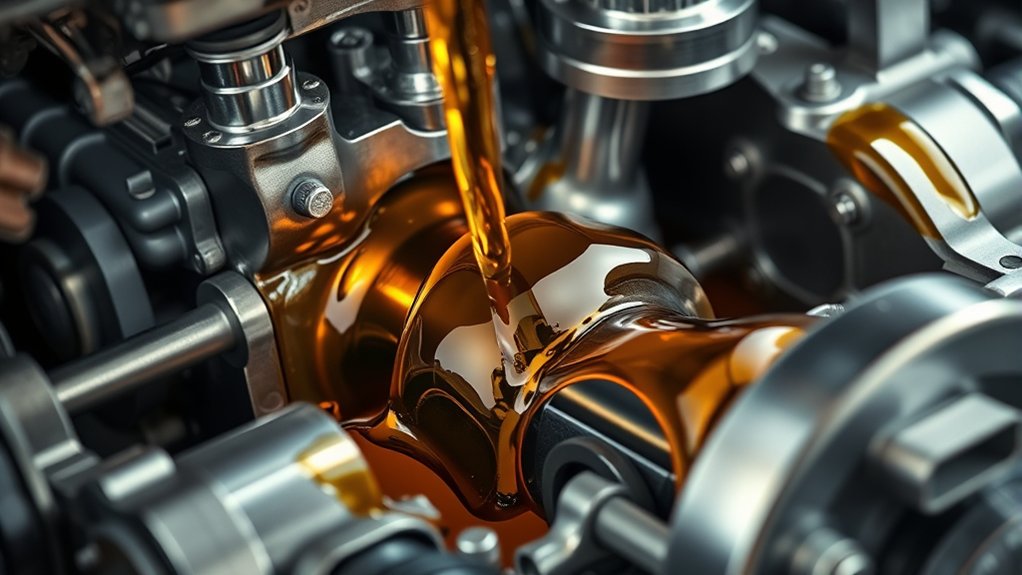
Understanding the damage caused by running a 4 cycle engine without oil highlights the importance of its lubrication system. Oil circulates through critical engine components via an oil pump, maintaining a protective film that minimizes metal-to-metal contact.
This film’s effectiveness depends on proper oil viscosity, which guarantees consistent flow under varying temperatures and engine speeds. As oil moves, it lubricates the crankshaft, camshaft, piston rings, and valve train, reducing friction and wear.
Additionally, the oil absorbs heat and carries away contaminants, preserving engine integrity. Without adequate engine lubrication, these parts would seize or degrade rapidly.
How to Check and Maintain Oil Levels in Your 4 Cycle Engine
Regularly checking and maintaining oil levels guarantees your 4 cycle engine operates effectively and prevents premature wear. Begin by positioning your engine on a level surface, then remove the oil dipstick to perform an oil dipstick check. Wipe it clean, reinsert fully, and withdraw again to observe the oil level against the marked indicators.
If the level falls below the minimum mark, add the recommended oil type incrementally, rechecking until ideal. Conduct this oil dipstick check at consistent intervals aligned with the manufacturer’s guidelines to guarantee accuracy.
Regular maintenance also involves inspecting oil quality for discoloration or contaminants, signaling necessary oil changes. Adhering to this disciplined approach prevents lubrication failures, mitigates friction, and extends engine lifespan, underscoring the critical role of precise oil level management in 4 cycle engine performance.
Frequently Asked Questions
What Type of Oil Is Best for Different 4 Cycle Engines?
You’ll want to choose oil viscosity based on engine compatibility. Typically, SAE 10W-30 suits general 4-cycle engines, while synthetic oils offer better performance in high-stress or temperature-variable conditions.
Always check your engine’s manual first.
How Often Should Oil Be Changed in a 4 Cycle Engine?
You should never ignore oil change frequency. Changing your oil every 50 hours or season keeps your engine humming. Follow engine maintenance tips precisely to prevent wear, guarantee peak performance, and extend your 4 cycle engine’s lifespan effectively.
Can Synthetic Oil Be Used in All 4 Cycle Engines?
Yes, you can use synthetic oil in most 4 cycle engines. Its benefits include enhanced lubrication and temperature stability.
However, drawbacks like incompatibility with older seals might cause leaks, so always check your engine’s specifications first.
What Are Signs of Oil Leaks in a 4 Cycle Engine?
You know what they say: “A stitch in time saves nine.” For oil leak detection, watch for puddles, low oil levels, or smoke.
Regular engine maintenance helps you spot leaks early and prevent costly damage.
How Does Engine Oil Affect Fuel Efficiency in 4 Cycle Engines?
You’ll improve fuel economy by using oil with proper viscosity, ensuring ideal lubrication quality. This reduces wear, maintains engine performance, and controls temperature, all of which minimize friction and energy loss in your 4 cycle engine.
Conclusion
You need oil in your 4 cycle engine to reduce friction and prevent wear—without it, damage occurs rapidly. Studies show that engines running without oil can seize in under 30 seconds, underscoring oil’s critical role. Oil circulates through key parts, maintaining smooth operation and longevity.
Regularly checking and maintaining oil levels guarantees your engine performs effectively and avoids costly repairs. Don’t overlook this essential maintenance step for ideal engine health.
In conclusion, 4 cycle engines need oil to ensure durability and optimal performance.