You need a spark plug socket to safely remove and install spark plugs without damaging their ceramic insulator or electrodes. A spark plug socket guarantees a secure grip, prevents slippage, and allows consistent torque application to avoid misfires.
Using the right size and design protects delicate parts and optimizes maintenance. Investing in a proper socket also extends tool life and maintains engine performance.
If you want to fully understand when and how to use these sockets, there’s more detail ahead.
Key Takeaways
- A spark plug socket ensures safe removal and installation, preventing damage to the ceramic insulator and electrodes.
- It provides a secure grip with rubber inserts or magnets, reducing the risk of slipping and rounding hex edges.
- Using the correct socket guarantees consistent torque application, avoiding misfires and ensuring engine performance.
- Deep well spark plug sockets are essential for accessing hard-to-reach plugs in many engines.
- Investing in a quality spark plug socket improves maintenance efficiency and protects spark plug integrity.
Do You Need a Spark Plug Socket?
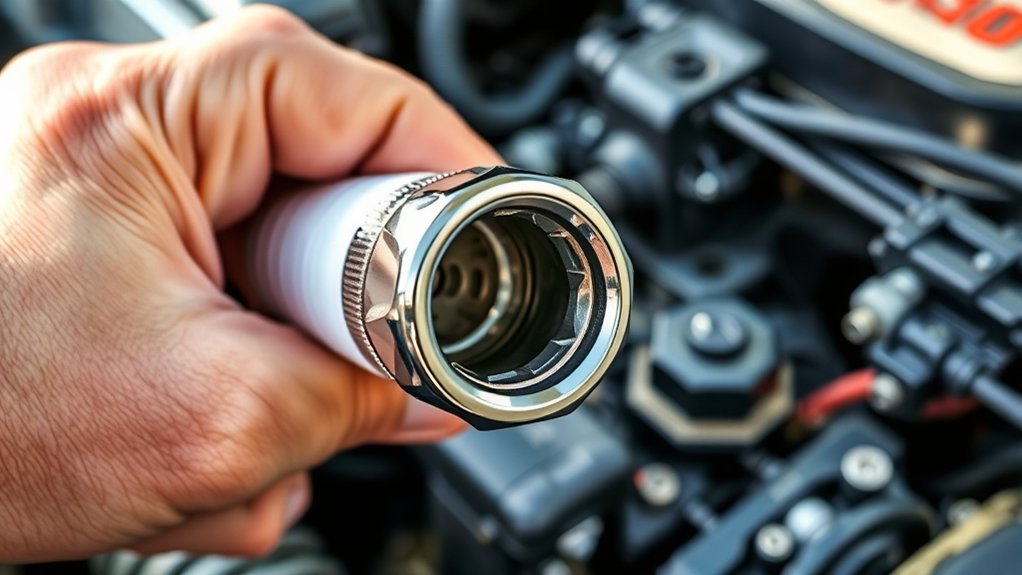
Why should you use a spark plug socket? Because the spark plug’s importance in your engine’s ignition system demands proper handling during maintenance. Using a dedicated spark plug socket guarantees you remove and install plugs without damaging their ceramic insulator or delicate electrodes.
This tool fits snugly around the plug, preventing slippage and rounding off hex edges. When following maintenance tips, you’ll appreciate the socket’s rubber insert or magnet holding the plug securely, reducing the risk of dropping it into the engine bay.
A standard wrench lacks these features, increasing the chance of improper torque application, which can lead to poor engine performance or thread damage. In short, a spark plug socket protects your spark plugs and optimizes your maintenance efforts efficiently.
What Is a Spark Plug Socket?
A spark plug socket is a specialized tool designed to fit spark plugs securely, allowing you to remove or install them without damage. It features a rubber insert or magnetic core to grip the plug firmly and protect its ceramic insulator.
Understanding its design helps you work efficiently and avoid costly mistakes during maintenance.
Purpose of Spark Plug Socket
Although spark plugs resemble ordinary bolts, you’ll need a specialized socket to install or remove them properly. The purpose of a spark plug socket is to provide a secure grip and protect the delicate ceramic insulator during spark plug maintenance.
Using a regular socket risks damaging the spark plug or applying uneven torque, which can compromise engine performance. This socket is designed to fit snugly over the plug, often with a rubber or foam insert that cushions the plug and prevents slipping.
Socket Design Features
Because spark plugs require careful handling, spark plug sockets incorporate specific design features that set them apart from standard sockets. These sockets offer design benefits that protect the delicate ceramic insulator and prevent damage during removal or installation.
The socket materials are often high-quality chrome vanadium steel, providing durability and resistance to corrosion. Additionally, a built-in rubber insert or foam cushion secures the spark plug firmly, preventing it from slipping or falling.
You’ll also notice a deep socket design to reach recessed plugs easily, and a hexagonal shape that fits snugly over the spark plug’s hex nut for precise torque application.
- Cushioned interior for secure grip and protection
- Durable, corrosion-resistant socket materials
- Deep socket length for hard-to-reach plugs
- Hexagonal design for accurate torque control
- Lightweight yet sturdy construction for ease of use
When Is a Spark Plug Socket Essential?
When do you truly need a spark plug socket? You require one whenever you perform spark plug maintenance to guarantee proper engine performance.
Regular removal and installation of spark plugs demand a tool designed to grip the plug securely without damaging its ceramic insulator or threads. A standard socket won’t provide the precise fit or protection needed, risking breakage or improper torque application.
Using a spark plug socket lets you apply consistent torque, preventing under- or over-tightening, which can lead to engine misfires or damage. Additionally, if your spark plugs sit deep within the engine block, a spark plug socket’s extended design helps you reach them efficiently.
In short, whenever you’re maintaining spark plugs to optimize engine performance, using the right socket is essential.
Types of Spark Plug Sockets and How to Choose
Selecting the right spark plug socket depends on factors like the type of spark plug, engine accessibility, and the tool’s construction. You’ll encounter different spark plug types, such as iridium, platinum, or copper, each requiring a socket with compatible dimensions and materials.
Socket compatibility guarantees you don’t damage the plug or engine components during removal or installation.
Consider these points when choosing your socket:
- Size match to specific spark plug types
- Deep sockets for recessed plugs
- Rubber inserts or magnetic grips for secure handling
- Durable materials like chrome vanadium steel
- Drive size compatibility with your ratchet or wrench
How Spark Plug Sockets Keep Your Plugs Safe
Choosing the right spark plug socket isn’t just about fit. It directly affects how well you protect your spark plugs during removal and installation. A quality socket guarantees spark plug protection by securely gripping the plug without damage.
Additionally, socket durability matters. A robust socket resists wear and prevents slipping, safeguarding both the plug and your tools.
| Feature | Benefit | Importance |
|---|---|---|
| Rubber Insert | Cushions plug, prevents scratches | Critical for spark plug protection |
| Magnetic Socket | Holds plug firmly in place | Enhances ease and safety |
| Chrome Vanadium Steel | Resists wear and corrosion | Guarantees long socket durability |
| Precise Fit | Prevents plug rounding | Maintains plug integrity |
Using the right socket maximizes spark plug protection and extends socket durability.
How to Use a Spark Plug Socket Safely
You need to handle the spark plug socket with a firm grip to avoid slipping and damaging the plug or engine components. Always wear gloves and eye protection to prevent injury from debris or sudden tool slips.
Make certain the socket fits snugly on the spark plug before applying torque to guarantee safe and effective removal or installation.
Proper Socket Handling
Handling a spark plug socket correctly requires steady hands and attention to detail to prevent damage to both the spark plug and the engine. When you use the socket, apply the proper torque to avoid over-tightening, which can strip threads or break the plug.
Maintain your tools with socket maintenance tips such as cleaning the socket after use and inspecting for wear or deformation. Always align the socket straight onto the spark plug to prevent slipping or rounding off the edges.
- Use a ratchet with a torque wrench for accuracy
- Clean debris from the socket before each use
- Avoid forcing the socket when resistance is high
- Store sockets in a dry, organized space
- Check for cracks or damage regularly
These steps guarantee reliable, damage-free spark plug removal and installation.
Safety Precautions to Follow
Although spark plug sockets are designed for ease of use, following strict safety precautions is vital to prevent injury and equipment damage. Always wear protective gloves and safety glasses to guard against accidental slips and debris.
Verify the engine is cool before starting work to avoid burns. Use the correct socket size to maintain proper torque and prevent spark plug damage. Avoid applying excessive force, which can strip threads or break the plug.
Regular tool maintenance is essential; inspect your spark plug socket for wear and replace it if damaged. Keep the socket clean and free from grease or dirt to guarantee a secure grip.
Alternatives to Spark Plug Sockets: Pros and Cons
How can you remove or install spark plugs without a dedicated spark plug socket? You can use alternatives like manual tools or universal sockets, but each comes with trade-offs. Manual tools such as adjustable wrenches offer versatility but risk damaging the plug or engine.
Universal sockets fit various sizes but may slip or fail to grip properly. Here’s a quick rundown:
- Manual tools: Affordable but less precise, increasing damage risk
- Universal sockets: Convenient, yet can strip plug edges
- Pliers or adjustable wrenches: Poor fit, high damage potential
- Deep well sockets with rubber inserts: Better grip but not always available
- DIY socket modifications: Cost-effective but unreliable
Choosing alternatives demands care, as improper tools can compromise spark plug integrity and engine performance.
Frequently Asked Questions
How Often Should Spark Plugs Be Replaced?
You should replace spark plugs every 30,000 to 100,000 miles, depending on their spark plug lifespan.
Check your vehicle’s manual for exact replacement frequency to maintain peak engine performance and fuel efficiency.
Can a Regular Socket Damage Spark Plugs?
Yes, using a regular socket can damage spark plugs, especially different spark plug types with fragile ceramic insulators.
Spark plug sockets have rubber inserts and softer socket materials to protect threads and prevent breaking during removal or installation.
What Torque Is Needed for Spark Plug Installation?
Wondering what torque suits your spark plug installation? You’ll typically apply 15-30 ft-lbs, depending on spark plug materials and installation techniques. Using correct torque prevents damage and guarantees peak performance. Precision really matters here.
Are Spark Plug Sockets Compatible With All Vehicles?
You won’t find spark plug sockets compatible with all vehicles since spark plug types and socket sizes vary. Always check your vehicle’s specifications to choose the correct socket size matching the spark plug type for precise installation.
How to Clean Spark Plugs Before Installation?
You clean spark plugs by gently scrubbing with a wire brush to remove deposits, then wiping with a clean cloth. For spark plug cleaning, avoid harsh chemicals.
During installation, verify proper gap and torque for ideal performance.
Conclusion
You might not realize it, but 90% of spark plug damage happens during installation or removal. Using a spark plug socket minimizes this risk by providing the right grip and torque, protecting both the plug and engine.
While alternatives exist, nothing matches the precision and safety of a dedicated socket. For reliable maintenance and to avoid costly engine issues, investing in a quality spark plug socket is a practical and smart choice you won’t regret.
In conclusion, a spark plug socket is essential for ensuring proper installation and extending the life of your spark plugs.