If your engine oil is low, your car’s internal parts lose essential lubrication, causing increased friction and faster wear. This can make your engine overheat, reduce power output, and lower fuel efficiency.
You might notice knocking noises, warning lights, or oil leaks. Driving with low oil risks severe engine damage, including seized pistons and worn bearings.
Keeping proper oil levels is critical for engine health. Understanding the causes and solutions will help you avoid costly repairs.
Key Takeaways
- Low engine oil reduces lubrication, causing increased friction and accelerated wear of engine components.
- Insufficient oil leads to overheating as it cannot effectively dissipate heat from the engine.
- Engine performance and fuel efficiency decline due to poor lubrication and increased mechanical resistance.
- Hydraulic systems, such as variable valve timing, may malfunction with inadequate oil levels.
- Prolonged low oil can cause severe engine damage, including seized pistons and bearing failure.
Why Low Engine Oil Hurts Your Car’s Performance
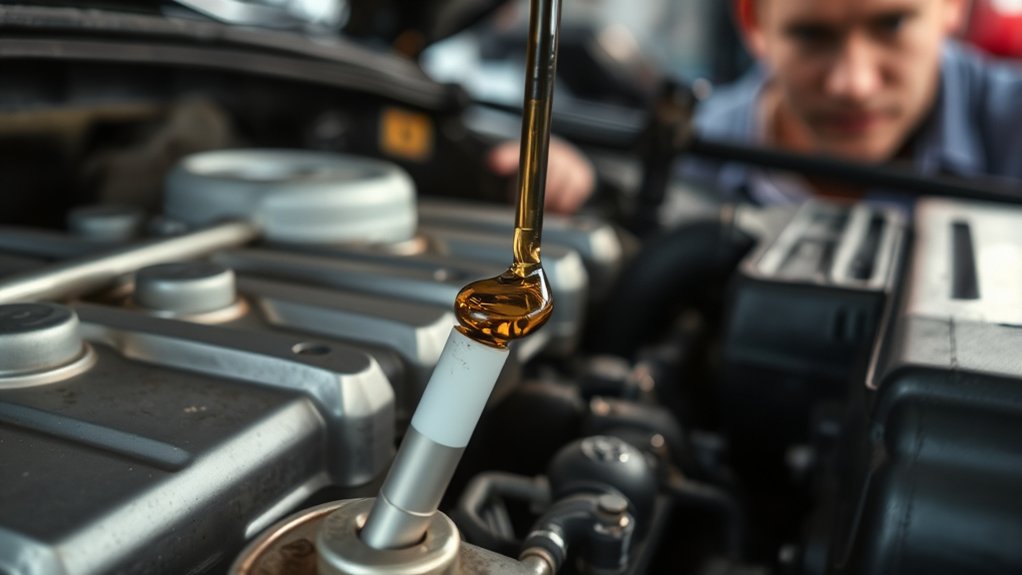
Although your engine might still run with low oil, it won’t perform efficiently or reliably. Low oil levels reduce lubrication, increasing friction between moving parts. This friction accelerates wear and leads to performance degradation.
Additionally, oil viscosity plays a significant role in maintaining a protective film on engine components. When oil is low, viscosity can fluctuate, causing inadequate lubrication and overheating. As a result, your engine struggles to maintain peak power output and fuel efficiency.
Insufficient oil also compromises hydraulic functions in variable valve timing systems, further impacting performance. Ignoring low oil levels can cause irreversible damage, reducing engine lifespan.
To prevent performance degradation, maintain proper oil levels and use oil with the correct viscosity specified by your vehicle manufacturer.
How to Spot Low Engine Oil
Understanding the effects of low engine oil on your vehicle’s performance highlights why monitoring oil levels regularly matters. You can spot low engine oil by paying attention to specific signs and performing routine engine oil checks. Use oil level indicators, such as the dipstick or electronic sensors, to get accurate readings.
Here are key ways to identify low oil:
- Check the oil dipstick for low or dark oil levels.
- Observe dashboard warning lights indicating oil pressure or level issues.
- Notice unusual engine noises, like knocking or ticking.
- Monitor engine temperature for overheating signs.
- Detect oil leaks or burning oil odors under the vehicle.
Regular engine oil checks and heeding oil level indicators help maintain peak engine function and prevent damage.
Risks of Driving With Low Engine Oil
When you drive with low engine oil, you risk severe engine damage due to insufficient lubrication and increased friction between moving parts. Lack of adequate oil causes accelerated engine wear, as metal components grind directly against each other, raising temperatures and potentially warping critical engine parts.
Low oil levels also reduce the oil’s ability to carry away heat, increasing thermal stress. Additionally, oil leaks may worsen, lowering oil volume further and contaminating engine components.
Continued operation under these conditions can lead to catastrophic engine failure, including seized pistons or damaged bearings. To protect your engine’s longevity and performance, avoid driving when oil is low, as the risks of irreversible damage and costly repairs escalate dramatically without proper lubrication.
How to Check and Maintain Engine Oil Levels
Anyone can prevent engine damage by regularly checking and maintaining proper oil levels. Start by parking your vehicle on a level surface and letting the engine cool. Pull out the dipstick, wipe it clean, then reinsert it fully before removing it again to check the oil level.
Confirm the oil viscosity matches manufacturer specifications, as incorrect viscosity affects lubrication efficiency. Use oil with the right oil additives to enhance protection and performance.
To maintain ideal engine oil levels:
- Check oil level monthly or every 1,000 miles
- Inspect oil color and consistency for contamination
- Top up with recommended oil type and viscosity
- Change oil and filter according to your vehicle’s schedule
- Store oil properly to preserve additive effectiveness
Consistent monitoring preserves engine health and prevents premature wear.
When to See a Mechanic for Low Engine Oil Problems
If you notice persistent low oil levels despite topping up, or if warning lights illuminate on your dashboard, it’s crucial to consult a mechanic promptly. Ignoring these signs can lead to severe engine damage. A professional will diagnose potential leaks, faulty oil pumps, or overdue oil change schedules, ensuring proper engine maintenance.
| Symptom | Possible Cause | Urgency Level |
|---|---|---|
| Frequent low oil levels | Leak or consumption | High |
| Dashboard oil warning | Low pressure or sensor | Immediate |
| Engine noise or overheating | Insufficient lubrication | Critical |
Timely intervention safeguards your engine’s health and prevents costly repairs. Don’t delay engine maintenance when low oil problems arise.
Frequently Asked Questions
Can Low Engine Oil Cause My Car to Fail Emissions Tests?
Yes, low engine oil can cause emissions failures by degrading oil quality, increasing engine wear, and disrupting combustion efficiency.
You should maintain proper oil levels to guarantee peak emissions performance and pass emissions tests reliably.
Does Low Engine Oil Affect Fuel Efficiency?
Yes, low engine oil increases oil consumption and reduces engine performance, which forces your engine to work harder. This inefficiency directly lowers fuel efficiency, so maintaining proper oil levels is essential for ideal fuel economy.
How Does Engine Oil Type Impact Low Oil Warnings?
Like a watch’s gears, your engine relies on the right oil viscosity and oil additives to keep sensors accurate. Using improper oil can trigger low oil warnings prematurely or delay them, risking engine damage.
Can Synthetic Oil Prevent Issues From Low Oil Levels?
Synthetic oil can’t prevent issues from low oil levels, but its synthetic advantages like superior oil longevity and better thermal stability help protect your engine longer. This gives you more time to address low oil before damage occurs.
Is It Safe to Top off Engine Oil With Any Brand?
Brand blending breaches basic best practices. You shouldn’t top off without checking oil brand compatibility and oil formulation differences.
Mixing oils with varying additives and viscosities can cause engine inefficiency or damage, so always match your manufacturer’s recommendations precisely.
Conclusion
Think of your engine oil like the lifeblood of a complex machine; without enough, it’s like trying to run a marathon on empty fuel tanks. Low engine oil compromises lubrication, causing friction and wear that degrade performance and risk costly damage.
By regularly checking and maintaining proper oil levels, you guarantee your engine runs smoothly and efficiently. Don’t wait for warning signs—address low oil promptly to keep your car’s essential systems healthy and reliable.
In conclusion, maintaining adequate engine oil is crucial to prevent damage and ensure your vehicle operates at its best. Always monitor your engine oil levels to avoid the serious consequences of low engine oil.