You can expect your Jeep Wrangler to reach a top speed between 100 and 112 mph, depending on its engine and trim.
The 2.0-liter turbocharged inline-4 offers efficiency, while the 3.6-liter V6 delivers more power for higher speeds.
Off-road features like tires, weight distribution, and suspension also affect performance.
Terrain plays a big role—mud, rocks, or sand can slow you down.
If you want to access more speed potential and safety tips, there’s plenty more to explore.
Key Takeaways
- Jeep Wranglers have an official top speed ranging from 100 to 112 mph, depending on the model year and engine type.
- The 3.6-liter V6 engine provides higher power and better top speed compared to the 2.0-liter turbocharged inline-4.
- Off-road conditions like mud, rocks, and sand significantly reduce the Wrangler’s effective speed due to traction challenges.
- Performance upgrades such as engine tuning and aerodynamic kits can enhance the Wrangler’s acceleration and top speed.
- Maintaining proper tire pressure and reducing vehicle weight improve speed and handling stability on paved roads.
What Is the Jeep Wrangler’s Official Top Speed?
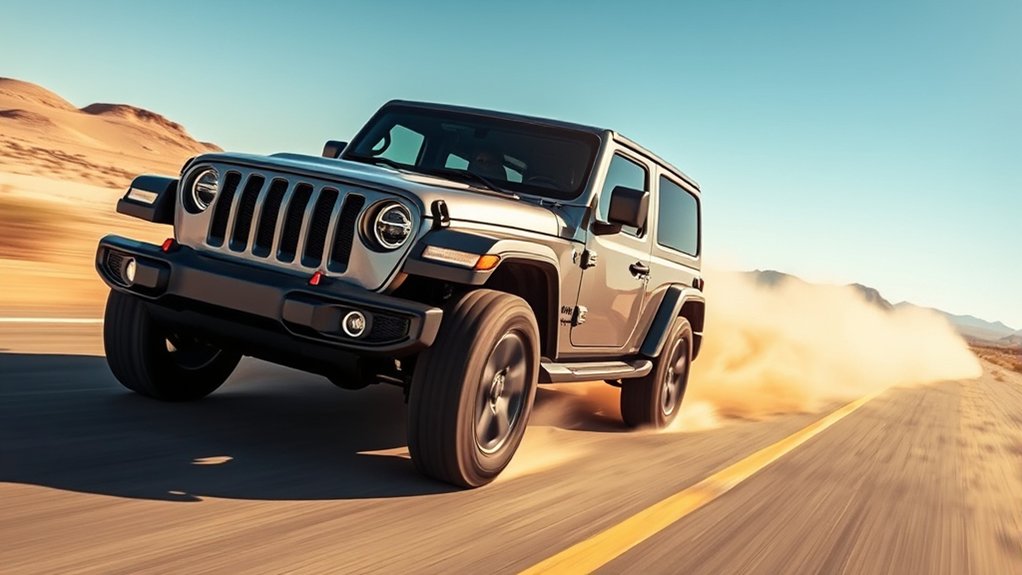
How fast can a Jeep Wrangler actually go? When you look at Jeep performance, the official top speed usually falls between 100 to 112 mph, depending on the model year and trim. This speed might surprise you if you’ve bought into common speed myths suggesting Wranglers are slow or only built for off-roading.
While Jeep Wranglers prioritize ruggedness and versatility, they still deliver respectable highway speeds. The design, including aerodynamics and gearing, limits their top-end velocity compared to sports cars, but they remain capable on paved roads.
Understanding the official top speed helps you separate fact from fiction and appreciate the balance Jeep strikes between speed and off-road capability. So, you can trust the Jeep Wrangler to handle daily driving without sacrificing essential performance elements.
How Engine Options Affect Jeep Wrangler Speed
You’ll find that the Jeep Wrangler offers several engine options, each influencing its speed differently. Understanding how these engines impact acceleration helps you gauge real-world performance beyond just top speed figures.
Let’s examine how engine type plays a key role in the Wrangler’s overall speed capabilities.
Engine Types Overview
Although the Jeep Wrangler comes with several engine options, each one greatly influences its top speed and overall performance. When you compare engine specifications, you’ll notice variations in displacement, turbocharging, and fuel type that directly affect power output.
For example, the 2.0-liter turbocharged inline-4 delivers a balanced mix of efficiency and horsepower, while the 3.6-liter V6 offers a higher power output for increased top speed potential. Diesel options, though less common, prioritize torque over outright speed.
Understanding these differences helps you grasp how each engine type shapes the Wrangler’s capability on the road. By examining engine specifications and power output, you can better predict which engine suits your need for speed without compromising the Wrangler’s rugged character.
Impact On Acceleration
The choice of engine directly influences a Jeep Wrangler’s acceleration, shaping how quickly it responds when you hit the gas. Different engine options come with varying horsepower and torque, which are critical acceleration factors.
A more powerful engine delivers quicker throttle response and faster 0-60 times, enhancing overall speed capability. Additionally, performance upgrades like turbochargers or enhanced intake systems can further improve acceleration by increasing engine efficiency and power output.
When selecting your Jeep Wrangler, consider how these acceleration factors align with your driving needs, whether you prioritize quick highway merges or off-road responsiveness. Ultimately, understanding the impact of engine options and potential performance upgrades helps you optimize your Wrangler’s speed and acceleration to suit your style.
Which Off-Road Features Impact Jeep Wrangler Speed?
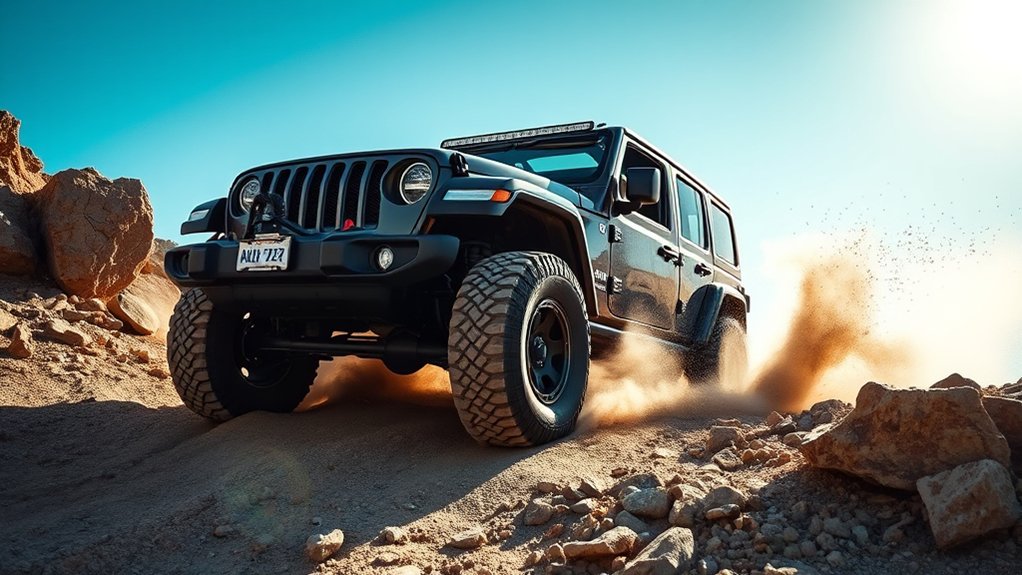
When tackling rugged terrain, several off-road features directly influence your Jeep Wrangler’s speed and performance. Tire selection plays a critical role; all-terrain or mud-terrain tires provide better grip but often add rolling resistance, reducing top speed. Conversely, lighter tires improve speed but may sacrifice traction.
Weight distribution is equally important. Balanced weight between the front and rear axles guarantees better control and stability, which allows you to maintain higher speeds safely. Adding heavy accessories like winches or roof racks can shift weight forward or upward, negatively impacting acceleration and speed.
Suspension upgrades, while enhancing off-road capability, may alter weight dynamics and affect speed as well. Understanding how these features interact helps you optimize your Wrangler’s performance for faster, safer off-road driving.
How Different Terrains Affect Jeep Wrangler Speed
You’ll notice that muddy trails slow your Jeep Wrangler down considerably due to reduced traction.
On rocky paths, your speed depends on carefully maneuvering around obstacles to maintain control without damaging the vehicle. Meanwhile, sandy surfaces require balancing power and momentum to avoid getting stuck while keeping a steady pace.
Impact Of Muddy Trails
Although Jeep Wranglers are built for off-road adventures, muddy trails can greatly reduce their speed and maneuverability. When you tackle these slippery surfaces, mud traction becomes a critical factor influencing your vehicle’s performance. Poor traction forces you to slow down, compromising trail handling and control.
To navigate muddy trails effectively, consider these key aspects:
- Tire Choice – Aggressive, mud-terrain tires improve grip and reduce slippage.
- Speed Adjustment – You’ll need to lower your speed to maintain stability and avoid getting stuck.
- Momentum Management – Maintaining steady momentum helps prevent wheel spin and loss of control.
Understanding how mud affects your Wrangler enables you to adapt your driving style, ensuring safer, more efficient passage through challenging muddy conditions.
Speed On Rocky Paths
Muddy trails demand careful speed control, but rocky paths present a different set of challenges for your Jeep Wrangler’s performance. On rocky terrain, maintaining traction and stability becomes essential, and your vehicle’s off-road handling directly impacts how fast you can navigate these obstacles safely.
You’ll need to reduce speed to avoid damage and maintain control over jagged rocks and uneven surfaces.
| Terrain Type | Recommended Speed | Handling Consideration |
|---|---|---|
| Rocky Terrain | 10-20 mph | Enhanced suspension, precise throttle control |
| Gravel | 20-30 mph | Moderate traction, stable steering |
| Mixed Rocks | 15-25 mph | Adapt to variable surface grip |
Adjust your speed based on the rocky terrain’s severity to optimize off-road handling and protect your Jeep Wrangler.
Performance On Sandy Surfaces
When driving your Jeep Wrangler on sandy surfaces, managing speed becomes essential to prevent getting stuck or losing traction. Sand traction is considerably lower than on solid ground, so maintaining the right balance is key.
Lowering your tire pressure increases the tire’s footprint, improving grip and helping you glide over the sand rather than dig in.
To optimize performance on sand, focus on these three points:
- Reduce tire pressure to around 15-20 PSI for better sand traction.
- Maintain steady, moderate speed to avoid wheel spin or getting bogged down.
- Use 4WD mode to distribute power evenly across all wheels.
How Modifications Can Boost Your Jeep Wrangler’s Speed
Since the stock Jeep Wrangler prioritizes off-road capability over speed, many owners turn to modifications to enhance performance on the road. You can greatly boost your Wrangler’s speed by focusing on performance upgrades and aerodynamics enhancements.
Performance upgrades like engine tuning and exhaust systems increase horsepower, while aerodynamics improvements reduce drag, allowing smoother airflow.
| Modification Type | Impact on Speed |
|---|---|
| Engine Tuning | Increased horsepower |
| Exhaust System Upgrade | Improved engine efficiency |
| Aerodynamic Body Kits | Reduced wind resistance |
| Lightweight Wheels | Lowered unsprung weight |
Tips to Safely Maximize Your Jeep Wrangler’s Speed
Upgrading your Jeep Wrangler’s performance is only part of the equation; ensuring you maximize speed safely requires careful attention to handling, braking, and vehicle stability. To achieve this balance, focus on these critical aspects:
Maximizing your Jeep Wrangler’s speed safely means balancing performance upgrades with handling, braking, and stability.
- Maintain ideal tire pressure: Properly inflated tires improve grip and reduce rolling resistance, enhancing both speed and control.
- Implement weight reduction: Removing unnecessary cargo or replacing heavy components with lighter alternatives can improve acceleration and handling without compromising safety.
- Upgrade braking components: High-performance brakes help you manage increased speeds confidently by reducing stopping distances.
Frequently Asked Questions
What Is the Fuel Efficiency of a Jeep Wrangler at High Speeds?
You’ll notice increased fuel consumption during highway driving with a Jeep Wrangler, as higher speeds reduce efficiency. Expect roughly 17-20 MPG, depending on model and conditions, so plan accordingly to manage fuel costs effectively.
How Does Jeep Wrangler Speed Compare to Other SUVS?
You won’t win drag races with a Jeep Wrangler, but its off-road speed and acceleration metrics shine where others falter. Jeep performance prioritizes engine power and rugged SUV comparison, making speed capabilities unique beyond just pavement.
What Safety Features Activate at High Speeds in a Jeep Wrangler?
At high speeds, your Jeep Wrangler activates stability control and advanced braking systems to maintain traction and prevent skidding. These features work together, ensuring you stay in control during sudden maneuvers or slippery conditions.
Can Jeep Wrangler Speed Be Controlled via Smartphone Apps?
You can’t directly control Jeep Wrangler speed via smartphone control apps, but some systems offer speed regulation features like geo-fencing or speed alerts. These help you monitor and manage driving behavior remotely with precision.
How Does Weather Affect the Jeep Wrangler’s High-Speed Performance?
You’ll notice that tire performance drops in adverse weather conditions, reducing grip and stability at high speeds. Wet or icy roads make your Jeep Wrangler less responsive, so adjust your driving to maintain safety and control.
Conclusion
You’ll be surprised to know the Jeep Wrangler’s official top speed is around 112 mph, depending on the engine and model. While it’s built for rugged off-road adventures, understanding how engine options and terrain affect speed helps you get the most out of your ride.
With smart modifications and safe driving tips, you can boost performance without sacrificing control. This approach makes every drive both thrilling and secure.
When considering how fast a Jeep Wrangler can go, it’s important to balance speed with the vehicle’s off-road capabilities.