To check if your spark plug is firing, first perform a visual inspection for wear, deposits, or damage.
Use a spark tester by connecting it between the ignition coil and plug, then crank the engine to observe spark intensity safely. This method helps ensure that the spark plug is functioning correctly.
You can also measure electrical continuity with a multimeter and verify the spark plug gap matches specifications.
Watching for smooth engine performance without misfires or rough idling is another key indicator of a properly firing spark plug.
Keep going to uncover detailed testing and troubleshooting steps. These will guide you through more advanced diagnostics to maintain engine efficiency and performance.
Key Takeaways
- Use an insulated spark tester connected between the ignition coil and spark plug to visually confirm spark presence during engine cranking.
- Observe engine performance indicators such as smooth running, steady RPM, and lack of misfires to infer proper spark plug firing.
- Inspect the spark plug electrodes for wear, fouling, or damage that can prevent effective spark generation.
- Measure spark plug electrical resistance with a multimeter to ensure continuity and proper function.
- Verify the spark plug gap with a gauge to confirm it meets manufacturer specifications for optimal firing.
Signs a Spark Plug Is Firing Properly
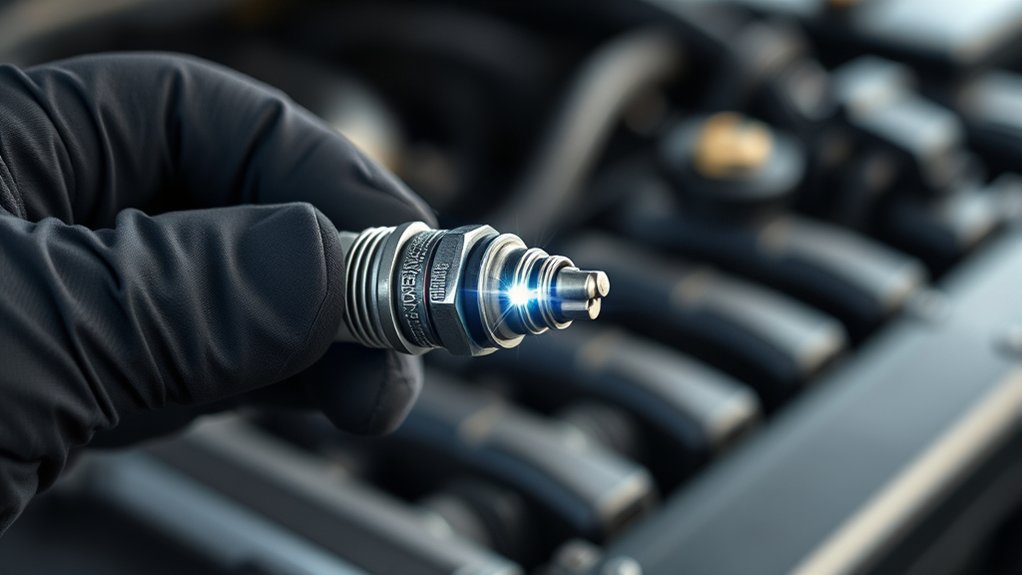
Although you can’t see the spark directly, you’ll know a spark plug is firing properly if your engine runs smoothly without misfires, hesitation, or rough idling. Spark plug efficiency directly impacts combustion quality, so consistent engine performance indicates effective spark generation.
Proper ignition timing guarantees the spark occurs at the ideal moment within the combustion cycle, maximizing power output and fuel efficiency. If your vehicle accelerates seamlessly and maintains steady RPMs, your spark plugs likely maintain correct timing and efficient operation.
Conversely, any noticeable stuttering, reduced power, or increased fuel consumption suggests compromised spark plug efficiency or timing issues. Monitoring these performance indicators helps you assess spark plug health without specialized tools, guiding timely maintenance to preserve engine reliability and efficiency.
Tools Needed to Test Spark Plugs at Home
Before you begin testing spark plugs at home, you’ll need a few essential tools to assure accurate diagnostics and safe handling. Having the right spark plug tools guarantees you perform DIY testing efficiently and avoid damage to engine components.
Here are the key tools you should prepare:
- Spark plug socket wrench: Designed specifically to fit spark plugs, it provides the grip and torque needed for removal and installation.
- Multimeter: Measures electrical resistance and continuity, helping you assess spark plug functionality.
- Spark plug gap gauge: Assures proper electrode spacing, critical for peak spark performance.
- Insulated spark tester: Allows you to observe spark activity safely without direct contact.
With these tools, you’ll be well-equipped to check spark plugs accurately at home.
Visual Inspection: Spotting Spark Plug Issues
Start by closely examining the electrode for wear or erosion, as its condition directly affects spark quality. Look for deposits like carbon buildup or oil residue, which can indicate engine problems.
Also, check for visible damage such as cracks or burns that signal the need for replacement.
Checking Electrode Condition
The electrode condition offers essential insights into your spark plug’s performance and engine health. You need to closely examine the electrodes for signs of electrode wear and electrode corrosion, as both can degrade ignition efficiency. Look for:
- Rounded or eroded edges on the center and ground electrodes indicating electrode wear.
- Pitting or rough surfaces caused by electrode corrosion disrupting spark formation.
- Consistent gap size; any widening points to excessive wear.
- Uniform color without discoloration that might signal underlying issues.
Identifying Deposits and Damage
Three key types of deposits, carbon, oil, and ash, can accumulate on your spark plugs, each signaling different engine conditions. Carbon deposits appear as dry, black soot and often indicate a rich fuel mixture or weak ignition system.
Oil deposits look wet and oily, suggesting worn piston rings or valve seals allowing oil into the combustion chamber. Ash deposits are light tan or gray and typically result from fuel additives or oil burning.
In addition to deposits, inspect for physical damage such as cracked insulators, eroded electrodes, or melted tips. Different spark plug types may respond differently to wear, so compare your plugs to manufacturer specifications.
Identifying these issues promptly helps maintain efficient ignition system performance and prevents misfires or engine damage.
Using a Spark Tester to Check Spark Plugs
One essential tool for diagnosing spark plug function is a spark tester, which allows you to observe the spark without removing the plug from the engine. Spark tester types vary from simple inline testers to more advanced inductive models.
To use one, connect it between the ignition coil and spark plug, then crank the engine. Observe the spark intensity and consistency through the tester’s window or indicator.
Key testing techniques include:
- Ensuring secure connections to avoid false readings
- Comparing spark appearance to manufacturer specifications
- Testing under various engine loads for accuracy
- Using appropriate tester types for different ignition systems
This method quickly verifies spark plug firing, helping you pinpoint ignition issues efficiently.
How to Use a Multimeter for Spark Plug Testing
While a spark tester provides a visual indication of spark quality, a multimeter offers a more detailed electrical assessment of your spark plugs. First, set your multimeter to the resistance (ohms) setting, making sure it’s appropriate for low resistance measurements.
Remove the spark plug and connect the multimeter probes to the terminal and the threaded base. Use steady pressure to maintain contact. A typical good spark plug will show resistance between 4,000 and 8,000 ohms, though you should verify specs for your specific plug.
Testing techniques include checking for infinite resistance, which indicates a broken insulator or faulty plug. Also, inspect for continuity to confirm the internal electrode isn’t open. By following these multimeter settings and testing techniques, you can accurately diagnose spark plug condition before installation.
Safely Testing Spark Plugs on Your Engine
Begin by ensuring your engine is off and cooled down to prevent injury or damage during spark plug testing. Prioritize safe handling by wearing insulated gloves and eye protection.
Follow these engine precautions to test spark plugs properly:
- Remove the spark plug wire carefully, avoiding contact with metal parts.
- Attach a spark tester to the spark plug and ground it securely.
- Crank the engine briefly, observing the tester for a strong, blue spark.
- Reinstall the spark plug wire firmly after testing each plug.
These steps minimize electrical shock risk and prevent engine damage. Always work in a well-ventilated area and keep flammable materials away.
Common Spark Plug Problems and Symptoms
You’ll want to watch for signs of misfiring, such as engine hesitation or rough idling, which often indicate spark plug issues. Inspect the electrodes for wear, including rounded edges or erosion, as these reduce spark efficiency.
Additionally, carbon buildup can cause fouling that disrupts combustion, so identifying deposits is essential for proper diagnosis.
Signs of Misfiring
If your engine hesitates, stumbles, or feels less responsive, it likely indicates a misfire caused by faulty spark plugs. Misfiring causes often stem from worn electrodes, improper gap, or fouling, all of which interrupt the spark needed for combustion.
Recognizing misfiring symptoms early helps you pinpoint spark plug issues before they escalate.
Look for these signs of misfiring:
- Rough or uneven engine idling
- Decreased fuel efficiency
- Increased exhaust emissions or smell of unburned fuel
- Engine warning light or diagnostic trouble codes (DTCs)
Spark Plug Wear Indicators
Although spark plugs are small components, they play an essential role in your engine’s performance, and recognizing their wear indicators can save you from costly repairs. Over time, the electrode erodes, increasing the gap and causing weak or inconsistent sparks.
You should inspect for rounded or worn electrodes, which signal the end of the spark plug lifespan. Additionally, look for cracked insulators or burnt areas, as these indicate overheating or electrical issues.
Following manufacturer-recommended replacement intervals is vital to maintain peak engine function. If you notice any wear signs during inspection, replace the spark plugs immediately to prevent misfires or reduced fuel efficiency.
Regular checks aligned with your vehicle’s maintenance schedule guarantee you catch these wear indicators before they cause significant engine problems.
Effects of Carbon Buildup
When carbon buildup accumulates on your spark plugs, it disrupts the spark’s ability to ignite the air-fuel mixture efficiently. This leads to incomplete combustion, reducing engine performance and fuel economy. Understanding carbon effects helps you identify symptoms early and apply buildup prevention methods effectively.
Carbon deposits cause:
- Misfiring or rough idling due to inconsistent spark generation
- Difficulty starting the engine from poor ignition spark
- Increased emissions from unburned fuel escaping the combustion chamber
- Reduced power output as the spark weakens under heavy buildup
To prevent buildup, use quality fuel, maintain proper air-fuel ratios, and inspect plugs regularly. Cleaning or replacing spark plugs at signs of carbon effects guarantees reliable ignition and peak engine function.
What to Do When a Spark Plug Isn’t Firing
Since a spark plug failing to fire can cause engine misfires and performance issues, you need to diagnose the root cause quickly. First, inspect the spark plug for fouling, cracks, or wear; if damaged, proceed with spark plug replacement.
Next, check the ignition system components, including ignition coils, wires, and connectors, for continuity and proper voltage output using a multimeter. Verify that the spark plug gap matches manufacturer specifications, as an incorrect gap can prevent firing.
If the ignition system tests fine, examine the engine control unit (ECU) and wiring for faults. After replacing or repairing faulty parts, clear any diagnostic trouble codes and retest the engine. Addressing the root cause promptly guarantees reliable ignition and peak engine performance.
Frequently Asked Questions
How Often Should Spark Plugs Be Replaced?
You should replace spark plugs every 30,000 to 100,000 miles, depending on your spark plug lifespan. Follow maintenance tips like inspecting regularly and cleaning to guarantee peak engine performance and avoid misfires or inefficiency.
Can Bad Spark Plugs Affect Fuel Efficiency?
Imagine your engine gulping fuel like it’s thirsty. Bad spark plugs cause incomplete combustion, increasing fuel consumption and accelerating engine wear. You’ll want to replace them promptly to maintain efficiency and prevent costly damage.
What Types of Spark Plugs Are Best for My Car?
You should choose spark plug materials like iridium, platinum, or copper based on your car’s spark plug compatibility, heat range, and desired longevity.
Compare spark plug brands to guarantee peak performance and durability for your engine.
How Do Spark Plug Gaps Affect Engine Performance?
You’ll lose up to 30% efficiency if your spark plug gaps are off. Proper gaps, matched with spark plug materials, guarantee ideal ignition timing and combustion.
This directly influences power, fuel economy, and engine smoothness. Adjust precisely.
Can Spark Plugs Cause Engine Misfires?
Yes, faulty spark plugs can cause engine misfires. You’ll notice spark plug symptoms like rough idling, poor acceleration, and reduced engine performance.
Regularly inspect and replace plugs to maintain smooth engine operation and peak performance.
Conclusion
Just like a maestro ensuring every note hits perfectly, you need to confirm each spark plug fires flawlessly for your engine’s symphony. By visually inspecting, using a spark tester, or a multimeter, you can pinpoint issues quickly.
Remember, a misfiring plug is your engine’s silent saboteur—catch it early with these precise checks. Stay methodical, stay safe, and keep your engine performing at its peak, just like a well-tuned orchestra.
Regularly checking to see if a spark plug is firing is essential to maintain your engine’s smooth operation and prevent costly damage.