To check your lawn mower spark plug, first locate it on the engine’s cylinder head and make sure the engine is cool before you begin.
Use a spark plug socket wrench to carefully remove the spark plug from the engine.
Visually inspect the spark plug for any cracks, fouling, or signs of wear.
Next, test for spark by grounding the plug against the engine and pulling the starter cord. A strong blue spark indicates the spark plug is in good condition.
If the spark plug is dirty or damaged, clean it or replace it as needed.
Also, check the gap using a feeler gauge to ensure it meets the manufacturer’s specifications.
Proper maintenance of your spark plug keeps your mower running efficiently, so keep exploring for detailed steps and helpful tips.
Key Takeaways
- Locate the spark plug on the engine’s cylinder head and ensure the engine is cool before removal.
- Use a spark plug socket wrench to carefully remove the plug, cleaning dirt around it beforehand.
- Test the spark by grounding the plug to engine metal and pulling the starter cord for a strong blue spark.
- Measure and adjust the spark plug gap using a gap gauge according to the mower manual specifications.
- Inspect for cracks, wear, or fouling, and replace the spark plug if faulty or after 25-50 hours of use.
Signs Your Lawn Mower Spark Plug Needs Checking
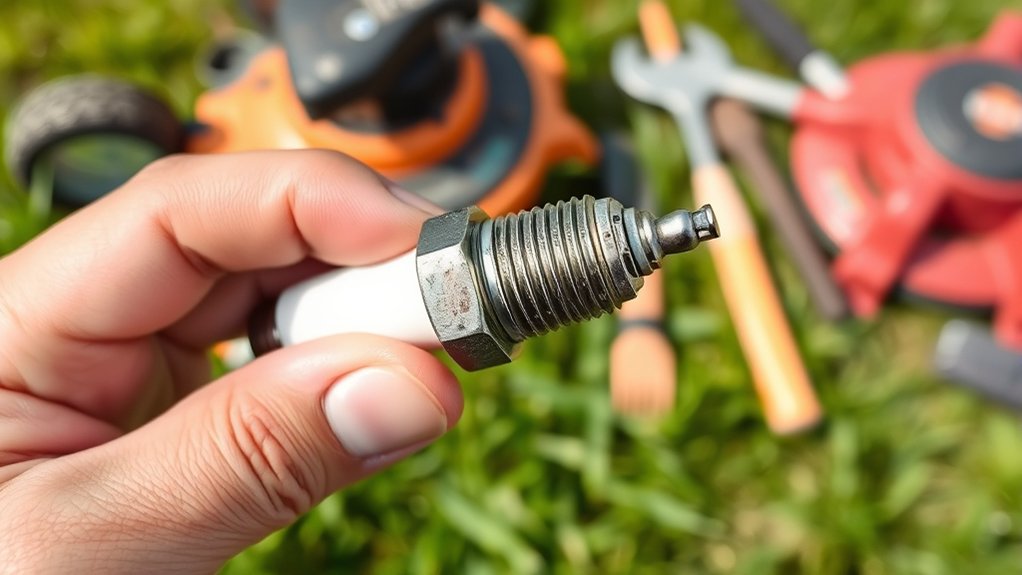
Although your lawn mower might still start, you should check the spark plug if it shows signs of misfiring, difficulty starting, or uneven engine performance. These symptoms often indicate the spark plug is nearing the end of its spark plug lifespan.
Check your lawn mower’s spark plug if it misfires, struggles to start, or runs unevenly.
A worn or fouled spark plug disrupts the ignition process, causing inconsistent combustion and reducing engine efficiency. If your mower hesitates during acceleration, runs rough, or stalls unexpectedly, the spark plug is likely compromised.
Regularly inspecting the spark plug helps maintain peak engine performance and prevents long-term damage. Ignoring these signs can lead to increased fuel consumption and higher emissions.
Checking the spark plug at least once per mowing season guarantees you catch potential issues early and keep your mower running smoothly.
Tools Needed to Inspect Your Lawn Mower Spark Plug
To inspect your lawn mower spark plug, you’ll need a few essential tools like a spark plug socket, a ratchet, and a gap gauge.
Don’t forget safety equipment such as gloves and safety glasses to protect your hands and eyes. Having these items ready guarantees a smooth and safe inspection process.
Essential Inspection Tools
Before inspecting your lawn mower spark plug, gather the right tools to guarantee an accurate assessment. Different spark plug types require specific handling, and regular inspection frequency promotes peak engine performance. Equip yourself with these essential tools:
- Spark plug socket wrench: fits various spark plug types for easy removal.
- Gap gauge: measures electrode gap to match manufacturer specs.
- Wire brush or spark plug cleaner: removes carbon deposits efficiently.
- Multimeter or spark tester: checks spark plug functionality.
- Torque wrench: guarantees proper reinstallation tightness.
Using these tools, you can accurately inspect, clean, and test the spark plug, extending its lifespan and maintaining your mower’s engine efficiency. Proper preparation streamlines the process and prevents damage from incorrect handling or inspection intervals.
Safety Equipment Required
Two critical pieces of safety equipment you’ll need when inspecting your lawn mower spark plug are gloves and safety goggles. Rubber gloves protect your hands from dirt, grime, and potential electrical shocks, while safety goggles shield your eyes from debris and sparks.
Additionally, wearing a work apron safeguards your clothing and skin from fuel or oil spills. Keep a fire extinguisher nearby as a precaution in case of accidental ignition, especially when working around flammable gasoline.
Before beginning, verify your gloves are intact and your goggles are clean for maximum visibility. This combination of safety gear minimizes injury risk and helps you work efficiently and confidently while maintaining your lawn mower spark plug.
Prioritize safety to avoid accidents during the inspection process.
How to Locate and Remove the Spark Plug
First, locate the spark plug on your lawn mower, usually found on the engine’s side with a thick wire attached. Before removal, verify the engine is off and cool to avoid burns or shocks.
Use a spark plug socket and wrench to carefully loosen and remove the plug without damaging the surrounding components.
Finding the Spark Plug
Locating the spark plug on your lawn mower typically involves identifying the engine’s cylinder head where the plug screws in. The spark plug is a small metal component connected to a thick ignition wire. To find it quickly, follow these tips:
Look for the engine’s top or side, often under a protective rubber boot. Identify the ignition wire leading from the engine’s coil to the plug.
Different spark plug types vary in size and shape; check your mower manual. Note maintenance frequency; some plugs require checking after every 25 hours of use.
Clean off dirt or debris around the plug area before inspection to avoid contamination.
Knowing the exact location and type of spark plug guarantees efficient maintenance and helps maintain mower performance.
Safely Removing Spark Plug
Before removing the spark plug, disconnect the ignition wire by firmly pulling the boot off the plug to prevent accidental starts. Locate the spark plug on the engine’s cylinder head; it typically protrudes with a thick wire attached.
Use a spark plug socket wrench to loosen and unscrew the plug by turning counterclockwise. Make sure you apply steady force to avoid damaging the plug or threads.
Proper spark plug maintenance is vital for peak engine performance and longevity. Once removed, inspect the plug for wear or fouling.
Handle the spark plug carefully to avoid dropping or contaminating it. Follow these steps each time you perform maintenance to maintain efficient engine operation and prevent potential starting issues.
How to Visually Inspect and Identify Spark Plug Fouling
Several common types of spark plug fouling can indicate specific engine issues when you visually inspect the plug. Different spark plug types respond distinctly to engine conditions, so identifying fouling helps diagnose common issues early.
Look for these signs:
- Carbon Fouling: Dry, black soot; signals a rich fuel mixture or weak ignition.
- Oil Fouling: Oily, wet deposits; indicates worn piston rings or valve guides.
- Ash Deposits: Light brown or tan buildup; usually from oil additives or fuel contamination.
- Overheating: White, blistered insulator; points to incorrect spark plug heat range or cooling problems.
- Electrode Wear: Rounded or eroded electrodes; suggests old plugs or poor combustion.
Inspecting these fouling types guarantees you address engine problems promptly, maintaining mower performance.
How to Test Your Lawn Mower Spark Plug’s Spark
Check your lawn mower’s spark plug spark by removing the plug, reconnecting it to the ignition wire, and grounding the threaded part against the engine metal. Pull the starter cord and observe the spark gap.
A strong, blue spark indicates a functioning spark plug, while a weak or absent spark suggests the plug may need replacement. Different spark plug types, such as copper, platinum, and iridium, vary in durability but require similar testing methods.
A strong blue spark means your spark plug works; weak or no spark signals replacement may be needed.
For accurate results, perform this test in a well-lit area and verify the plug is clean and dry. Avoid touching the electrode to prevent false readings.
This practical testing method quickly verifies spark plug performance and helps diagnose ignition issues, confirming your lawn mower runs efficiently.
When and How to Clean Your Spark Plug
If your spark plug shows a weak or inconsistent spark, cleaning it can restore proper function without immediate replacement. Regular cleaning is essential for optimal engine performance and longevity.
Follow these cleaning techniques and maintenance tips for best results:
- Remove the spark plug carefully with a wrench to avoid damage.
- Use a wire brush or spark plug cleaner to remove carbon deposits and dirt.
- Avoid abrasive materials that can damage the electrode or ceramic insulator.
- Inspect the spark plug for cracks or excessive wear; replace if necessary.
- Reinstall the spark plug securely, ensuring proper seating and connection.
Perform this cleaning every 25 hours of mowing or at the start of each season to maintain peak efficiency and prevent fouling issues.
How to Set the Correct Spark Plug Gap
Although cleaning your spark plug is essential, setting the correct spark plug gap guarantees the engine fires efficiently and maintains peak performance. Start by consulting your lawn mower’s manual to find the recommended gap specification.
Use a spark plug gap tool or feeler gauge to measure the gap between the center and ground electrodes accurately. If the gap is too wide or narrow, gently bend the ground electrode to adjust it, ensuring you don’t damage the plug.
Proper gap measurement is a critical step in spark plug maintenance because an incorrect gap leads to misfires, poor fuel economy, and reduced power. Regularly checking and adjusting the gap keeps your mower running smoothly and extends the spark plug’s lifespan.
When to Replace Your Lawn Mower Spark Plug
Knowing when to replace your lawn mower spark plug guarantees consistent engine performance and prevents unexpected breakdowns. The spark plug lifespan typically ranges from 25 to 50 hours of use, but you should also consider these lawn maintenance tips to determine replacement timing:
- Inspect for worn or fouled electrodes, causing weak or no spark
- Check for cracked porcelain insulator or damaged threads
- Notice difficulty starting or engine misfires during operation
- Monitor reduced fuel efficiency or uneven engine idling
- Replace spark plugs annually if you mow frequently or store the mower long-term
Regularly evaluating these factors guarantees peak mower function and prolongs engine life. Staying proactive with spark plug replacement minimizes downtime and keeps your lawn care routine uninterrupted.
How to Install a New Spark Plug Safely
After identifying the need to replace your lawn mower spark plug, you’ll want to install the new one correctly to secure peak engine performance and safety. First, select the correct spark plug type specified in your mower’s manual. Different engines require specific heat ranges and thread sizes.
Before installation, inspect the new plug for damage and apply a small amount of anti-seize compound on the threads to prevent seizing. Hand-thread the spark plug into the cylinder head carefully to avoid cross-threading.
Use a torque wrench to tighten it to the manufacturer’s recommended torque setting. Over-tightening can damage threads, while under-tightening risks poor engine performance. Connect the spark plug wire firmly to guarantee a solid electrical connection.
Following these installation tips secures reliable starts and prolonged engine life.
Frequently Asked Questions
Can I Use a Smartphone App to Test Spark Plug Performance?
You can’t directly perform spark plug testing with a smartphone app alone, but smartphone diagnostics can help by analyzing engine performance data. For accurate spark plug testing, use specialized tools like a spark tester or multimeter instead.
How Does Spark Plug Type Affect Lawn Mower Efficiency?
Don’t worry about complexity. Choosing the right spark plug types boosts engine performance by ensuring proper ignition and fuel efficiency. Using spark plugs designed for your mower optimizes combustion, reducing misfires and improving overall lawn mower efficiency.
What Causes Spark Plugs to Foul Prematurely?
Fouling causes include poor fuel quality, excessive idling, and incorrect spark plug gap. You should follow maintenance tips like using the right fuel, cleaning the plug regularly, and checking the gap to prevent premature fouling.
Are There Eco-Friendly Spark Plug Options for Lawn Mowers?
Yes, you can choose eco-friendly spark plug materials like iridium or platinum that last longer. Pair them with alternative fuels such as bioethanol to reduce emissions and environmental impact while maintaining your lawn mower’s performance.
How Often Should I Check the Spark Plug if Used Seasonally?
You don’t need to check your spark plug daily unless you enjoy surprises. For seasonal usage, perform spark plug maintenance at least once before and after each season. This helps guarantee efficient starts and prevent engine issues.
Conclusion
Regularly checking your lawn mower spark plug can boost engine performance by up to 30%, saving you time and fuel. By inspecting, cleaning, and setting the correct gap, you prevent common issues like misfires and hard starts.
Remember, replacing the spark plug every season or after 100 hours of use keeps your mower running smoothly. Stay proactive to extend your mower’s life and guarantee efficient cutting every time you head outdoors.
To maintain optimal performance, make checking your lawn mower spark plug a routine part of your mower maintenance.