To clean engine oil sludge, start by warming up your engine to loosen deposits. This initial step helps break down the thick sludge inside the engine.
Next, drain the old oil completely and remove the oil filter.
Add a high-quality engine flush to the crankcase, then run the engine at idle for the recommended time. This process helps dissolve and remove sludge buildup.
Afterward, replace the oil filter and refill with fresh oil that meets your vehicle’s specifications.
Doing this restores proper lubrication and prevents engine damage. Understanding and following this process leads to better maintenance and effective sludge prevention.
Key Takeaways
- Warm up the engine to loosen sludge deposits before beginning the cleaning process.
- Completely drain old oil and remove the oil filter to eliminate contaminated oil.
- Add a high-quality engine flush solution to the crankcase and run the engine at idle as directed.
- Replace the oil filter and refill the engine with fresh, manufacturer-recommended oil after flushing.
- Perform regular oil changes and maintenance to prevent sludge buildup and ensure engine health.
What Causes Engine Oil Sludge and Why It Matters
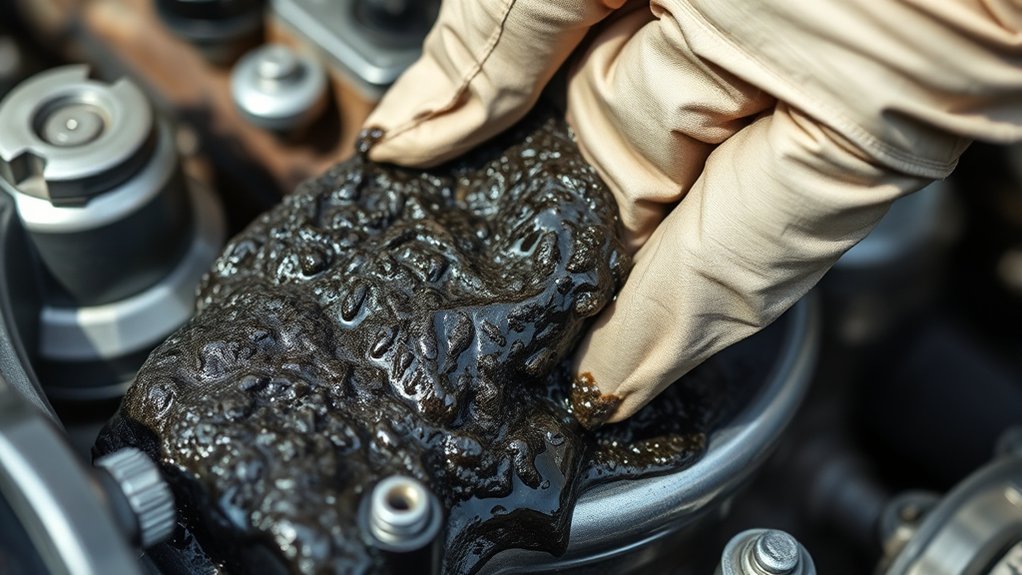
Although engine oil sludge often develops gradually, it can severely impair your engine’s performance and longevity. Sludge forms primarily due to oil breakdown caused by prolonged exposure to high temperatures and contaminants.
When engine oil degrades, it loses its lubricating properties, accelerating engine wear. This buildup restricts oil flow, increasing friction and heat, which further exacerbates oil breakdown.
Contaminants like dirt, fuel, and moisture also contribute to sludge formation by mixing with degraded oil, creating a thick, sticky residue. If left unchecked, sludge can clog oil passages, reduce cooling efficiency, and cause premature engine failure.
Understanding these causes helps you prioritize timely oil changes and use high-quality lubricants, preventing excessive engine wear and maintaining peak engine function.
How to Spot Engine Oil Sludge in Your Vehicle
When you suspect engine oil sludge, start by inspecting the oil’s appearance and consistency. Sludge symptoms often manifest as thick, dark, and gritty oil rather than smooth and amber. To accurately spot sludge, follow these steps:
Suspect engine oil sludge? Inspect for thick, dark, and gritty oil instead of smooth, amber consistency.
- Check the oil dipstick. If the oil looks pasty or clumpy, sludge is likely forming.
- Inspect under the oil filler cap. Sludge buildup appears as dark, tar-like deposits.
- Monitor engine performance. Symptoms like rough idling, overheating, or reduced power may indicate sludge affecting lubrication.
Recognizing these signs early is essential for effective engine maintenance, preventing costly damage. Regular checks guarantee you catch sludge before it compromises engine health and efficiency.
How to Clean Engine Oil Sludge Step-by-Step
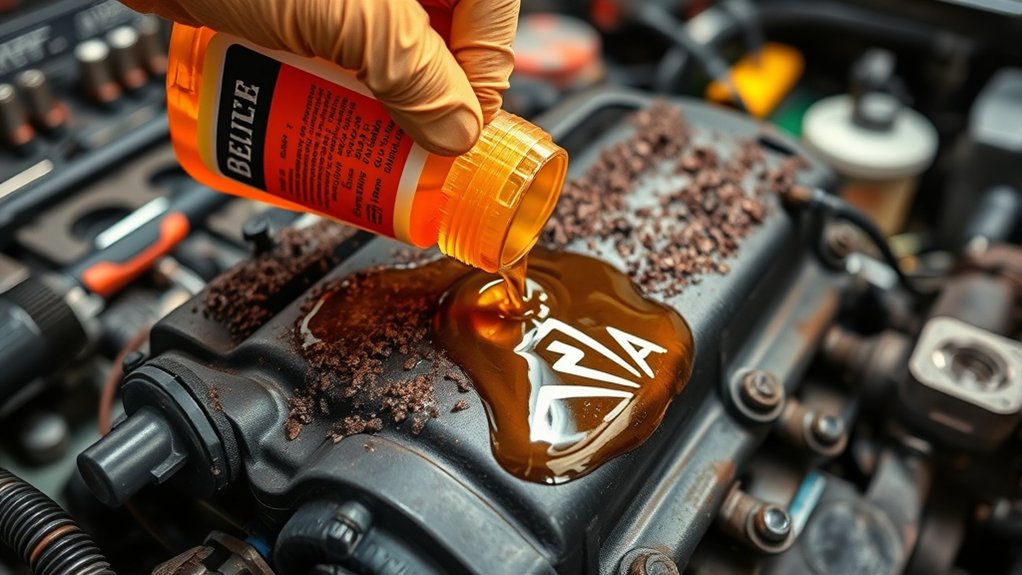
Cleaning engine oil sludge requires a systematic approach to guarantee thorough removal without damaging your engine. Start by warming up the engine to loosen sludge deposits, then drain the old oil completely. Remove the oil filter as sludge often accumulates there.
Next, add a high-quality engine flush solution to the crankcase, run the engine at idle for the recommended time, and then perform another oil change to expel loosened sludge and contaminants. Inspect the oil pan and valve covers for residual sludge and clean as needed during routine engine maintenance.
Finally, replace the oil filter with a new one and refill with fresh oil meeting your vehicle’s specifications. Following these steps during your oil change cycle helps prevent sludge buildup and extends engine life efficiently.
Top Tools and Products to Remove Engine Oil Sludge
Equip yourself with the right tools and products to effectively tackle engine oil sludge. Choosing effective cleaning products and tools is essential for successful oil sludge removal. Here are the top essentials:
1. Engine Flush Additives
These cleaning products break down sludge deposits inside oil galleries and passages, supporting your removal techniques.
2. Oil Drain Pan and Funnel
Important for safe oil changes, they prevent spills and contamination during sludge removal.
3. High-Quality Engine Oil and Filter
After cleaning, fresh oil and a new filter guarantee peak engine care and help maintain system cleanliness.
Using these tools and following maintenance tips will streamline sludge removal and improve engine performance. Stay focused on proper removal techniques to protect your engine and support preventive measures that maintain long-term engine health.
How to Prevent Engine Oil Sludge From Building up Again
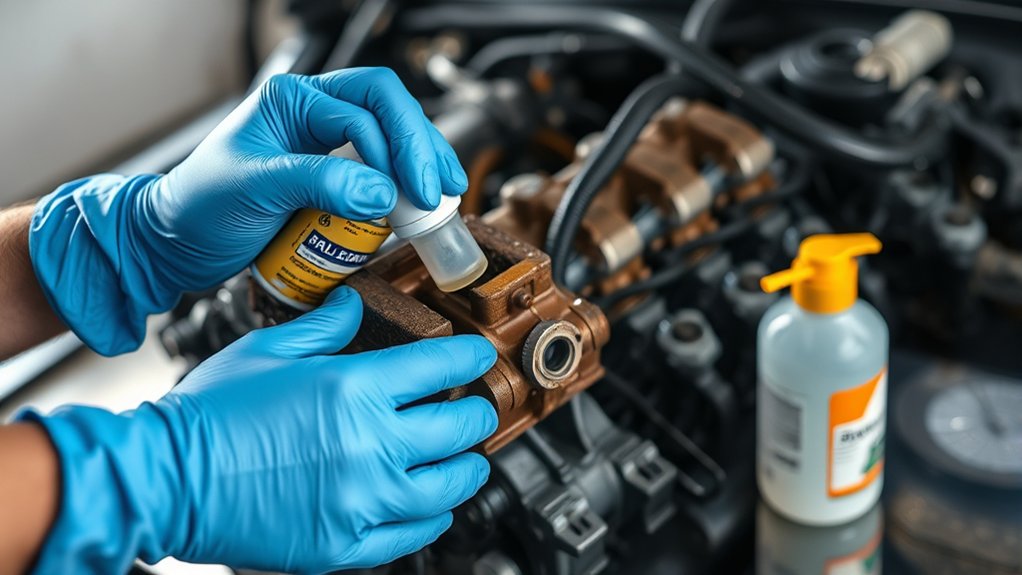
To keep engine oil sludge from forming again, you need to adopt consistent maintenance habits and use high-quality products suited to your vehicle. Regular preventive maintenance is vital. Stick to the manufacturer-recommended oil change intervals and use the specified oil grade.
Skipping or delaying oil changes allows contaminants to accumulate, accelerating sludge buildup. Additionally, make sure you replace the oil filter every time you change the oil to maintain proper filtration. Use engine flushes sparingly, only when necessary, as overuse can strip essential lubricants.
Monitor engine temperature and address any overheating issues promptly since excessive heat worsens sludge formation. Finally, keep your engine clean by inspecting and replacing worn seals or gaskets to prevent leaks that can degrade oil quality.
These steps collectively reduce sludge recurrence and promote engine longevity.
Frequently Asked Questions
Can Engine Oil Sludge Damage Other Car Components?
Yes, oil sludge formation can damage seals, gaskets, and sensors. You should follow engine maintenance tips like regular oil changes to prevent sludge buildup and protect your engine components from costly damage and reduced performance.
Is Professional Cleaning Better Than DIY for Oil Sludge Removal?
Professional services outperform DIY methods for oil sludge removal due to specialized tools and expertise. You’ll get thorough cleaning, minimizing engine damage risk.
DIY can work for mild sludge but risks incomplete removal and potential harm.
How Long Does Engine Oil Sludge Cleaning Usually Take?
You won’t spend a weekend scrubbing sludge like a medieval dungeon. Cleaning usually takes 2-4 hours.
Stick to sludge prevention tips: maintain proper oil change frequency, and your engine will thank you with smoother, longer life.
Are Synthetic Oils Less Likely to Cause Sludge?
Yes, synthetic oils reduce sludge risk due to their superior oil composition and synthetic advantages like better thermal stability and oxidation resistance.
You’ll experience cleaner engine internals and extended oil change intervals using synthetic formulations.
What Is the Cost Range for Professional Sludge Removal Services?
You’ll love paying $200 to $1,000 for sludge removal because who doesn’t enjoy costly engine therapy?
Cost factors include sludge severity and vehicle type; service comparisons help you pick the best balance between price and thoroughness.
Conclusion
Engine oil sludge affects nearly 40% of vehicles with neglected maintenance, leading to costly repairs if ignored. By spotting sludge early and following proper cleaning steps, you can restore engine performance and extend its life.
Use recommended tools and products to effectively remove buildup, and maintain regular oil changes to prevent recurrence. Taking these practical measures guarantees your engine runs smoothly, saving you time and money in the long run.
Proper engine oil sludge cleaning is essential to keep your vehicle running efficiently and avoid expensive damage.