To drain your car’s engine oil, start by securing the vehicle on jack stands to ensure stability.
Wear gloves and goggles to protect yourself from hot oil and debris.
Next, locate the engine’s drain plug beneath the oil pan.
Position a drain pan underneath to catch the used oil.
Carefully loosen and remove the plug using the correct wrench.
Allow the oil to fully drain out, then replace the drain plug and washer if they show signs of wear.
Dispose of the used oil at a certified recycling center to protect the environment.
Following proper oil change intervals will help keep your engine running smoothly.
More details on tools, safety precautions, and disposal methods can help perfect the process.
Key Takeaways
- Secure the vehicle on jack stands and ensure the engine is cool before starting the oil drain process.
- Place an oil drain pan beneath the engine’s drain plug to catch all used oil.
- Use the correct wrench to carefully loosen and remove the drain plug, allowing oil to flow out fully.
- Inspect and replace the drain plug washer if worn, then reinstall and tighten the drain plug to the correct torque.
- Dispose of used oil responsibly by transferring it to a proper container and taking it to a certified recycling center.
Tools and Materials Needed to Drain Engine Oil
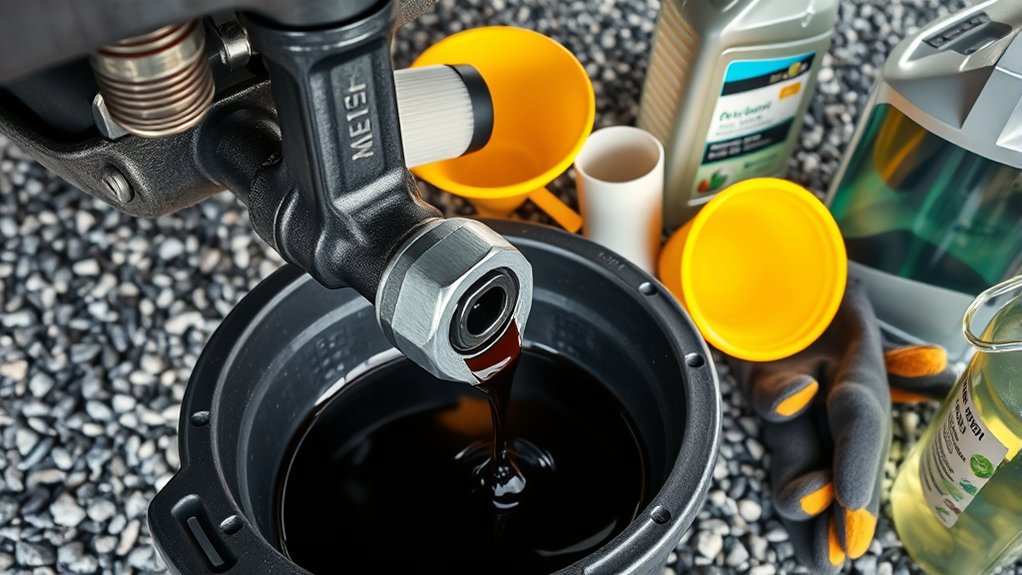
Before you begin draining your engine oil, gather all the necessary tools and materials to guarantee a smooth process. For an effective oil change, you’ll need a wrench or socket set to remove the drain plug, an oil drain pan to catch used oil, and a funnel for refilling.
Have engine oil that matches your vehicle’s specifications ready, alongside a new oil filter if you plan to replace it during engine maintenance. Additionally, keep clean rags or paper towels handy for wiping spills and gloves to protect your hands.
A jack and jack stands or ramps may be necessary to access the drain plug, depending on your vehicle’s clearance. Assembling these items beforehand secures an efficient, mess-free oil change and proper engine maintenance.
Safety Preparations Before Draining Engine Oil
While preparing to drain your engine oil, make sure the vehicle is securely supported to prevent any movement. Use jack stands on a flat surface, never rely solely on a jack.
Prioritize personal protective measures to avoid contact with hot oil or harmful chemicals. Follow these essential safety steps:
- Wear gloves and safety goggles to protect your skin and eyes from oil splashes.
- Confirm the engine is cool to reduce burn risk and improve oil flow control.
- Position a drip pan correctly to catch all oil, minimizing the chance of spills.
- Keep absorbent materials nearby for immediate oil spill prevention and cleanup.
Adhering to these precautions will safeguard you and your workspace before you begin draining the engine oil.
Step-by-Step Guide to Draining Engine Oil
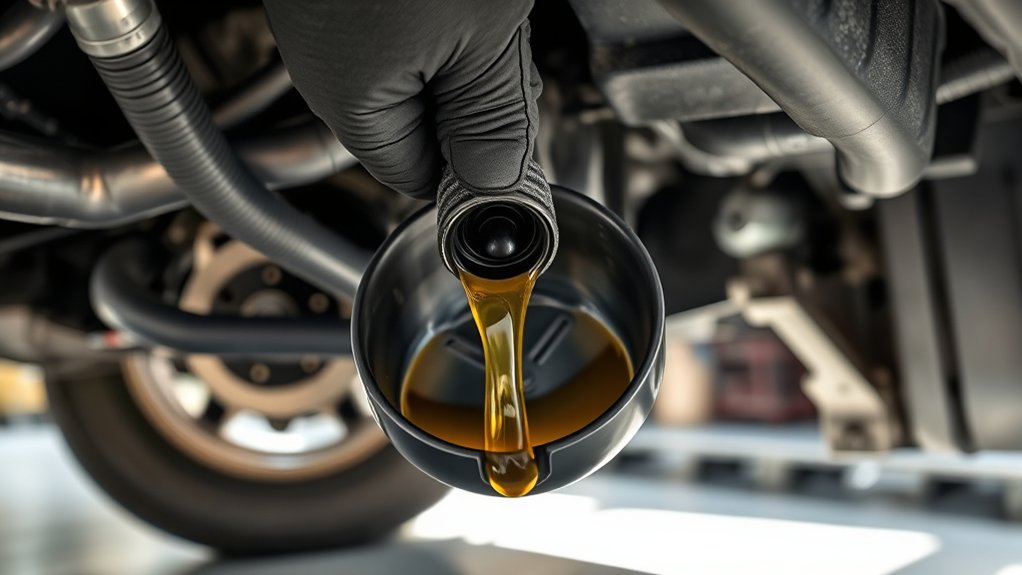
Start by locating the oil drain plug underneath the engine; this is typically a hexagonal bolt at the lowest point of the oil pan. Place a drain pan beneath it to catch the used oil. Using the correct-sized wrench, carefully loosen the plug, avoiding stripping the bolt, a common mistake.
Once loosened, unscrew it by hand and allow the oil to drain completely. While draining, inspect the drain plug’s washer; replace it if worn to prevent leaks. After drainage, reinstall the plug, tightening it to the manufacturer’s torque specification to avoid over-tightening, another frequent error.
Next, remove the oil filler cap on top of the engine to facilitate flow. These oil change techniques help guarantee a clean, efficient draining process without damaging your engine components.
Disposing of Used Engine Oil Responsibly
After completing the oil drainage and securing the drain plug, your next responsibility involves handling the used engine oil properly. To minimize environmental impact and comply with local regulations, follow these steps precisely:
- Transfer the used oil into proper containers designed for hazardous liquids to prevent leaks and contamination.
- Avoid mixing oil with other substances like antifreeze or solvents, as this complicates recycling.
- Locate a certified oil recycling center or automotive shop that accepts used oil, ensuring safe disposal.
- Keep records of disposal if required by local regulations for environmental compliance.
When and Why You Should Change Your Engine Oil
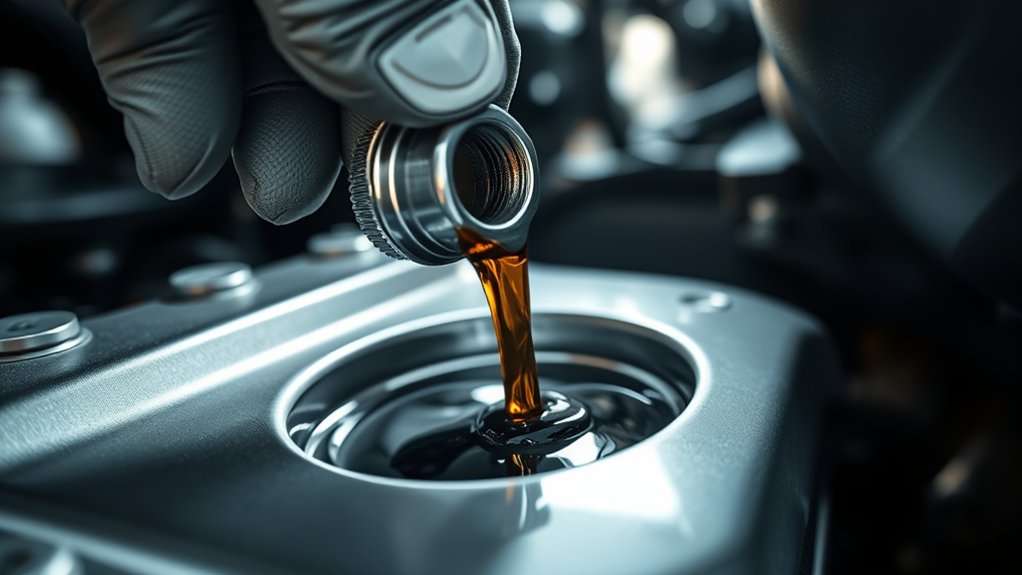
Because engine oil lubricates, cools, and protects your engine’s moving parts, you should change it regularly to maintain peak performance and prevent damage. Adhering to the recommended oil change frequency guarantees ideal engine performance benefits, including reduced wear, improved fuel efficiency, and extended engine life.
| Oil Change Frequency | Engine Condition | Performance Benefit |
|---|---|---|
| Every 3,000 miles | Heavy-duty or severe driving | Maximum protection under stress |
| Every 5,000 miles | Normal driving conditions | Balanced protection and cost |
| Every 7,500 miles | Synthetic oil usage | Extended oil life and efficiency |
| Every 10,000 miles | Manufacturer’s extended interval | Long-term engine cleanliness |
| Based on inspection | Oil quality and level monitoring | Prevents premature engine wear |
Follow these guidelines to enhance your engine’s reliability and efficiency.
Frequently Asked Questions
Can I Use Synthetic Oil Instead of Conventional Oil?
Yes, you can use synthetic oil instead of conventional oil, provided your engine supports oil compatibility. Synthetic advantages include better lubrication, temperature stability, and longer intervals, enhancing engine performance and protection compared to conventional oils.
How Often Should I Change My Oil Filter?
You should change your oil filter every time you change your oil, typically every 3,000 to 7,500 miles, depending on your vehicle. This guarantees ideal oil filter lifespan and maintains proper filter replacement frequency.
What Are the Signs of Low Engine Oil?
You’ll notice warning lights or a burning smell when the oil level’s low. Poor engine performance and overheating can occur, signaling you to check oil immediately to prevent severe engine damage.
Can I Recycle Used Oil at Any Gas Station?
Not every gas station accepts used oil; you’ll need to locate recycling centers specializing in oil disposal. Check local regulations and facilities to guarantee proper handling, preventing environmental harm and complying with legal requirements for safe oil recycling.
How Does Oil Viscosity Affect Engine Performance?
You’ll notice oil viscosity directly impacts engine lubrication; thicker oil resists flow at low oil temperature, reducing efficiency, while thinner oil may fail to protect at high temperatures.
Choose viscosity matching your engine’s operating conditions precisely.
Conclusion
Draining your engine oil is like clearing the veins of your car’s heart, ensuring it pumps smoothly. By gathering the right tools, taking safety steps, and following each precise move, you keep your engine healthy and efficient.
Remember to dispose of used oil responsibly, protecting the environment. Regular oil changes aren’t just maintenance—they’re the lifeblood that keeps your engine running at peak performance.
Stay diligent, and your car will thank you with lasting power. Properly draining engine oil from your car is essential to maintaining its overall health and performance.