If you notice milky oil in your engine, it is crucial to act promptly to prevent further damage. Milky oil often indicates coolant contamination, which can lead to serious engine problems if not addressed quickly.
Start by checking for coolant leaks. Inspect hoses, the radiator, and the head gasket for any signs of leaks or damage. Address any overheating issues by testing components like the thermostat, water pump, and radiator function. These steps help identify and fix the root cause of the milky oil.
Once the underlying problems are resolved, drain the contaminated oil completely. Replace the oil filter and refill the engine with fresh oil.
Afterward, closely monitor engine temperature and oil condition to ensure the issue is fully fixed.
Continue for detailed steps on diagnosing and repairing milky oil causes.
Key Takeaways
- Inspect and repair any coolant leaks in hoses, radiator, or engine components causing contamination.
- Replace the head gasket if tests reveal failure or cracks allowing coolant into oil.
- Drain all milky, contaminated oil and replace the oil filter to remove residual water or coolant.
- Refill the engine with fresh, manufacturer-recommended oil and monitor oil condition regularly.
- Address overheating issues by checking thermostat, water pump, and radiator functionality to prevent recurrence.
What Milky Oil Is And Why It’s A Problem
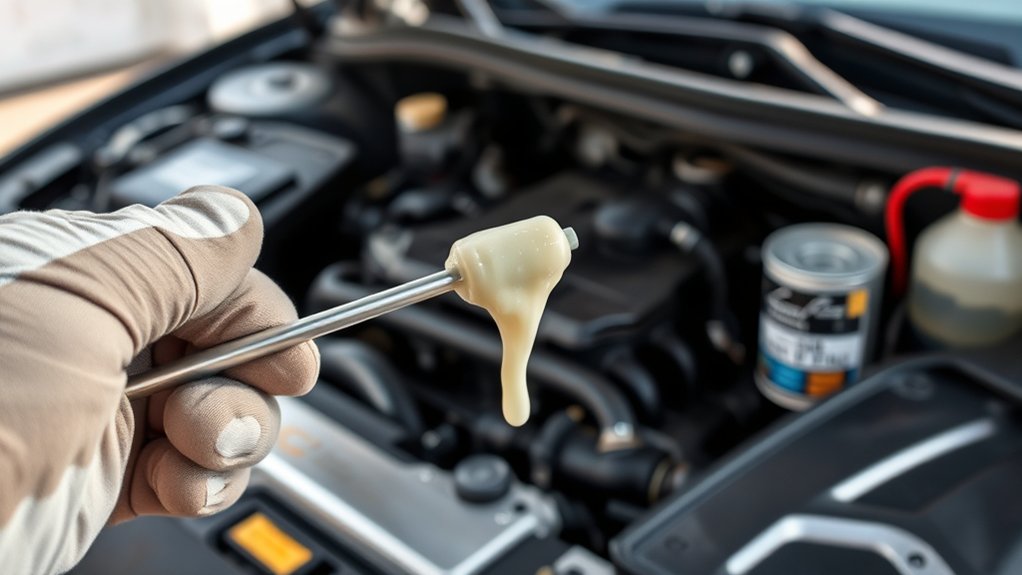
Although you might not notice it immediately, milky oil in your engine signals a serious issue: contamination of the engine oil with water or coolant. This oil contamination compromises lubrication, reducing the oil’s ability to protect moving components from friction and wear.
You need to recognize that milky oil is a clear indicator of deteriorating engine health, as it can lead to corrosion, sludge buildup, and eventual mechanical failure. The emulsified mixture forms a frothy, light brown or beige substance, which impairs oil flow and heat dissipation.
Ignoring this condition allows contaminants to circulate, accelerating damage to bearings, pistons, and seals. Addressing oil contamination promptly is essential to maintaining engine efficiency and preventing costly repairs or total engine replacement.
How To Diagnose The Causes Of Milky Oil In Your Engine
Identifying the root cause of milky oil is the first step in resolving the contamination issue effectively. To diagnose oil contamination, inspect the oil dipstick and oil cap for a creamy, frothy appearance, which indicates water or coolant mixing with oil.
Next, check for engine overheating signs, such as warped cylinder heads or blown head gaskets, which often cause coolant leaks into the oil system. Perform a compression test to detect gasket failure or cracked engine blocks.
Additionally, examine the radiator and coolant reservoir for leaks or low fluid levels. Use a borescope to inspect internal engine components for cracks.
Finally, monitor the engine’s operating temperature and pressure readings to identify abnormal conditions contributing to oil contamination. These steps help pinpoint the exact cause of milky oil in your engine.
How To Fix Common Causes Of Milky Oil
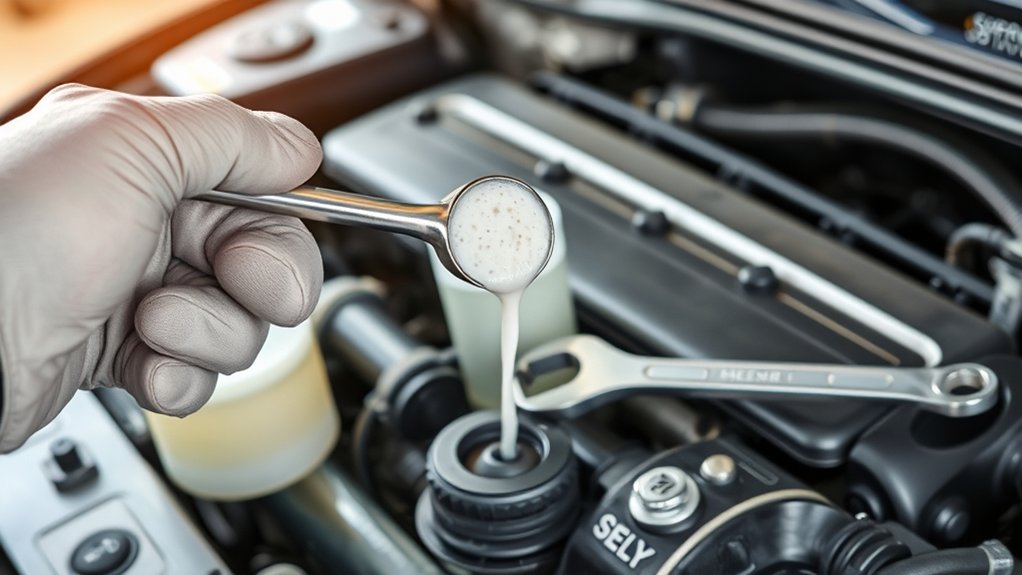
When you’ve determined the cause of milky oil, you can take targeted steps to fix it effectively. If coolant leaks are the culprit, inspect the cooling system for damaged hoses or cracked radiator components and replace them promptly.
In cases of gasket failure, especially the head gasket, replace the gasket to prevent coolant from entering the oil passages. Address engine overheating by diagnosing the cooling system, checking the thermostat, water pump, and radiator function to restore proper temperature regulation.
Avoid delaying repairs, as overheating exacerbates oil contamination. After these repairs, monitor oil condition closely to verify contamination has ceased. Taking these precise actions tackles the root causes of milky oil, safeguarding your engine’s longevity and performance.
How To Drain And Replace Milky Oil Safely
Draining and replacing milky oil involves a systematic process to prevent further contamination and protect your engine. First, warm up the engine slightly to ease oil flow, then securely position a drain pan beneath the oil drain plug.
Warm your engine and position a drain pan to safely remove milky oil without causing contamination.
Carefully remove the plug, allowing the contaminated oil to drain completely. Dispose of the milky oil using approved oil disposal methods to comply with environmental regulations.
Next, replace the oil filter to eliminate residual contaminants. Reinstall the drain plug, ensuring it’s tightened to the manufacturer’s torque specifications.
Finally, refill with the recommended fresh engine oil grade. After completion, check for leaks and monitor oil condition regularly.
Following these engine maintenance tips helps maintain peak performance and extends your engine’s life.
Frequently Asked Questions
Can Milky Oil Damage My Car’s Warranty?
Yes, milky oil can void your warranty coverage if it results from poor engine maintenance or neglect. Always address contamination issues promptly to guarantee your engine stays protected and your warranty remains valid.
How Often Should I Check My Engine Oil for Milky Appearance?
You should check your engine oil at least once a month to catch milky discoloration early. Regular oil maintenance helps spot contamination causes like coolant leaks, preventing severe engine damage and costly repairs down the line.
Does Milky Oil Affect Fuel Efficiency?
Yes, milky oil affects fuel efficiency because oil contamination causes poor lubrication and increased friction. This reduces engine performance, forcing your engine to work harder and consume more fuel, ultimately lowering your vehicle’s fuel economy.
Can Driving With Milky Oil Cause Engine Overheating?
You risk engine overheating. Over 60% of engines with milky oil symptoms face coolant contamination, which disrupts heat transfer. Ignoring this leads to severe engine overheating causes, damaging internal components and reducing performance drastically.
Are Synthetic Oils More Resistant to Milky Contamination?
Yes, synthetic oils offer synthetic advantages like superior oil composition, which resists water contamination better than conventional oils. You’ll notice improved thermal stability and reduced milky oil formation, protecting your engine’s performance effectively under harsh conditions.
Conclusion
Remember, “a stitch in time saves nine.” Catching milky oil early prevents severe engine damage and costly repairs. By diagnosing the root cause—whether it’s coolant contamination or condensation buildup—and addressing it promptly, you protect your engine’s performance and longevity.
Follow proper draining and replacement procedures to guarantee clean oil circulation. Stay vigilant, act quickly, and keep your engine running smoothly.
Maintaining well-maintained oil is essential to fix milky oil in engine and ensure your vehicle stays reliable and efficient.