To flat tow your Jeep Wrangler, first confirm your model supports flat towing and check the transmission type. Preparing your vehicle properly is essential for safe towing.
Begin by disconnecting the drive shaft and verifying fluid levels. Equip your Jeep with a compatible tow bar, base plate, safety chains, and wiring harness. Attach everything securely, ensuring safety cables cross beneath the tow bar.
When driving, maintain smooth, moderate speeds with gradual acceleration and braking to avoid damage.
Understanding these basics sets you up for safe, effective towing—explore further to master the process.
Key Takeaways
- Verify your Jeep Wrangler’s model year, transmission type, and towing package for flat towing compatibility before starting.
- Disconnect the drive shaft and check transmission fluid per manufacturer guidelines to prepare the vehicle safely.
- Use a properly aligned tow bar, heavy-duty safety chains crossed under the bar, and a wiring harness for lights.
- Tow at moderate speeds with gradual acceleration, smooth turns, increased following distance, and proper braking techniques.
- Regularly inspect towing equipment and drivetrain for wear, maintain alignment, and follow the owner’s manual instructions.
What Is Flat Towing and Why Choose It for Your Jeep Wrangler?
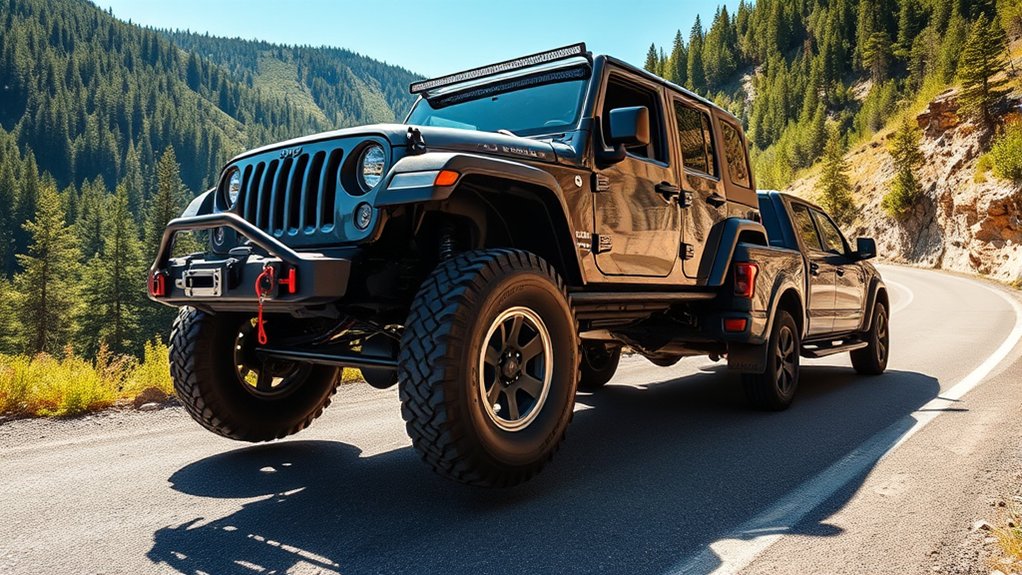
Flat towing means pulling your Jeep Wrangler behind another vehicle with all four wheels on the ground, without using a trailer or dolly. This method offers several towing benefits, including reduced equipment costs and easier hookup compared to trailers.
You’ll save time and effort, especially on short trips or when you want to avoid trailer storage. To flat tow safely, follow essential flat towing tips: confirm your Wrangler is in neutral, use a proper tow bar setup, and connect safety chains and wiring harnesses for lights.
Also, check tire pressure and secure the steering column lock if applicable. By understanding these benefits and applying flat towing tips, you can efficiently transport your Jeep Wrangler without compromising vehicle integrity or safety.
How to Check Jeep Wrangler Flat Towing Compatibility
Start by verifying your Jeep Wrangler’s model year to guarantee it supports flat towing. Next, inspect the transmission type, since some transmissions require specific procedures or modifications.
Finally, confirm whether your vehicle has the proper towing package installed for safe flat towing.
Verify Model Year
Before attempting to tow your Jeep Wrangler, you’ll need to confirm its model year to determine if it supports flat towing. Jeep models vary in flat towing compatibility depending on the year of manufacture.
Generally, Jeep Wranglers from 2003 onward support flat towing with proper equipment, but specific towing regulations may differ by state. Check your vehicle’s owner manual or Jeep’s official resources to verify flat towing approval for your model year.
This step guarantees compliance with towing regulations and prevents potential drivetrain damage. Accurately identifying your Jeep’s model year allows you to select the correct tow bar and base plates.
Don’t rely on assumptions. Model year verification is essential for safe, legal flat towing of your Jeep Wrangler.
Inspect Transmission Type
Two main transmission types, manual and automatic, determine your Jeep Wrangler’s flat towing compatibility. Before towing, it’s essential to inspect your transmission type to avoid damage.
- Identify Transmission Type: Locate your vehicle’s specifications to confirm if your Wrangler has a manual or automatic transmission.
- Check Gear Ratios: Review the gear ratios; certain ratios affect driveline stress during flat towing. Manual transmissions with appropriate gear ratios generally allow flat towing without extra modifications.
- Monitor Transmission Fluid: For automatic transmissions, verify the transmission fluid pressure is maintained during towing. Many automatics require a transmission fluid pump or auxiliary lubrication to prevent damage.
Check Towing Package
Knowing your Jeep Wrangler’s transmission type sets the stage for evaluating its flat towing readiness, but verifying the presence of a towing package is equally important. Begin by locating the manufacturer’s label, usually found inside the driver’s door jamb, to check if your model includes a factory towing package.
This package often contains essential components like a heavy-duty radiator, transmission cooler, and specific wiring harnesses that comply with towing regulations. Next, ascertain your Jeep’s gear compatibility supports flat towing, typically requiring a neutral position that disengages the drivetrain.
Consult the owner’s manual to confirm gear settings and any additional modifications needed. Properly identifying these elements guarantees your Jeep adheres to safety standards and prevents transmission damage during flat towing, maintaining both vehicle integrity and compliance with legal requirements.
Essential Gear for Flat Towing Your Jeep Wrangler
To flat tow your Jeep Wrangler safely and effectively, you’ll need a specific set of gear designed to protect both your vehicle and towing setup. Prioritize quality towing accessories and safety equipment to guarantee stability and legal compliance.
- Tow Bar and Base Plate: Select a compatible tow bar with a sturdy base plate designed for the Wrangler’s frame to provide secure attachment points.
- Safety Chains: Use heavy-duty safety chains crossed under the tow bar to prevent separation if the tow bar fails.
- Wiring Harness: Install a wiring harness to connect the Wrangler’s lighting system to the tow vehicle, maintaining brake and turn signal function.
These components are essential for a reliable flat towing setup, assuring your Jeep stays secure and visible during transit.
How to Prepare Your Jeep Wrangler for Flat Towing
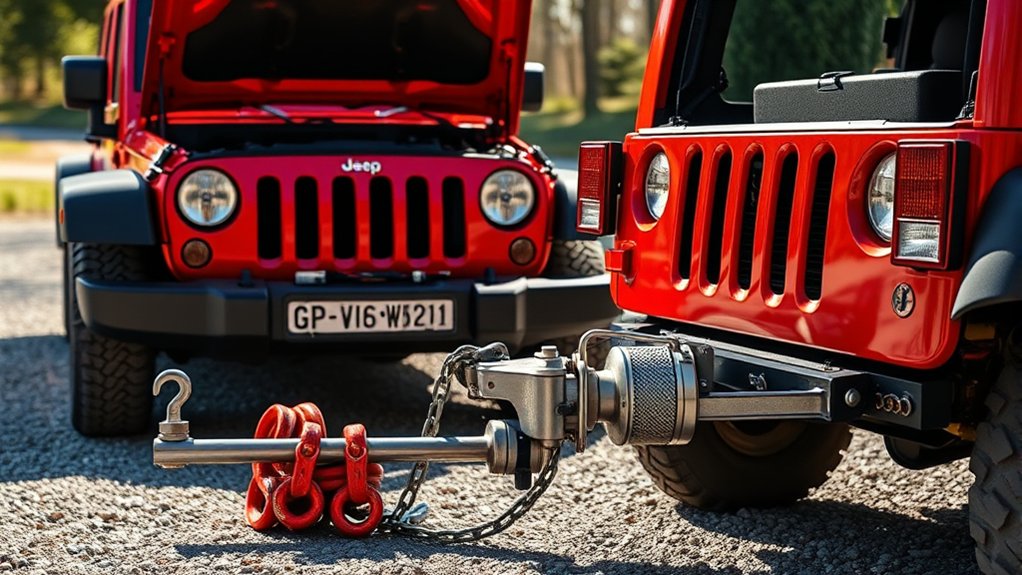
Before you start towing, verify your Jeep Wrangler’s transmission requirements to prevent damage during flat towing. Next, disconnect the drive shaft according to your model’s specifications to avoid drivetrain strain. These steps guarantee a safe and effective flat towing setup.
Check Transmission Requirements
Although flat towing might seem straightforward, you must verify your Jeep Wrangler’s transmission compatibility first. Improper towing can damage the transmission, leading to costly repairs. Follow these steps:
- Consult the Owner’s Manual: Confirm if your Wrangler’s transmission supports flat towing. Some automatic transmissions require the key to be in the “on” position to circulate transmission fluid.
- Check Transmission Fluid Levels: Ascertain the fluid is at the proper level and in good condition to prevent overheating during towing.
- Verify Towing Capacity Limits: Confirm your Jeep’s maximum towing capacity to avoid exceeding manufacturer recommendations, which can strain the transmission.
Disconnect Drive Shaft
Begin by safely disconnecting the drive shaft to prevent drivetrain damage while flat towing your Jeep Wrangler. First, gather the proper tools: a socket set, wrench, and a jack stand.
Secure the Jeep on level ground and engage the parking brake. Use the jack stand to support the drive shaft near the transfer case.
Locate the bolts connecting the drive shaft to the transfer case flange. Carefully remove these bolts using your socket set.
Once loose, gently lower the drive shaft, ensuring it does not hang or strain other components. Store the drive shaft safely to avoid damage.
This drive shaft removal is critical; it stops power transfer, preventing costly transmission issues during flat towing. Always follow manufacturer guidelines for your specific Jeep model.
Setting Up the Tow Bar and Safety Cables Properly
Two critical components guarantee a secure flat tow setup: the tow bar and safety cables. First, ascertain precise tow bar alignment by centering the tow bar with your Jeep Wrangler’s frame to prevent stress and sway during towing.
Ensuring precise tow bar alignment with your Jeep Wrangler’s frame prevents stress and sway while towing.
Second, conduct a thorough safety cable inspection. Check for frays, corrosion, or weak points, replacing cables if necessary. Third, attach safety cables in a crisscross pattern under the tow bar to maintain connection if the tow bar fails.
- Confirm tow bar alignment flush with the Jeep’s mounting brackets.
- Inspect safety cables meticulously for damage or wear.
- Secure cables with proper hooks and cross them to form an “X” beneath the tow bar.
Following these steps guarantees a reliable, safe connection before you hit the road.
How to Drive Safely While Flat Towing Your Jeep Wrangler
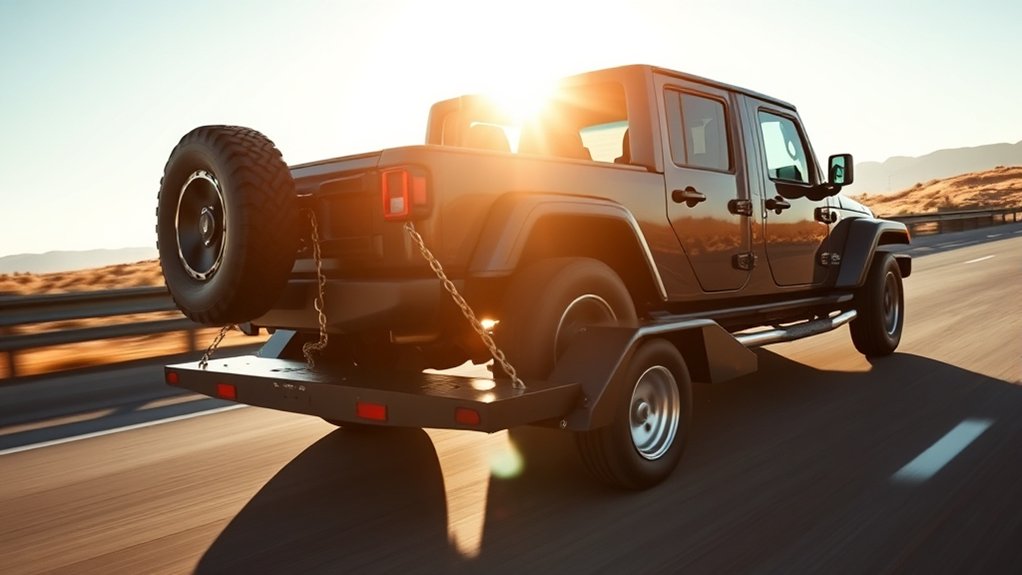
When flat towing your Jeep Wrangler, maintaining smooth and controlled driving habits is essential to guarantee safety and prevent damage. Employ precise towing techniques such as gradual acceleration and deceleration to minimize stress on the tow bar and vehicle components.
Avoid sudden stops and sharp turns to maintain stability. Use safety tips like increasing following distance and reducing speed, especially on inclines or rough terrain. Monitor tow vehicle and Wrangler alignment regularly.
| Action | Recommended Practice | Reason |
|---|---|---|
| Acceleration | Gradual | Reduces stress on setup |
| Turning | Smooth, wide turns | Prevents sway or damage |
| Following Distance | Increase | Allows safer braking time |
Common Flat Towing Mistakes and How to Avoid Them
Although flat towing your Jeep Wrangler can be straightforward, many drivers make critical mistakes that compromise safety and vehicle integrity. To avoid common errors, focus on these key areas:
- Ignoring towing speed limits: Maintain a consistent, moderate towing speed to prevent undue stress on the drivetrain and guarantee control.
- Improper braking techniques: Use smooth, gradual braking to avoid sudden jerks that strain the tow bar and can cause trailer sway.
- Failing to disengage the transfer case: Always shift your Jeep’s transfer case into neutral to prevent transmission damage during towing.
Frequently Asked Questions
Can I Flat Tow a Jeep Wrangler With an Automatic Transmission?
You can flat tow a Jeep Wrangler with an automatic transmission, but you must engage specific towing techniques and transmission considerations. For example, placing the transfer case in neutral is essential to prevent damage. This ensures safe, effective towing performance.
How Does Flat Towing Affect My Jeep Wrangler’s Warranty?
You should follow Jeep’s towing guidelines precisely to avoid warranty limitations. Failure to comply may void coverage on drivetrain components.
Always consult your owner’s manual and use approved flat towing equipment to protect your Wrangler’s warranty.
Are There Specific Jeep Wrangler Models Not Suitable for Flat Towing?
Not all Jeep Wranglers are created equal; certain models have Jeep towing restrictions. You’ll want to check model year considerations carefully since older or specific trims may lack flat-towing capability.
Ensuring you avoid costly drivetrain damage is important when selecting a Wrangler for flat towing.
How Often Should I Inspect the Tow Bar and Safety Cables?
You should perform tow bar maintenance and safety cable inspection before every trip to guarantee secure connections, checking for wear, corrosion, or damage.
Regularly replace components as needed to maintain safe, reliable towing performance.
Can I Use Flat Towing for Long-Distance Travel Across States?
You can flat tow your Jeep for long-distance travel, but you must check towing regulations and distance limitations for each state. Verify your setup complies with these rules to avoid fines or damage during extended trips.
Conclusion
Flat towing your Jeep Wrangler is like aligning two compasses—precision guarantees a smooth journey. By checking compatibility, preparing your vehicle, and securing gear properly, you create a seamless connection that protects both vehicles.
Drive attentively, respecting the unique demands flat towing requires. Avoid common mistakes, and your Wrangler will follow faithfully, symbolizing trust and control on the road.
Master these steps, and you’ll tow confidently, turning every trip into a well-orchestrated mission of flat towing your Jeep Wrangler.