To put the spark plug boot on the wire, first verify the boot matches your wire gauge and material for a secure fit.
Firmly slide the boot over the wire end until it seats fully, making sure it covers the wire completely to block moisture and maintain conductivity.
Tug gently to check the connection is solid without forcing or damaging components.
Proper installation prevents misfires and guarantees engine performance.
Keep following to explore common mistakes and testing tips for best results.
Key Takeaways
- Confirm the spark plug boot size matches the wire gauge for a proper fit.
- Slide the boot firmly onto the wire until it clicks or seats securely.
- Ensure the boot fully covers the wire end to prevent moisture entry.
- Tug gently on the boot to confirm it is securely attached to the wire.
- Avoid forcing incompatible boots onto wires to prevent damage and ensure proper connection.
Get Your Spark Plug Wire and Boot Ready
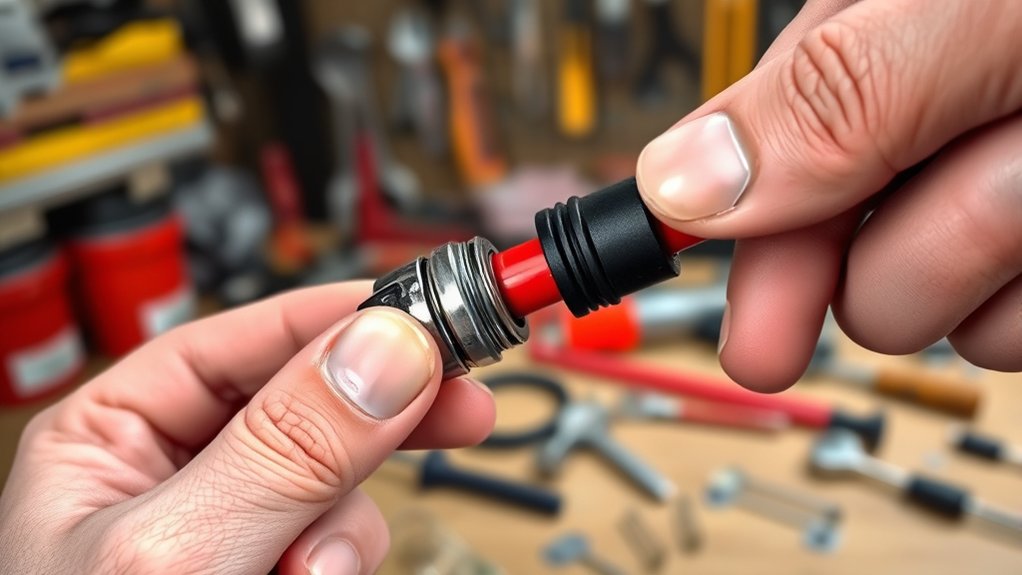
Before attaching the spark plug boot, make certain you have the correct spark plug wire and boot for your engine model. Different spark plug types require specific wire compatibility to guarantee ideal electrical conductivity and prevent misfires.
Check your engine manual to confirm the recommended wire gauge and boot material suited for the spark plug’s heat range and terminal design. Using incompatible wires or boots can cause poor connections, increased resistance, or premature wear.
Consult your engine manual to ensure wire gauge and boot material match the spark plug’s heat and terminal specs.
Inspect both components for any signs of damage or corrosion before proceeding. Selecting the right combination guarantees a secure fit and reliable performance.
Preparing your spark plug wire and boot with attention to these specifications sets the foundation for a proper installation and long-lasting engine operation.
Put the Spark Plug Boot on the Wire the Right Way
Slide the spark plug boot firmly onto the wire until you feel it click or seat securely. Verify the wire materials are compatible with the boot to maintain electrical insulation and durability. Different spark plug types, such as copper, platinum, or iridium, may require specific boot designs for ideal connection.
Use steady pressure to avoid damaging the wire core or boot. Confirm that the boot fully covers the wire end, preventing moisture ingress and electrical leak.
| Step | Detail |
|---|---|
| 1. Align boot | Match boot size with wire gauge |
| 2. Check materials | Verify wire materials suit boot |
| 3. Slide boot | Push firmly until seated |
| 4. Inspect fit | Confirm full coverage |
| 5. Test connection | Tug gently to verify secure fit |
Following these steps verifies a reliable spark plug wire connection.
Watch Out for These Common Spark Plug Boot Installation Mistakes
Making certain the spark plug boot fits securely on the wire is fundamental, but overlooking common installation errors can compromise performance and safety. One frequent mistake is using incompatible spark plug boot types with your ignition wire, leading to poor electrical contact or damage.
Another is forcing the boot onto the wire without verifying wire compatibility issues, which can cause tearing or loose connections. Avoid pulling the boot by the wire during installation to prevent internal wire damage.
Confirm the boot fully seats on the spark plug terminal to maintain a solid seal. Use troubleshooting tips like inspecting for cracks, corrosion, or improper fit.
Addressing these common installation errors early guarantees ideal spark transmission and prevents misfires or premature wear.
How to Test and Confirm a Proper Spark Plug Boot Connection
Although installing the spark plug boot correctly is essential, you need to test and confirm the connection to guarantee ideal performance. Proper spark plug testing verifies the boot compatibility and connection integrity, preventing misfires or electrical loss. Follow these steps to validate the connection:
Inspect the boot for secure fit, verifying no gaps between wire and boot. Use a multimeter to measure resistance; values should align with manufacturer specs. Perform a spark test by grounding the spark plug and checking for consistent sparks. Confirm the boot doesn’t slip off when gently tugged on the wire. Check for any signs of wear or corrosion that could impair conductivity.
Frequently Asked Questions
What Tools Do I Need to Remove Old Spark Plug Boots Safely?
You’ll need spark plug boot pliers or a boot removal tool to prevent wire damage during spark plug maintenance. Use dielectric grease and gloves for boot installation, ensuring a secure, safe connection while avoiding electrical shorts or corrosion.
How Often Should Spark Plug Boots Be Replaced?
A stitch in time saves nine: you should replace spark plug boots every 30,000 to 50,000 miles or during spark plug maintenance. Proper boot installation guarantees reliable performance and prevents misfires or electrical issues.
Can Damaged Spark Plug Boots Cause Engine Misfires?
Yes, damaged spark plug boots can cause engine misfires by disrupting spark plug performance. You’ll experience ignition system issues as the electrical current leaks, preventing proper combustion.
Inspect and replace boots promptly to maintain engine efficiency.
What Materials Are Spark Plug Boots Typically Made From?
You’d think spark plug boots are made from knight’s armor, but they’re typically rubber or silicone, providing excellent boot insulation. These spark plug materials resist heat and electrical interference, ensuring reliable engine performance and preventing misfires effectively.
Are Spark Plug Boots Universal or Vehicle-Specific?
You’ll find spark plug boots aren’t universal; they vary by vehicle. Ensuring spark plug compatibility is essential.
Apply precise boot installation techniques to secure fit, prevent arcing, and maintain peak engine performance.
Conclusion
Think of installing a spark plug boot like securing a lifeline—just as a climber trusts their rope, your engine relies on a solid connection. One mechanic once shared that a loose boot was the culprit behind a stubborn misfire; after a quick reseat, performance soared.
By prepping your wire, fitting the boot correctly, and double-checking the fit, you guarantee your engine runs smoothly and efficiently every time. Don’t skip these vital steps when you put spark plug boot on wire!