To remove a frozen spark plug, first identify its type and inspect for any damage. Using the correct tools is essential for safe removal. Gather a spark plug socket with a rubber insert, an extension bar, a torque wrench, and penetrating oil.
Apply the penetrating oil around the spark plug threads and wait about 15 minutes to allow it to loosen any corrosion. When ready, turn the spark plug counterclockwise with steady, controlled torque.
If the plug feels stuck, alternate by slightly tightening it before trying to loosen again. Avoid using sudden or excessive force to prevent breaking the spark plug.
After successfully removing the plug, inspect and clean the threads before installing a replacement. Following these steps ensures safe extraction and helps maintain engine health—more detailed guidance awaits.
Key Takeaways
- Apply penetrating oil around the spark plug threads and let it sit for at least 15 minutes to loosen corrosion.
- Use a spark plug socket with a rubber insert and a ratchet for secure grip and controlled torque application.
- Turn the spark plug counterclockwise slowly, alternating between slight tightening and loosening to break the seal.
- If resistance persists, apply more lubricant, wait longer, and avoid using sudden or excessive force to prevent breakage.
- Use a breaker bar or extension for extra leverage only after sufficient lubrication and gentle initial attempts.
Diagnosing and Preparing Tools to Remove a Frozen Spark Plug
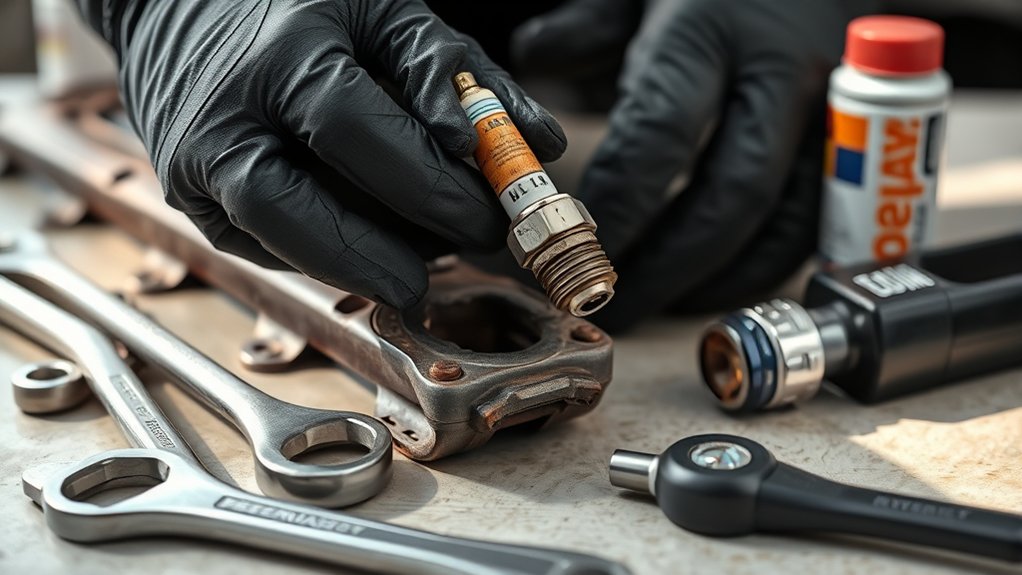
Before you attempt to remove a frozen spark plug, you need to accurately diagnose the issue and gather the proper tools. Start by identifying the spark plug type in your engine, as different engines use varying spark plug sizes and heat ranges.
Inspect for visible damage or corrosion that may indicate a frozen plug. Check engine maintenance records to confirm if plugs were serviced recently or if neglect might have caused seizing.
Use a torque wrench, spark plug socket, extension bar, and penetrating oil for preparation. Ascertain you have a breaker bar for added leverage if needed.
Gather a torque wrench, spark plug socket, extension bar, penetrating oil, and a breaker bar for extra leverage.
Proper diagnosis and tool selection prevent further engine damage and facilitate safe removal. Accurate identification of spark plug types and maintenance status is critical before proceeding.
How to Safely Loosen and Remove a Frozen Spark Plug
With the correct tools and a clear understanding of your spark plug type from the previous step, you can now focus on safely loosening the frozen spark plug. Begin by applying a penetrating oil around the spark plug threads and let it sit for at least 15 minutes to break down corrosion.
Use a spark plug socket attached to a ratchet with an extension for leverage. Turn the spark plug counterclockwise slowly, applying steady, moderate force to avoid stripping the threads. If it resists, alternate between slight tightening and loosening motions to help break the bond.
Keep the engine cool before starting to prevent metal expansion. This careful approach guarantees effective engine maintenance and minimizes the risk of damaging the spark plug or cylinder head during removal.
Avoiding Damage When Removing a Frozen Spark Plug
Although removing a frozen spark plug can be challenging, you can prevent damage by applying controlled torque and using the proper tools. Start by applying lubricants such as penetrating oil around the spark plug threads, allowing it to soak for at least 15 minutes to loosen corrosion.
Use a quality spark plug socket with a rubber insert to grip the plug securely, reducing the risk of slipping. When turning, apply slow, steady torque rather than sudden force to avoid snapping the plug or damaging the cylinder head.
If resistance remains high, apply additional lubricant and let it penetrate further before attempting removal again. These steps are essential for preventing breakage and ensuring you extract the plug intact without causing costly engine damage.
What to Do Next to Keep Your Engine Healthy
Once you’ve successfully removed the frozen spark plug, inspect the spark plug hole and threads carefully for any damage or debris. Clean the area thoroughly using compressed air or a thread chaser to guarantee proper seating for the new plug.
Choose a spark plug that matches your engine’s specifications for peak performance. During spark plug replacement, apply anti-seize compound lightly to the threads to prevent future freezing but avoid over-application, which can cause inaccurate torque readings.
Torque the new spark plug to the manufacturer’s recommended specification using a calibrated torque wrench. After replacement, perform a basic engine maintenance check, including examining ignition wires and testing engine compression to identify potential underlying issues.
Regular engine maintenance will prolong engine life and prevent recurrence of frozen spark plugs.
Frequently Asked Questions
What Causes Spark Plugs to Freeze in the First Place?
Spark plugs freeze due to corrosion and debris buildup from poor spark plug maintenance and inadequate winter preparation. You’ll prevent this by cleaning plugs regularly and using anti-seize compound before cold exposure to guarantee easy removal later.
How Often Should Spark Plugs Be Replaced Under Normal Conditions?
You should replace spark plugs every 30,000 to 100,000 miles, depending on type. Follow maintenance tips like regularly checking gaps and cleaning to extend spark plug lifespan and guarantee peak engine performance.
Can Frozen Spark Plugs Affect Fuel Efficiency?
Absolutely, frozen spark plugs can tank your fuel economy instantly! When they seize, your engine performance drops dramatically, causing misfires and inefficient combustion.
You should free or replace them promptly to restore peak fuel economy and engine performance.
Are Certain Spark Plug Materials Less Likely to Freeze?
Yes, certain spark plug materials like iridium and platinum resist corrosion better, reducing the risk of a frozen spark plug.
You’ll want to choose these materials for durability and easier removal under tough conditions.
What Are the Signs of a Failing Spark Plug?
You’ll notice engine misfires, rough idling, or poor acceleration as signs of a failing spark plug.
Since the average spark plug lifespan is 30,000 miles, monitor these symptoms to maintain peak engine performance and avoid damage.
Conclusion
Removing a frozen spark plug is like carefully untangling a stubborn knot—rushing only tightens it. A mechanic once shared that applying steady, measured force prevented a costly thread repair. By diagnosing properly, using the right tools, and loosening the plug gradually, you avoid damage and keep your engine running smoothly.
Follow these steps precisely, and you’ll turn a frustrating task into a straightforward fix. Ensuring your engine stays healthy and efficient depends on careful technique. Mastering how to remove a frozen spark plug is key to maintaining your vehicle’s performance.