You can tell if your engine oil is bad by checking its color, texture, and smell. Fresh oil looks amber and feels smooth; dark, gritty, or thick oil signals contamination or breakdown. A burnt or sour odor means the oil has degraded.
Engine symptoms like noise, rough idling, reduced power, or overheating also indicate poor oil condition.
Regular checks and timely changes based on mileage and driving conditions keep your engine protected.
Understanding these signs helps you maintain peak performance and avoid costly damage.
Key Takeaways
- Check oil color: fresh oil is amber or light brown, while dark or black oil indicates contamination or oxidation.
- Feel the oil texture; gritty or thick oil suggests degradation, unlike smooth and slippery fresh oil.
- Smell the oil for burnt or sour odors, which signal oil breakdown or overheating.
- Observe engine symptoms like increased noise, rough idling, reduced power, or overheating as signs of bad oil.
- Inspect for contamination such as milky appearance, sludge, or debris on the dipstick under good lighting.
How to Check Engine Oil Color, Texture, and Smell
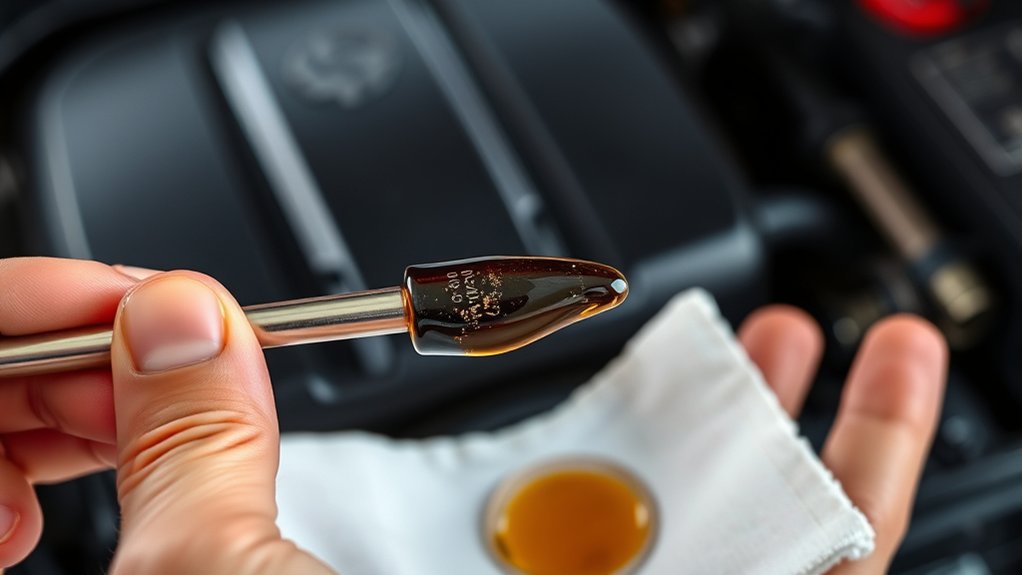
To accurately assess your engine oil’s condition, start by examining its color, texture, and smell. Fresh oil typically appears amber or light brown, while dark or black oil may indicate contamination or oxidation.
Rub a small amount between your fingers; it should feel smooth and slippery, reflecting proper oil viscosity. Gritty or thick textures suggest the oil has degraded or accumulated debris.
Smell the oil. Burnt or sour odors often signal oil breakdown or overheating. Keep in mind, oil additives enhance performance and longevity, so changes in these characteristics can mean additives are depleted.
Regularly checking these properties helps guarantee your engine oil maintains ideal lubrication, protects engine components, and supports efficient operation. Address deviations promptly to prevent damage and maintain engine health.
Engine Performance Symptoms That Show Bad Engine Oil
Anyone who drives regularly can experience a decline in engine performance caused by bad engine oil. When oil loses its proper viscosity, it fails to lubricate engine components effectively, increasing friction and wear.
You might notice increased engine noise, rough idling, or sluggish acceleration. These symptoms indicate your oil’s protective qualities have degraded.
| Symptom | Cause | Effect on Engine |
|---|---|---|
| Increased engine noise | Low oil viscosity | More metal-to-metal contact |
| Rough idling | Contaminated oil | Poor combustion stability |
| Reduced power | Thickened oil | Inefficient lubrication |
| Overheating | Oil breakdown | Insufficient heat dissipation |
| Warning lights | Oil pressure drop | Potential engine damage |
Monitoring these symptoms helps you identify when your engine oil is no longer performing at its best.
When to Change Engine Oil: Mileage and Time Guidelines
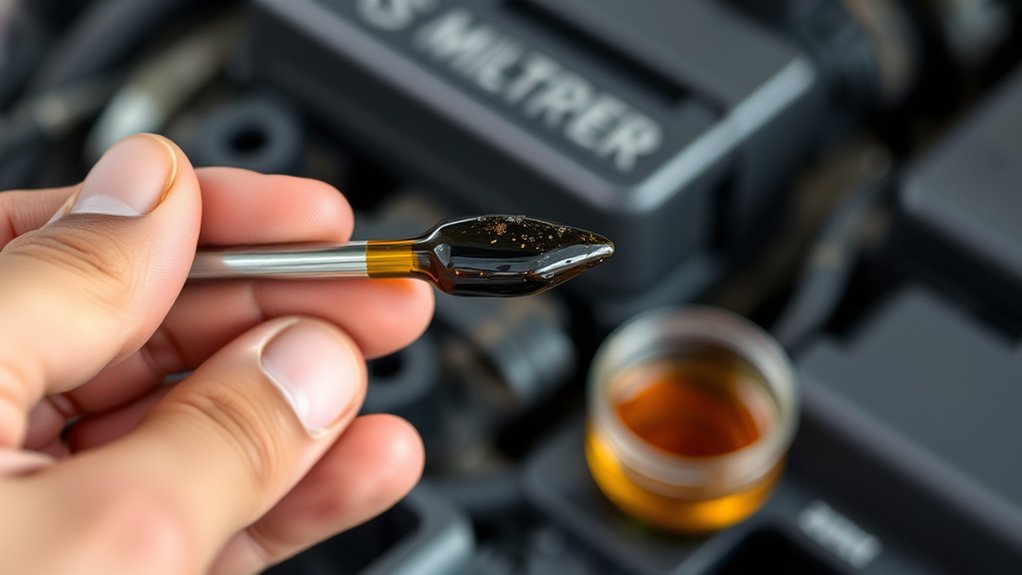
Engine oil requires regular replacement based on specific mileage and time intervals to maintain peak engine performance and prevent damage. Generally, manufacturers recommend changing oil every 3,000 to 7,500 miles, depending on oil type and vehicle model. You should also consider time-based intervals, typically every six months, because oil degrades over time, even if mileage is low.
Oil change frequency varies with driving conditions; severe use, such as frequent short trips or extreme temperatures, demands more frequent changes. Seasonal considerations are essential: cold weather thickens oil, reducing flow, while heat accelerates oil breakdown. Adjust your oil change schedule accordingly during winter and summer to guarantee ideal lubrication. Following these mileage and time guidelines helps preserve engine integrity and assures reliable vehicle operation.
How to Spot Contamination in Your Engine Oil
How can you tell if your oil has become contaminated? Start by examining its color and texture. Dark, gritty oil often indicates dirt or metal particles, common oil contamination causes.
You might also notice a milky appearance, signaling coolant leakage into the oil system. Contamination can degrade engine oil additives, reducing their effectiveness in protecting engine components.
Additionally, check for unusual odors, such as a burnt smell, which can suggest overheating or chemical breakdown.
Using a clean dipstick, pull the oil and inspect it under good lighting. If you detect sludge, water droplets, or metallic debris, it’s a clear sign of contamination.
Regularly monitoring your engine oil helps maintain ideal additive performance and prevents damage caused by contaminants compromising lubrication and engine health.
Frequently Asked Questions
Can Bad Engine Oil Damage My Car’s Warranty?
Yes, bad engine oil can cause warranty implications if oil degradation leads to engine damage.
You’ll want to use the recommended oil and maintain regular changes to avoid voiding your car’s warranty and costly repairs.
Is Synthetic Oil Better at Preventing Bad Oil?
You know what they say: “Prevention is better than cure.” Synthetic oil offers synthetic advantages, enhancing oil performance by resisting breakdown and maintaining viscosity.
How Does Extreme Weather Affect Engine Oil Quality?
Extreme temperature effects cause viscosity changes in your engine oil, making it thicker in cold weather and thinner in heat. This alters lubrication efficiency, accelerates oil degradation, and demands more frequent oil monitoring and changes to protect your engine.
Can Engine Oil Additives Improve Oil Lifespan?
Yes, oil additives can improve your oil’s lifespan by providing performance benefits like reducing wear and preventing oxidation. They enhance longevity and boost engine protection, ensuring your engine runs efficiently under various operating conditions.
Does Engine Oil Type Vary by Vehicle Model?
Yes, engine oil type varies by vehicle model because each has specific vehicle requirements. You should always choose oil viscosity that matches your engine’s design to guarantee ideal lubrication, performance, and protection under different operating conditions.
Conclusion
Think of your engine oil as the lifeblood flowing through your car’s veins. When its color darkens, texture thickens, or smell turns sour, it’s signaling distress. Engine hiccups and sluggish performance are warning flags waving in the wind.
Keep a vigilant eye on mileage and time to avoid costly damage. Spot contamination early, like a detective uncovering clues, to guarantee your engine runs smoothly and efficiently.
Don’t wait—act before the lifeblood runs dry. Knowing how to tell if engine oil is bad can save you from expensive repairs and keep your vehicle in top shape.