No, engine oil and transmission fluid aren’t the same and serve different roles in your vehicle.
Engine oil lubricates and cools engine parts, while transmission fluid handles hydraulic pressure for smooth gear shifts and protects transmission components from wear and corrosion.
Using engine oil in your transmission can cause overheating and mechanical failure.
Choosing the correct fluid based on manufacturer specifications is essential to your vehicle’s performance and longevity.
Understanding these differences helps guarantee proper maintenance and reliability.
Knowing whether engine oil is the same as transmission fluid is key to keeping your vehicle running smoothly.
Key Takeaways
- Engine oil and transmission fluid have different compositions tailored for their specific functions in engines and transmissions.
- Transmission fluid contains friction modifiers and hydraulic properties absent in engine oil.
- Using engine oil in transmissions can cause inadequate lubrication, overheating, and mechanical failures.
- Transmission fluid ensures smooth gear shifts by maintaining proper viscosity and hydraulic pressure.
- Manufacturer-recommended transmission fluid is essential for transmission reliability and longevity.
What Is Engine Oil and How Does It Work?
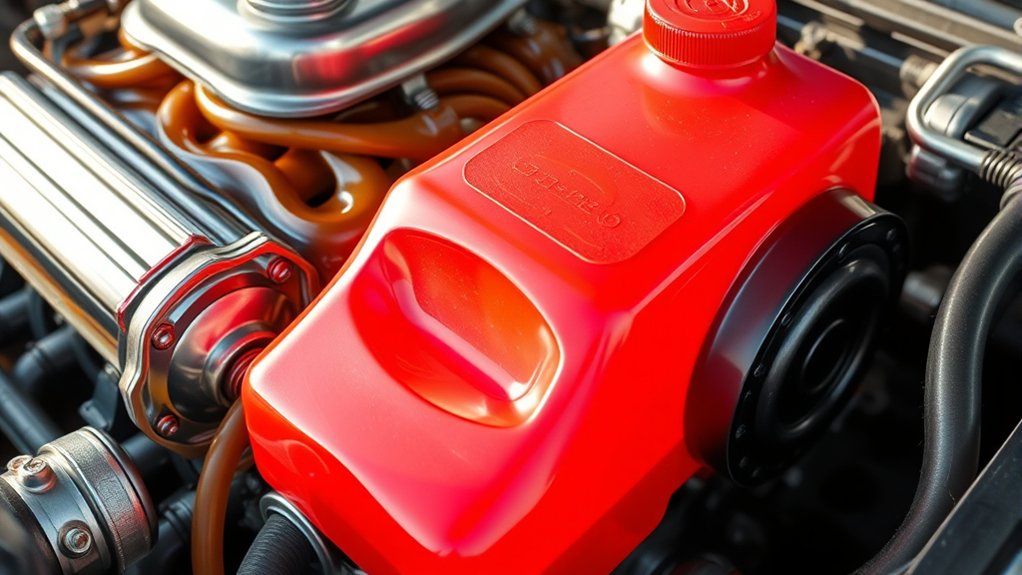
Engine oil acts as the lifeblood of your vehicle’s engine, reducing friction between moving parts and preventing wear. You rely on its carefully engineered engine oil composition, which typically includes base oils blended with additives to enhance performance.
These additives improve viscosity, protect against corrosion, neutralize acids, and prevent sludge buildup. The primary engine oil functions you depend on include lubrication, cooling, cleaning, and sealing.
Lubrication minimizes mechanical wear by creating a protective film, while cooling dissipates heat generated by combustion and friction. The cleaning function keeps contaminants suspended to avoid deposit formation, and sealing guarantees peak compression by filling gaps between piston rings and cylinder walls.
Understanding these precise functions helps you appreciate how engine oil maintains engine efficiency and longevity.
How Is Transmission Fluid Different From Engine Oil?
While both engine oil and transmission fluid serve to lubricate and protect essential components, their formulations and functions differ markedly to meet distinct mechanical demands. Transmission fluid is specifically engineered for various transmission types: automatic, manual, and continuously variable transmissions. Each requires unique fluid properties such as friction modifiers, detergents, and anti-wear additives.
Unlike engine oil, which primarily focuses on thermal stability and contaminant suspension, transmission fluid must maintain precise viscosity under high shear conditions and facilitate hydraulic pressure for gear shifting. Additionally, transmission fluid often contains additives to prevent corrosion and guarantee smooth clutch engagement.
Understanding these specialized fluid properties helps you recognize why transmission fluid is not interchangeable with engine oil, as each fluid supports distinct operational requirements dictated by the mechanical design and function of the component it serves.
Why Should You Never Use Engine Oil in Your Transmission?
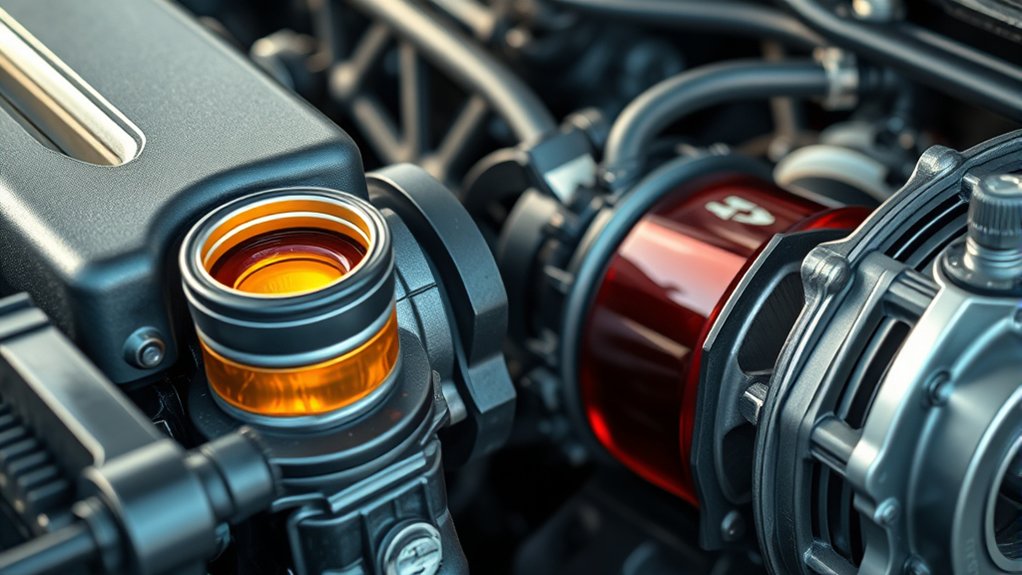
Because transmission systems require fluids with specific frictional and hydraulic properties, using engine oil instead can cause serious mechanical issues. Engine oil lacks the precise friction modifiers and viscosity characteristics essential for ideal transmission performance.
If you substitute engine oil, you risk improper fluid compatibility, leading to inadequate lubrication, increased wear, and potential overheating. This mismatch affects the delicate balance of pressure and friction within the transmission’s components, impairing smooth gear shifts and causing premature failure.
Additionally, engine oil’s additive package isn’t formulated to manage the hydraulic requirements unique to transmissions. Using the wrong fluid compromises the transmission’s operational integrity and can result in costly repairs.
To maintain reliable transmission performance, always use the manufacturer-recommended transmission fluid designed specifically for your vehicle’s system.
How Transmission Fluid Protects Your Vehicle’s Transmission
Transmission fluid plays a vital role in protecting your vehicle’s transmission by providing essential lubrication, cooling, and hydraulic functions. This specialized fluid lubrication minimizes friction between moving parts, preventing wear and extending the transmission’s lifespan.
It also dissipates heat generated during operation, maintaining ideal temperature and preventing overheating that can lead to component failure. Additionally, transmission fluid serves as a hydraulic medium, enabling smooth gear shifts by transmitting pressure within the system.
Maintaining proper transmission efficiency depends heavily on the fluid’s condition and quality. Without adequate transmission fluid, you risk increased friction, heat buildup, and impaired hydraulic function, all of which can cause premature transmission damage.
Understanding how transmission fluid protects your transmission helps emphasize why it’s important to use the correct fluid and keep it well-maintained.
What Are the Signs Your Engine Oil or Transmission Fluid Needs Changing?
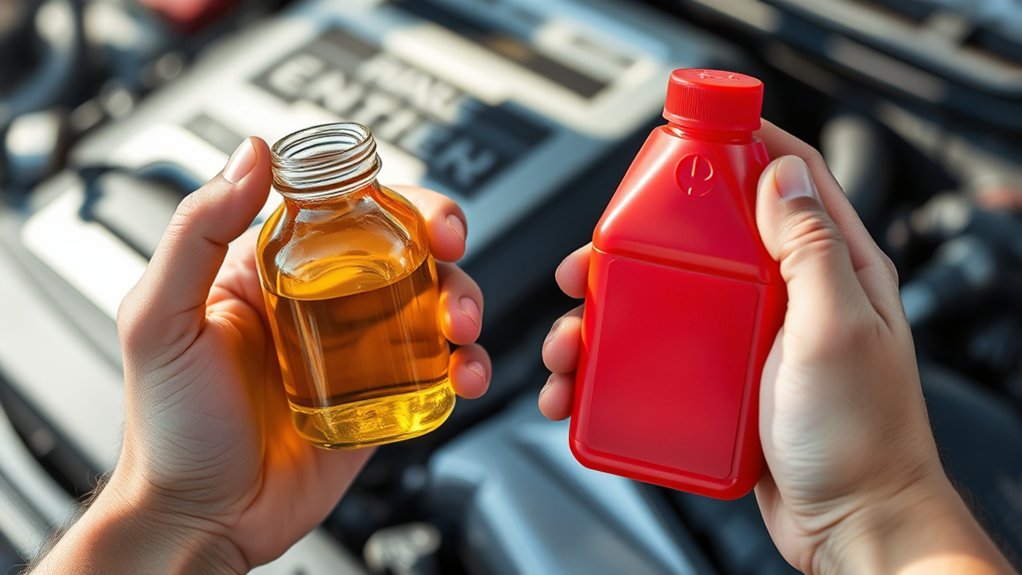
How can you tell when your engine oil or transmission fluid needs changing? Key oil change indicators include dark, gritty oil texture and a burnt smell, signaling contamination and breakdown. Low oil levels detected via the dipstick also indicate a need for replacement.
For transmission fluid, fluid replacement signs include a dark or cloudy appearance instead of its normal bright red or amber hue. Additionally, a burnt odor or slipping gears during shifts point to degraded fluid compromising transmission performance.
Monitoring these indicators regularly helps maintain peak lubrication and prevents component wear. Ignoring these signs risks severe engine or transmission damage, so timely fluid changes based on precise assessment protect your vehicle’s longevity and efficiency.
How to Choose the Right Engine Oil and Transmission Fluid for Your Vehicle
You need to select engine oil and transmission fluid based on your vehicle’s specifications and operating conditions. Different engine oils vary by viscosity and additive packages, while transmission fluids differ in type and formulation for specific transmissions.
Always follow the manufacturer’s recommendations to guarantee peak performance and protection.
Engine Oil Types
Though selecting the right engine oil might seem straightforward, it requires understanding your vehicle’s specifications and operating conditions. You’ll encounter several engine oil types: conventional, synthetic blends, full synthetic, and high mileage formulations.
Synthetic blends combine conventional oil with synthetic base stocks, offering improved protection and oxidation resistance at a moderate cost. High mileage oils contain additives designed to reduce leaks and wear in engines exceeding 75,000 miles, enhancing seal conditioning and minimizing oil consumption.
Full synthetic oils provide superior thermal stability and protection, ideal for extreme conditions. Always consult your vehicle’s manual for recommended viscosity grades and oil types, ensuring compatibility with engine design and driving patterns.
Choosing the correct oil type optimizes engine performance, longevity, and fuel efficiency.
Transmission Fluid Varieties
Selecting the right fluids goes beyond engine oil, extending to transmission fluid, which plays a critical role in your vehicle’s drivetrain performance. Transmission fluids come in several varieties, including conventional mineral-based and advanced synthetic options.
Synthetic transmission fluids offer superior thermal stability, oxidation resistance, and longer service intervals, making them ideal for high-performance or modern vehicles. You’ll also need to take into account viscosity levels, which determine fluid flow and lubrication efficiency under varying temperatures and operating conditions.
Automatic transmissions typically require fluids with specific viscosity grades to guarantee proper hydraulic function and gear protection. Manual transmissions and differentials often use thicker gear oils with distinct viscosity requirements.
Choosing the correct transmission fluid variety tailored to your vehicle’s design prevents wear, overheating, and shifting issues, ensuring peak drivetrain function and longevity.
Manufacturer Recommendations
When determining the appropriate engine oil and transmission fluid for your vehicle, following the manufacturer’s specifications is essential. These guidelines guarantee fluid compatibility with your engine and transmission materials, preventing wear and maintaining peak performance.
Always consult your owner’s manual or manufacturer resources for recommended viscosity grades and fluid types.
| Component | Manufacturer Specification | Fluid Compatibility |
|---|---|---|
| Engine Oil | SAE 5W-30, API SN | Synthetic, conventional |
| Automatic Transmission Fluid (ATF) | Dexron VI, Mercon LV | Specific ATF types |
| Manual Transmission Fluid | GL-4 or GL-5 gear oil | High-pressure gear oils |
| Differential Fluid | SAE 75W-90 | Hypoid gear oils |
| Hybrid/Electric Vehicles | Specialized low-viscosity oils | Manufacturer-approved only |
Adhering to these specs guarantees you’re using fluids engineered for your vehicle’s systems.
Frequently Asked Questions
Can Transmission Fluid Affect Fuel Efficiency?
Yes, transmission fluid can affect fuel efficiency because poor fluid viscosity reduces transmission performance, causing increased friction and energy loss. Maintaining proper fluid viscosity guarantees efficient transmission operation, which helps optimize fuel consumption and overall vehicle performance.
How Often Should Transmission Fluid Be Checked?
Like a heartbeat for your vehicle, you should perform transmission fluid inspection every 30,000 to 60,000 miles.
Regular transmission maintenance guarantees peak performance and prevents costly repairs by keeping fluid levels and quality in check.
Are Synthetic Fluids Better for Transmissions?
Yes, synthetic fluids offer synthetic benefits like improved thermal stability and oxidation resistance, enhancing fluid longevity. You’ll experience better protection against wear and smoother shifting.
Ultimately, this extends your transmission’s lifespan and maintains peak performance.
Can Old Transmission Fluid Damage Other Car Parts?
Yes, old fluid effects can cause transmission wear, leading to inefficient gear shifts and overheating. Additionally, degraded transmission fluid may damage seals and other components, reducing overall transmission lifespan and potentially affecting adjacent systems in your vehicle.
Is It Safe to Mix Different Brands of Transmission Fluid?
You shouldn’t mix different brands of transmission fluid, as 70% of fluid failures result from incompatibility. Brand differences affect fluid compatibility, potentially harming your transmission’s performance and longevity.
Always use the manufacturer’s recommended fluid.
Conclusion
Now you know engine oil and transmission fluid serve very different, essential roles—engine oil lubricates your engine’s moving parts, while transmission fluid guarantees smooth gear shifts and cools the transmission.
Did you know that transmission fluid can reduce friction by up to 90%, preventing costly damage? Using the wrong fluid risks severe mechanical failure.
Always choose the right fluid type for your vehicle to keep everything running efficiently and extend your car’s lifespan. Understanding that engine oil is not the same as transmission fluid is key to proper vehicle maintenance.