You cause engine oil leaks mainly through worn gaskets and seals that crack under heat and pressure, loose or damaged drain plugs that fail to secure oil, and incorrect oil filter installation compromising seals.
Environmental factors like dirt buildup, excessive heat, and aging components accelerate degradation, while improper oil changes and overfilling increase internal pressure, forcing leaks.
Detecting these issues early and understanding their causes helps you maintain engine integrity and avoid costly damage.
More detailed insights can further enhance your prevention strategy.
Key Takeaways
- Worn gaskets and seals deteriorate from heat, pressure, and chemicals, forming gaps that cause oil leaks.
- Loose or damaged drain plugs fail to seal properly, allowing oil to seep out.
- Improper oil filter installation or damaged filter gaskets result in persistent oil leakage.
- Dirt, excessive heat, and aging components accelerate seal degradation and increase leak risks.
- Overfilling oil or using the wrong oil type raises pressure, forcing oil past seals and causing leaks.
Common Signs of Engine Oil Leaks to Watch For
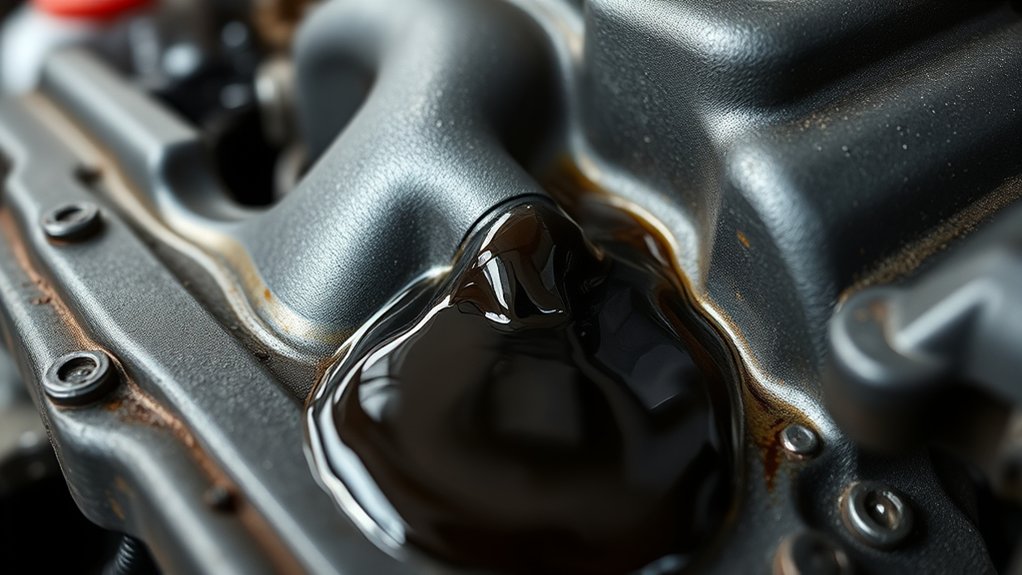
Although engine oil leaks can vary in severity, you’ll typically notice specific signs indicating their presence. One of the most obvious is the appearance of oil stains beneath your vehicle, often dark, irregular patches on the driveway or garage floor. These stains are a clear indicator that oil is escaping from the engine.
Additionally, you should monitor your vehicle’s oil pressure gauge closely. A sudden drop or consistent low oil pressure reading signals that the engine isn’t maintaining adequate lubrication, possibly due to a leak.
You might also detect a burning oil smell or see smoke from the engine bay, both signs that oil is leaking onto hot engine parts. Recognizing these symptoms early helps prevent mechanical damage and costly repairs.
How Worn Gaskets and Seals Cause Oil Leaks
Noticing oil stains or a drop in oil pressure often points to leaks originating from compromised components within the engine. Worn gaskets and seals are frequent culprits in such scenarios. Different gasket types, such as rubber, cork, or composite, serve as critical barriers between engine components, preventing oil from escaping.
Over time, exposure to heat, pressure, and chemical degradation causes these gasket types to harden, crack, or lose elasticity. Similarly, seal materials like nitrile rubber or silicone degrade, losing their ability to maintain an effective seal.
When these materials deteriorate, microscopic gaps form, allowing oil to seep through under operating pressures. You must inspect and replace worn gaskets and seals promptly to maintain engine integrity and prevent further damage caused by persistent oil leaks.
How Loose or Damaged Drain Plugs Cause Oil Leaks
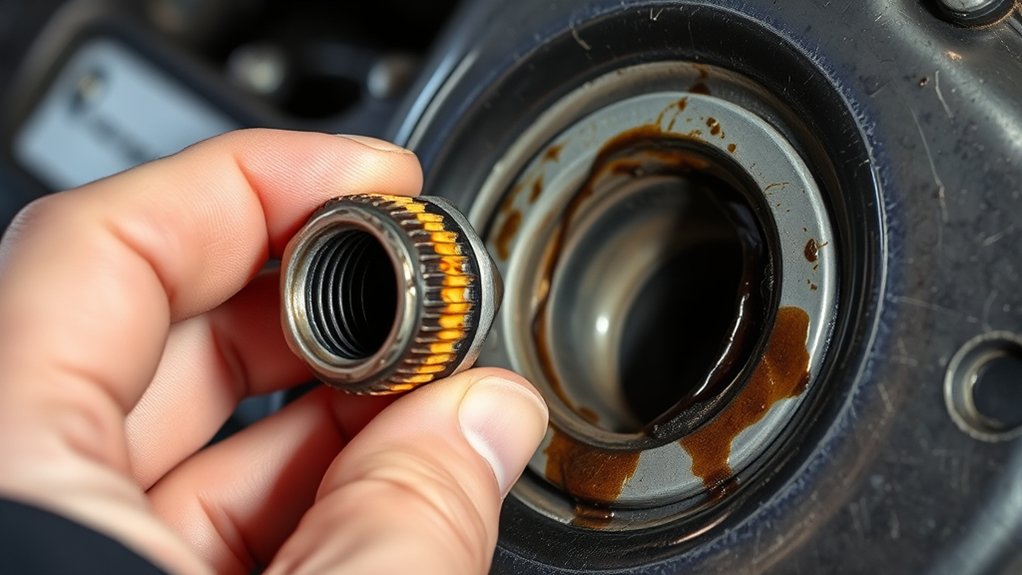
If you overlook the condition or tightness of your engine’s drain plug, you risk oil leakage that can compromise engine performance. Proper drain plug maintenance is essential for oil leak prevention. A loose plug allows oil to seep, while a damaged plug, such as one with stripped threads or a worn gasket, fails to seal the oil pan effectively.
Regular inspection and correct torque guarantee a secure fit, preventing leaks.
| Issue | Cause | Effect |
|---|---|---|
| Loose Drain Plug | Insufficient torque | Oil seepage, engine damage |
| Damaged Plug | Worn threads or gasket | Incomplete sealing, leaks |
| Neglected Maintenance | Lack of inspection | Increased leak risk |
Consistent drain plug maintenance directly mitigates oil leaks and safeguards engine integrity.
Why Dirt, Heat, and Age Increase Oil Leak Risks
You’ll find that dirt accelerates seal degradation by causing abrasion and contamination. Excessive heat breaks down gasket materials, reducing their elasticity and sealing capability.
Over time, aging components lose structural integrity, increasing the likelihood of oil leaks.
Dirt’s Impact On Seals
Although seals are designed to prevent oil leaks, their effectiveness diminishes when exposed to dirt, heat, and age. Dirt accumulation on seal surfaces accelerates seal deterioration by introducing abrasive particles that compromise the seal’s integrity.
When dirt embeds into the seal material, it disrupts the tight interface between the seal and mating components, creating micro-gaps where oil can escape. You’ll find that as dirt builds up over time, it exacerbates wear patterns and promotes hardening or cracking of the seal compound.
This degradation reduces the seal’s elasticity, impairing its ability to maintain a proper seal under pressure. As a result, controlling dirt exposure is critical to preserving seal function and minimizing oil leak risks in engine systems.
Heat Effects On Gaskets
Dirt’s abrasive effects on seals often coincide with elevated temperatures that accelerate gasket degradation in engine systems. When you consider gasket materials, you must account for their susceptibility to thermal expansion.
As the engine heats up, these materials expand and contract repeatedly, which stresses the gasket’s structural integrity. Over time, this cyclic thermal expansion induces micro-cracks or warping, compromising the gasket’s seal.
Dirt particles exacerbate this by embedding in the gasket surface, creating uneven pressure points that promote accelerated wear. You’ll notice that heat also accelerates chemical breakdown within gasket compounds, reducing elasticity and increasing brittleness.
Consequently, the combined effects of dirt and heat elevate the risk of oil leaks by deteriorating the gasket’s ability to maintain a consistent, tight seal under engine operating conditions.
Aging Components Wear
As engine components age, their materials inevitably degrade, which directly increases the likelihood of oil leaks. With increasing engine age, components experience fatigue due to continuous mechanical stress and thermal cycling. This fatigue weakens seals, gaskets, and metal surfaces, reducing their ability to maintain tight tolerances and proper sealing.
Dirt accumulation accelerates wear by introducing abrasive particles that damage sealing surfaces, while heat exacerbates material breakdown by causing hardening or brittleness. You must recognize that component fatigue compromises the integrity of oil containment, making leaks more probable over time.
Regular inspections should focus on identifying signs of aging wear, such as cracked gaskets or hardened seals, to prevent leaks. Understanding how engine age and environmental factors interplay helps you manage and mitigate oil leak risks effectively.
Oil Filter Problems That Cause Engine Oil Leaks
You can experience engine oil leaks if the oil filter isn’t installed correctly, causing gaps where oil can escape. A damaged filter gasket can also compromise the seal and lead to leaks.
Additionally, using the wrong filter model can result in poor fitment and pressure issues that cause oil to seep out.
Improper Filter Installation
Improper filter installation frequently triggers engine oil leaks by compromising the seal integrity between the oil filter and engine block. When you neglect proper installation techniques, such as uneven tightening or misalignment, you risk creating gaps that allow oil to escape.
Effective filter maintenance requires you to clean the mounting surface thoroughly and apply the correct torque to the filter, ensuring a uniform seal. Over-tightening can damage the filter housing, while under-tightening fails to compress the gasket adequately, both leading to leaks.
Additionally, using incompatible or low-quality filters disrupts the seal, negating proper installation efforts. By adhering strictly to manufacturer-recommended procedures during filter replacement, you minimize leak risks and maintain peak engine performance.
Proper installation techniques are essential for preventing oil leaks related to filter issues.
Damaged Filter Gasket
When the filter gasket sustains damage, it compromises the seal between the oil filter and engine, leading to persistent leaks. This gasket, typically made of rubber or synthetic material, guarantees a tight, leak-proof connection.
Over time, exposure to heat, pressure, and oil contaminants can cause the gasket to crack, harden, or deform. If you don’t perform regular filter maintenance, these issues can go unnoticed, exacerbating leaks and risking engine damage.
During oil changes, inspect the gasket for signs of wear or damage and replace it promptly. Gasket replacement is vital because even minor imperfections can disrupt the seal, allowing oil to escape.
Use Of Incorrect Filter
A damaged filter gasket often signals the need to scrutinize the entire oil filtration system, including the compatibility of the filter itself. Using an incorrect filter can compromise seal integrity, causing oil leaks.
You must verify filter compatibility with your engine specifications; otherwise, poor fitment or improper sealing occurs. Additionally, filter quality impacts durability and resistance to pressure fluctuations.
Low-quality filters degrade faster, increasing leak risks.
| Issue | Cause | Impact |
|---|---|---|
| Incorrect Filter Size | Mismatched filter dimensions | Poor seal, oil leakage |
| Incompatible Threads | Wrong thread pattern | Cross-threading, leaks |
| Low Filter Quality | Inferior materials | Gasket failure, leaks |
| Improper Filter Type | Non-compliant filtration specs | Reduced oil flow, leaks |
| Seal Damage | Defective or worn gasket | Immediate oil leakage |
Check filter compatibility and quality to prevent leaks.
How Improper Oil Changes Lead to Oil Leaks
How exactly can an oil change, a routine maintenance task, cause your engine to leak oil? If you neglect proper oil change frequency, contaminants accumulate, degrading the oil’s lubricating properties and increasing pressure on seals.
Additionally, poor maintenance habits like failing to tighten the drain plug or improperly seating the oil filter can create weak points where oil escapes. Using the wrong oil type or filter during changes can also compromise seal integrity.
Overfilling oil during a change raises internal pressure, forcing oil past gaskets and seals. Fundamentally, improper oil changes disrupt the engine’s designed oil containment system, promoting leaks.
Easy Ways to Detect Engine Oil Leaks Early
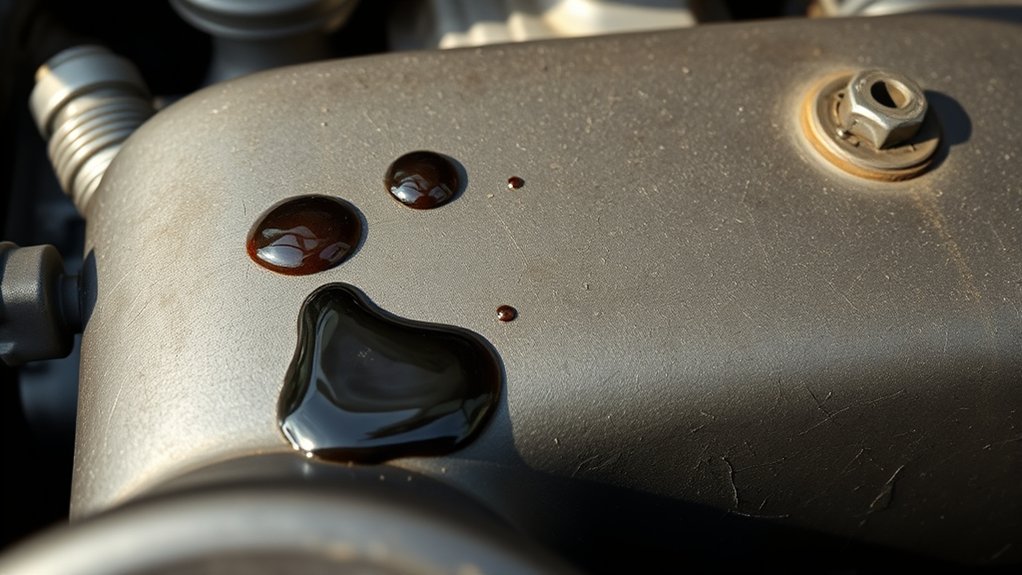
Why should you prioritize early detection of engine oil leaks? Early warning enables you to address leaks before they cause engine damage or costly repairs. Oil leak detection relies on systematic inspection and monitoring for telltale signs such as oil spots, low oil levels, and engine performance changes.
Use the following table to compare common oil leak detection methods:
| Detection Method | Indicator | Frequency Recommended |
|---|---|---|
| Visual Inspection | Oil spots under vehicle | Weekly |
| Dipstick Check | Reduced oil level | Every fill-up |
| Engine Performance | Unusual noises or smoke | Monthly |
| UV Dye Test | Fluorescent traces | Annually or as needed |
| Pressure Test | Drop in oil system pressure | During maintenance |
Regularly applying these methods guarantees timely identification and action on leaks.
Simple Steps to Prevent Engine Oil Leaks
Since engine oil leaks can lead to significant mechanical issues and costly repairs, you should implement preventative measures that target common leak sources. Start by establishing a routine of preventive maintenance, focusing on oil filter replacements, gasket condition, and seal integrity.
Conduct regular inspections to identify wear or damage early, paying close attention to valve cover gaskets, oil pan seals, and drain plugs. Use the manufacturer’s recommended oil type and maintain appropriate oil levels to reduce excessive pressure that can cause leaks.
Additionally, make certain that engine components are torqued to specifications to prevent loosening. Keeping your engine clean during inspections helps spot leaks faster. By combining preventive maintenance with consistent, thorough inspections, you minimize leak risks and extend your engine’s operational lifespan effectively.
Frequently Asked Questions
Can Using the Wrong Type of Oil Cause Engine Leaks?
Yes, using oil with incorrect viscosity can stress seals, leading to leaks.
If the oil’s chemical properties don’t match seal compatibility, it may degrade seals, causing premature failure and engine oil leaks over time.
Do Engine Oil Leaks Affect Fuel Efficiency?
Yes, oil leak symptoms can increase fuel consumption by causing engine inefficiency and overheating. You’ll notice reduced lubrication, leading to higher friction and energy loss, which directly impacts your vehicle’s fuel economy and overall performance.
Can Engine Oil Leaks Damage Other Car Components?
Like a slow drip eroding stone, an oil seal or gasket failure lets oil leak, which can degrade belts, hoses, and sensors.
You’ll risk overheating and component damage if you don’t fix these leaks promptly.
How Long Can I Drive With a Minor Oil Leak?
You can drive briefly with a minor oil leak, but oil leak causes like gasket wear can worsen. Minor leak effects include reduced lubrication, risking engine damage.
Monitor oil levels closely and fix leaks promptly to avoid complications.
Are Synthetic Oils More Likely to Cause Leaks?
Synthetic oils aren’t more likely to cause leaks; their oil composition enhances stability and leak prevention. However, switching to synthetic in older engines without proper seals may reveal pre-existing leaks rather than create new ones.
Conclusion
You should know that over 60% of engine oil leaks stem from worn gaskets and seals, highlighting the importance of regular inspections. By understanding how factors like dirt, heat, and improper oil changes contribute to leaks, you can act proactively.
Detecting leaks early and maintaining tight drain plugs and filters will greatly reduce risks. Taking these precise steps keeps your engine running efficiently and prevents costly repairs down the line.
Ultimately, addressing these issues promptly is key to preventing engine oil leaks and ensuring your vehicle’s longevity.