You can recognize a worn spark plug by checking for visible electrode erosion, cracked or chipped insulators, and discoloration on the metal shell. These are clear signs that the spark plug is no longer functioning optimally.
Excessive deposits, such as black soot or white blistering, also indicate issues like rich fuel mixtures or overheating.
Measuring the electrode gap is essential—if it’s wider than the specifications, the plug is worn and needs replacement. These signs directly impact engine performance and fuel efficiency.
Understanding these wear patterns helps maintain engine efficiency and avoid further damage.
Keep exploring to fully grasp when to replace your spark plugs and ensure your engine runs smoothly.
Key Takeaways
- Worn spark plugs show electrode erosion, where the metal tip appears rounded or thinned.
- The porcelain insulator may have cracks, chips, or discoloration such as white blistering.
- Black, sooty deposits indicate a rich fuel mixture and poor combustion.
- Excessive gap size between electrodes suggests wear and reduced spark efficiency.
- Uneven wear or damage on the electrode can signal misfires or improper ignition timing.
Common Symptoms of Worn Spark Plugs
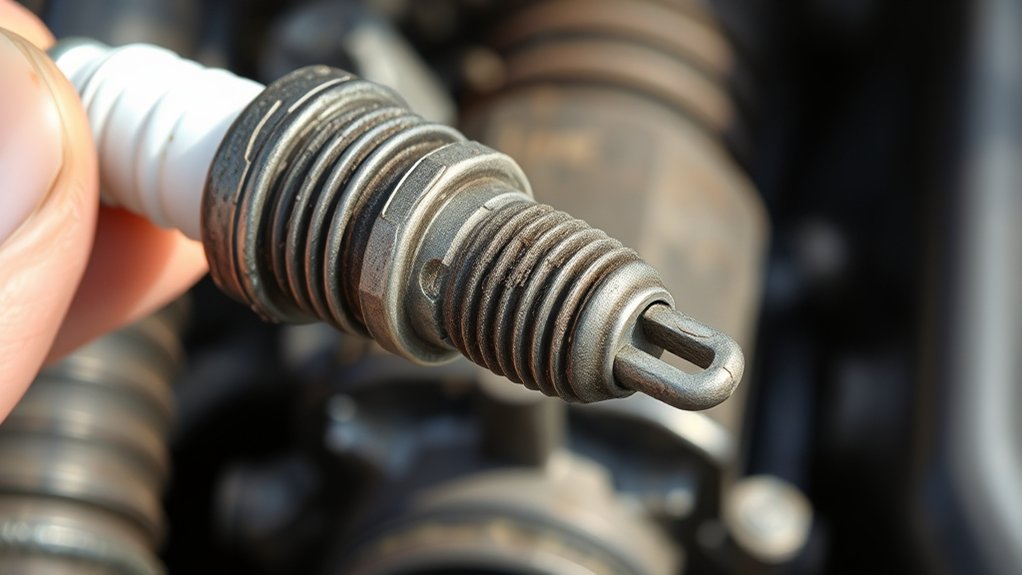
You’ll notice several key symptoms when spark plugs wear out, affecting your engine’s performance. Decreased spark plug performance leads to misfires, causing rough idling and hesitation during acceleration.
You might experience reduced fuel economy because worn plugs fail to ignite the air-fuel mixture efficiently, directly lowering engine efficiency. Additionally, your engine may struggle to start or exhibit increased exhaust emissions due to incomplete combustion.
These issues arise because worn spark plugs generate weaker sparks, disrupting ignition timing and combustion quality. Addressing these symptoms promptly helps maintain peak engine efficiency and prevents further mechanical stress.
Monitoring these indicators allows you to identify when spark plugs no longer perform adequately, ensuring your engine runs smoothly and reliably without unnecessary fuel consumption or power loss.
Identifying Worn Spark Plugs: Visual Inspection Tips
A thorough visual inspection is essential for accurately identifying worn spark plugs before they cause significant engine issues. Start by examining the spark plug anatomy, focusing on the electrode, insulator, and metal shell.
Use proper inspection techniques such as cleaning the plug gently to reveal any deposits or damage. Look for signs like electrode erosion, cracks in the insulator, or discoloration on the metal shell.
Pay attention to the electrode gap size, as an excessively wide gap often indicates wear. Use a feeler gauge to measure this gap precisely. Also, inspect the porcelain insulator for any chips or burns that can impair spark function.
Worn Spark Plug Wear Patterns and What They Mean
Once you’ve identified worn spark plugs through visual inspection, understanding the specific wear patterns can provide valuable insights into engine performance and potential issues. For instance, excessive electrode erosion typically indicates prolonged use or poor combustion quality.
Different spark plug types, such as copper, platinum, or iridium, display wear differently. Copper plugs erode faster, while iridium plugs sustain wear more gradually. A black, sooty deposit signals a rich fuel mixture, while white, blistered insulators suggest overheating.
Uneven electrode wear could point to improper gap settings or misfires. By analyzing these wear patterns, you can diagnose problems like fuel mixture imbalances, ignition timing errors, or engine overheating, enabling targeted maintenance. Recognizing how wear manifests across spark plug types helps you maintain peak engine efficiency and longevity.
Here’s What Happens If You Ignore a Worn Spark Plug
If worn spark plugs continue operating unnoticed, they will degrade engine performance and fuel efficiency considerably. Ignoring maintenance on these components causes incomplete combustion, leading to misfires, reduced power output, and increased emissions.
Over time, the engine’s ignition system strains to compensate, which can accelerate wear on related parts. You might notice rough idling, difficulty starting, or a drop in acceleration responsiveness.
Additionally, fuel consumption rises as the engine burns more fuel to maintain the same power levels, impacting overall efficiency. Ignoring maintenance compromises engine timing and combustion quality, which can result in costly repairs if left unaddressed.
Staying attentive to spark plug condition guarantees peak engine performance and prevents such degradation, safeguarding your vehicle’s reliability and operational lifespan.
When and How to Replace Worn Spark Plugs
Monitor your vehicle’s performance and inspect spark plugs regularly to determine the ideal replacement interval. Replacement frequency varies by spark plug types. Copper plugs typically require replacement every 20,000 to 30,000 miles, while platinum and iridium plugs last up to 100,000 miles.
When replacing worn spark plugs, follow these steps:
- Allow the engine to cool completely to prevent damage.
- Remove ignition coils or wires carefully, then use a spark plug socket to extract old plugs.
- Check the gap on new plugs with a feeler gauge; adjust if necessary before installation.
Proper torque application is critical to avoid thread damage. Refer to your vehicle’s manual for specific replacement frequency and spark plug types suited to your engine.
Frequently Asked Questions
Can Worn Spark Plugs Affect Fuel Efficiency?
Yes, worn spark plugs reduce fuel combustion efficiency, causing incomplete burning and wasted fuel.
You’ll notice decreased fuel efficiency as spark plug lifespan ends, so replace them regularly to maintain peak engine performance and fuel economy.
Do All Car Models Use the Same Type of Spark Plugs?
No, you won’t find all car models using the same spark plug types. You need to check vehicle compatibility because different engines require specific spark plugs for peak performance and longevity.
Always follow manufacturer recommendations.
How Often Should Spark Plug Gaps Be Checked?
Think of spark plug gap measurement like tuning a guitar. It guarantees perfect performance. You should check gaps every 30,000 miles during spark plug maintenance to maintain engine efficiency and prevent misfires effectively.
Can Worn Spark Plugs Cause Engine Misfires in Cold Weather?
Yes, worn spark plugs can cause engine misfires in cold weather. Cold weather effects increase ignition difficulty, so maintaining spark plugs guarantees proper combustion, preventing misfires and improving engine performance during low temperatures.
Regular spark plug maintenance is essential.
Are Aftermarket Spark Plugs as Reliable as OEM Parts?
Imagine inspecting a spark plug’s pristine electrode; aftermarket quality varies widely. If you choose reputable spark plug brands, you’ll get reliable performance comparable to OEM parts.
Low-quality options might cause misfires or reduced engine efficiency.
Conclusion
If you ignore worn spark plugs, your engine’s fuel efficiency can drop by up to 30%, costing you more at the pump. By regularly inspecting for signs like carbon buildup or eroded electrodes, you guarantee peak engine performance. Replacing worn spark plugs on schedule prevents misfires and rough idling, keeping your vehicle running smoothly.
Staying proactive not only saves money but also extends your engine’s lifespan, making maintenance well worth the effort. Understanding what a worn spark plug looks like is essential for timely replacement and optimal engine health. Regular checks help you identify issues early and avoid costly repairs down the road.