When you ask what engine oil is thicker, you’re referring to oil with a higher viscosity grade. This means it flows more slowly and forms a stronger lubricating film at operating temperatures.
Thicker oils provide better protection for engine parts under high pressure and heat. However, using oil that is too viscous can reduce fuel efficiency.
It’s important to match the oil thickness to your engine’s specific demands and the climate conditions where you drive. Doing so helps optimize both performance and wear protection.
Exploring the nuances of viscosity grades and how temperature affects them can clarify your best choice. Understanding these factors ensures you select the right oil to keep your engine running smoothly.
Key Takeaways
- Engine oil thickness is indicated by its viscosity grade, with higher numbers representing thicker oil at operating temperatures.
- Oils labeled with higher second numbers (e.g., 20W-50 vs. 5W-30) are thicker when the engine is warm.
- Thicker oils form stronger lubricating films, providing better protection under high pressure and temperature conditions.
- Synthetic oils often maintain thickness better under stress compared to conventional oils.
- Choosing thicker oil depends on engine requirements, climate, and manufacturer recommendations; thicker is not always better.
What Engine Oil Thickness Means for Your Engine
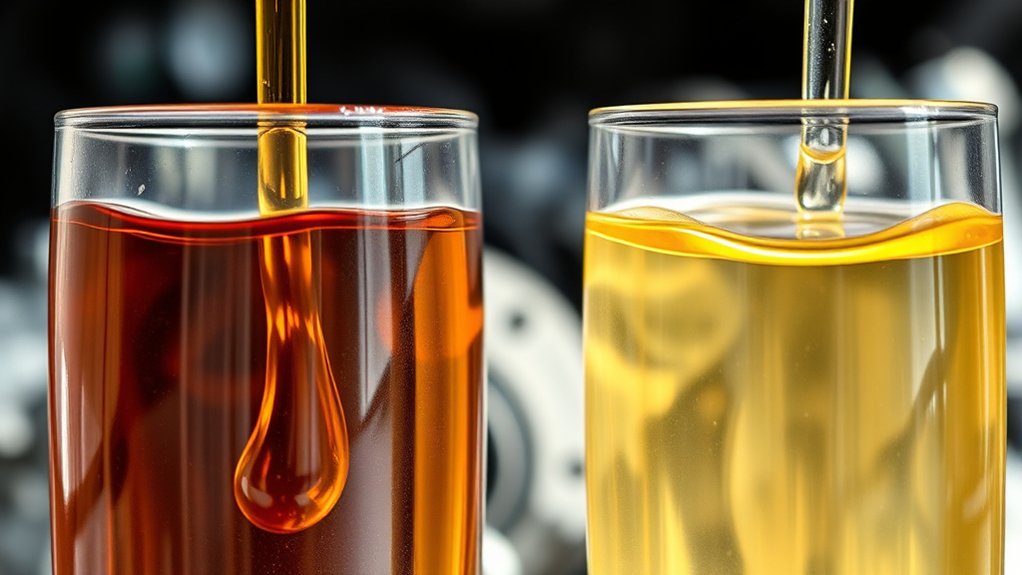
While engine oil thickness might seem like a simple specification, it directly affects your engine’s performance and longevity. Thicker oil forms a more robust lubricating film, reducing metal-to-metal contact and minimizing wear. However, if the oil is too thick, it can increase resistance and reduce fuel efficiency.
You must consider how oil additives influence this balance; detergents and dispersants maintain cleanliness, while anti-wear agents enhance protection without compromising viscosity. These additives enhance oil’s ability to protect moving parts under diverse operating conditions, ultimately extending engine longevity.
Selecting the right oil thickness guarantees your engine operates efficiently, with ideal protection against friction and corrosion. By understanding how thickness and additives interact, you can make informed decisions to maximize your engine’s lifespan and maintain peak performance.
What Viscosity Grades Tell You About Oil Thickness
Understanding how oil thickness impacts engine performance leads directly to the significance of viscosity grades. These grades form the basis of viscosity classification, indicating how oil behaves under varying temperatures.
You’ll find that lower numbers reflect thinner oil at cold temperatures, while higher numbers signal thicker oil at operating temperatures. This classification helps predict oil performance, ensuring ideal lubrication and protection.
| Viscosity Grade | Cold Temp Behavior | Operating Temp Behavior |
|---|---|---|
| 5W | Thin | Moderate |
| 10W | Moderate | Moderate |
| 20W | Thicker | Thicker |
Why Thicker Engine Oils Matter for Your Car

Because engine components operate under high pressure and temperature, using thicker engine oils guarantees a more robust lubricating film that reduces metal-to-metal contact and wear. This enhanced film strength directly supports maximum engine performance by maintaining consistent lubrication under demanding conditions.
Thicker oils also improve oil efficiency by sustaining viscosity over longer intervals, minimizing breakdown and the need for frequent oil changes. Additionally, they provide superior protection against mechanical stress, preserving engine integrity and extending component lifespan.
However, selecting the appropriate thickness must balance protection with the engine’s design specifications to avoid excessive drag or reduced fuel economy. By choosing a thicker oil tailored to your vehicle’s operating demands, you secure reliable lubrication, reduce wear, and maintain peak engine performance effectively.
How Temperature Affects Engine Oil Thickness
As engine oil heats up during operation, its viscosity decreases, causing it to flow more easily but provide a thinner lubricating film. This temperature impact directly influences how effectively the oil protects engine components.
You need to understand these viscosity changes to guarantee ideal engine performance and avoid premature wear.
| Temperature (°C) | Viscosity (cP) | Effect on Engine Oil Thickness |
|---|---|---|
| 0 | 1500 | Very thick, slow flow |
| 40 | 500 | Moderate thickness, normal flow |
| 100 | 100 | Thin, fast flow, less protective |
| 150 | 50 | Very thin, minimal lubrication |
Recognizing how temperature affects oil thickness helps you anticipate lubrication performance under varying conditions.
How to Choose the Right Thicker Engine Oil for Your Engine

When selecting a thicker engine oil, what factors should you prioritize to guarantee ideal engine protection and performance? Start with viscosity considerations. Choose an oil with a viscosity grade that matches your engine’s requirements and operating conditions.
Refer to your vehicle’s manual for manufacturer recommendations, focusing on the SAE rating for thickness. Next, assess oil selection tips such as compatibility with engine materials and additive packages that enhance wear protection.
Consider synthetic versus conventional oils, as synthetics often maintain viscosity better under stress. Also, evaluate the oil’s performance specifications, like API or ACEA ratings, to confirm it meets or exceeds your engine’s needs.
When to Switch to a Thicker Engine Oil
You should switch to a thicker engine oil when operating in cold climates to maintain adequate viscosity and guarantee proper lubrication at low temperatures.
Thicker oils provide enhanced engine wear protection under high load or aging engine conditions. Assess your engine’s performance and environmental factors carefully to determine the ideal oil viscosity.
Cold Weather Performance
Although colder temperatures generally demand thinner oils for easier engine starts, there are specific conditions where switching to a thicker engine oil can enhance protection and performance. In extreme cold weather, standard thin oils may become excessively fluid, reducing their lubricating film strength under operating loads.
By selecting a slightly thicker oil grade, you guarantee adequate oil viscosity, maintaining a stable film between moving parts. This adjustment prevents metal-to-metal contact during initial engine operation, optimizing oil performance despite low ambient temperatures.
However, you must balance viscosity to avoid increased resistance and fuel consumption. Monitoring manufacturer recommendations and ambient temperature ranges helps you decide when a thicker oil improves cold weather engine performance without compromising start-up efficiency or long-term engine health.
Engine Wear Protection
Since engine components experience increased friction and wear over time, switching to a thicker engine oil can greatly enhance protection under high-stress conditions. You’ll improve lubrication efficiency, reducing metal-to-metal contact and extending engine longevity.
Thicker oils maintain a robust film strength, essential for engines with higher mileage or those operating under heavy loads.
| Condition | Recommended Oil Viscosity |
|---|---|
| High engine mileage | 10W-40 or 20W-50 |
| Heavy-duty towing | 15W-40 |
| High temperature climates | 20W-50 |
| Severe operating loads | 15W-50 |
Switch when you notice increased oil consumption, noise, or reduced oil pressure. This adjustment guarantees ideal wear protection and sustains engine performance.
Thickest Engine Oils on the Market
When selecting the thickest engine oils on the market, it’s essential to understand their viscosity ratings and how they perform under various temperature conditions. Synthetic options often provide superior stability and maintain thickness better than conventional oils, especially in extreme heat.
For high mileage engines, thicker oils with specialized oil additives can reduce wear and improve sealing, extending engine life. Racing applications demand oils that balance thickness with fuel efficiency, ensuring ideal protection without sacrificing performance.
Comparing brands, you’ll find variations in additive packages that affect environmental impact and maintenance requirements. To maximize benefits, follow maintenance tips tailored to your engine type and driving conditions, ensuring the thick oil maintains its protective qualities while minimizing negative effects on fuel economy and emissions.
Debunking Common Myths About Thick Engine Oils
Even if thick engine oils seem straightforward, several misconceptions can mislead you about their performance and suitability. One common myth is that thicker oils always provide better engine protection. In reality, viscosity must match manufacturer specifications to guarantee peak lubrication without causing excessive drag or poor flow at startup.
Another oil misconception is that thicker oils are universally better for older engines; however, using excessively thick oil can increase wear due to inadequate circulation. Myth busting reveals that oil thickness alone doesn’t determine quality or longevity.
Instead, you should focus on the oil’s viscosity grade, additive package, and compatibility with your engine type. Understanding these nuances helps you select the right oil, avoiding costly mistakes based on inaccurate assumptions about thickness.
Frequently Asked Questions
Can Thicker Engine Oil Improve Fuel Efficiency?
Thicker engine oil usually reduces fuel economy due to increased viscosity effects, causing more internal friction. You shouldn’t expect improved fuel efficiency; instead, use manufacturer-recommended viscosity to balance protection and ideal fuel economy performance.
Does Thicker Oil Cause More Engine Wear?
Thicker oil’s not always a villain; excessive oil viscosity can increase friction, subtly impacting engine longevity.
You should balance viscosity carefully, ensuring your engine’s protection without inadvertently accelerating wear through inadequate lubrication.
How Does Thicker Oil Affect Oil Change Intervals?
Thicker oil viscosity can extend oil change intervals by maintaining lubrication longer, but it may reduce engine performance under cold starts.
You should balance oil thickness to optimize both protection and efficient engine operation.
Are Synthetic Oils Thicker Than Conventional Oils?
Synthetic oils aren’t necessarily thicker; their synthetic viscosity guarantees consistent thickness across temperatures.
You’ll notice improved oil performance because synthetics maintain stable viscosity, reducing engine wear and enhancing lubrication compared to conventional oils.
Can Thicker Oil Cause Engine Overheating?
When oil viscosity runs too high, it’s like pushing a boulder uphill. Thicker oil can impede flow, increasing friction and temperature effects, which may cause engine overheating by reducing efficient heat dissipation and lubrication under extreme conditions.
Conclusion
Now that you understand how viscosity grades define oil thickness and why thicker oils can protect your engine better under certain conditions, the real question remains: when exactly should you make the switch? Don’t rush it—consider your engine’s needs and operating environment carefully.
Choosing the right thicker oil isn’t just about protection; it’s about optimizing performance and longevity. Ready to make the best decision? The answer lies deeper in your engine’s demands than you might think.
When deciding what engine oil is thicker, always factor in the specific requirements of your vehicle and the conditions it faces to ensure optimal results.