Engine oil pressure is the force created by your engine’s oil pump pushing lubricating oil through channels to protect moving parts from friction and wear. This pressure is essential for maintaining proper lubrication within the engine.
It depends on oil viscosity, engine speed, and pump performance. Proper pressure guarantees efficient lubrication and prevents overheating or premature damage.
Low or high pressure signals potential issues like worn bearings or blockages. Understanding how oil pressure works helps you maintain engine health and avoid costly failures.
More details are available on managing and diagnosing pressure problems.
Key Takeaways
- Engine oil pressure measures the force of circulating oil within the engine’s lubrication system.
- It ensures adequate lubrication by maintaining consistent oil flow to engine components.
- Oil viscosity and temperature directly affect oil pressure levels.
- Proper oil pressure prevents metal-to-metal contact, reducing wear and overheating.
- Oil pressure is generated by the oil pump, critical for engine reliability and performance.
What Engine Oil Pressure Is and Why It Matters
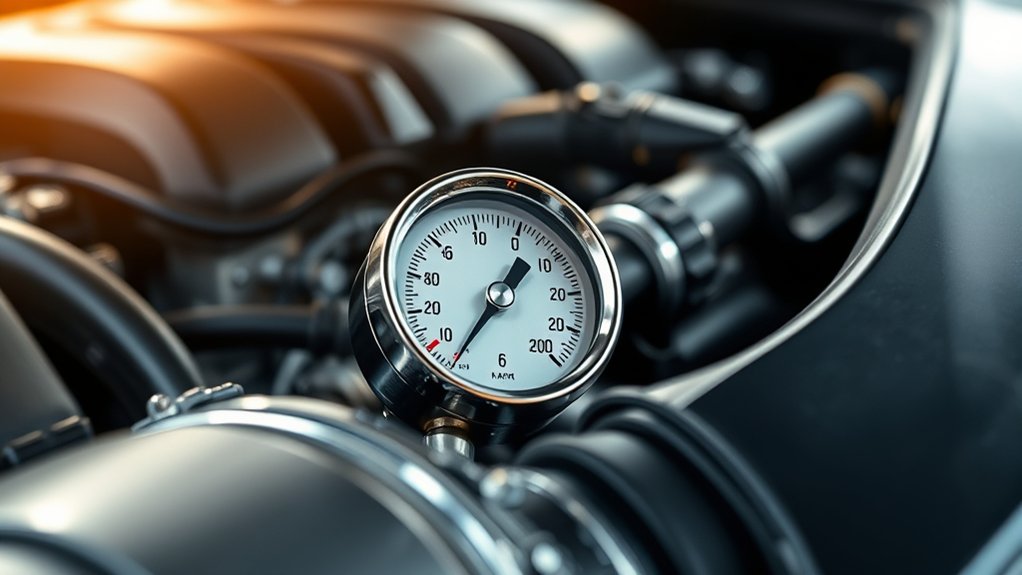
Engine oil pressure measures the force exerted by circulating oil within your engine’s lubrication system. You rely on the pressure gauge to monitor this force, guaranteeing your engine receives adequate lubrication.
Oil viscosity directly affects oil pressure; thicker oil increases resistance, raising pressure, while thinner oil lowers it. Maintaining proper oil pressure is critical because it guarantees oil reaches all engine components, reducing friction and wear.
If pressure drops too low, insufficient lubrication can cause overheating and component damage. Conversely, excessively high pressure might indicate blockages or a failing oil pump.
How Engine Oil Pressure Works Inside Your Engine
You rely on the oil pump to generate pressure that forces oil through intricate channels, lubricating critical engine components. This circulation mechanism guarantees consistent oil flow, preventing metal-to-metal contact and wear.
Pressure regulation maintains ideal levels, balancing flow and preventing system damage under varying engine speeds.
Oil Circulation Mechanism
Three critical stages govern the oil circulation mechanism that maintains proper engine oil pressure. First, the oil’s viscosity influences how easily it flows through the engine’s passages, directly affecting pressure levels.
Next, different pump types, such as gear or rotor pumps, generate the necessary force to propel oil throughout the system. Finally, oil travels through designated channels to lubricate essential components, ensuring minimal friction and wear.
Key elements include:
- Oil viscosity: Determines flow resistance and pressure stability.
- Pump types: Different designs impact pressure generation efficiency.
- Oil pathways: Precisely engineered routes enhance lubrication and cooling.
Understanding these stages helps you grasp how engine oil pressure sustains peak engine performance and longevity.
Role of Oil Pump
The oil pump plays a central role in maintaining proper oil pressure by actively drawing oil from the sump and forcing it through the engine’s lubrication system. You’ll find several oil pump types, including gear, rotor, and vane pumps, each designed to deliver consistent flow under varying engine speeds and conditions.
Understanding how these pumps operate helps you appreciate their impact on oil pressure stability. If the oil pump fails due to wear, clogging, or mechanical damage, it can’t generate sufficient pressure, leading to inadequate lubrication. This failure risks critical engine components by causing increased friction and potential overheating.
Monitoring oil pump performance is essential to prevent oil pump failure, which directly compromises engine reliability and longevity by disrupting the precise oil pressure needed for effective lubrication.
Pressure Regulation Process
Although the oil pump generates flow, maintaining ideal engine oil pressure depends on a finely tuned pressure regulation process inside the engine. This system continuously adjusts to guarantee peak lubrication while preventing excessive pressure that could damage seals or components.
You rely on pressure sensors to monitor real-time oil pressure, providing critical feedback to the engine control unit. Oil viscosity plays a significant role here; thicker oil increases pressure, while thinner oil reduces it, affecting flow dynamics.
Key elements of the pressure regulation process include:
- A pressure relief valve that modulates excess pressure by diverting oil flow
- Pressure sensors that detect deviations and signal adjustments
- The influence of oil viscosity on pressure stability and sensor readings
Understanding this balance helps you maintain engine health and performance.
Normal Engine Oil Pressure Ranges Explained
Understanding normal engine oil pressure ranges helps you assess your engine’s health accurately. Typically, oil pressure at idle should be between 10 to 30 psi, while at operating speed, you can expect 40 to 70 psi. These values vary slightly depending on engine design and temperature.
Using oil pressure gauges allows you to monitor these ranges precisely, ensuring your engine receives adequate lubrication. Effective pressure monitoring helps you spot deviations early, which can prevent serious damage.
Keep in mind that pressure fluctuates with RPM and oil viscosity, so consistent readings within these parameters indicate a properly functioning oil pump and clear oil passages. By regularly observing these metrics, you maintain peak engine performance and longevity.
Common Causes of Low or High Engine Oil Pressure
You’ll often encounter low oil pressure caused by factors like worn bearings, oil leaks, or a failing oil pump.
High oil pressure, on the other hand, can result from blocked oil passages or a malfunctioning pressure relief valve. Understanding these causes helps you diagnose and address engine performance issues effectively.
Low Oil Pressure Causes
When your engine oil pressure drops below the ideal range, several mechanical or fluid-related issues could be responsible. Low oil pressure often signals that oil isn’t circulating properly, which can accelerate engine wear. One common cause is using oil with incorrect viscosity, which compromises the oil’s ability to maintain pressure under operating conditions.
You should consider these causes:
- Degraded oil viscosity: Thin or contaminated oil reduces pressure and film strength.
- Engine wear: Worn bearings or clearances increase oil flow paths, lowering pressure.
- Oil pump failure: A malfunctioning pump cannot sustain proper oil pressure.
Addressing these factors promptly helps prevent critical lubrication failures and protects your engine’s longevity.
High Oil Pressure Reasons
While low oil pressure usually indicates insufficient lubrication, high oil pressure can be just as problematic for your engine’s performance and safety. You’ll often find that increased oil viscosity or a cold engine temperature leads to excessive pressure.
Blockages in oil passages or a malfunctioning pressure relief valve also cause abnormal pressure spikes. Addressing these issues promptly prevents damage to seals and bearings.
| Cause | Effect on Oil Pressure | Diagnostic Indicator |
|---|---|---|
| High oil viscosity | Increases resistance, raises pressure | Thick oil, cold start issues |
| Low engine temperature | Oil thickens, pressure rises | High pressure on cold start |
| Blocked oil passages | Restricts flow, pressure spikes | Reduced oil flow, noise |
| Faulty pressure relief valve | Fails to regulate pressure | Constant high pressure reading |
How to Safely Check Your Engine Oil Pressure
Three essential steps guarantee you safely check your engine oil pressure without risking injury or inaccurate readings. First, confirm the engine is off and cooled to avoid burns or false gauge readings caused by thermal expansion.
Ensure the engine is off and cooled before checking oil pressure to prevent injury and inaccurate readings
Second, locate the oil pressure sensor or port to connect an accurate mechanical gauge, bypassing potentially faulty electronic pressure sensors. Third, start the engine and observe the gauge readings carefully, noting any deviations from manufacturer specifications.
Use a calibrated mechanical gauge for precise measurement. Avoid checking pressure immediately after startup to allow oil circulation stabilization. Wear protective gloves and eye protection to prevent injury.
Following these steps guarantees you obtain reliable data while maintaining safety during the diagnostic process.
Warning Signs Your Engine Oil Pressure Is Failing
After safely measuring your engine oil pressure, recognizing the warning signs of pressure failure becomes the next priority. You should monitor the oil pressure gauge or warning light closely; fluctuations or a sudden drop indicate potential issues.
Warning indicators include an illuminated oil pressure warning light, unusual engine noises like ticking or knocking, and reduced engine performance. Additionally, if your engine oil level remains consistent but pressure readings drop, it signals internal problems such as a failing oil pump or clogged oil passages.
Ignoring these signs can lead to severe engine damage. You must address these warning indicators promptly by performing a thorough diagnostic to avoid costly repairs and guarantee your engine’s longevity.
How Engine Oil Pressure Affects Engine Health
Because engine oil pressure directly influences lubrication efficiency, it plays a critical role in maintaining engine health. When oil pressure stays within ideal ranges, it guarantees consistent oil flow, preventing metal-to-metal contact and minimizing wear.
This directly supports engine longevity and performance enhancement by reducing friction and heat buildup.
Low or inconsistent oil pressure can cause:
- Increased component wear due to insufficient lubrication
- Overheating from inadequate heat dissipation
- Accelerated degradation of engine parts leading to premature failure
Easy Ways to Maintain Proper Engine Oil Pressure
Maintaining proper engine oil pressure requires consistent attention to several key factors that influence lubrication performance. First, regularly check and maintain the correct oil level; insufficient oil volume directly reduces pressure and compromises engine protection.
Next, prioritize filter quality. Using high-grade oil filters guarantees contaminants are effectively removed, preventing blockages that can disrupt oil flow and pressure. Additionally, replace oil and filters according to manufacturer intervals to avoid viscosity breakdown and sludge buildup, which impair pressure stability.
Monitor for leaks and address them promptly, as even minor losses affect oil volume and pressure consistency. Finally, confirm your oil pump functions effectively; any mechanical wear can lead to pressure drops. By systematically managing these elements, you’ll maintain stable engine oil pressure critical for engine longevity and performance.
Frequently Asked Questions
Can Synthetic Oil Affect Engine Oil Pressure Readings?
Yes, synthetic oil benefits your engine by maintaining stable viscosity, which can improve pressure measurement accuracy. You’ll notice more consistent oil pressure readings because synthetic oil resists breakdown and flow changes better than conventional oils.
Does Engine Oil Pressure Vary With Engine Temperature?
Absolutely, engine oil pressure shifts dramatically with temperature! As oil viscosity thins when hot, pressure drops, especially under high engine load.
You’ll notice thicker oil or cooler temps maintain higher pressure for ideal lubrication.
How Often Should the Oil Pressure Sensor Be Replaced?
You should replace the oil pressure sensor every 60,000 to 100,000 miles, considering its oil sensor lifespan. Regular pressure gauge maintenance guarantees accurate readings and prevents premature sensor failure, optimizing engine performance and reliability.
Can Driving Habits Influence Engine Oil Pressure?
Like a river’s flow, your driving habits affect engine oil pressure; aggressive starts increase engine wear. Oil viscosity varies with temperature, altering pressure. You can preserve engine health by driving smoothly and monitoring conditions precisely.
Is Engine Oil Pressure the Same in All Vehicle Types?
No, engine oil pressure varies between engine types due to design differences, clearances, and oil viscosity.
You’ll notice pressure differences in diesel versus gasoline engines and naturally aspirated versus turbocharged setups, affecting lubrication efficiency and performance.
Conclusion
Now that you understand how essential engine oil pressure is, don’t ignore its subtle warnings. A sudden drop or spike might seem minor, but it signals deeper engine issues waiting to escalate.
You hold the key to preventing costly damage—monitor pressure carefully, act fast, and maintain your engine’s health with precision.
The question is, will you catch the signs before it’s too late? Your engine’s life depends on engine oil pressure.