Engine oil typically lasts up to five years if you store it correctly. The shelf life of engine oil depends on the oil type, storage conditions, and container integrity.
Synthetic oils resist degradation better than conventional ones.
Keeping oil in airtight, opaque containers away from heat and moisture helps maintain its quality. If the oil darkens, thickens, or smells burnt, it’s likely gone bad.
Understanding these factors guarantees you use effective oil.
More details on preservation and signs of spoilage are provided ahead.
Key Takeaways
- Engine oil shelf life varies by type, with synthetic oils lasting longer than conventional oils under proper storage conditions.
- Proper storage in airtight, opaque containers at stable temperatures (10-25°C) extends oil shelf life and prevents degradation.
- Exposure to moisture, air, heat, or freezing temperatures accelerates oil breakdown and reduces shelf life.
- Partially used or damaged containers allow contaminants and air ingress, significantly shortening oil shelf life.
- Typically, unopened engine oil can last 3-5 years if stored correctly, while opened oil should be used within 1-2 years.
How Long Does Engine Oil Last?
How long engine oil lasts depends on several factors, including the type of oil, driving conditions, and vehicle usage. The engine oil lifespan varies considerably between conventional, synthetic blend, and full synthetic oils. Synthetic oils generally withstand higher temperatures and resist breakdown longer.
Oil degradation factors such as heat, contaminants, and mechanical stress accelerate viscosity loss and additive depletion. Frequent short trips increase moisture accumulation, reducing oil effectiveness faster. Harsh environments, like dusty or extreme temperature areas, also contribute to faster degradation.
You’ll find that highway driving typically exerts less stress on oil than stop-and-go traffic, which causes frequent temperature fluctuations. Monitoring these variables helps you understand when to change your oil, ensuring ideal engine protection and performance throughout the oil’s effective lifespan.
How Can You Tell If Engine Oil Has Gone Bad?
Recognizing when engine oil has deteriorated is key to maintaining peak engine performance and preventing damage. You can tell if oil has gone bad by checking oil color, performing a smell test, observing viscosity change, and evaluating container integrity.
Fresh oil usually has a transparent amber color and a mild petroleum scent. Dark, thickened oil with a burnt or sour odor signals degradation.
Viscosity change is evident if the oil feels gritty or excessively thin. Also, inspect the container for leaks or swelling, which compromises oil quality.
| Indicator | What to Look For |
|---|---|
| Oil Color | Transparent amber vs. dark, cloudy |
| Smell Test | Mild petroleum vs. burnt/sour odor |
| Viscosity Change | Smooth flow vs. gritty or thin |
| Container Integrity | No leaks/swelling vs. damage |
| Sediment Presence | None vs. visible particles |
Key Factors That Affect Engine Oil’s Shelf Life
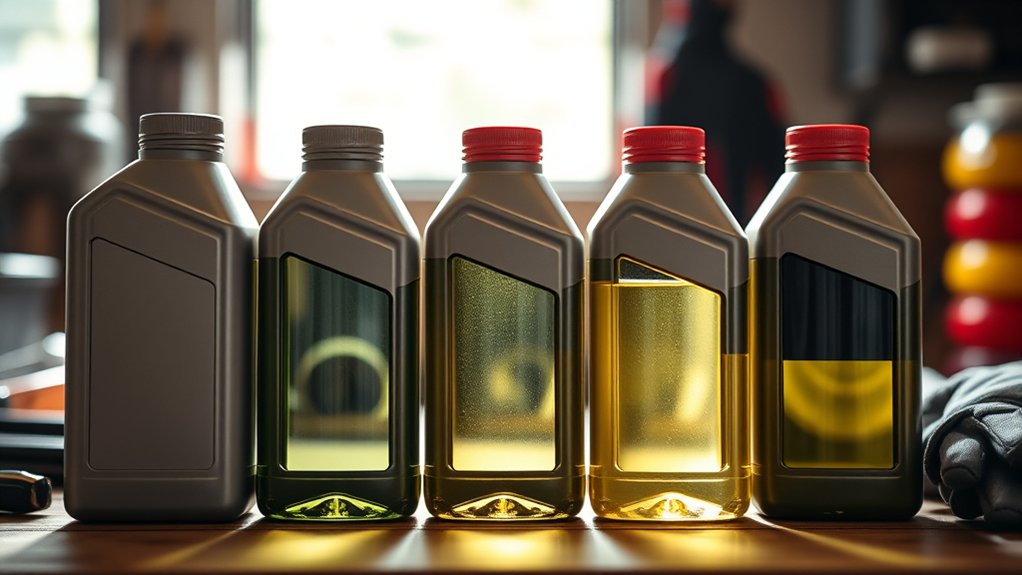
Although engine oil is formulated to remain stable over time, several key factors can considerably shorten its shelf life if not properly managed. First, oil composition plays a critical role; synthetic oils tend to resist degradation better than conventional oils due to their refined additives and base stocks.
You must also consider storage conditions. Exposure to moisture, air, or contaminants accelerates oxidation and viscosity breakdown. Temperature impact is significant: excessive heat speeds up chemical reactions that deteriorate oil quality, while freezing temperatures can cause additive separation.
Finally, container integrity is essential. Damaged or improperly sealed containers allow air and moisture ingress, leading to premature oil oxidation and contamination. By understanding these factors, you can better gauge and maintain the oil’s effectiveness during storage.
Best Ways to Store Engine Oil for Maximum Freshness
To maintain engine oil’s effectiveness over time, you need to control the storage environment carefully. Proper storage minimizes degradation caused by temperature fluctuations and exposure to contaminants. Here are the best ways to store engine oil for maximum freshness:
- Choose the right oil container types: Use airtight, opaque containers made from materials resistant to chemical interactions, like high-density polyethylene (HDPE). Avoid partially used containers to limit air exposure.
- Control temperature effects: Store oil in a cool, stable environment between 10-25°C (50-77°F). Avoid extreme heat, which accelerates oxidation, and freezing temperatures that may alter viscosity.
- Limit exposure to air and moisture: Always seal containers tightly after use to prevent moisture ingress and oxidation, which degrade additives and base oil quality.
Following these guidelines helps preserve oil integrity and extends its shelf life considerably.
Frequently Asked Questions
Can You Mix Different Brands of Engine Oil Safely?
You can mix different engine oil brands if their oil formulations and specifications match, ensuring brand compatibility. However, to maintain peak performance and protection, it’s best to stick with one consistent, high-quality formulation whenever possible.
How Often Should Engine Oil Be Changed in Extreme Climates?
You should increase oil change frequency by up to 50% in extreme weather conditions. High heat or severe cold accelerates oil degradation, so changing every 3,000 to 5,000 miles guarantees ideal engine protection and performance.
Does Synthetic Oil Have a Longer Shelf Life Than Conventional Oil?
Yes, synthetic oil offers a longer shelf life due to superior oil stability and synthetic benefits like enhanced oxidation resistance. You’ll find it maintains performance longer than conventional oil, especially under varying temperature and storage conditions.
Can Old Engine Oil Damage an Engine if Used?
Sure, you can totally trust old engine oil to boost engine performance said no mechanic ever. Oil degradation compromises lubrication, leading to increased friction, wear, and potential engine damage.
Always use fresh oil to maintain ideal engine function.
What Are the Environmental Impacts of Disposing of Used Engine Oil?
When you dispose of used engine oil improperly, oil contamination pollutes soil and water. Recycling benefits include conserving resources, reducing environmental hazards, and lowering toxicity.
You should always use certified collection centers to minimize ecological damage.
Conclusion
Think of engine oil like a finely tuned clock—its effectiveness ticks down over time. To keep your engine running smoothly, you need to use oil before it loses its protective properties, typically within two to five years unopened. Watch for changes in color and texture as warning bells.
Store your oil in a cool, dry place, sealed tight, to slow the hands of time and preserve its essential performance. Don’t let old oil rust your engine’s rhythm. Remember, understanding the shelf life of engine oil is key to maintaining your engine’s health and longevity.