Engine oil should be amber or light brown with a smooth, transparent texture, indicating proper viscosity and effective lubrication. When you check the engine oil, it should feel slick and free of grit.
Gritty or dark, opaque oil signals contamination or wear. Milky or frothy oil suggests serious issues like coolant leaks. Monitoring these signs helps keep your engine performing well.
Understanding these details will guide you in maintaining ideal oil health. Regularly inspecting your engine oil ensures your engine runs smoothly and lasts longer.
Key Takeaways
- Healthy engine oil is amber or light brown and has a transparent appearance indicating proper lubrication.
- It should have a smooth texture without grit or sludge for effective engine protection.
- Dark or opaque oil suggests contamination, extended use, or fuel dilution requiring inspection.
- Milky or frothy oil indicates coolant leaks and needs immediate attention.
- Visible particles or a burnt smell signal oil contamination and the need for an oil change.
How to Check Your Engine Oil Color and Texture

Before you assess your engine oil’s condition, make sure the engine is cool and the vehicle is on a level surface. Start by removing the dipstick and wiping it clean. Reinsert it fully, then withdraw it again for a dipstick examination.
Observe the oil’s color and texture carefully. Pay attention to oil viscosity; it should be neither too thin nor excessively thick, as abnormal viscosity can indicate contamination or degradation. Feel the oil between your fingers. Any gritty particles signal possible engine wear or contamination.
Note the oil’s appearance; while color varies, texture changes often reveal issues. This method allows you to detect early signs of oil breakdown or contamination before serious engine damage occurs, ensuring you maintain peak engine performance through timely oil changes or maintenance.
What Healthy Engine Oil Looks Like
Understanding what healthy engine oil looks like helps you interpret the observations from your dipstick check accurately. Healthy engine oil typically appears amber or light brown with a transparent, smooth texture. This clarity indicates proper oil viscosity, which is essential for maintaining peak engine performance.
When oil retains its correct viscosity, it lubricates moving parts effectively, minimizing friction and wear. You should notice that healthy oil flows smoothly and isn’t overly thick or thin.
Proper viscosity guarantees the oil forms a protective film on engine components, supporting heat dissipation and preventing metal-to-metal contact. By recognizing these visual and tactile indicators, you can confirm your engine oil is functioning correctly, helping you maintain engine efficiency and longevity without confusion or misinterpretation.
How to Identify Contaminated or Dirty Engine Oil
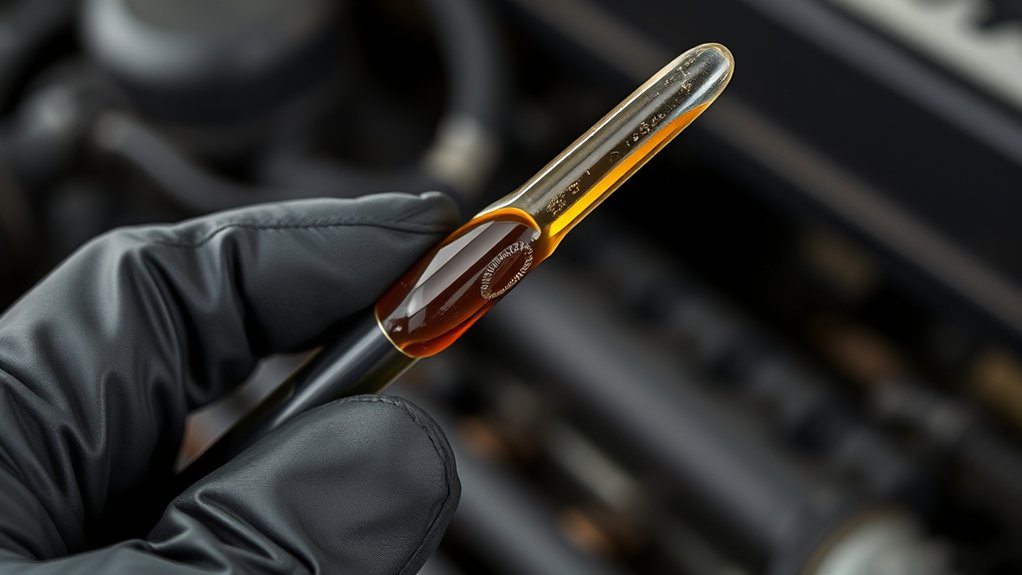
How can you tell if your engine oil has become contaminated or dirty? Begin by examining the oil’s color and clarity. Dark, opaque oil often signals contamination.
Next, conduct an oil texture analysis by rubbing a small amount between your fingers. A gritty or sludge-like texture indicates particulate contamination.
Check oil texture by rubbing it between fingers; grit or sludge signals contamination.
Oil contamination sources include combustion byproducts, metal shavings from engine wear, coolant leaks, and external dirt ingress. Water contamination can cause a milky appearance, while fuel dilution thins the oil.
Use a clean dipstick or sample container to avoid introducing new contaminants. Regularly monitoring oil viscosity and texture helps catch early signs of contamination, preventing engine damage.
Identifying dirty oil promptly allows you to schedule an oil change and address underlying issues efficiently.
What Oil Appearance Changes Mean for Your Engine
You’ll want to recognize what changes in your engine oil’s appearance indicate about your engine’s condition. Clear oil typically signals healthy lubrication and efficient engine performance.
Dark or milky oil, however, can warn you of contamination, wear, or coolant leaks that need prompt attention.
Clear Oil Benefits
Although engine oil naturally darkens with use, clear oil signals excellent performance and cleanliness within your engine. You benefit from oil clarity advantages, as clear oil guarantees ideal lubrication, reduces friction, and prevents premature engine wear. Maintaining clear oil directly supports consistent engine performance and longevity.
| Aspect | Benefit |
|---|---|
| Oil Clarity | Indicates minimal contaminants |
| Lubrication Quality | Ensures smooth engine component motion |
| Heat Dissipation | Efficiently carries away engine heat |
| Wear Prevention | Reduces metal-to-metal contact |
| Engine Cleanliness | Limits sludge and deposit buildup |
Clear oil reflects proper filtration and timely oil changes, essential for sustaining your engine’s health and efficiency.
Dark Oil Warnings
While clear oil indicates ideal engine health, spotting dark oil can signal underlying issues that require your attention. Dark oil causes often stem from extended use, fuel contamination, or excessive engine heat, which degrade the oil’s additives and reduce its lubricating properties.
You should recognize that dark oil effects include increased engine wear, higher operating temperatures, and potential sludge buildup. These issues impair engine efficiency and can lead to costly repairs if ignored.
Regular oil analysis helps identify whether dark oil results from normal oxidation or more serious problems like combustion byproducts entering the oil system. To protect your engine, change the oil according to manufacturer recommendations or sooner if you detect persistent darkening, ensuring peak performance and longevity.
Milky Oil Issues
If your engine oil develops a milky or frothy appearance, it usually indicates contamination with water or coolant, which signals a serious issue requiring immediate attention. Milky oil forms when engine coolant leaks into the oil system, often due to a blown head gasket, cracked engine block, or damaged cylinder head.
This contamination compromises the oil’s lubricating properties, increasing friction and accelerating engine wear. You should not ignore milky oil, as continued operation can lead to severe engine damage.
To diagnose, check the coolant level and inspect for external leaks. Performing a coolant system pressure test helps identify breaches. If you spot milky oil, drain and replace the oil and address the coolant source promptly to prevent costly repairs and maintain engine reliability.
When to Change Engine Oil Based on Its Appearance
You should monitor your engine oil’s color changes over time to determine the right moment for a change. Darkening oil often indicates oxidation and contamination, while milky or gritty oil signals water or debris presence.
Recognizing these visual signs helps you prevent engine damage by scheduling timely oil replacements.
Color Changes Over Time
Because engine oil undergoes continuous exposure to heat and contaminants, its color changes markedly over time. These changes serve as significant oil aging indicators, helping you determine when to replace the oil to maintain engine performance.
As oil ages, you’ll notice:
- Gradual darkening from amber to deep brown or black, signaling oxidation and additive depletion.
- A thicker consistency due to oil viscosity changes, which can reduce lubrication efficiency.
- A loss of transparency, indicating accumulation of microscopic particles and combustion byproducts.
Monitoring these visual cues is essential since oil that’s too dark or thick no longer protects your engine effectively. While color alone isn’t a definitive test, combining it with viscosity assessment provides a reliable method to decide when to change your engine oil and avoid premature engine wear.
Signs of Contamination
Beyond simple color changes, engine oil can exhibit signs of contamination that demand immediate attention. You should look for visible particles, a milky appearance, or a burnt smell. These indicate oil contamination causes such as coolant leaks, fuel dilution, or excessive soot.
Contaminated oil compromises lubrication, increasing friction and wear, which negatively affects engine performance by reducing efficiency and potentially causing severe damage. If you notice sludge buildup or oil that feels gritty, it’s a clear sign that contaminants have accumulated beyond acceptable limits.
Acting promptly by changing the oil prevents further degradation and protects engine components. Regularly inspect your engine oil’s clarity and consistency to maintain peak performance and avoid costly repairs caused by overlooked contamination.
Easy Tips to Keep Your Engine Oil Clean and Effective
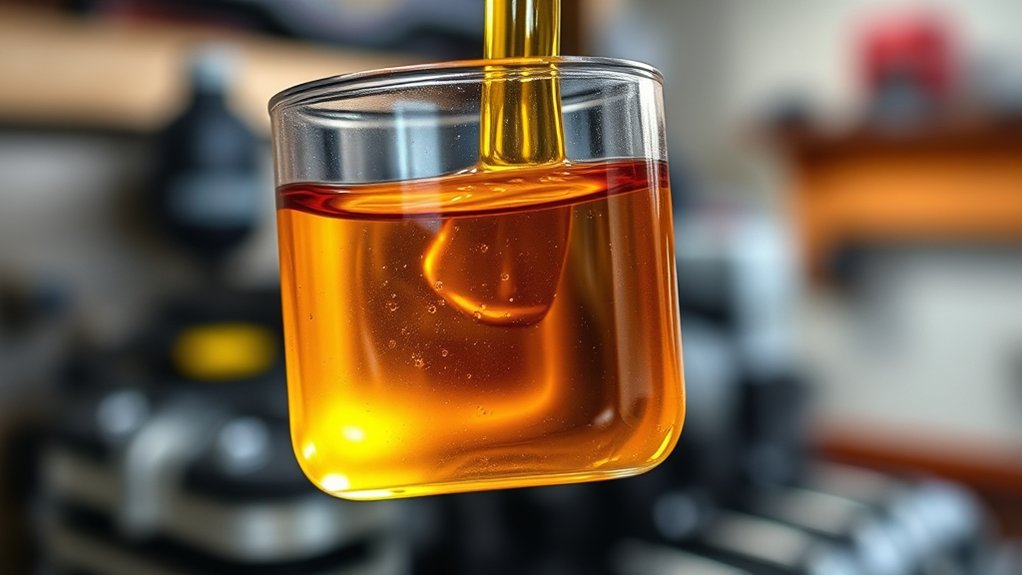
Although engine oil naturally degrades over time, following simple maintenance practices can greatly extend its effectiveness and cleanliness. Prioritizing oil maintenance tips guarantees your engine runs smoothly and avoids premature wear.
One critical factor is the filtration importance; a quality oil filter traps contaminants that degrade oil performance. To keep your engine oil in peak condition, you should:
- Change oil and filter at manufacturer-recommended intervals to prevent sludge buildup.
- Use the correct oil grade specified for your engine to maintain proper viscosity.
- Check for leaks and promptly address any to avoid contamination or oil loss.
Frequently Asked Questions
What Type of Engine Oil Is Best for My Vehicle?
You should choose engine oil with the correct oil viscosity specified in your vehicle’s manual. Also, look for oil additives that enhance performance, like detergents and anti-wear agents, to protect your engine effectively.
How Often Should I Change My Engine Oil?
You shouldn’t wait for a telegram to remind you; follow your vehicle’s maintenance schedule and check the oil change frequency in your manual.
Typically, change oil every 3,000 to 7,500 miles for peak engine performance.
Can Synthetic Oil Improve Engine Performance?
Yes, synthetic benefits include superior lubrication and thermal stability, which reduce engine wear and improve fuel efficiency. You’ll notice performance enhancement through smoother operation and better protection under extreme conditions, extending your engine’s lifespan effectively.
Does Engine Oil Affect Fuel Efficiency?
You can improve fuel efficiency by up to 2% using the correct engine oil viscosity. Engine oil additives benefit performance by reducing friction, enhancing lubrication, and maintaining ideal engine conditions, ensuring smoother operation and better fuel economy.
What Are the Signs of Low Engine Oil Levels?
You’ll notice low engine oil levels through oil dipstick readings below the minimum mark.
Engine oil indicators may also illuminate on your dashboard, signaling you to check oil pressure or add oil promptly to avoid damage.
Conclusion
Think of your engine oil as the lifeblood flowing through your car’s heart. Clear, amber, and smooth oil signals a healthy engine, while dark, gritty, or milky oil warns of trouble lurking beneath the surface. By regularly checking its color and texture, you can spot issues before they escalate.
Keep your oil clean and fresh, and your engine will run like a well-oiled machine, humming efficiently down the road for miles to come. Understanding what engine oil should look like is key to maintaining your vehicle’s performance and longevity.