Spark plug threads commonly come in metric sizes like M14x1.25, M12x1.25, and M18x1.5, where the first number is diameter in millimeters and the second is thread pitch.
Knowing the size of spark plug threads is essential for proper installation and engine performance.
You need precise measurements using calipers to guarantee compatibility, as using incorrect thread sizes can cause cross-threading, poor sealing, and engine damage.
Both metric and standard inch sizes exist, so matching diameter and pitch exactly is critical.
Understanding these details helps you install plugs correctly and avoid costly engine issues.
Always verify the thread size before purchasing or installing spark plugs to ensure a proper fit and function.
Key Takeaways
- Common spark plug thread sizes include M14x1.25, M12x1.25, and M18x1.5, indicating diameter and pitch in metric units.
- Metric thread sizes range from M10x1.0 to M18x1.5, while standard sizes include 3/8” (9.5 mm) and 7/16” (11.1 mm).
- Accurate measurement of diameter and pitch using calipers prevents cross-threading and ensures proper spark plug fit.
- Correct thread size is critical for proper sealing, combustion efficiency, and avoiding engine damage.
- Always verify spark plug thread size with the engine manual and inspect threads before replacement.
Most Common Spark Plug Thread Sizes
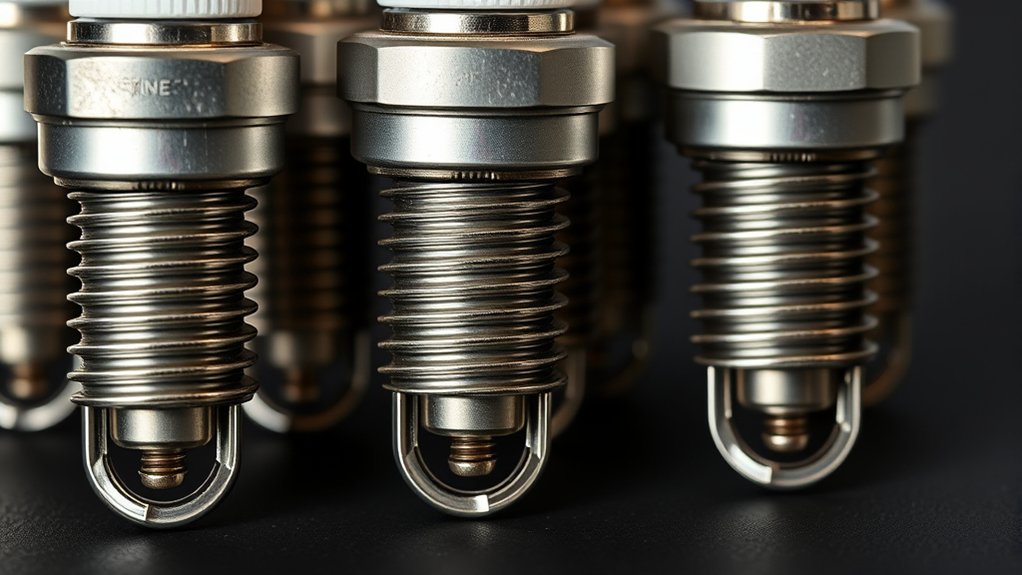
Three primary thread sizes dominate the spark plug market, each tailored to specific engine designs and performance requirements. You’ll frequently encounter M14x1.25, M12x1.25, and M18x1.5 thread sizes, with the metric designation indicating diameter and pitch.
When selecting a spark plug, confirm spark plug compatibility by matching the thread size precisely to your engine’s cylinder head specifications. Using an incorrect thread size risks improper seating and accelerated thread wear, potentially damaging the cylinder head.
Additionally, pay attention to thread length, as it affects heat dissipation and combustion chamber clearance. Regular inspection for thread wear is essential; worn threads can cause poor electrical grounding and misfires.
Why Spark Plug Thread Size Matters
Because the thread size directly affects how a spark plug fits into the cylinder head, it plays an essential role in guaranteeing proper sealing and heat transfer. If the spark plug thread size isn’t compatible with the cylinder head, you risk poor spark plug compatibility, leading to gas leaks or inefficient combustion.
Incorrect thread size can cause improper torque application, accelerating thread wear and potentially damaging the cylinder head. Thread wear also compromises the mechanical grip, resulting in loose plugs that impact engine performance and longevity.
Maintaining the right thread size guarantees ideal heat dissipation from the combustion chamber, preventing overheating. Consequently, understanding and adhering to correct spark plug thread size is critical for maintaining engine integrity and avoiding costly repairs caused by mismatched or worn threads.
Measuring Spark Plug Threads Correctly
You need to measure the thread diameter accurately to guarantee compatibility with your engine. Use a caliper to determine the external diameter of the spark plug threads.
Next, measure the thread pitch by counting the number of threads per inch or millimeter to match the correct specification.
Thread Diameter Importance
When measuring spark plug threads, understanding the exact thread diameter is essential to confirm proper fit and function. Incorrect diameter measurements can lead to thread compatibility issues, cross-threading, or damage to thread materials.
Precise diameter guarantees the spark plug seats securely in the cylinder head, maintaining engine performance and preventing leaks.
| Thread Diameter (mm) | Common Usage | Thread Material |
|---|---|---|
| 10 | Small engines | Steel, Nickel alloy |
| 12 | Motorcycles | Stainless steel |
| 14 | Passenger vehicles | Chrome-plated steel |
| 18 | Heavy-duty engines | Hardened steel |
| 22 | Industrial engines | High-strength alloys |
Be certain to use calibrated tools to measure diameter accurately for ideal thread compatibility.
Measuring Thread Pitch
How do you determine the correct thread pitch for a spark plug? You start by using precise measurement tools designed for thread inspection. Thread gauges are essential for accurately identifying the distance between threads, expressed in threads per inch (TPI) or millimeters for metric sizes.
To measure the thread pitch correctly, follow these steps:
Select the appropriate thread gauge matching standard spark plug pitch ranges. Align the gauge teeth with the spark plug threads. Check for a snug fit without gaps or looseness.
Use calipers to measure thread diameter simultaneously for confirmation. Record the pitch value indicated by the matched gauge.
Metric vs. Standard Spark Plug Thread Sizes
You’ll notice metric spark plug threads typically come in sizes like M10x1.0 or M12x1.25, where the first number indicates thread diameter in millimeters and the second is the pitch.
Standard threads use diameters in inches, such as 14mm or 18mm, with pitch measured in threads per inch (TPI). Understanding these dimensional differences, especially in thread pitch, is essential to guarantee proper fit and avoid damage during installation.
Common Metric Thread Sizes
Although both metric and standard spark plug thread sizes serve the same fundamental purpose, their measurements and specifications differ considerably. When dealing with metric thread specifications, you’ll notice that common spark plug threads typically range in diameter and pitch, affecting thread compatibility concerns if mismatched.
Understanding these sizes guarantees you avoid cross-threading or improper seating.
Common metric thread sizes include:
- M10 x 1.0 mm pitch
- M12 x 1.25 mm pitch
- M14 x 1.25 mm pitch
- M14 x 1.5 mm pitch
- M18 x 1.5 mm pitch
Each size corresponds to specific engine requirements, so selecting the correct thread diameter and pitch is critical for proper installation and engine performance.
Standard Thread Dimensions
When selecting a spark plug, distinguishing between metric and standard thread dimensions becomes essential to guarantee proper fitment and engine function. Standard spark plug threads, primarily used in American-made vehicles, are measured in inches, with common diameters like 3/8” (9.5 mm) and 7/16” (11.1 mm).
These thread sizes differ from metric types, which use millimeters for diameter specification. You must confirm thread compatibility by matching the plug’s thread diameter and length precisely to the engine’s cylinder head specifications. Using the wrong spark plug types can cause cross-threading or insufficient sealing, leading to performance issues or damage.
Understanding standard thread dimensions helps you select the correct plug, maintaining peak combustion chamber sealing and preventing mechanical failures. Always verify specifications before installation.
Differences In Thread Pitch
Since thread pitch determines how tightly a spark plug screws into the cylinder head, understanding the differences between metric and standard thread pitches is vital for proper installation. Metric spark plugs typically use pitch measurements in millimeters, while standard (imperial) plugs use threads per inch (TPI).
This variation directly impacts thread compatibility, making it important to select the right type to avoid cross-threading or damage during spark plug maintenance. For example, a 14mm x 1.25 metric thread differs considerably from a 3/8” 24 standard thread. Visualize these differences:
- Metric threads: finer pitch, measured in millimeters
- Standard threads: coarser pitch, measured in TPI
- Metric example: 14mm diameter, 1.25 mm pitch
- Standard example: 3/8-inch diameter, 24 TPI
- Incorrect match risks thread stripping and poor sealing
Recognizing these distinctions guarantees a secure fit and reliable engine performance.
Spark Plug Thread Sizes for Popular Vehicles
Numerous popular vehicles employ specific spark plug thread sizes that directly affect installation and engine performance. When selecting spark plugs, you must prioritize spark plug compatibility by consulting your vehicle specifications.
For example, many Japanese models like Honda and Toyota typically use M14 x 1.25 threads, while some European vehicles, including Volkswagen and Audi, often feature M12 x 1.25 threads. American cars, such as Ford and Chevrolet, commonly use 14mm x 1.25 or 18mm x 1.5 sizes depending on engine design.
Using the correct thread size guarantees proper seating, heat dissipation, and prevents damage to the cylinder head. Always verify thread diameter and pitch in your vehicle’s service manual or parts catalog to maintain peak engine function and longevity.
Risks of Using the Wrong Spark Plug Thread Size
Selecting the correct spark plug thread size is essential because using the wrong size can cause serious mechanical issues. When the spark plug thread doesn’t match your engine’s specifications, you risk compromising spark plug compatibility, which directly affects engine performance and longevity.
Choosing the correct spark plug thread size is crucial to avoid serious engine performance and durability problems.
Incorrect threading can strip the cylinder head threads, leading to costly repairs or replacement. You might also experience:
- Misaligned spark plugs causing improper combustion
- Difficulty achieving proper torque, risking loosening or over-tightening
- Compression leaks reducing engine efficiency
- Potential damage to piston or cylinder walls from an ill-fitted plug
- Increased risk of engine misfires and rough idling
Ensuring precise thread compatibility safeguards engine integrity and maintains peak performance, preventing costly mechanical failures.
Tips to Choose the Right Spark Plug Thread Size
When you need to choose the right spark plug thread size, start by consulting your engine’s service manual to identify the exact specifications required. Verify the thread gauge carefully, as this measures the diameter and pitch of the spark plug threads, ensuring proper fit and seal.
Next, check spark plug compatibility with your engine model, considering manufacturer recommendations and OEM specifications. Using a thread gauge tool can help you physically measure existing spark plugs or cylinder head threads if documentation is unavailable.
Avoid assuming sizes based on visuals, as slight variations in thread pitch or diameter can cause improper seating or damage. Prioritize precision in matching thread gauge and plug design to maintain engine performance and prevent mechanical issues linked to incorrect spark plug threading.
Safely Replacing Spark Plugs With Correct Threads
Before replacing spark plugs, verify you have the correct thread size to avoid cross-threading or damage to the cylinder head. Ensuring thread compatibility is essential for proper spark plug installation and engine performance.
Start by inspecting the spark plug hole and confirming the thread pitch and diameter match your replacement spark plug. Use a torque wrench to apply the manufacturer’s specified torque, preventing overtightening or loosening.
Lubricate the spark plug threads with anti-seize compound if recommended, but avoid excessive amounts that can affect torque readings.
Clean spark plug hole threads with a thread chaser
Align threads carefully before insertion
Hand-tighten spark plugs initially
Apply correct torque with a torque wrench
Verify no thread damage after installation
Following these steps guarantees a secure, leak-free spark plug installation.
Frequently Asked Questions
How Often Should Spark Plugs Be Replaced?
You should replace spark plugs every 30,000 to 100,000 miles, depending on their lifespan. Watch for replacement signs like rough idling, poor fuel economy, or misfires to maintain peak engine performance and efficiency.
What Materials Are Spark Plugs Made From?
Like a tiny conductor, spark plug construction uses materials such as nickel alloy, iridium, or platinum to guarantee spark plug longevity. These metals withstand heat and corrosion, delivering precise ignition and enhancing engine performance consistently.
Can Spark Plug Gaps Be Adjusted?
Yes, you can adjust the spark plug gap by carefully bending the ground electrode. Properly adjusting spark plugs guarantees ideal combustion, improved engine performance, and prevents misfires.
Use a gap gauge for precise measurement before installation.
How Does Heat Range Affect Spark Plugs?
Think of your spark plug as a thermostat; its heat range controls heat dissipation, preventing overheating or fouling. Choosing the right range guarantees peak ignition efficiency, balancing combustion temperature for reliable engine performance and longevity.
What Symptoms Indicate a Failing Spark Plug?
You’ll notice rough idling, misfires, and reduced engine performance when a spark plug nears the end of its lifespan. Increased fuel consumption and difficulty starting also signal it’s time to inspect or replace your spark plugs.
Conclusion
Choosing the right spark plug thread size is like finding the perfect key for your engine’s lock—precise fit guarantees peak performance and prevents costly damage.
Don’t let mismatched threads throw a wrench in your ride; measure carefully, know your vehicle’s specifications, and always match metric or standard sizes exactly.
By mastering these details, you’ll ignite reliable starts and smooth runs, keeping your engine’s heartbeat strong and steady.
Understanding the correct spark plug thread size is essential for maintaining your engine’s health and ensuring optimal function.