You should use the type of engine oil for lawn mower specified in your mower’s manual, typically SAE 30 for warm months or 10W-30 multi-grade for variable temperatures.
Synthetic oils offer better stability and protection but cost more; conventional oils are budget-friendly but need frequent changes.
Regular oil changes—initially after 5 hours, then every 25–50 hours—keep your engine running smoothly.
Proper selection and maintenance protect your mower’s longevity and efficiency.
There’s more to learn about optimizing oil use and handling it safely.
Key Takeaways
- Use engine oil specified in the lawn mower’s manual for optimal performance and protection.
- Choose oil viscosity based on temperature: SAE 30 for warm weather, 10W-30 for variable conditions.
- Synthetic oils provide better protection and longer intervals but cost more than conventional oils.
- Change oil after the first 5 hours of use, then every 25-50 hours or once per season.
- Store oil in original, sealed containers in a cool, dry place to maintain quality.
Why Using the Right Engine Oil Protects Your Lawn Mower
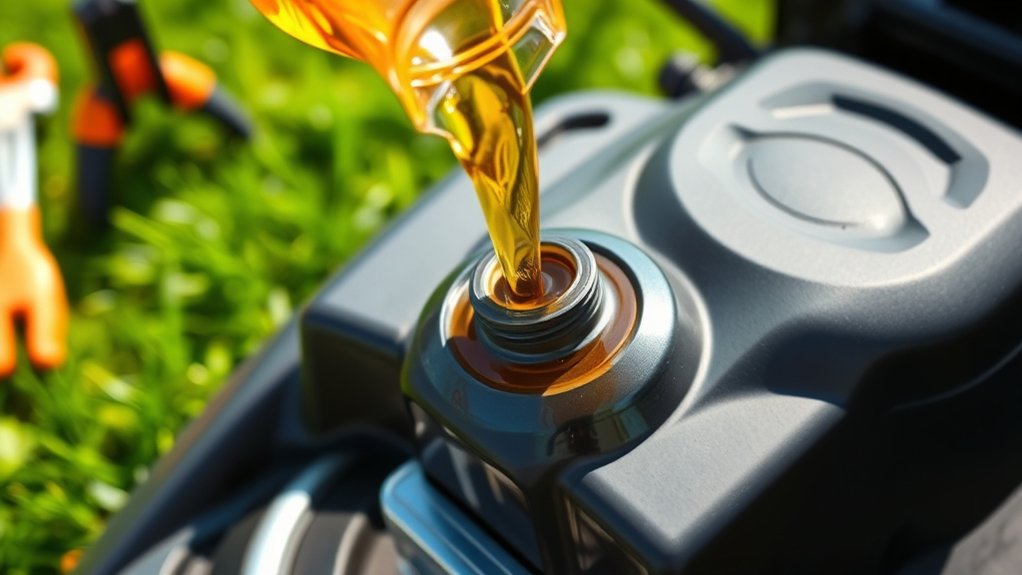
Although it might seem like a minor detail, using the correct engine oil is crucial for maintaining your lawn mower’s performance and longevity. The right oil forms a protective film on engine components, reducing friction and minimizing engine wear caused by metal-to-metal contact.
High-quality engine oils contain specific oil additives that enhance viscosity stability, prevent oxidation, and inhibit corrosion. These additives also help disperse contaminants and sludge, guaranteeing clean internal surfaces.
Using an inappropriate oil can lead to insufficient lubrication, accelerated wear, and potential engine damage. By selecting oil formulated for small engines, you guarantee excellent thermal stability and protection under varying operating temperatures. This precision in lubrication directly extends the mower’s service life and maintains peak efficiency.
How to Find and Understand Your Lawn Mower’s Oil Requirements
Where can you find the exact oil specifications for your lawn mower? The most reliable source is the mower manual, which provides detailed manufacturer recommendations tailored to your engine model. Locate the section labeled “oil specifications” or “engine oil” to identify the correct oil viscosity grade, typically indicated by SAE numbers like 30 or 10W-30.
The manual also specifies whether the engine requires single or multi-grade oil, and any particular standards it must meet, such as API classifications. If you don’t have the physical manual, check the manufacturer’s website or contact customer support for a digital copy.
Understanding these oil specifications guarantees ideal lubrication, engine protection, and performance, preventing premature wear or damage. Always adhere strictly to these guidelines for the best results.
Conventional vs. Synthetic Engine Oil: Which Is Best for Lawn Mowers

You need to weigh the performance differences between conventional and synthetic oils, as synthetics offer better viscosity stability and cleaner engine operation.
Cost is another factor, since synthetic oils tend to be pricier but can extend engine longevity by reducing wear and deposits. Understanding these trade-offs helps you choose the best oil to maintain your lawn mower’s efficiency and lifespan.
Performance Differences
Since engine oil directly impacts the efficiency and longevity of your lawn mower, understanding the performance differences between conventional and synthetic oils is essential. The oil quality influences engine performance by affecting lubrication, wear protection, and thermal stability.
Synthetic oils typically outperform conventional oils in several critical areas:
- Viscosity stability: Synthetic oils maintain consistent viscosity across temperature fluctuations, ensuring reliable lubrication during startup and operation.
- Oxidation resistance: Synthetic formulations resist breakdown under high heat, reducing sludge formation and extending oil life.
- Wear protection: Synthetic oils provide superior film strength, minimizing metal-to-metal contact and engine component wear.
Choosing the right oil based on these factors enhances engine performance, reduces maintenance frequency, and prolongs your mower’s operational life.
Cost Considerations
Balancing the performance benefits of synthetic oil against its higher upfront price often shapes the decision-making process for lawn mower maintenance. When considering cost, you need to factor in oil price fluctuations, which can greatly affect your budget over time.
Synthetic oils, though pricier initially, tend to require fewer changes due to superior stability and longer service intervals. Conversely, conventional oils offer budget-friendly options with lower upfront costs, but you may replace them more frequently, potentially increasing long-term expenses.
Carefully evaluating your usage patterns and local oil price trends helps optimize your spending. By understanding these cost dynamics, you can make an informed choice between synthetic and conventional oils that aligns with your financial and maintenance priorities.
Engine Longevity Impact
Although synthetic and conventional oils both serve to lubricate your lawn mower’s engine, their impact on engine longevity differs markedly due to variations in formulation and performance characteristics. Synthetic oils, engineered with uniform molecular structures and advanced oil additives, provide superior protection against engine wear, especially under extreme temperatures and stress.
Conventional oils rely more on natural base stocks and less refined additives, which can degrade faster.
Consider these factors for engine longevity:
- Synthetic oils maintain viscosity stability longer, reducing friction and wear over time.
- Enhanced oil additives in synthetics improve oxidation resistance, preventing sludge buildup.
- Conventional oils may require more frequent changes to avoid accelerated engine wear.
What Engine Oil Viscosity Should You Use in Your Lawn Mower?
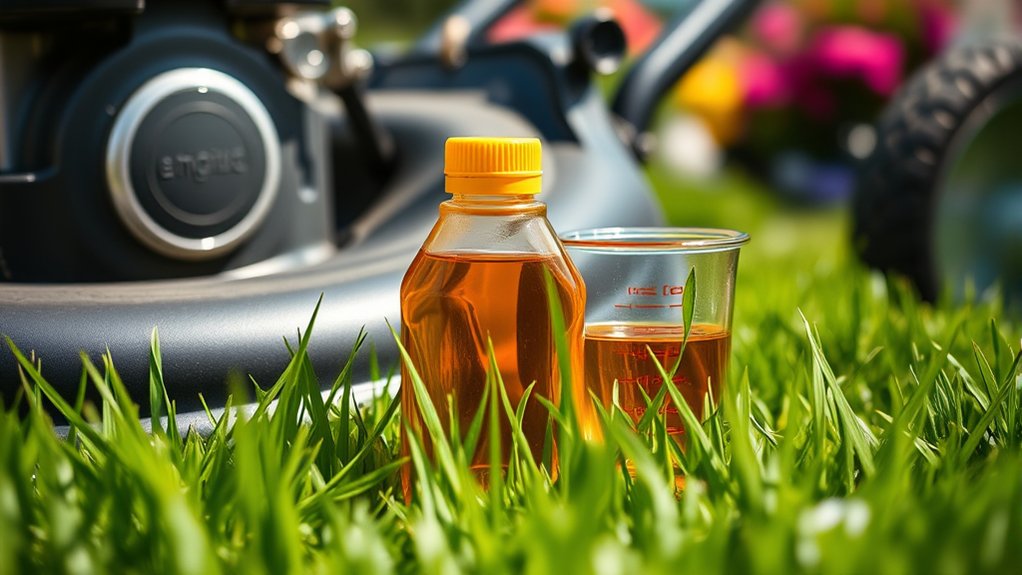
How do you determine the correct engine oil viscosity for your lawn mower? Start by consulting the manufacturer’s specifications, as they recommend viscosity grades based on engine design and operating conditions.
Oil viscosity, measured in grades like SAE 30 or 10W-30, indicates how the oil flows at various temperatures. For warmer months, a higher viscosity oil such as SAE 30 provides adequate lubrication without thinning excessively.
During cooler seasons, a multi-grade oil like 10W-30 adapts to temperature fluctuations, maintaining proper flow and protection. Seasonal changes greatly influence oil performance; using the right viscosity guarantees ideal engine protection, efficient starting, and reduced wear.
Always match your choice to both ambient temperature ranges and your mower’s engine requirements for reliable operation year-round.
How Often Should You Change Your Lawn Mower’s Engine Oil?
Since engine oil degrades with use, you should change your lawn mower’s oil regularly to maintain peak engine performance and longevity. Adhering to a strict maintenance schedule is essential for ideal oil change frequency.
Typically, manufacturers recommend changing the oil after the first 5 hours of use for new mowers, then every 25 to 50 hours of operation or at least once per mowing season.
Change new mower oil after 5 hours, then every 25 to 50 hours or once each season.
Consider these factors to determine the appropriate oil change frequency for your mower:
- Operating conditions: Frequent heavy-duty or dusty conditions require more frequent changes.
- Engine type: Four-stroke engines usually need regular oil changes, unlike two-stroke models.
- Oil type: Synthetic oils may extend intervals, but always follow manufacturer guidelines.
Following these guidelines guarantees your mower’s engine stays well-lubricated and reliable.
Common Lawn Mower Oil Mistakes and How to Avoid Them
When maintaining your lawn mower, using the wrong type or amount of oil can severely damage the engine and reduce its lifespan. One common misconception is that any oil will suffice; however, using oil with incorrect viscosity impacts lubrication efficiency.
Overfilling oil leads to increased crankcase pressure, causing leaks and seal damage. Neglecting oil filter maintenance also compromises engine performance by allowing contaminants to circulate, accelerating wear. Many users overlook the importance of regularly inspecting and replacing the oil filter as specified in the manual.
Avoid mixing different oil types, as this can alter chemical properties, reducing protection. To prevent these issues, always select the recommended oil grade, measure oil precisely, and maintain the oil filter diligently. These steps guarantee peak engine function and longevity.
How to Store and Handle Lawn Mower Engine Oil Safely
Properly storing and handling lawn mower engine oil involves several critical steps to maintain its quality and guarantee your safety. First, always keep oil containers tightly sealed to prevent contamination and oxidation, which degrade oil performance.
Store oil in a cool, dry place away from direct sunlight and temperature extremes to preserve its chemical integrity. When handling oil, follow strict precautions to avoid spills and skin contact, which can cause irritation or environmental harm.
Key oil storage and handling precautions include:
- Use original containers with clear labels to avoid mix-ups and guarantee correct oil usage.
- Store oil off the ground on shelves to prevent contamination from dirt or water.
- Dispose of used oil responsibly at designated recycling centers to protect the environment and comply with regulations.
Frequently Asked Questions
Can I Use Automotive Engine Oil in My Lawn Mower?
You can use automotive engine oil in your lawn mower if it matches the recommended oil types and viscosity. Synthetic oil often provides better protection, but always check your mower’s manual to confirm compatibility and prevent engine damage.
What Are the Signs of Low Engine Oil in a Lawn Mower?
Wondering how to spot low oil level? You’ll notice decreased engine performance, unusual noises, overheating, and smoke.
Regularly check the dipstick to confirm proper oil level, preventing damage and maintaining ideal lawn mower function.
Is Biodegradable Oil Better for Lawn Mowers?
Yes, biodegradable oil offers significant benefits by reducing environmental impact through faster decomposition and lower toxicity. You’ll protect soil and water while maintaining engine performance, making it a smart, eco-friendly choice for your lawn mower.
Can Old Engine Oil Damage My Lawn Mower?
Imagine sludge coating your mower’s engine like thick mud; old oil accelerates oil degradation, losing lubricating ability. This increases engine wear, causing friction and heat, ultimately damaging your mower’s internal parts and shortening its lifespan.
How Do Temperature Changes Affect Lawn Mower Oil Performance?
Temperature extremes affect oil viscosity, causing it to thicken in cold and thin in heat. You’ll want oil that maintains proper viscosity across these ranges to guarantee consistent lubrication and protect your lawn mower’s engine effectively.
Conclusion
Choosing the right engine oil for your lawn mower isn’t just about maintenance—it’s about maximizing performance and longevity. Have you considered how oil type, viscosity, and change intervals directly impact your mower’s engine health? By understanding these specifics and avoiding common mistakes, you guarantee smooth operation and prevent costly damage.
Handle and store oil properly to maintain its quality. Don’t overlook these details—they’re critical for your mower’s best function. Ultimately, selecting the appropriate type of engine oil for your lawn mower is essential to keep it running efficiently and extend its lifespan.