You should never toss used engine oil in the trash. Proper disposal of engine oil is essential to protect the environment and public health. Instead, store it safely in clean, sealed containers labeled with the collection date.
Take the used oil to authorized auto repair shops, recycling centers, or hazardous waste facilities equipped to handle this waste. These sites guarantee your oil is inspected, purified, and recycled properly, preventing environmental contamination and complying with legal regulations.
Finding trusted disposal options is easier than you think. Understanding the full process can help you manage used oil responsibly and contribute to a cleaner environment.
Key Takeaways
- Many auto repair shops accept used engine oil for safe disposal, often with proper hazardous waste systems.
- Locate authorized recycling centers or hazardous waste drop-off sites through local government websites or waste management services.
- Community recycling events and oil collection drives provide convenient, responsible disposal opportunities.
- Always store used engine oil in sealed, leak-proof containers labeled with “Used Engine Oil” before disposal.
- Verify disposal site licensing and compliance to ensure environmentally safe and legal oil handling.
Don’t Toss Used Engine Oil in the Trash: Here’s Why
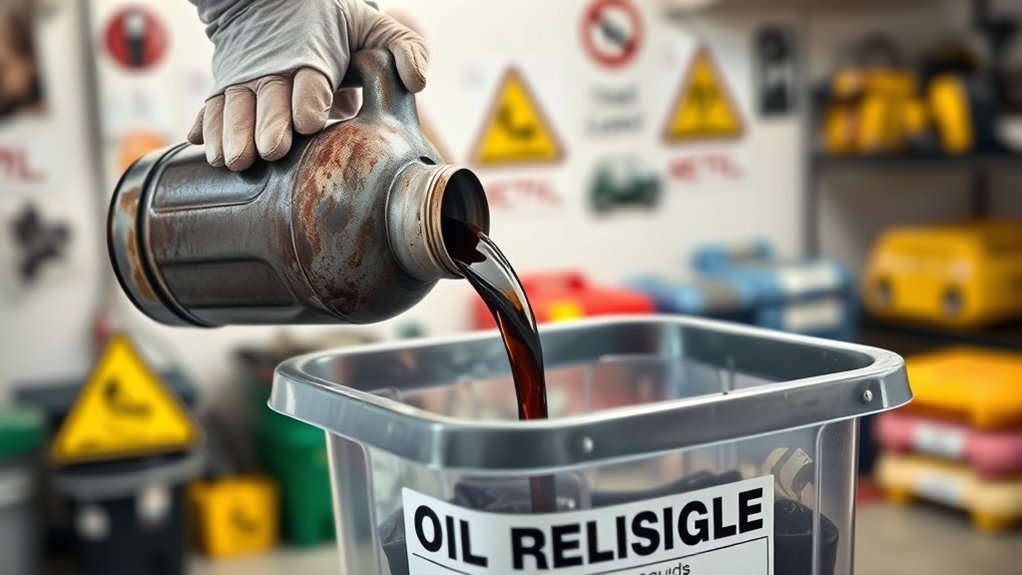
Because used engine oil contains hazardous contaminants, you shouldn’t toss it in the trash. Disposing of it improperly leads to severe environmental impact, as toxic substances can leach into soil and waterways, harming ecosystems and contaminating drinking water sources.
You’re also risking legal consequences; many jurisdictions classify improper disposal as a violation subject to fines or penalties. Regulations mandate that used engine oil must be handled through approved recycling or disposal facilities to guarantee safe treatment.
Storing Used Engine Oil Safely Before You Dispose of It
When you collect used engine oil, store it in a clean, leak-proof container designed for hazardous liquids to prevent spills and contamination. Proper oil container selection is essential. Choose containers made of high-density polyethylene (HDPE) or metal with tight-sealing caps. Avoid reusing containers that previously held food or beverages to prevent chemical reactions.
Store used engine oil in clean, leak-proof HDPE or metal containers with tight caps to prevent spills and contamination.
Keep these points in mind for safe storage:
- Label the container clearly with “Used Engine Oil” and the collection date.
- Store the container in a cool, dry place away from direct sunlight and heat sources.
- Limit storage duration to no more than 30 days to minimize degradation and avoid environmental hazards.
Drop Off Used Engine Oil at Auto Repair Shops

Although many people overlook this option, dropping off used engine oil at auto repair shops offers a convenient and environmentally responsible way to dispose of it. When you perform an oil change, these shops typically accept your used oil as part of their disposal options. They have systems in place to handle hazardous waste safely, preventing soil and water contamination.
| Aspect | Details |
|---|---|
| Acceptance | Most shops accept used engine oil |
| Preparation | Store oil in sealed, leak-proof containers |
| Benefits | Proper disposal, supports environmental safety |
| Limitations | Some shops may charge a small fee |
Check with your local repair shop beforehand to confirm their policy and any associated fees.
Recycle Used Engine Oil at Recycling Centers
You can locate nearby recycling centers through local government websites or waste management services. Before dropping off your used engine oil, make sure it’s stored in a sealed, leak-proof container to prevent spills.
Proper recycling at these centers conserves resources and prevents environmental contamination.
Finding Nearby Recycling Centers
Where can you safely dispose of used engine oil to protect the environment? Locating nearby recycling centers is key. These centers provide an efficient way to maximize recycling benefits while utilizing local resources responsibly.
You can find them by checking municipal websites or environmental agency portals for authorized drop-off sites. Using online locator tools specifically designed for hazardous waste disposal is also helpful.
Another option is contacting automotive service centers or retail stores that accept used oil for recycling.
Preparation Before Drop-Off
Before dropping off used engine oil at a recycling center, make certain it’s properly stored in a clean, leak-proof container with a secure lid to prevent spills and contamination. Focus on oil container selection by choosing containers specifically designed for oil storage, typically made of durable plastic or metal resistant to chemical degradation. Avoid using containers that previously held other substances to prevent cross-contamination.
Implement safety precautions such as labeling the container clearly as “Used Engine Oil” and handling it with gloves to minimize skin contact. Store the container upright in a well-ventilated, shaded area away from heat sources. These steps guarantee safe transportation and effective recycling, protecting both you and the environment from hazardous spills or exposure.
Benefits of Proper Recycling
Properly preparing and storing used engine oil sets the foundation for its effective recycling at designated centers. When you recycle used engine oil, you greatly reduce its environmental impact by preventing soil and water contamination.
Additionally, recycling conserves natural resources, as the oil can be re-refined and reused rather than extracted anew. You also protect public health by minimizing exposure to hazardous pollutants that can cause respiratory and skin issues.
Key benefits include:
- Reducing toxic waste that harms ecosystems.
- Conserving energy and raw materials through oil reprocessing.
- Preventing health risks associated with improper disposal.
Dispose of Engine Oil at Hazardous Waste Facilities
You can locate hazardous waste facilities near you through local government websites or waste management services.
Before transport, store your used engine oil in a clean, leak-proof container with a secure lid to prevent spills.
Proper storage and timely disposal guarantee safe handling and compliance with environmental regulations.
Facility Locations Near You
Wondering where to dispose of used engine oil safely? Locate nearby hazardous waste facilities offering certified oil disposal services to minimize environmental impact. These facilities guarantee your used oil is processed according to strict environmental regulations, preventing soil and water contamination.
To find the closest facility, consider:
- Checking your local government or environmental agency websites for authorized hazardous waste sites.
- Using online tools or apps designed to map oil disposal centers in your area.
- Contacting automotive shops or service centers that often partner with certified disposal services.
Proper Oil Storage Tips
Although disposing of used engine oil at hazardous waste facilities is essential, storing it correctly beforehand secures safety and prevents leaks or contamination. You should use oil container types specifically designed for used oil, typically sealed, non-reactive, and durable plastic or metal drums.
Avoid containers that previously held chemicals or food products to prevent cross-contamination. Label each container clearly with the content and date to track storage duration effectively. Keep containers tightly sealed and store them in a cool, dry, well-ventilated area away from direct sunlight and heat sources.
Limit storage duration to no more than 90 days, as prolonged storage increases risks of leaks and environmental hazards. By following these practical tips, you guarantee compliance with regulations and maintain a safe environment before transporting oil to disposal facilities.
Community Events for Engine Oil Recycling

When local governments or environmental organizations host community events for engine oil recycling, they create convenient opportunities for you to responsibly dispose of used oil. These events often coincide with broader community cleanup initiatives, enhancing environmental impact.
You can participate in designated oil collection drives where trained personnel handle the hazardous material safely. Such events typically provide clear instructions on how to prepare your engine oil for drop-off, minimizing contamination risk.
At these gatherings, you’ll find:
- Specialized containers for secure oil collection
- On-site experts guiding proper disposal procedures
- Informational materials promoting environmentally sound practices
What Happens When You Drop Off Used Engine Oil
Dropping off your used engine oil triggers a carefully managed process designed to prevent environmental contamination and facilitate recycling. Once you hand over the oil, it undergoes immediate inspection to detect any signs of oil contamination, such as water or debris. This step guarantees only suitable oil enters the recycling process.
Next, the oil is stored in designated containers and transported to specialized facilities. There, it undergoes filtration and purification, removing impurities and contaminants. The refined oil then serves as a base for producing new lubricants or as fuel in industrial applications.
How to Locate Trusted Local Engine Oil Disposal Sites
To guarantee proper disposal of your used engine oil, you need to identify certified collection points that comply with environmental regulations. Start by researching local regulations to understand approved oil disposal methods in your area. Use official resources such as government websites or environmental agencies to find trusted disposal sites. Verify that these sites are licensed to handle hazardous waste to confirm compliance and environmental safety.
Consider these practical steps to locate reliable disposal sites:
- Contact your municipality’s waste management department for authorized drop-off locations.
- Visit certified automotive service centers or repair shops that accept used engine oil.
- Utilize online databases or mobile apps dedicated to locating hazardous waste collection points.
Following these steps helps you dispose of engine oil responsibly while adhering to local regulations.
Frequently Asked Questions
Can Used Engine Oil Be Repurposed for Other Applications?
Yes, you can repurpose used engine oil through oil recycling methods like re-refining or energy recovery. These used oil applications reduce waste and conserve resources, making your approach both environmentally responsible and technically efficient.
How Often Should I Change My Vehicle’s Engine Oil?
You should follow your vehicle’s manufacturer guidelines for oil change frequency, typically every 3,000 to 7,500 miles.
Regular engine maintenance tips include monitoring oil quality and using recommended oil types to guarantee peak performance.
What Are the Environmental Risks of Improper Oil Disposal?
Like a poison spreading through water, improper oil disposal causes oil contamination, leading to severe ecosystem damage. You’ll harm aquatic life, soil quality, and water supplies.
Can Mixing Different Types of Used Engine Oil Affect Recycling?
Yes, mixing different types of used engine oil alters the oil composition, complicating recycling processes. You’ll face challenges in separating contaminants and additives, reducing recycling efficiency.
This can potentially degrade the quality of the recycled oil product.
Are There Any Fees for Dropping off Used Engine Oil?
Dropping off used engine oil at most oil disposal locations and recycling centers usually won’t cost you a dime. Think of it as your free ticket to eco-friendly maintenance, but always check local policies for exceptions.
Conclusion
Don’t let your used engine oil become an environmental villain—dispose of it properly. Store it safely in a sealed container until you can drop it off at an auto repair shop, recycling center, or hazardous waste facility.
You can even check for community recycling events nearby. Think of it like using a rotary phone: outdated and risky if ignored.
By following these steps, you’ll protect your engine and the planet with precision and care. Knowing where to get rid of engine oil is essential for keeping our environment safe.