You should jack your Jeep Wrangler JL at designated frame rails near the front and rear axles, the pinch welds along the rocker panels, or the factory lift and recovery hooks.
Knowing where to jack up a Jeep Wrangler JL is crucial for safe and effective maintenance. These points provide stable, reinforced support that prevents damage and guarantees safety.
Always place your jack on solid, level ground, align it precisely, and use wheel chocks with the parking brake engaged.
Avoid suspension parts or plastic components to maintain stability. Understanding proper jacking techniques is essential for safe vehicle maintenance.
Key Takeaways
- Use the front and rear axle frame rails as primary jacking points for stability and safety.
- Position the jack on the pinch welds along the rocker panels to avoid structural damage.
- Avoid placing the jack under suspension parts or plastic components to prevent damage and instability.
- Align the jack saddle precisely under factory lift or recovery hooks designed for secure lifting.
- Ensure the jack base rests on solid, level ground with wheel chocks and parking brake engaged.
Key Jacking Points on a Jeep Wrangler JL
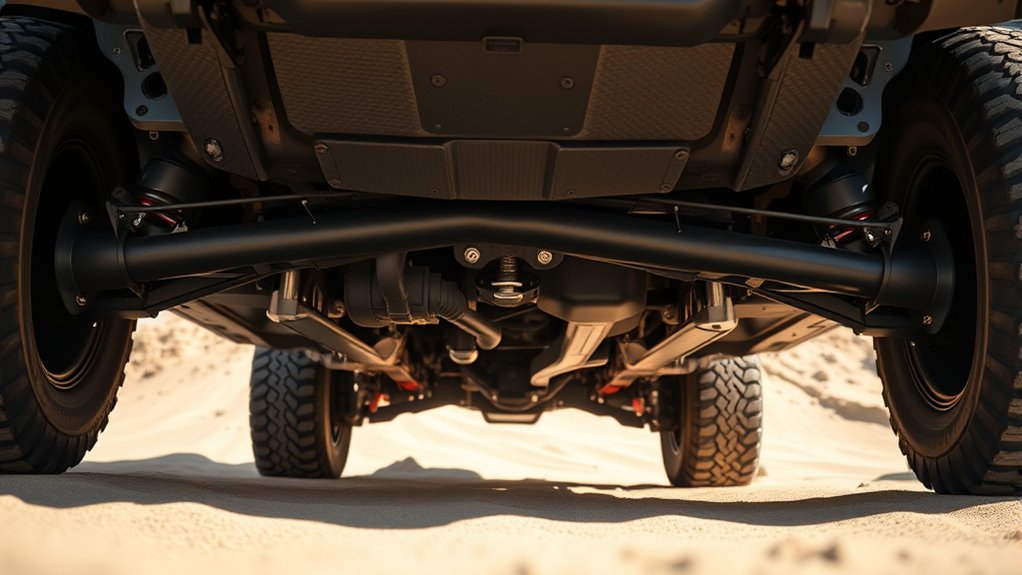
When jacking up your Jeep Wrangler JL, you’ll want to focus on four key points designed to support the vehicle safely and effectively. These points include the reinforced frame rails near the front and rear axles, and the designated pinch welds along the rocker panels.
Using these specific locations minimizes jacking hazards by preventing damage to structural components and avoiding unstable lifting positions. Ensuring you engage these solid contacts maintains ideal vehicle stability throughout the process.
Targeting these solid jacking points prevents damage and ensures stable, safe lifting throughout your maintenance.
Avoid placing the jack under suspension components or plastic parts, as this increases the risk of slippage or collapse. By targeting these engineered jacking points, you maintain the Wrangler’s integrity and reduce the chance of accidents during maintenance or tire changes.
Prioritize safety by understanding and respecting these critical support areas.
How to Position Your Jack Safely on a Jeep JL
Selecting the correct jacking points on your Jeep Wrangler JL is only part of the process; you also need to position your jack to confirm maximum stability and safety. Depending on the jack types, scissor, bottle, or floor jack, you’ll want to verify the jack base rests on solid, level ground, and the saddle aligns precisely under the designated jacking point.
Always apply safety precautions like using wheel chocks and engaging the parking brake before lifting.
| Jack Type | Base Stability | Positioning Tip |
|---|---|---|
| Scissor Jack | Small footprint, unstable on soft ground | Use on firm surfaces only |
| Bottle Jack | Compact, narrow base | Place on a sturdy wood block if needed |
| Floor Jack | Wide base, most stable | Align saddle directly under jacking point |
Proper positioning minimizes risks and prevents vehicle damage.
Using Your Jeep’s Factory Lift and Recovery Hooks for Jacking
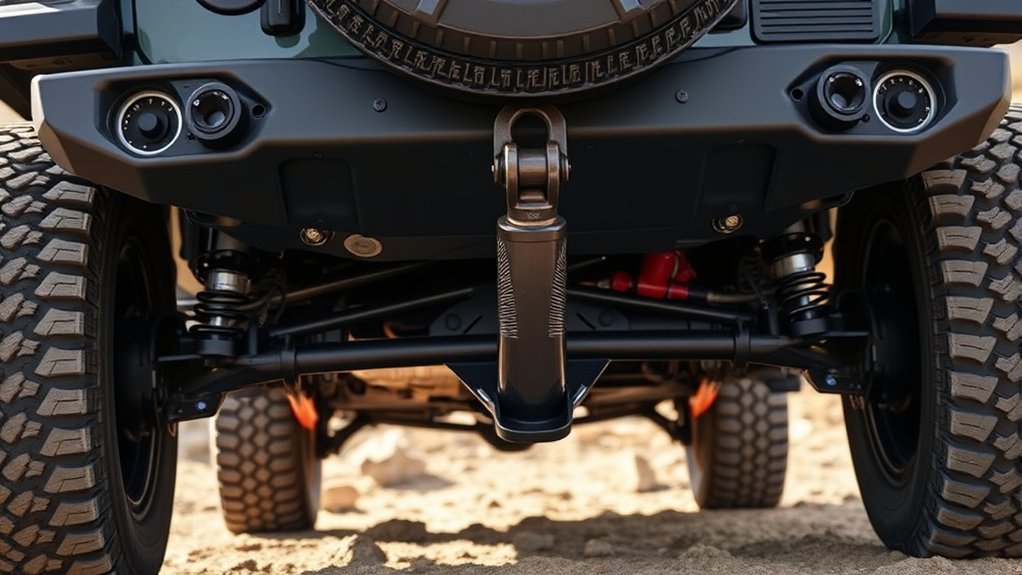
The factory lift and recovery hooks on your Jeep Wrangler JL serve as reinforced points designed to handle significant stress during lifting and recovery operations. When using your factory jack, position it near these recovery hooks to guarantee a secure and stable lift.
These hooks are engineered to endure the forces exerted by the jack without bending or damaging your vehicle. Before jacking, confirm the hooks are free of debris and corrosion to maintain a solid contact surface.
Align the jack saddle directly under the recovery hook, applying upward pressure steadily. Avoid using the hooks for lifting if the factory jack’s contact points don’t align properly, as this can compromise stability.
Proper use of recovery hooks with the factory jack enhances safety and preserves your Jeep’s structural integrity during jacking.
Common Mistakes to Avoid When Jacking Your Jeep JL
Although jacking your Jeep Wrangler JL might seem straightforward, neglecting certain precautions can lead to unsafe conditions or vehicle damage. Incorrect jack placement can bend or damage the frame. Skipping stability checks increases the risk of the vehicle slipping or falling.
Always position the jack under designated lift points and confirm the jack’s secure contact before lifting.
| Mistake | Consequence | Avoidance Tip |
|---|---|---|
| Incorrect jack placement | Frame damage or instability | Use factory lift/recovery hooks |
| Ignoring stability checks | Vehicle slips or falls | Test jack stability before lifting |
| Using uneven surfaces | Jack failure or tipping | Always jack on flat, solid ground |
Essential Tools and Safety Tips for Lifting Your Jeep JL
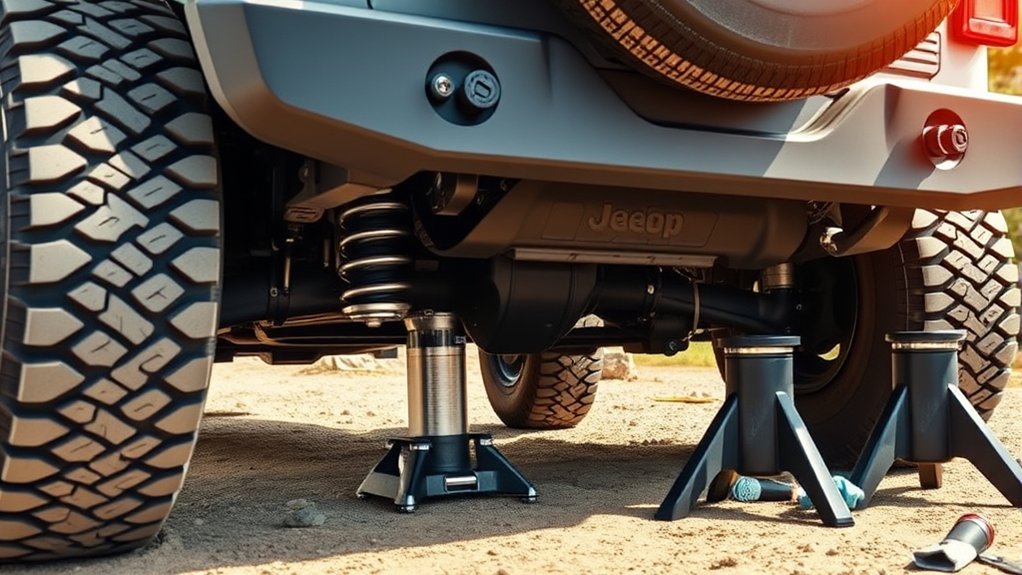
When lifting your Jeep Wrangler JL, you’ll need the right tools to guarantee both efficiency and safety. Start with selecting the appropriate jack types; a hydraulic floor jack offers stability and smooth lifting, while a bottle jack suits tight spaces but demands careful placement.
Always use jack stands to support the vehicle after lifting. Never rely solely on the jack. Equip yourself with essential safety gear, including gloves and safety glasses, to protect against injuries.
Ascertain the ground is level and firm to prevent jack slipping. Engage the parking brake and chock wheels opposite the lift point to secure the Jeep. Following these technical guidelines minimizes risks and helps you lift your Jeep JL safely and effectively every time.
Frequently Asked Questions
Can I Jack up My Jeep JL on Uneven Terrain?
You shouldn’t jack your Jeep JL on uneven surfaces due to jack safety risks. Always find a stable, level area to guarantee the jack remains secure, preventing slippage or accidents while lifting your vehicle safely.
How Often Should I Inspect My Jack for Safety?
Don’t wait until your jack decides to star in a collapsing circus act. Inspect it monthly.
Follow strict jack maintenance and safety guidelines to spot wear, leaks, or rust, ensuring your lift stays reliable and accident-free every time.
Is It Necessary to Use Wheel Chocks When Jacking?
Yes, you should always use wheel chocks when jacking. They guarantee wheel stability, preventing the vehicle from rolling.
This practice is essential for jack safety, reducing risk and maintaining a secure, stable lifting environment.
Can I Use an Electric Jack on My Jeep JL?
You can use electric jack types like bottle or scissor jacks on your Jeep JL, but always prioritize electric jack safety. Ensure proper weight capacity, stable ground, and use wheel chocks to prevent slipping or accidents during lifting.
What’s the Maximum Weight My Jack Can Safely Lift?
Like a tightrope walker’s balance, your jack’s weight limits are essential. Different jack types, such as scissor, bottle, or floor, have specific maximum weights.
Always check your jack’s rated capacity to safely lift your Jeep without risking failure or injury.
Conclusion
Knowing where to jack up your Jeep Wrangler JL is like finding the perfect anchor point in rough waters—it guarantees stability and safety. Always position your jack on the designated factory lift points or recovery hooks to prevent damage and maintain balance.
Avoid common pitfalls by using the right tools and following safety protocols. This careful approach keeps your Jeep secure, ready to conquer any terrain without compromising its integrity or your safety.
In conclusion, knowing exactly where to jack up a Jeep Wrangler JL ensures both your vehicle’s safety and your peace of mind during any maintenance or recovery situation.