Your spark plug is covered in oil because worn valve seals, faulty piston rings, or a malfunctioning PCV valve allow oil to seep into the combustion chamber.
This fouling coats the plug’s electrode with an oil film that disrupts ignition. As a result, you may experience misfires, rough idling, and increased hydrocarbon emissions.
Excess crankcase pressure and deteriorated head gaskets can also contribute to oil contamination on the spark plug.
Understanding these mechanisms helps you identify precise fixes and maintenance strategies. Addressing the root causes will restore peak engine performance and prevent further damage.
Key Takeaways
- Oil on spark plugs usually indicates worn valve seals or piston rings allowing oil into the combustion chamber.
- A faulty PCV valve or head gasket can cause oil to mix with the air-fuel mixture, contaminating the plugs.
- Overfilled or incorrect oil viscosity may lead to excessive oil entering the combustion area and fouling spark plugs.
- Oil film on plugs disrupts ignition, causing misfires, rough idling, and difficulty starting the engine.
- Regular engine wear and tear or mechanical failures can increase oil leakage, leading to oily spark plugs.
What Are the Symptoms of Oily Spark Plugs?
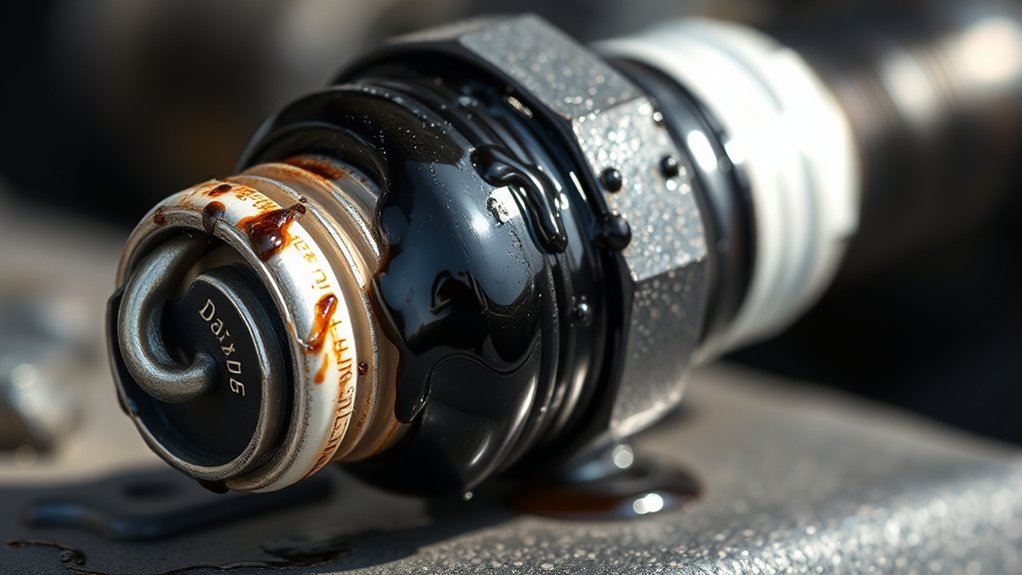
When your spark plug gets coated in oil, you’ll likely notice a range of performance issues including misfires, rough idling, and reduced fuel efficiency. These symptoms indicate compromised combustion efficiency, often detected during routine spark plug maintenance.
The oil film disrupts the electrode gap’s ideal spark generation, causing erratic ignition timing and incomplete fuel burn. You might experience increased hydrocarbon emissions and difficulty starting the engine, signaling the need for immediate inspection.
Incorporating oil analysis alongside spark plug maintenance can help diagnose the underlying contamination severity and engine wear. Monitoring these symptoms precisely allows you to prevent further degradation of ignition components and guarantees timely corrective actions, maintaining engine performance and reducing the risk of catalytic converter damage.
What Causes Oil on Spark Plugs?
Because oil intrusion into the combustion chamber disrupts normal spark plug operation, understanding its root causes is essential. Oil residue on spark plugs typically results from compromised engine seals or faulty valve guides, allowing lubricant to seep past into the combustion area.
You might also encounter oil contamination due to deteriorated cylinder head gaskets or excessive blow-by gases. Regular spark plug maintenance helps detect these issues early, preventing misfires and performance degradation.
| Cause | Description |
|---|---|
| Worn valve seals | Permit oil leakage into combustion chamber |
| Faulty head gasket | Enables oil to mix with air-fuel mixture |
| PCV system malfunction | Causes pressure buildup, pushing oil past seals |
Identifying these causes streamlines your diagnostic process and prevents excessive oil residue buildup on spark plugs.
How Do Worn Piston Rings Cause Oil on Spark Plugs?
If piston rings wear beyond their service limits, they lose their ability to maintain an effective seal between the piston and cylinder wall, allowing engine oil to bypass into the combustion chamber. This piston wear compromises the ring’s radial tension and gap control, resulting in inadequate oil scraping and blow-by gases infiltrating the crankcase.
As a consequence, oil infiltrates the combustion chamber, contaminating the spark plug electrodes. Additionally, worn piston rings induce compression loss, reducing cylinder pressure and impairing combustion efficiency.
The combined effects of oil fouling and compression loss cause misfires and reduced engine performance. When diagnosing oil on spark plugs, consider piston ring integrity, as severe piston wear directly correlates with oil contamination and compression degradation, making ring replacement critical to restoring peak combustion and preventing further engine damage.
How Do Valve Seal Problems Lead to Oil on Spark Plugs?
You rely on valve seals to maintain proper lubrication control by preventing oil from entering the combustion chamber via the valve stems. When these seals degrade, oil bypasses them, contaminating the spark plugs and causing misfires or fouled electrodes.
Recognizing symptoms like blue smoke on startup and rough idling can help you identify worn valve seals early.
Valve Seal Function Explained
A valve seal’s primary role is to prevent engine oil from leaking into the combustion chamber by sealing the gap between the valve stem and the valve guide. Valve seals guarantee peak sealing performance by maintaining a tight interface that restricts oil migration while allowing valve stem movement.
When valve seals degrade, their elastomeric properties weaken, compromising sealing performance and permitting engine oil to bypass into the combustion chamber. This oil contacts the spark plug, causing fouling.
Understanding the precise function of valve seals highlights why their integrity is critical; they must balance lubrication control and sealing efficacy under thermal and mechanical stress. If you notice oil on spark plugs, suspect valve seal wear that deteriorates the sealing surface and compromises oil control, leading to combustion chamber contamination.
Oil Leakage Mechanism
Several mechanical and material failures contribute to valve seal degradation, initiating oil seepage past the valve stem into the combustion chamber. Over time, exposure to extreme thermal cycles and incompatible oil types accelerates the breakdown of elastomeric sealing materials.
Hardening, cracking, or swelling of these seals compromises their radial compression, allowing pressurized lubricants to bypass. Additionally, improper clearance between the valve guide and stem exacerbates wear, reducing the seal’s ability to contain oil.
As oil migrates, it contaminates the spark plug’s electrode, impairing ignition efficiency. You’ll find that synthetic and mineral oil formulations influence seal longevity differently due to their additive packages and viscosity profiles.
Ultimately, the failure of sealing materials under dynamic mechanical stress and chemical attack is the root cause of oil infiltration onto spark plugs, signaling valve seal malfunction.
Symptoms Of Worn Seals
When valve seals deteriorate, oil bypasses the stem and accumulates on the spark plug, causing fouling that disrupts the electrode’s spark generation. You’ll notice symptoms like misfires, rough idling, and increased hydrocarbon emissions due to incomplete combustion.
Different seal types, such as umbrella, positive, and synthetic rubber seals, each exhibit distinct wear patterns, but all fail to prevent oil ingress when compromised. Ignoring seal maintenance accelerates degradation, leading to excessive oil pooling in the combustion chamber.
This contamination creates a conductive path on the spark plug, resulting in weak or absent sparks and poor engine performance. By recognizing these symptoms early, you can target valve seal replacement before extensive piston ring damage occurs, preserving combustion efficiency and preventing costly engine repairs.
How Can a Faulty PCV Valve Cause Oil on Spark Plugs?
If your PCV (Positive Crankcase Ventilation) valve malfunctions, it disrupts the engine’s blow-by gas recirculation, causing excessive crankcase pressure that forces oil past piston rings and into the combustion chamber. When the PCV valve sticks closed or remains partially open, it fails to regulate the vapors adequately, resulting in increased oil vapor ingress into the combustion chamber.
This contamination leads to oil deposits on the spark plugs, impairing ignition efficiency. Additionally, a faulty PCV valve can cause vacuum leaks, deteriorating engine performance by skewing the air-fuel ratio. The ensuing oil fouling on spark plugs manifests as misfires, rough idling, and reduced fuel economy.
Monitoring PCV valve functionality is essential to maintain peak engine performance and prevent oil contamination of ignition components.
How to Fix and Prevent Oily Spark Plugs
Although diagnosing oily spark plugs points to specific engine faults, resolving the issue requires targeted interventions such as replacing worn piston rings, repairing valve cover gaskets, or servicing the PCV valve. To fix and prevent oily spark plugs, start with a thorough spark plug maintenance routine: inspect electrode wear, clean deposits, and verify correct heat range.
Address elevated oil consumption by conducting a leak-down test to pinpoint cylinder sealing failures. Replace defective valve cover gaskets to eliminate oil seepage into the combustion chamber. Additionally, make certain the PCV valve operates within specification to regulate crankcase ventilation and prevent oil carryover.
Regularly monitor oil levels and quality to avoid contamination. By integrating these precise mechanical corrections and maintenance protocols, you’ll restore ideal combustion conditions and effectively mitigate oil fouling on spark plugs.
Frequently Asked Questions
How Often Should Spark Plugs Be Replaced?
You should replace spark plugs every 30,000 to 100,000 miles, depending on their material and engine specs. Maintaining ideal spark plug lifespan guarantees consistent ignition and maximizes engine performance, preventing misfires and efficiency loss.
Can Oil-Covered Spark Plugs Damage the Engine?
Yes, oil leak causes fouled spark plug symptoms like misfires and poor ignition. You’ll experience decreased combustion efficiency and potential engine damage if you don’t address oil-contaminated electrodes compromising spark integrity promptly.
What Types of Spark Plugs Are Best for Oily Engines?
You’ll want iridium or platinum spark plug materials for oily engines, as they resist fouling better. Match them with synthetic engine oil types to minimize deposits and guarantee peak ignition performance under heavy oil contamination conditions.
Is It Safe to Drive With Oil on Spark Plugs?
You shouldn’t drive with oil on spark plugs; oil leak causes misfires, fouled plugs, and compromised ignition. This degrades engine performance, leading to rough idling, reduced power, and increased emissions. Address leaks promptly to avoid costly damage.
How Do I Clean Oil off Spark Plugs Properly?
You’ll clean oil off spark plugs by removing them, using a carburetor cleaner or brake cleaner, then brushing with a wire brush.
Address spark plug maintenance and inspect for oil leak causes to prevent recurrence and guarantee peak ignition performance.
Conclusion
You expect clean, precise combustion, but oily spark plugs tell a different story—one of compromised piston rings, degraded valve seals, or a malfunctioning PCV valve. This oil fouling disrupts ignition timing and combustion efficiency, leading to misfires and power loss.
By diagnosing these specific mechanical failures and addressing them promptly, you restore ideal cylinder sealing and crankcase ventilation. This ensures your ignition system operates with peak performance and reliability.
No more oil, just pure, efficient spark. Understanding why your spark plug is covered in oil is key to maintaining engine health and optimal function.