To fix coolant mixing with your engine oil, start by identifying the source of the leak. Common causes include a damaged head gasket, a faulty oil cooler, or a cracked engine block. Addressing this issue promptly is crucial to prevent severe engine damage.
Next, drain the contaminated engine oil completely and replace the oil filter to remove any remaining contaminants.
Perform a thorough coolant flush to clear out any residues left in the cooling system.
Repair or replace the faulty component responsible for the intrusion.
Once done, refill the engine with fresh oil and coolant.
Finally, maintain regular system checks to catch any potential problems early and prevent recurrence.
Understanding these steps will help you manage this issue with precision and efficiency.
Key Takeaways
- Drain contaminated engine oil and replace the oil filter immediately to remove the coolant-oil mixture.
- Perform a thorough coolant system flush to eliminate residual coolant from the engine.
- Identify and repair the root cause, such as a faulty head gasket or cracked engine block.
- Refill the engine with fresh oil and a new filter after completing all repairs and flushing.
- Maintain regular engine and cooling system inspections to prevent recurrence of coolant contamination.
How to Identify Coolant in Engine Oil: Key Signs
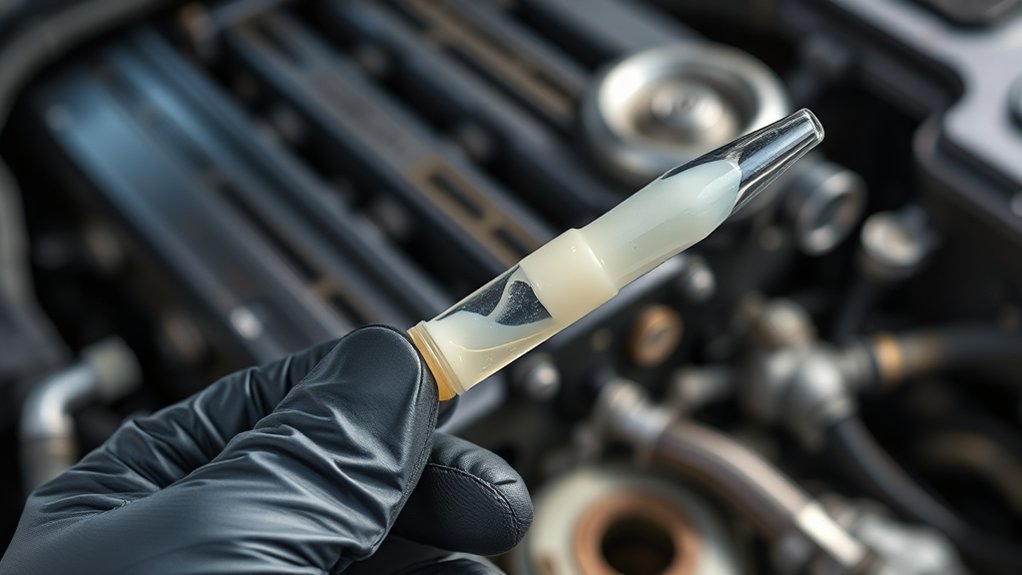
Although coolant contamination in engine oil can be subtle initially, you can identify it by closely examining the oil’s appearance and texture. One primary coolant symptom is a milky or frothy discoloration on the oil dipstick or in the oil filler cap, indicating water or antifreeze mixing with oil.
Coolant contamination shows as milky discoloration on the dipstick or oil filler cap, signaling water in the oil.
You might also notice a thicker, sludge-like consistency instead of the oil’s usual viscosity, signifying oil contamination. Additionally, the engine oil level may rise unexpectedly due to coolant intrusion.
Paying close attention to these signs helps you detect contamination early, preventing further engine damage. Regular oil analysis for abnormal coolant content enhances diagnosis accuracy.
Recognizing these coolant symptoms promptly allows you to take corrective action before severe mechanical failures occur.
Why Coolant and Engine Oil Mix: Common Causes
When coolant and engine oil mix, it usually signals a failure in the engine’s sealing components or cooling system integrity. In many cases, gasket failure, particularly the head gasket, represents the primary culprit. The head gasket seals the cylinder head to the engine block, preventing coolant and oil from intermingling.
A compromised gasket allows coolant to infiltrate the oil passages. Additionally, flaws in the engine design can contribute, especially if the oil cooler, which relies on tight seals between oil and coolant circuits, deteriorates or cracks. The cylinder head itself may develop microfractures or warping due to overheating, creating pathways for fluid crossover.
The coolant system’s pressure and temperature fluctuations exacerbate these vulnerabilities, accelerating seal degradation and resulting in the mixing of coolant and engine oil.
How to Find Where Coolant Is Leaking Into Oil
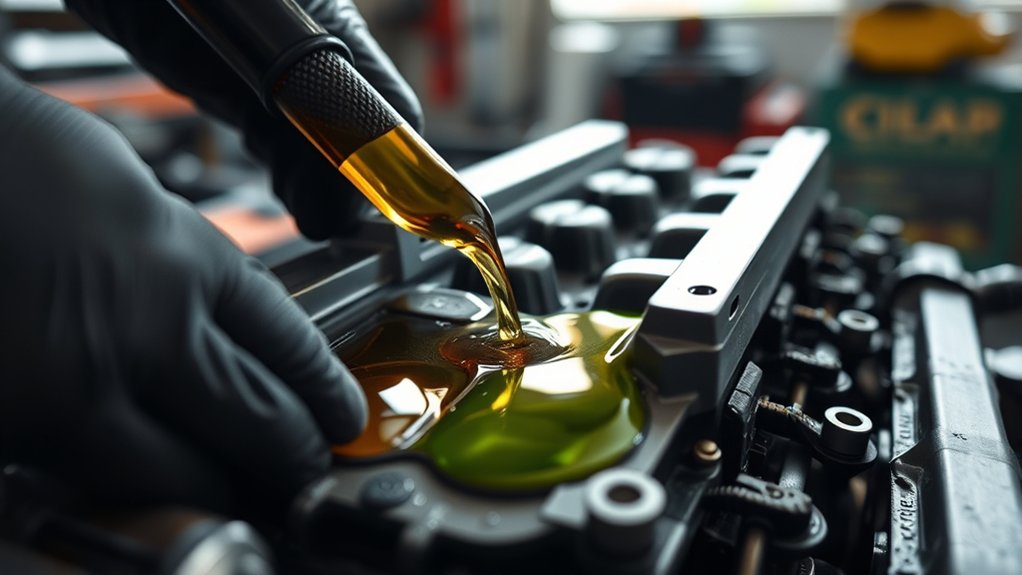
Identifying the exact source of coolant leaking into engine oil requires systematic inspection and diagnostic testing. Begin by checking common coolant sources such as the head gasket, intake manifold gasket, and engine block cracks. Use a visual inspection to locate any visible leaks or signs of coolant residue around these components.
Conduct a pressure test on the cooling system to detect leaks under operating conditions. Additionally, perform a chemical test on the oil to quantify coolant contamination levels. Analyzing the oil’s appearance and consistency can help pinpoint the severity of contamination.
Employ a cylinder leak-down test to identify internal breaches allowing coolant to enter the oil passages. By methodically evaluating these coolant sources and utilizing diagnostic tools, you can accurately determine where coolant is leaking into oil.
How to Fix Coolant in Your Engine Oil
Since coolant contamination in engine oil can severely damage your engine, addressing the issue promptly and correctly is essential. First, drain the contaminated oil and replace the oil filter to remove as much coolant-oil mixture as possible.
Next, perform a thorough coolant flush to eliminate residual coolant from the engine’s lubrication system. This step is crucial to prevent corrosion and internal component wear. After flushing, refill with fresh engine oil and a new filter.
Throughout this process, inspect and repair the root cause of the leak, such as a faulty head gasket or cracked block. Consistent engine maintenance following the repair guarantees system integrity and prevents recurrence.
Preventing Coolant and Engine Oil From Mixing Again
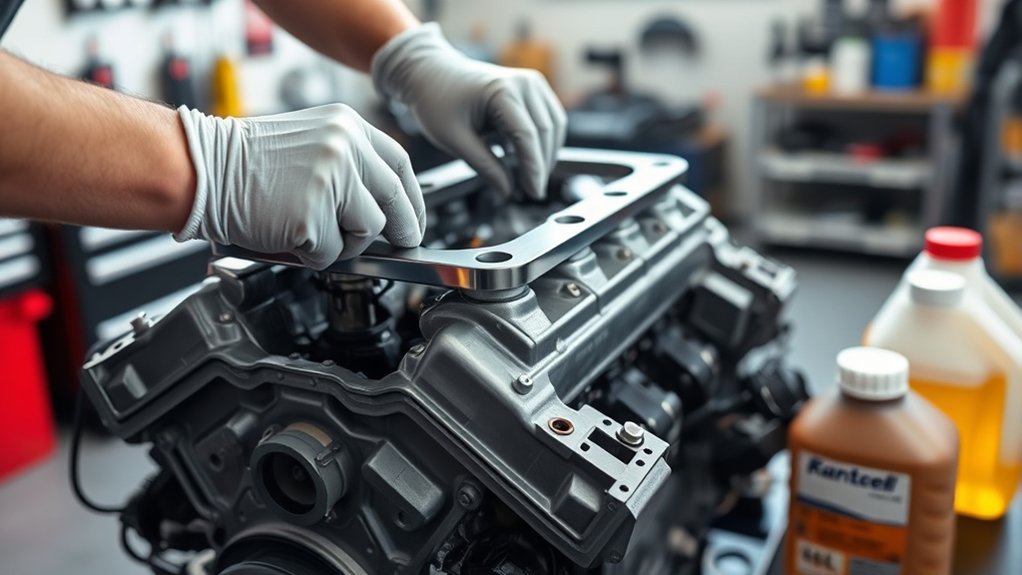
After addressing the immediate contamination by flushing and replacing fluids, your focus should shift to stopping coolant and engine oil from mixing again. Start by implementing a rigorous cooling system maintenance schedule, including regular inspections for leaks, corrosion, and blockages. Monitor pressure levels and temperature to guarantee system integrity.
Pay close attention to gasket replacement, especially head gaskets, which are common failure points causing fluid crossover. Use OEM-quality gaskets and install them following manufacturer torque specifications to prevent seal failure.
Additionally, inspect the engine block and cylinder head for cracks or warping, as structural defects can allow fluid mixing. By combining thorough cooling system maintenance with timely gasket replacement and structural assessments, you can effectively prevent recurrence of coolant and engine oil contamination, preserving engine performance and longevity.
Frequently Asked Questions
Can Coolant in Engine Oil Cause Long-Term Engine Damage?
Yes, coolant contamination in your engine oil can cause long-term engine damage by degrading lubrication, increasing wear, and reducing engine performance.
You’ll notice corrosion and overheating if you don’t address the issue promptly.
Is It Safe to Drive With Coolant Mixed in Engine Oil?
No, don’t drive with coolant symptoms or oil contamination; driving risks engine overheating, corrosion, and bearing damage.
You must diagnose the coolant leak, replace affected oil, and repair the source promptly to avoid severe mechanical failure.
How Much Does It Typically Cost to Repair Coolant and Oil Mixing?
You’ll typically pay $1,000 to $3,000 for repair methods like head gasket replacement or engine overhaul.
Prevention tips include regular coolant checks and timely maintenance to avoid costly coolant and oil mixing damage.
Can Using the Wrong Coolant Type Cause Mixing With Engine Oil?
You might imagine incompatible coolant types corroding engine seals, but using the wrong coolant rarely causes oil mixing directly. Instead, incompatible coolants accelerate seal degradation, increasing the risk of coolant and engine oil intermixing through compromised seals.
Are There Specific Oil Types Better for Engines Prone to Coolant Leaks?
You should choose oil viscosity that maintains stability under contamination. High-quality synthetic oils resist breakdown, aiding leak detection by keeping coolant and oil separate. This approach enhances engine protection in coolant leak-prone engines.
Conclusion
When coolant mixes with your engine oil, it’s like a hidden leak slowly eroding your engine’s foundation. You need to act swiftly: identify the signs, pinpoint the source, and apply the right fix to stop the contamination.
Regularly inspect your cooling and oil systems to prevent this issue from recurring. By staying vigilant and proactive, you’ll safeguard your engine’s performance and avoid costly repairs down the road.
Understanding how to fix coolant mixing with engine oil is essential for maintaining your vehicle’s health and longevity.