A spark plug wrench looks like a slim, elongated tool with a hexagonal socket sized between 16mm and 21mm to fit spark plugs precisely.
It often has a recessed, rubber-lined or magnetized socket to grip plugs securely without damaging them. Many feature an ergonomic handle and sometimes flexible joints for accessing tight engine spaces.
This specialized design helps you apply proper torque and avoid wear. Understanding its types and materials can enhance your maintenance efficiency.
Using the right spark plug wrench ensures safer and easier removal or installation of spark plugs.
Key Takeaways
- A spark plug wrench is a slim, elongated tool with a hexagonal socket sized 16mm to 21mm to fit spark plug bases.
- It often features a recessed socket end lined with rubber or magnets to securely grip the spark plug during removal or installation.
- The wrench typically has an ergonomic handle or T-handle for comfortable use in tight engine spaces.
- Some designs include flexible or swivel joints to access spark plugs at awkward angles.
- Made from durable steel alloys with protective coatings, the wrench prevents damage and ensures proper torque application.
What Is a Spark Plug Wrench and Its Unique Features
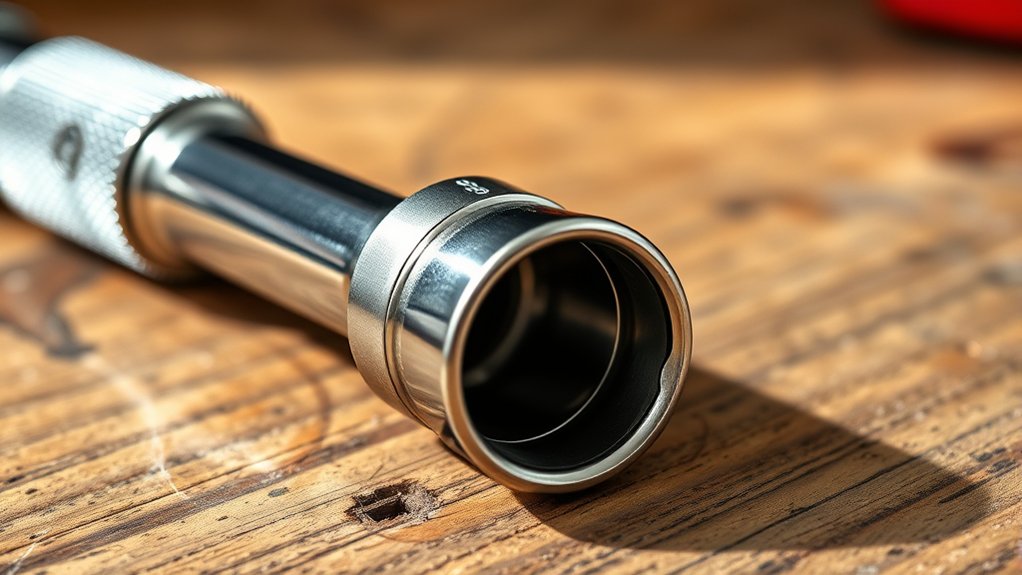
A spark plug wrench is a specialized hand tool designed specifically for installing and removing spark plugs from engines. When you use one, you’ll appreciate its tailored fit that aligns perfectly with spark plug specifications, making sure you don’t damage the plug or engine components.
Its design typically features a socket with a rubber insert or magnetic core that grips the spark plug securely, preventing slippage during tightening or loosening. This precision tool helps you adhere to torque requirements, which is essential for proper engine function and longevity.
Following maintenance tips, like cleaning the wrench and inspecting it for wear, assures consistent performance. Relying on this tool minimizes the risk of cross-threading and guarantees you maintain the engine’s efficiency without compromising spark plug integrity.
Shape and Size of Spark Plug Wrenches
Understanding the shape and size of spark plug wrenches is essential for selecting the right tool for your engine. Spark plug dimensions vary, typically ranging from 16mm to 21mm in diameter, and your wrench must match these precisely to guarantee wrench compatibility.
Most spark plug wrenches have a hexagonal shape to fit snugly over the plug’s hexagonal base, providing a secure grip and torque application. The length of the wrench is also critical; it should be long enough to reach recessed plugs but not so bulky that it limits maneuverability.
Design Features That Reach Tight Engine Spaces
Because engine compartments often have limited clearance around spark plugs, spark plug wrenches incorporate specific design features that allow you to access tight spaces effectively. These wrenches typically have a slim, elongated body to navigate tight clearance areas without obstruction.
The socket end is often recessed and magnetized or rubber-lined to secure the spark plug firmly during removal or installation. You’ll notice the ergonomic design includes a handle or extension that provides ideal torque while reducing hand fatigue, enabling precise control even in confined spaces.
Additionally, some models feature flexible or swivel joints that adapt to awkward angles, enhancing accessibility. This combination of tight clearance compatibility and ergonomic design guarantees you can work efficiently and safely within cramped engine compartments.
Types of Spark Plug Wrenches Available
When you need to remove or install spark plugs, choosing the right type of spark plug wrench is essential for efficiency and safety. You’ll find three primary types: T-handle, ratchet socket, and flex-head wrenches. Each offers specific advantages depending on your engine’s layout and your preference for magnetic retention or socket compatibility.
| Wrench Type | Magnetic Retention | Socket Compatibility |
|---|---|---|
| T-handle | Usually no | Limited |
| Ratchet Socket | Often yes | High |
| Flex-head | Sometimes | Moderate |
Ratchet sockets excel in tight spaces with excellent socket compatibility and magnetic retention to hold plugs securely. Flex-head wrenches allow angled access but may lack strong magnetic retention. Choose based on your workspace and tool needs.
Spark Plug Wrench Materials and Build Quality
The durability and performance of a spark plug wrench largely depend on the materials used and its build quality. Typically, high-grade steel alloys like chrome vanadium or chrome molybdenum dominate material types, offering excellent strength and corrosion resistance. These materials guarantee the wrench withstands high torque demands without deforming.
Additionally, manufacturers often apply protective coatings, such as black oxide or nickel plating, to enhance longevity and reduce rust. Build quality also influences dimensional accuracy, guaranteeing a snug fit on spark plugs to prevent slippage. Precision machining and heat treatment processes further improve hardness and durability.
When selecting a spark plug wrench, focus on these material types and scrutinize the build quality, as they directly affect tool reliability and lifespan during repeated automotive maintenance tasks.
How Spark Plug Wrench Sockets Grip Without Damage
You’ll notice that spark plug wrench sockets use specific design features like chamfered edges and precise internal dimensions to grip plugs securely without causing damage. The materials chosen for these sockets, often high-strength steel with corrosion-resistant coatings, ensure a firm hold while minimizing wear on the spark plug.
Understanding these grip mechanisms helps you avoid stripping or cracking plugs during removal or installation.
Design Features Preventing Damage
Several key design features guarantee spark plug wrench sockets grip securely without damaging the delicate ceramic insulator or metal shell. The socket’s internal profile is engineered to evenly distribute torque across the spark plug’s hexagonal metal shell, safeguarding spark plug protection by preventing localized stress points that could cause cracking or deformation.
Additionally, many sockets incorporate a soft rubber insert or a cushioning layer that stabilizes the plug during removal or installation, further minimizing damage risk. The ergonomic design of the wrench handle enhances your control and leverage, allowing you to apply steady, precise force without slipping.
Together, these features guarantee a secure grip while preserving the integrity of the spark plug, making your maintenance tasks safer and more efficient.
Material and Grip Mechanisms
Material selection and grip mechanisms play essential roles in ensuring spark plug wrench sockets hold securely without causing damage. When you use a wrench, the right materials and design prevent slippage and protect the delicate spark plug surface.
Manufacturers prioritize material durability and ergonomic design to optimize functionality.
Key factors include:
- High-grade steel alloys for strength and resistance to wear
- Non-marring interior lining to avoid scratching the spark plug
- Precise socket dimensions ensuring a snug fit
- Textured or knurled exterior to enhance your grip and control
- Ergonomic handle shapes reducing hand fatigue during use
How Spark Plug Wrenches Differ From Regular Wrenches
You’ll notice spark plug wrenches have a unique design that fits snugly around the plug without causing damage. Unlike regular wrenches, they often include a rubber insert or magnetic feature to hold the plug securely during removal and installation.
These functional advantages make spark plug wrenches essential for precise and safe maintenance.
Design Differences
A spark plug wrench features a distinct design tailored specifically for accessing and removing spark plugs in tight engine spaces. Unlike regular wrenches, it accommodates unique spark plug shapes and prioritizes wrench ergonomics for ease of use.
Key design differences include:
- Hollow cylindrical socket matching spark plug hex sizes precisely
- Deep reach to fit recessed spark plugs without damaging surrounding components
- Foam or rubber inserts to grip spark plug porcelain securely
- T-handle or swivel handle options for better torque application in confined areas
- Lightweight materials enhancing maneuverability and reducing user fatigue
These features guarantee you handle spark plugs efficiently without compromising engine parts, unlike standard wrenches that lack specialized adaptations for spark plug shapes and ergonomics.
Functional Advantages
The unique design features of spark plug wrenches directly translate into functional advantages that set them apart from regular wrenches. Unlike standard wrenches, spark plug wrenches provide a snug fit that prevents damage to the delicate ceramic insulator and hex nut of the plug.
This precision fit enhances spark plug efficiency by ensuring proper torque application, which is critical for peak engine performance. Additionally, their extended handle or flexible shaft design allows you to access plugs in tight engine compartments with ease, improving safety and reducing the risk of rounding off the plug.
These maintenance benefits save you time and prevent costly repairs, making spark plug wrenches an indispensable tool for precise spark plug installation and removal.
What to Look For When Choosing a Spark Plug Wrench
How do you guarantee a spark plug wrench meets your specific needs? Start by focusing on critical factors that affect wrench performance and compatibility. Consider the following:
- Wrench compatibility with various spark plug types to secure a fit
- Material quality, such as chrome-vanadium steel, for durability and corrosion resistance
- Size and shape of the wrench, including socket dimensions tailored to your engine’s spark plugs
- Grip design for efficient torque application without slippage
- Extension and swivel features that provide access to hard to reach spark plugs
Frequently Asked Questions
Can I Use a Spark Plug Wrench for Other Automotive Repairs?
You can use a spark plug wrench for some automotive repairs, but it’s best suited for spark plug types only. Its wrench materials, often steel or chrome-vanadium, provide precision but limit versatility on other fasteners.
How Do I Maintain and Clean a Spark Plug Wrench?
You maintain your spark plug wrench by wiping it clean after use, removing dirt and grime with a brush or cloth. Regular wrench cleaning prevents rust and guarantees precise spark plug maintenance, extending the tool’s lifespan.
Are Spark Plug Wrenches Compatible With All Car Models?
You can’t fit a square peg in a round hole; spark plug wrenches aren’t universal. Since spark plug types vary, you must match wrench sizes precisely to guarantee proper fit.
This helps avoid damage during installation or removal.
Can a Spark Plug Wrench Cause Damage if Used Incorrectly?
Yes, incorrect usage of a spark plug wrench can cause spark plug damage, such as stripping threads or cracking insulators.
You should apply proper torque and use the correct size wrench to avoid causing costly engine issues.
What Is the Average Cost of a Quality Spark Plug Wrench?
You’ll pay around $10 to $30 for a quality spark plug wrench, crafted from durable steel or chrome-vanadium. Choose based on your spark plug types, ensuring the wrench material matches your engine’s precision needs perfectly.
Conclusion
Now that you know a spark plug wrench is your engine’s best friend, designed to reach tight spaces without causing damage, you can choose the right one with confidence. Its unique shape and precise grip make changing spark plugs as smooth as clockwork.
Just like a key fits perfectly in a lock, the right wrench guarantees efficiency and care, preventing slips and scratches. Trust these tools to keep your engine running at peak performance.
When selecting the perfect spark plug wrench, remember that its specialized design is what makes all the difference. Having the correct spark plug wrench ensures you work efficiently and safely every time.