You might wonder if the Jeep Wrangler is considered a compact car, but it doesn’t fit into that category.
While it’s smaller than full-size SUVs, the Wrangler is classified as a midsize SUV designed for off-road capability, not urban efficiency.
It’s longer, taller, and less fuel-efficient than typical compact cars, which focus on maneuverability and economy.
The Wrangler’s rugged design and interior layout prioritize utility over space optimization.
Understanding these differences can help clarify why the Jeep Wrangler stands apart from compact vehicles.
Key Takeaways
- The Jeep Wrangler is classified as a midsize SUV, not a compact car, due to its larger size and off-road design.
- Compact cars typically measure 165-180 inches in length, while the Wrangler ranges from 166 to 189 inches, exceeding compact car dimensions.
- The Wrangler’s height (73-74 inches) is significantly taller than the average compact car height of about 56 inches.
- Unlike compact cars, the Wrangler prioritizes rugged utility and off-road capability over fuel efficiency and urban maneuverability.
- Compact cars maximize interior space and fuel economy, while the Wrangler offers more headroom but lower fuel efficiency and less cargo flexibility.
What Defines a Compact Car in Today’s Market?
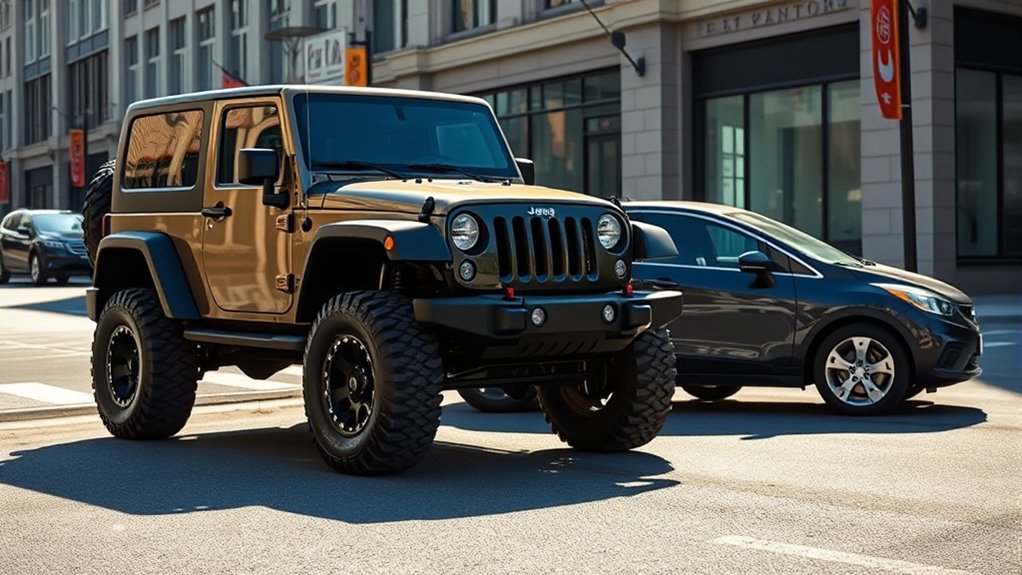
Although the definition of a compact car can vary slightly by region, it generally refers to a vehicle with a smaller footprint designed for efficiency and urban maneuverability. When you look at compact car characteristics, you’ll notice dimensions typically range between 165 to 180 inches in length, offering ease of parking and traversing city streets.
Fuel efficiency is a hallmark, with many models prioritizing low emissions and high miles per gallon. Recent compact car trends show an increased integration of technology, such as advanced driver-assist systems, while maintaining affordability.
You’ll also see a focus on maximizing interior space despite the smaller exterior. Understanding these compact car characteristics and trends helps you evaluate whether a particular vehicle fits the compact category based on design and function rather than just size alone.
Does the Jeep Wrangler Qualify as a Compact Car?
How does the Jeep Wrangler measure up against the criteria of a compact car? To answer that, you need to evaluate the Jeep Wrangler classification carefully.
Unlike traditional compact cars, the Wrangler is designed as an off-road SUV with a larger footprint, higher ground clearance, and rugged capabilities. Many compact car misconceptions arise because people associate “compact” with small size alone, overlooking factors like design purpose and vehicle category.
The Wrangler’s construction and intended use clearly place it outside the compact car segment. So, while you might find the Jeep Wrangler smaller than full-sized SUVs, it doesn’t meet the defining standards of compact cars. Understanding these distinctions helps clarify why the Wrangler isn’t classified as a compact car.
How the Jeep Wrangler’s Size Compares to Compact Cars
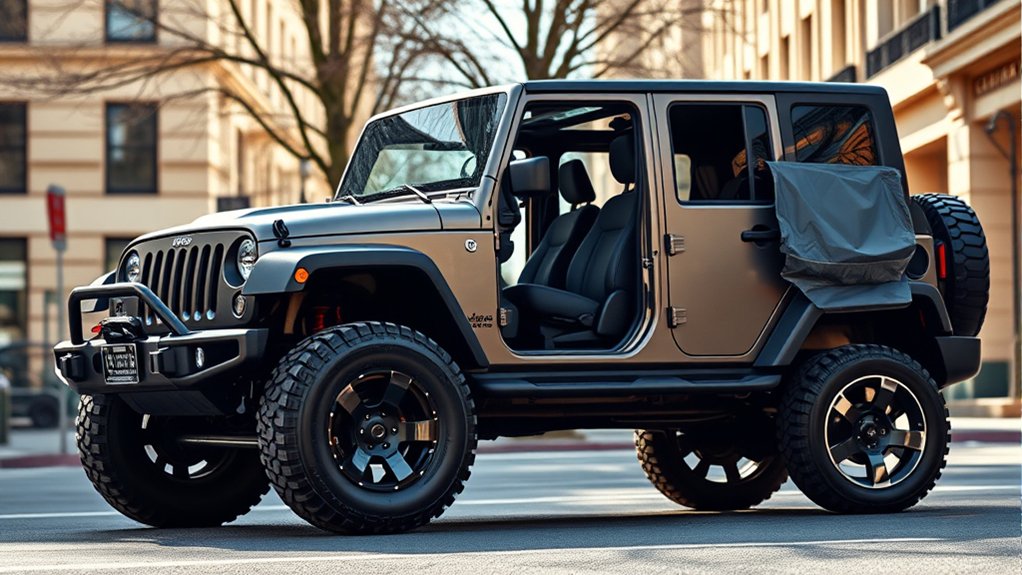
You’ll notice the Jeep Wrangler’s overall dimensions differ markedly from typical compact cars. Compact cars usually have smaller footprints and more confined interior space compared to the Wrangler’s larger frame.
Let’s examine how these size differences affect both exterior measurements and passenger room.
Jeep Wrangler Dimensions Overview
The Jeep Wrangler’s dimensions place it well outside the typical range of compact cars, offering a noticeably larger footprint both in length and height. When examining Jeep Wrangler measurements, you’ll find it stretches approximately 166 to 189 inches long, depending on the model, with a height around 73 to 74 inches.
These figures considerably exceed those of compact cars, which generally measure around 170 inches long and 56 inches tall. The Wrangler’s robust Jeep Wrangler features, including its elevated ground clearance and boxy frame, further contribute to its imposing size.
This combination of length, height, and design elements means the Wrangler offers more interior space and off-road capability but does not align with the compact car category’s size parameters.
Compact Car Size Standards
Although Jeep Wranglers share some features with smaller vehicles, they don’t meet the established size standards that define compact cars. Compact car history shows these vehicles typically have a length between 165 and 185 inches, designed to maximize fuel efficiency and urban maneuverability. These are key compact car benefits. The Wrangler, however, exceeds these dimensions, reflecting its rugged off-road design rather than compact practicality.
| Vehicle Type | Length (inches) | Width (inches) | Height (inches) | Wheelbase (inches) |
|---|---|---|---|---|
| Typical Compact | 165-185 | 68-70 | 55-60 | 100-105 |
| Jeep Wrangler | 166-189 | 73-75 | 73-74 | 96-118 |
This table highlights the Wrangler’s larger footprint compared to standard compact cars.
Comparing Interior Space
When comparing interior space, it’s clear that the Jeep Wrangler offers a different experience than typical compact cars. Its interior layout prioritizes rugged utility over sleek efficiency, giving you a more upright seating position and greater headroom.
While compact cars focus on maximizing passenger comfort within limited dimensions, the Wrangler provides a more spacious feel, especially regarding vertical space. However, when it comes to cargo space, the Wrangler often falls short compared to many compact hatchbacks or sedans.
Its boxy design and rear-mounted spare tire reduce usable cargo capacity. So, if you’re looking for versatile passenger space with off-road capability, the Wrangler’s interior layout stands out. But for efficient cargo space, compact cars typically have the advantage.
What Makes the Jeep Wrangler Stand Out?
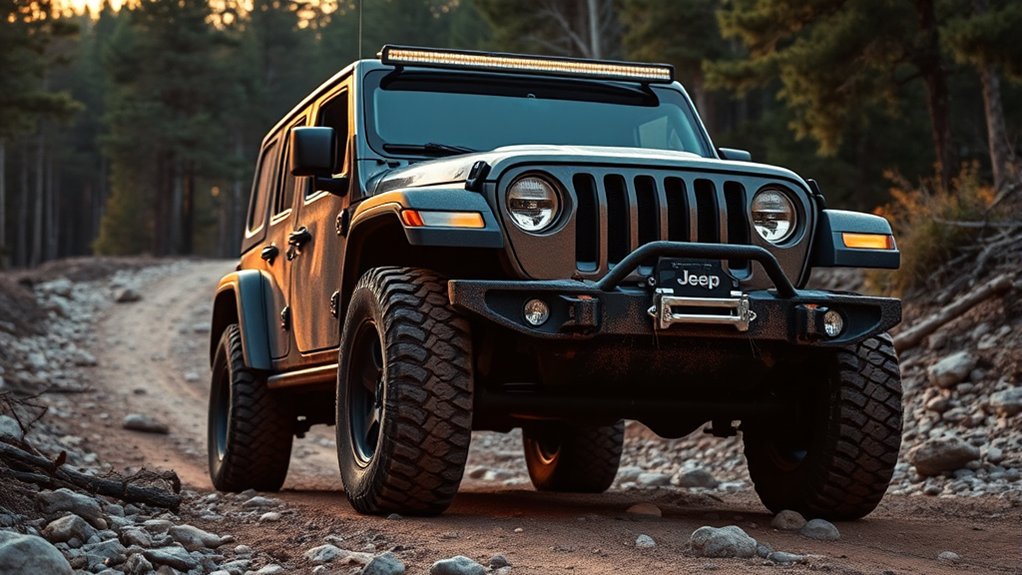
You’ll notice the Jeep Wrangler stands out mainly because of its unmatched off-road capabilities. Its design isn’t just for looks; it’s built rugged to handle tough terrain. These features set it apart from typical compact cars in both function and style.
Unique Off-Road Capabilities
Because the Jeep Wrangler is engineered with rugged terrain in mind, it offers off-road capabilities that few compact vehicles can match. You’ll experience exceptional off-road performance through features like solid axles, high ground clearance, and advanced 4×4 systems. Its rugged versatility lets you tackle rocky trails, mud, and steep inclines confidently.
| Feature | Benefit | Impact on Off-Road Performance |
|---|---|---|
| Solid Axles | Durability & Flexibility | Better traction on uneven ground |
| High Ground Clearance | Avoids Obstacles | Prevents undercarriage damage |
| Advanced 4×4 Systems | Enhanced Control | Improved handling on rough terrain |
With these capabilities, you’re well equipped for diverse off-road challenges, setting the Wrangler apart from typical compact cars.
Iconic Rugged Design
Three key design elements make the Jeep Wrangler instantly recognizable and set it apart from other vehicles: its boxy silhouette, round headlights, and seven-slot grille. These features contribute to the Wrangler’s rugged aesthetics, emphasizing durability and off-road readiness.
When you see these elements, you immediately associate them with adventure and resilience. The Wrangler’s design isn’t just about appearance; it carries significant cultural significance, symbolizing freedom and exploration.
Its rugged look echoes its military origins and decades of outdoor heritage. This distinct style guarantees the Wrangler stands out in a crowded automotive market, reinforcing its identity beyond conventional compact or utility cars.
When you drive a Jeep Wrangler, you’re embracing a legacy of toughness and timeless design that few vehicles can match.
How Off-Road Design Affects the Wrangler’s Classification
Although the Jeep Wrangler shares some size characteristics with compact vehicles, its off-road design greatly influences its classification. When you evaluate classification criteria, off-road performance plays an essential role in setting the Wrangler apart.
Its high ground clearance, robust suspension, and four-wheel-drive system are engineered specifically for challenging terrains, unlike typical compact cars designed primarily for urban and highway use. These off-road capabilities demand structural reinforcements and specialized components that increase the vehicle’s overall dimensions and weight beyond compact car standards.
Comparing Interior Space: Jeep Wrangler vs. Compact Cars
When comparing the interior space of the Jeep Wrangler to that of compact cars, you’ll notice distinct differences that reflect their contrasting design priorities. The Wrangler’s interior layout emphasizes rugged functionality, with upright seating and durable materials, designed for off-road use and easy cleaning.
In contrast, compact cars prioritize efficient use of space for everyday urban driving, offering more refined interior layouts that maximize passenger comfort. Cargo capacity also varies considerably; the Wrangler provides versatile but generally less cargo space behind the rear seats due to its boxy design and removable components.
Compact cars often deliver more optimized cargo capacity relative to their size, with fold-flat rear seats enhancing storage flexibility. Understanding these distinctions helps clarify why the Wrangler doesn’t fit the compact car mold, despite some superficial similarities.
Jeep Wrangler vs. Compact Cars: Fuel Efficiency
Since fuel efficiency plays a critical role in daily driving costs and environmental impact, comparing the Jeep Wrangler to compact cars reveals significant differences. You’ll notice the Wrangler’s fuel economy typically lags behind compact cars due to its larger size, heavier weight, and off-road capabilities.
Compact cars prioritize fuel economy, making them more cost-effective for daily commuting.
Compact cars focus on maximizing fuel efficiency, offering greater savings for everyday driving.
Consider these key points:
- Compact cars often achieve 30-40 mpg, whereas Jeep Wranglers average around 17-25 mpg.
- The Wrangler’s design focuses on rugged driving experience, sacrificing some fuel efficiency.
- Advanced engines and aerodynamics in compact cars enhance fuel economy without compromising comfort.
Understanding this contrast helps you balance your priorities between fuel savings and the unique driving experience the Wrangler offers.
Who Should Choose a Jeep Wrangler Over a Compact Car?
Why might you choose a Jeep Wrangler over a compact car? If you’re an adventure seeker, the Wrangler’s off-road capabilities and rugged design align better with your lifestyle choices. You need a vehicle that handles rough terrains, trails, and outdoor excursions, which compact cars simply aren’t built for.
Additionally, if your lifestyle involves frequent outdoor activities or you require ample cargo space for gear, the Wrangler offers practical advantages despite its larger size and lower fuel efficiency. On the other hand, if your daily routine demands city driving with tight parking, a compact car might be more suitable.
Ultimately, your decision hinges on whether your lifestyle prioritizes adventure and versatility over urban convenience and fuel economy.
Common Misconceptions About the Jeep Wrangler’s Size and Class
How do you accurately categorize the Jeep Wrangler’s size and class amid common misconceptions? Many Jeep misconceptions stem from its rugged design and off-road capability, which lead some to mistakenly label it as a compact car.
However, the Wrangler’s classification aligns more with midsize SUVs, reflecting its dimensions and functional intent. Understanding this helps you make informed decisions about its suitability compared to compact cars.
Consider these key points about Wrangler classification:
- The Wrangler’s length and width exceed typical compact car dimensions.
- Its higher ground clearance and off-road features distinguish it from compact cars.
- Passenger and cargo space cater to a midsize SUV segment, not compact.
Recognizing these factors clarifies the Wrangler’s true size and class, dispelling common Jeep misconceptions.
Frequently Asked Questions
What Is the Jeep Wrangler’s Towing Capacity?
You’ll find the Jeep Wrangler’s towing capacity ranges up to 3,500 pounds, depending on the model, while its towing features and payload capacity guarantee you can haul gear confidently on and off-road adventures.
How Does the Jeep Wrangler Perform in Snow?
You’ll find the Jeep Wrangler excels in snow performance thanks to its rugged off-road capability, four-wheel drive, and high ground clearance. These features help you maintain traction and control on slippery, snowy terrains with confidence and stability.
Are There Electric Versions of the Jeep Wrangler?
Yes, you’ll find the Jeep Wrangler 4xe, an electric version blending electric performance with iconic off-road capabilities. It delivers instant torque and impressive range, letting you tackle rugged terrain while enjoying eco-friendly driving.
What Are the Safety Ratings of the Jeep Wrangler?
You’ll find the Jeep Wrangler has mixed safety ratings; it includes essential safety features but scores average in crash tests.
You should carefully review specific model years to guarantee it meets your safety expectations before deciding.
How Customizable Is the Jeep Wrangler’s Exterior?
Like an artist’s canvas, the Jeep Wrangler’s exterior customization options abound. You’ll find countless exterior accessories such as bumpers, lights, and roof racks, letting you tailor your ride precisely to your adventurous style and functional needs.
Conclusion
You might be surprised to learn the Jeep Wrangler’s length exceeds many compact cars by over a foot, measuring around 166 inches compared to an average compact’s 155 inches. This means it clearly doesn’t fit the compact category despite its rugged appeal.
If you value off-road capability and space over typical compact car traits like fuel efficiency and maneuverability, the Wrangler’s size and design make it a unique choice that stands apart in today’s market. Ultimately, the Jeep Wrangler is not a compact car.