Spark plug heat range refers to how quickly your spark plug can transfer combustion heat from its tip to the engine’s cooling system. This concept is crucial for selecting the appropriate spark plug for your engine.
Choosing the right heat range guarantees your plug operates at an ideal temperature, preventing overheating or fouling, which can harm engine performance and fuel economy.
Hot plugs hold heat longer and are suitable for lower-speed engines. In contrast, cold plugs dissipate heat rapidly and are designed for high-performance engines.
Understanding heat range helps you maintain efficient combustion and reliable ignition—explore further for detailed insights.
Key Takeaways
- Spark plug heat range indicates the plug’s ability to transfer heat from the combustion chamber to the engine head.
- It is determined by the insulator nose design and length, affecting thermal energy dissipation.
- Correct heat range prevents pre-ignition and fouling, ensuring reliable spark and combustion.
- Hot plugs retain more heat for low-speed engines, while cold plugs dissipate heat faster for high-performance engines.
- Selecting the proper heat range optimizes engine performance, fuel efficiency, and spark plug durability.
What Does Spark Plug Heat Range Mean?
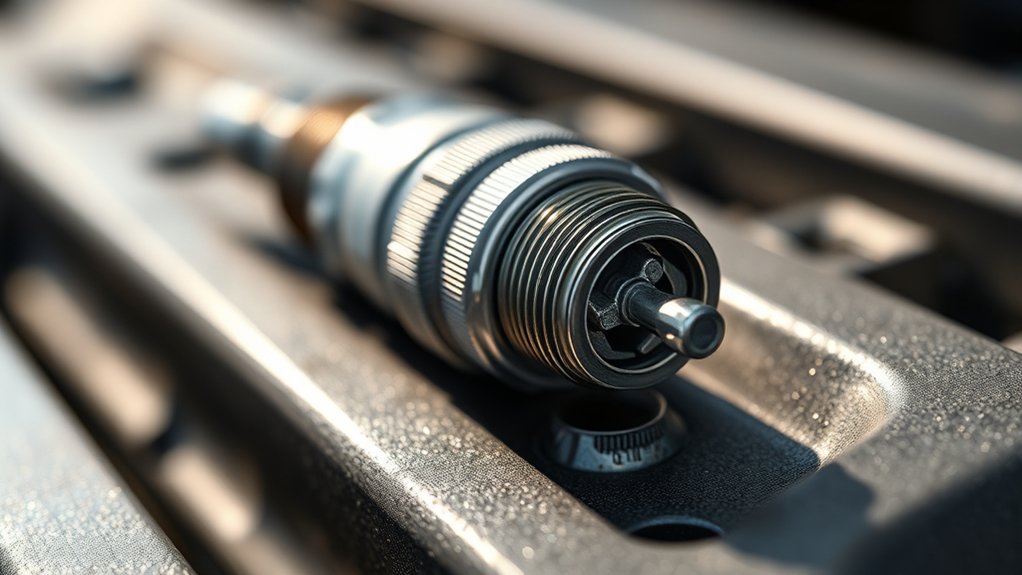
Although it may seem complex at first, the spark plug heat range fundamentally refers to the plug’s ability to dissipate heat from the combustion chamber. Understanding spark plug basics is essential, as the heat range affects how efficiently the spark plug transfers thermal energy away from the tip.
If the plug runs too hot, it risks pre-ignition and engine knock; too cold, and it may foul due to incomplete combustion. The heat range is determined by the design and length of the insulator nose, which influences how quickly heat moves to the cylinder head.
During engine ignition, maintaining the correct heat range guarantees ideal combustion, reliable spark delivery, and prevents damage. By selecting the appropriate heat range, you enhance engine performance and longevity.
Hot vs Cold Spark Plug Heat Ranges: Key Differences
When you choose between hot and cold spark plug heat ranges, you’re fundamentally selecting how quickly the plug will transfer heat away from the combustion chamber. Hot spark plugs have longer insulator noses made from specific spark plug materials that retain more heat, preventing fouling in low-speed or low-load engines.
Cold spark plugs, with shorter insulator noses, dissipate heat faster, making them suitable for high-performance engines with advanced ignition timing and higher combustion temperatures. Using the wrong heat range can lead to pre-ignition or fouling because the plug either runs too hot or too cold.
Understanding these key differences helps you select the best spark plug for your engine’s operating conditions, ensuring efficient combustion and consistent ignition timing without compromising longevity or performance.
How Spark Plug Heat Range Affects Engine Performance
You’ll find that the spark plug heat range directly influences combustion efficiency by controlling the plug’s operating temperature. Using an incorrect heat range can lead to pre-ignition or fouling, which negatively impacts engine power and fuel economy.
Additionally, choosing the right heat range helps maintain engine longevity by preventing excessive wear and thermal damage.
Heat Range Impact On Combustion
Because the spark plug’s heat range directly influences its ability to dissipate heat, it plays a critical role in combustion efficiency and overall engine performance. If you select a plug with an incorrect heat range, combustion temperatures can deviate from ideal levels, impairing ignition timing and fuel burn quality.
A plug too hot may cause pre-ignition by retaining excessive heat, leading to early combustion and knocking. Conversely, a plug too cold fails to reach self-cleaning temperatures, allowing deposits that degrade spark and combustion consistency.
Effects On Engine Longevity
Selecting the correct spark plug heat range doesn’t just optimize combustion; it directly influences your engine’s durability over time. Incorrect heat ranges can accelerate engine wear by causing improper thermal management and combustion instability.
To maximize your engine’s lifespan, focus on these key effects:
- Ignition Efficiency: Proper heat range maintains stable combustion, ensuring consistent ignition and reducing misfires.
- Thermal Management: Correct plugs dissipate heat effectively, preventing overheating and minimizing stress on engine components.
- Spark Longevity: Adequate heat range prolongs spark plug life, reducing the frequency of maintenance and replacements.
- Performance Tuning and Fuel Efficiency: Optimized heat range enhances fuel combustion, improving mileage while protecting engine parts from premature wear.
How the Right Heat Range Stops Fouling and Overheating
When an engine operates, the spark plug’s heat range directly influences its ability to maintain ideal temperature, preventing fouling and overheating. Selecting the correct heat range guarantees the plug reaches a self-cleaning temperature, typically between 450°C and 850°C, critical for fouling prevention.
If the heat range is too cold, deposits accumulate on the insulator nose, causing misfires and reduced efficiency. Conversely, an excessively hot plug leads to overheating, risking pre-ignition and electrode damage. Proper heat range acts as an overheating solution by dissipating heat effectively while maintaining combustion stability.
How to Identify the Correct Spark Plug Heat Range for Your Vehicle
Start by reviewing your engine specifications to determine the manufacturer-recommended spark plug heat range. Then, consult a reliable heat range chart to match those specs with the appropriate plug rating. This guarantees ideal combustion and prevents issues like fouling or overheating.
Engine Specifications Check
Although understanding spark plug heat range might seem complex, checking your engine specifications provides a clear path to identifying the correct plug for your vehicle. Different engine types and performance tuning directly influence the ideal heat range. To accurately determine the right spark plug, follow these steps:
- Consult your vehicle’s owner manual or manufacturer’s technical documents for recommended heat ranges.
- Identify your engine type, whether naturally aspirated, turbocharged, or supercharged, as each requires specific heat dissipation characteristics.
- Account for any performance tuning modifications that increase combustion temperature and may necessitate a colder heat range plug.
- Verify compression ratio and operating conditions to guarantee the plug avoids fouling or pre-ignition.
Heat Range Chart Use
How do you determine the correct spark plug heat range for your vehicle with confidence? Start by consulting a heat range chart specific to your engine model. These charts correlate heat range factors such as combustion chamber temperature, engine load, and operating conditions with recommended spark plug materials and heat ratings.
Pay close attention to the thermal conductivity of spark plug materials. Iridium and platinum plugs dissipate heat differently than copper ones, affecting the heat range choice. Use the chart to match your engine’s specifications and driving habits to the appropriate heat range, ensuring ideal combustion and preventing fouling or pre-ignition.
How Driving Conditions Influence Spark Plug Heat Range Choice
When you consider the demands placed on your engine during different driving conditions, selecting the appropriate spark plug heat range becomes critical. Your choice must align with factors such as urban driving, highway performance, off road conditions, and weather extremes. Here’s what to focus on:
- Towing capacity and engine modifications increase thermal loads, requiring colder plugs to prevent overheating.
- Racing applications generate higher combustion temperatures, demanding precise heat range adjustments.
- Fuel types influence combustion characteristics, impacting the required spark plug heat dissipation.
- Consistent stop-and-go urban driving versus steady highway speeds alter the plug’s operating temperature, affecting heat range suitability.
Consequences of Using the Wrong Spark Plug Heat Range
If you select the wrong spark plug heat range, your engine will suffer from inefficient combustion and potential mechanical damage. An incorrect heat range disrupts thermal dynamics, impairing heat dissipation and causing overheating or fouling.
This imbalance compromises combustion stability, leading to erratic ignition timing and incomplete fuel mixture burn. Consequently, engine efficiency drops, and spark plug longevity decreases due to accelerated electrode wear or carbon buildup.
Different engine types demand specific heat ranges to maintain ideal performance tuning and prevent pre-ignition or misfires. Ignoring proper heat range selection can also disrupt maintenance schedules, increasing the risk of costly repairs.
For precise operation, always match the spark plug heat range to your engine’s thermal profile and driving conditions to guarantee durability and peak efficiency.
How to Inspect and Replace Spark Plugs Correctly
Begin by thoroughly examining each spark plug for signs of wear, fouling, or damage that could impair engine performance. Different spark plug types require specific inspection criteria. Use proper installation tools to avoid damage during removal or insertion.
Follow these steps:
- Visually inspect electrodes and insulators for cracks, deposits, or erosion.
- Measure the electrode gap with a feeler gauge and adjust if necessary.
- Clean or replace plugs exhibiting heavy fouling or physical damage.
- Reinstall plugs using a torque wrench to the manufacturer’s specifications, guaranteeing proper seating and avoiding over-tightening.
Accurately identifying spark plug types and using the correct installation tools guarantees consistent engine operation and longevity.
Tips for Maintaining Optimal Spark Plug Performance
Regularly maintaining your spark plugs is essential to guarantee consistent engine efficiency and prevent performance issues. For effective spark plug maintenance, inspect electrode wear and gap size frequently, confirming they match your engine’s specifications.
Use a feeler gauge to measure the gap accurately, adjusting or replacing plugs as needed to maintain peak ignition. Clean deposits from the plugs using a wire brush or specialized cleaner to avoid misfires caused by fouling.
Additionally, monitor your engine’s operating temperature and fuel quality, as these factors influence spark plug heat range and longevity. Following these performance tips helps you sustain efficient combustion, reduce emissions, and prevent engine knocking.
Consistent attention to spark plug condition guarantees reliable starts, smooth acceleration, and maximized fuel economy over time.
Frequently Asked Questions
Can Spark Plug Heat Range Affect Fuel Efficiency?
Yes, the spark plug heat range impacts fuel efficiency by affecting spark plug performance. If you use an incorrect heat range, combustion won’t be ideal, reducing fuel economy and causing misfires or fouling, lowering overall engine efficiency.
Do Spark Plugs With Different Heat Ranges Cost More?
When it comes to spark plug pricing, don’t throw the baby out with the bathwater. Different heat range factors can slightly affect costs due to materials and design complexity, but price variations are generally modest and brand-dependent.
How Often Should Spark Plugs Be Replaced Regardless of Heat Range?
You should replace spark plugs every 30,000 to 100,000 miles, depending on the spark plug lifespan specified by your vehicle. Regularly check for wear and fouling as key maintenance tips to guarantee peak engine performance.
Are Heat Range Differences Noticeable in All Engine Types?
You’ll see heat range differences like subtle brushstrokes in engine performance, especially in high-performance or turbocharged engines where ignition timing is critical.
In simpler engines, these nuances might blur, making changes less noticeable.
Can Aftermarket Spark Plugs Have Different Heat Ranges Than OEM?
Yes, aftermarket options often offer different heat ranges than OEM plugs, allowing you to optimize combustion temperatures. This can provide performance benefits like improved ignition, reduced fouling, and enhanced engine efficiency under varied operating conditions.
Conclusion
Choosing the right spark plug heat range is like tuning a finely crafted instrument—each note must be perfect. When you match your spark plug to your engine’s needs, you avoid fouling and overheating, ensuring smooth combustion and peak performance.
Picture your engine as a living system, where the correct heat range keeps everything balanced, efficient, and reliable. Take care to inspect and replace plugs precisely, and you’ll keep your engine running at its sharpest edge.
In conclusion, understanding and selecting the proper spark plug heat range is essential for maintaining optimal engine function and longevity.